
Trying to gain weight can be just as frustrating as trying to lose it.
You may feel like you’re eating more, yet the scale barely changes. The problem is often not a lack of one “magic” food. It can be a combination of insufficient calories, inconsistent meals, low protein intake, high activity levels or an underlying health issue.
A sensible diet plan for weight gain focuses on gradually increasing calorie intake while keeping meals nutritious and balanced. The NHS suggests that adults can try adding roughly 300–500 extra calories per day for gradual weight gain, alongside balanced meals, protein-rich foods and healthy snacks.
The goal isn’t simply to become heavier.
The better goal is to support healthy weight gain while maintaining muscle, strength and adequate nutrition.
What does a healthy weight gain diet actually mean?
A healthy weight-gain diet provides more energy than your body uses while still supplying adequate protein, carbohydrates, fats, vitamins and minerals.
In simple terms:
Calories provide the energy surplus. Protein supports tissue and muscle. Carbohydrates provide fuel. Dietary fats increase energy density and support normal body functions.
ICMR-National Institute of Nutrition’s 2024 Dietary Guidelines for Indians emphasize dietary diversity, recommending foods from multiple food groups and a balanced combination of carbohydrates, protein and fats.
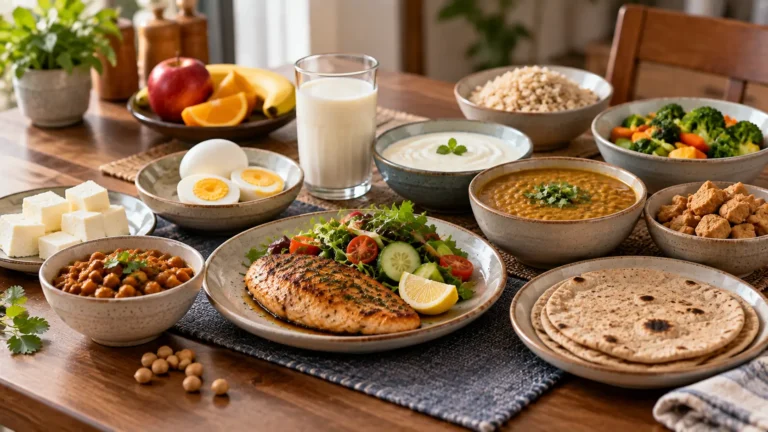
That means a weight-gain plate could include:
- Rice, roti or other whole grains
- Dal, beans or another protein source
- Vegetables
- Curd or milk
- Nuts or seeds
- Fruit
- Eggs, fish or lean meat if you eat them
The exact amount you need depends on your body size, activity level, age, health status and current eating pattern.
Who may benefit from a weight gain diet?
Not everyone who is naturally thin needs to gain weight.
Some people have a naturally smaller body frame or genetically lower body weight and remain healthy.
However, being underweight can sometimes be associated with inadequate nutrition or an underlying medical problem. Cleveland Clinic notes that a BMI below 18.5 is generally classified as underweight for adults, although BMI has limitations and should not be used as the only measure of health.
You should speak with a healthcare professional if you:
- Have lost weight unexpectedly
- Continue losing weight without trying
- Have a persistent lack of appetite
- Experience ongoing weakness or fatigue
- Have digestive symptoms affecting food intake
- Have a known medical condition
- Suspect an eating disorder
Unexpected weight loss can sometimes be a sign of an underlying condition rather than simply “fast metabolism.”
The basic formula for healthy weight gain
A practical approach has four parts.
1. Create a modest calorie surplus
Your body needs additional energy to gain weight.
The NHS recommends trying around 300–500 additional calories per day for adults seeking gradual weight gain.
You don’t need to force huge meals.
Instead, increase the energy density of meals you already enjoy.
For example:
- Add nuts to oatmeal.
- Add seeds to yogurt.
- Add cheese to meals.
- Use nut butter with fruit.
- Add milk to smoothies.
- Include healthy oils in cooking.
2. Eat protein regularly
Protein is important for maintaining and building body tissues.
Good choices include:
- Eggs
- Milk
- Curd
- Paneer
- Dal
- Chickpeas
- Rajma
- Soy foods
- Fish
- Chicken
- Lean meat
Harvard Health emphasizes that protein should be part of a balanced diet rather than replacing carbohydrates and healthy fats entirely.
If you have kidney disease or another medical condition affecting protein intake, your protein target should be discussed with a healthcare professional.
3. Choose calorie-dense foods
A large bowl of low-calorie food may be difficult to finish.
Instead, combine nutritious foods with higher energy density.
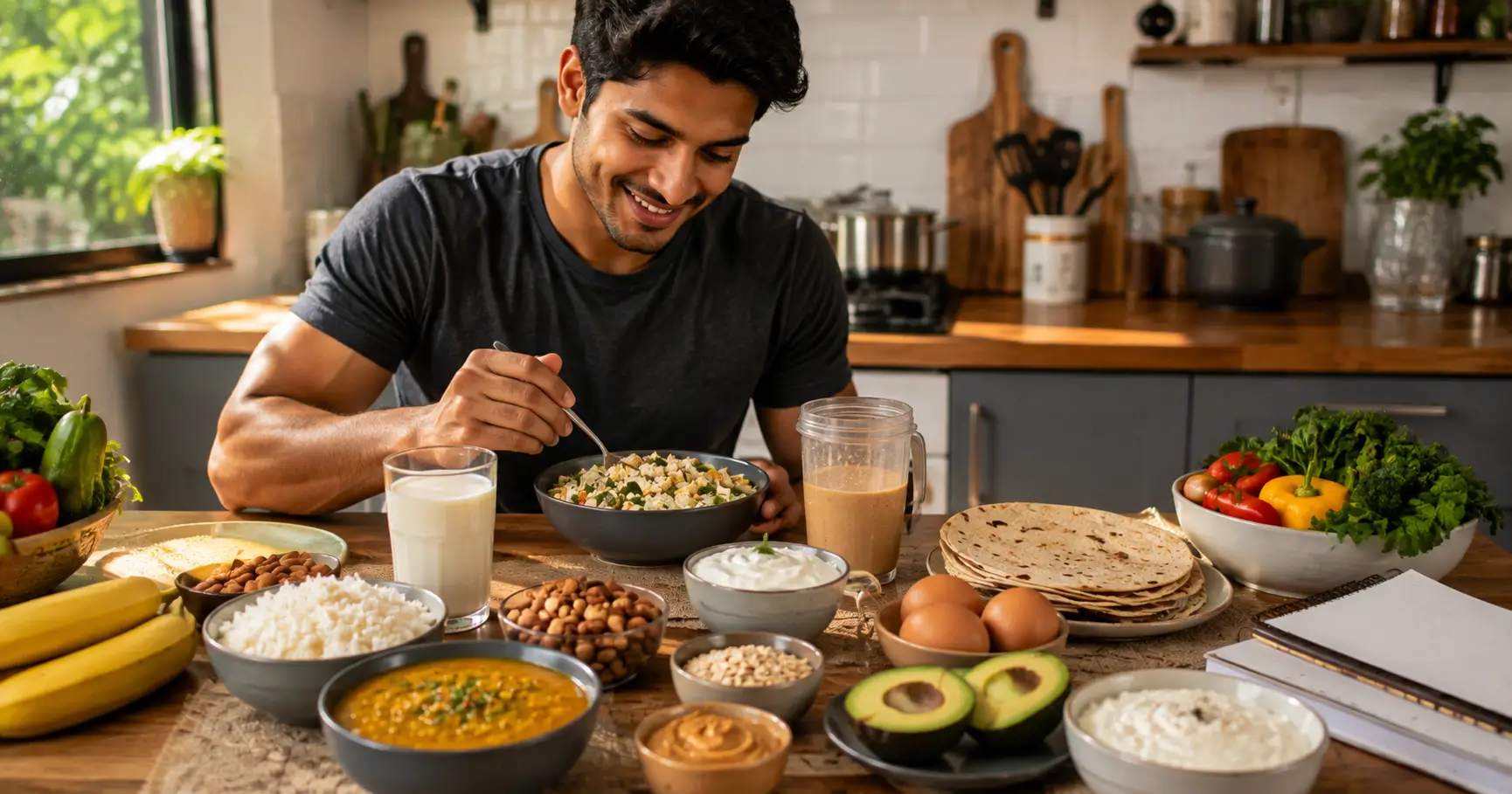
Useful choices include:
| Food | Why it can help |
|---|---|
| Nuts | Energy-dense and nutrient-rich |
| Peanut butter | Easy way to add calories and protein |
| Whole milk | Provides energy and protein |
| Curd | Protein and calories |
| Paneer | Energy-dense protein source |
| Avocado | Provides healthy unsaturated fats |
| Oats | Carbohydrates plus fiber |
| Rice | Easy-to-eat carbohydrate source |
| Banana | Convenient carbohydrate-rich fruit |
| Seeds | Healthy fats and nutrients |
Cleveland Clinic specifically recommends nutrient-dense foods such as nuts, nut butters, dairy products, avocado and protein-rich foods when healthy weight gain is needed.
4. Add strength training
If your goal is to gain a stronger body rather than simply increase scale weight, resistance training can complement your nutrition plan.
Strength training provides a stimulus for muscle adaptation.
The NHS also recommends strength training or yoga as part of a healthy approach to gaining weight and building muscle.
7-day diet plan for weight gain
This sample plan is intended as a general adult framework, not a personalized prescription.
Portions should be adjusted according to appetite, body size, activity and nutritional needs.
Day 1
Breakfast: Oats cooked with milk, banana and peanut butter
Mid-morning: Curd with nuts and fruit
Lunch: Rice, dal, vegetables, curd and paneer or chicken
Evening: Banana-milk smoothie with peanut butter
Dinner: Roti, mixed vegetables, dal and eggs/paneer
Before bed: Milk if tolerated
Day 2
Breakfast: Vegetable omelet with whole-grain toast and milk
Mid-morning: Banana with peanut butter
Lunch: Rajma rice, vegetables and curd
Evening: Nuts and yogurt
Dinner: Roti with dal, paneer/chicken and vegetables
Before bed: Milk or a small yogurt
Day 3
Breakfast: Poha with peanuts, vegetables and curd
Mid-morning: Fruit smoothie with milk
Lunch: Rice, dal, fish/chicken or paneer and vegetables
Evening: Peanut chaat or roasted chickpeas with fruit
Dinner: Roti, dal, vegetables and curd
Before bed: Milk if appropriate
Day 4
Breakfast: Paratha with curd plus eggs or paneer
Mid-morning: Fruit and mixed nuts
Lunch: Rice, chole, vegetables and curd
Evening: Banana smoothie
Dinner: Roti, paneer/chicken, vegetables and dal
Before bed: Milk
Day 5
Breakfast: Oatmeal with milk, banana, nuts and seeds
Mid-morning: Yogurt with fruit
Lunch: Rice, dal, vegetables and eggs/fish/paneer
Evening: Peanut butter toast and milk
Dinner: Roti with rajma or chole, vegetables and curd
Before bed: Milk if desired
Day 6
Breakfast: Vegetable upma with peanuts plus curd
Mid-morning: Banana and nuts
Lunch: Rice, dal, paneer/chicken and vegetables
Evening: Homemade fruit-and-milk smoothie
Dinner: Roti, dal, vegetables and eggs/paneer
Before bed: Yogurt or milk
Day 7
Breakfast: Eggs/paneer with toast, fruit and milk
Mid-morning: Curd with nuts
Lunch: Rice, dal, vegetables, curd and fish/chicken/paneer
Evening: Banana with peanut butter
Dinner: Roti, chickpeas or dal, vegetables and paneer/eggs
Before bed: Milk if tolerated
This seven-day structure deliberately repeats useful foods.
You don’t need seven completely different diets. Consistency is usually more practical than constantly searching for new meals.
Best foods for healthy weight gain
Eggs
Eggs provide protein and are easy to add to breakfast, lunch or dinner.
Milk and dairy
Milk, curd and paneer can increase the nutritional and energy density of meals.
Nuts and nut butter
A small quantity can add substantial energy without requiring a very large meal.
Rice and other grains
Rice, oats, wheat and other grains provide carbohydrate energy and can be paired with protein-rich foods.
Dal and beans
Lentils, chickpeas, kidney beans and other pulses provide protein, carbohydrates, fiber and micronutrients.
Bananas
Bananas are convenient and can be combined with milk, oats or nut butter.
Avocado and healthy oils
These foods can increase energy density while contributing unsaturated fats.
Fish and lean meat
For non-vegetarians, fish and lean meat can provide protein along with other nutrients.
ICMR-NIN’s dietary guidance includes cereals and millets, pulses, vegetables, fruits, nuts and seeds, dairy, roots and tubers, and animal-source foods among its food groups.
High-calorie snacks that are better than junk food
One of the easiest ways to increase calorie intake is to add one or two nutritious snacks.
Try:
- Banana + peanut butter
- Yogurt + nuts
- Trail mix
- Peanut chaat
- Whole-grain toast + nut butter
- Fruit + yogurt
- Homemade smoothie
- Paneer sandwich
- Milk + oats + banana smoothie
Cleveland Clinic recommends nutrient-dense snacks containing protein and healthy fats rather than relying primarily on junk food for weight gain.
A simple weight-gain smoothie
A homemade smoothie can be useful when large meals feel difficult.
Example
Blend:
- 1 banana
- 1 cup milk
- 2 tablespoons peanut butter
- 2–3 tablespoons oats
- Plain yogurt if desired
- Cinnamon for flavor
The exact calorie content depends on the ingredients and portions.
The advantage is that liquids can sometimes be easier to consume between meals than another large plate of food. Cleveland Clinic also notes that calorie-containing beverages can be useful for people who struggle to eat enough, particularly when consumed between meals.
What if you have a low appetite?
Trying to eat three enormous meals can backfire.
Instead, divide your food into smaller, more frequent meals and snacks.
The NHS recommends smaller meals more often and adding healthy snacks between meals for people trying to gain weight.
You can also increase calories without dramatically increasing volume.
For example:
Oatmeal → oatmeal + milk + nuts + peanut butter
Toast → toast + eggs + avocado
Rice → rice + dal + paneer + a little cooking oil
The objective is to make each meal more nutritionally useful.
Common weight-gain mistakes
Eating mostly junk food
Pizza, sweets, sugary drinks and fried foods can increase calorie intake, but they shouldn’t become the foundation of a weight-gain diet.
The NHS specifically advises against relying on chocolate, cakes and sugary drinks to gain weight.
Skipping protein
Extra calories without enough protein and overall dietary quality may not support your desired body-composition goal.
Drinking too much before meals
Large amounts of fluid immediately before eating can reduce appetite.
If you’re struggling to eat enough, consider calorie-containing drinks between meals instead.
Changing the plan every few days
Weight gain requires consistency.
Give your routine enough time to assess whether your food intake is actually increasing.
Assuming faster is better
Rapid weight changes aren’t necessarily healthier.
A gradual approach makes it easier to monitor appetite, digestion, energy and body composition.
Myths vs facts about weight gain
| Myth | Fact |
|---|---|
| You can gain healthy weight by eating unlimited junk food | Calorie-dense foods should still provide useful nutrients |
| More protein alone guarantees muscle gain | Protein works alongside adequate energy and resistance training |
| Everyone needs the same number of calories | Calorie needs vary by body size, activity and other factors |
| You must eat huge meals | Smaller, frequent meals can be easier |
| Supplements are essential | Many people can increase calories through ordinary foods |
| Being thin automatically means being unhealthy | Some naturally thin people are healthy; unexplained weight loss needs evaluation |
| More calories always means better weight gain | Excess calories can also increase unwanted body fat |
When weight gain may need medical attention
This is one part of weight gain that shouldn’t be ignored.
If you have lost weight without trying, have persistent appetite loss or continue losing weight despite increasing food intake, don’t simply assume you have a “fast metabolism.”
Underlying conditions can affect appetite, digestion, absorption or energy expenditure. Cleveland Clinic notes that underweight can sometimes be associated with medical conditions and nutrient deficiencies.
Seek professional guidance particularly if you also experience:
- Persistent diarrhea or vomiting
- Severe fatigue
- Dizziness
- Difficulty swallowing
- Significant appetite changes
- Recurrent illness
- Unexplained rapid weight loss
A doctor or registered dietitian can help determine whether the problem is dietary or whether another issue needs attention.
How to track whether your diet is working
Don’t judge your progress from one day’s scale reading.
Instead:
- Weigh yourself under similar conditions.
- Look at the trend over several weeks.
- Track your meals for a few days if you’re unsure how much you’re eating.
- Monitor strength if you’re resistance training.
- Pay attention to energy and digestion.
- Adjust portions gradually if your weight remains unchanged.
Remember that body weight naturally fluctuates because of hydration, food volume and other factors.
The goal is to identify a consistent trend, not react to every daily change.
Key takeaways
A healthy weight-gain diet is built around a few straightforward principles:
- Create a modest calorie surplus.
- Eat protein regularly.
- Choose nutrient-dense calorie sources.
- Include carbohydrates, fats, fruits and vegetables.
- Eat smaller meals more frequently if appetite is low.
- Use nutritious snacks and smoothies when useful.
- Add resistance training if muscle gain is your goal.
- Avoid relying on junk food and sugary drinks.
- Track your progress over time.
- Get medical advice for unexplained weight loss.
The best diet is not the one with the most calories.
It is the one that gives your body enough energy and nutrients consistently while fitting your appetite, culture, budget and lifestyle.
FAQ
What is the best diet plan for weight gain?
A healthy weight-gain diet should provide a modest calorie surplus while including protein, carbohydrates, healthy fats, fruits, vegetables and other nutrient-dense foods. The NHS suggests adults can try adding around 300–500 calories daily for gradual gain.
What should I eat to gain weight quickly but healthily?
Choose calorie-dense nutritious foods such as nuts, nut butter, dairy, paneer, eggs, rice, oats, bananas, avocado, dal and other protein-rich foods. Avoid relying mainly on sugary drinks and junk food.
How many meals should I eat for weight gain?
There is no universal number. If large meals are difficult, eating smaller meals more frequently with nutritious snacks can make it easier to increase total calorie intake.
Is protein important for healthy weight gain?
Yes. Protein supports normal tissue maintenance and is particularly important when resistance training is part of a muscle-building goal. However, protein should be part of a balanced diet rather than replacing carbohydrates and healthy fats.
Can I gain weight with an Indian vegetarian diet?
Yes. Vegetarian diets can include calorie- and protein-rich foods such as dal, rajma, chickpeas, soy foods, paneer, curd, milk, nuts, seeds, rice and whole grains. ICMR-NIN recommends dietary diversity across multiple food groups.
When should I see a doctor about being underweight?
Speak with a healthcare professional if you have unexplained or ongoing weight loss, persistent appetite loss, weakness, digestive problems or other concerning symptoms. Underweight can sometimes be associated with an underlying medical condition.
Conclusion
Healthy weight gain is not about eating everything in sight.
It is about creating a consistent calorie surplus with nutritious foods, while giving your body enough protein, carbohydrates, fats, vitamins and minerals.
A practical starting point is to add modest calories through foods such as nuts, peanut butter, dairy, paneer, eggs, dal, rice, oats, bananas and healthy meals rather than relying on sweets and sugary drinks.
If muscle gain is part of your goal, pair good nutrition with appropriate strength training.
And if you’re losing weight without trying, don’t simply assume that you need to “eat more.” Unexplained weight loss deserves medical attention.
The most sustainable diet plan for weight gain is one you can actually follow every day.
Start with the seven-day framework above, adjust portions to your needs, monitor your progress over several weeks, and seek professional guidance if your weight loss or low weight has an unclear cause.
Disclaimer
Medical and Nutrition Disclaimer: This article is intended for general educational and informational purposes and does not provide individualized medical or dietary advice. Calorie, protein and food requirements vary according to age, sex, body size, activity level, health status, medications and other factors. The sample meal plan is not a personalized prescription. Anyone who is underweight, experiencing unexplained weight loss, has a chronic disease, digestive disorder, kidney or liver condition, is pregnant or breastfeeding, has a history of an eating disorder, or is planning a diet for a child or teenager should consult a qualified doctor or registered dietitian before making significant dietary changes.