
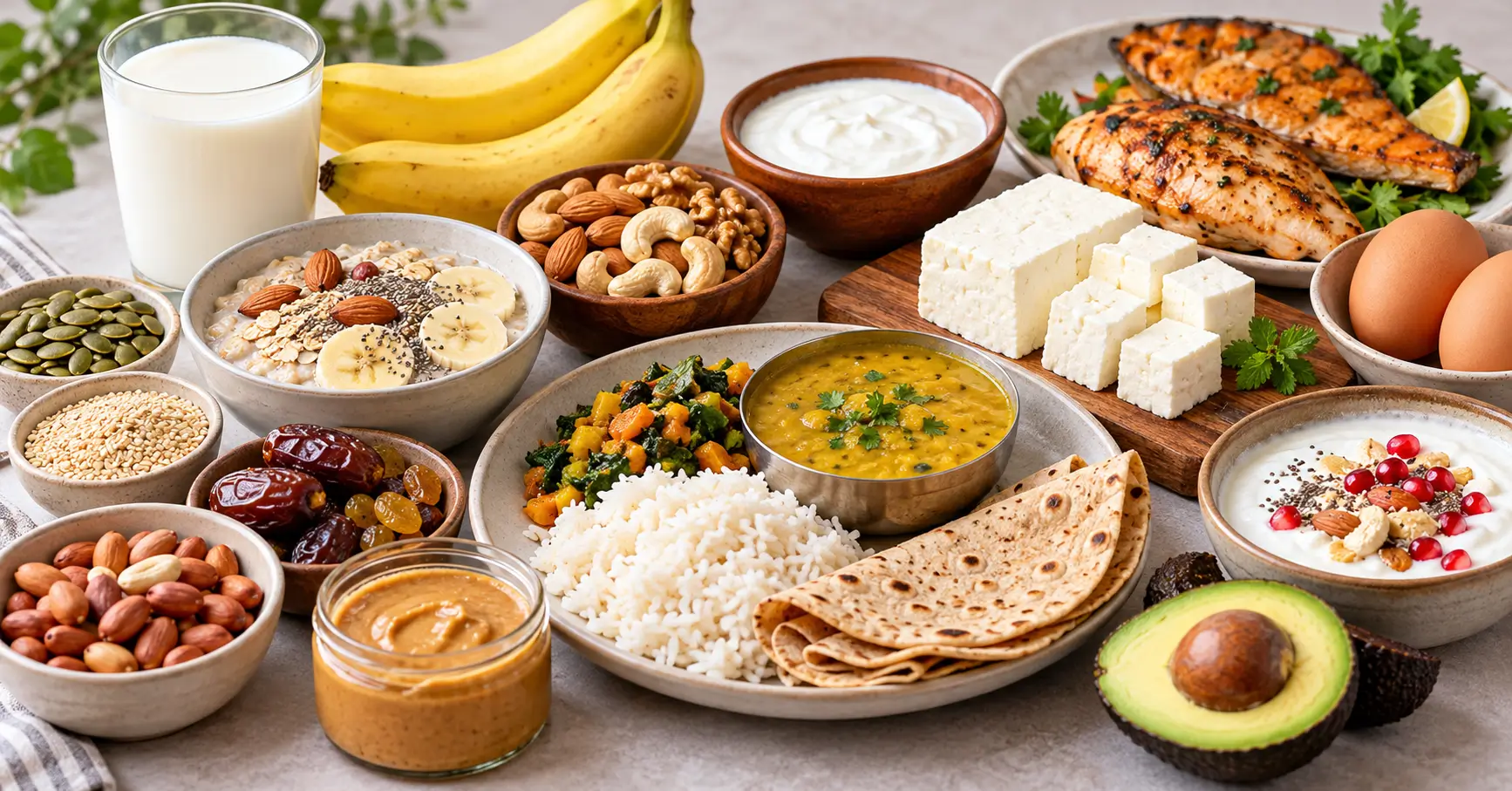

Gaining weight can be challenging when you have a small appetite, a busy routine or difficulty eating enough throughout the day. Choosing high calorie foods to gain weight can help you increase your energy intake without relying on large portions or unhealthy snacks.
The key is to choose foods that provide calories alongside protein, healthy fats, carbohydrates, vitamins and minerals. In an Indian diet, practical options include nuts, seeds, milk, curd, paneer, eggs, pulses, rice, potatoes and homemade smoothies.
For adults who need to gain weight, the NHS suggests gradually adding around 300–500 calories a day as a general starting point. The right amount depends on your current weight, activity level, health and nutritional needs.
This guide explains which foods to choose, how to include them in everyday meals and when to seek professional advice.
20 High Calorie Foods to Gain Weight
The following foods can help you increase your calorie intake while maintaining a balanced diet. Their nutritional value depends on the portion, ingredients and preparation method.
1. Nuts such as almonds, cashews and walnuts
Nuts are compact sources of energy, unsaturated fats, some protein and other nutrients. Because they contain relatively little water, a small serving can add substantial energy to a meal.
How to eat them: Add a small handful to breakfast, mix chopped nuts into curd or porridge, or carry them as a snack.
2. Peanut butter
Peanut butter provides concentrated energy from fats and some protein. It is convenient for people who find it difficult to eat large meals.
How to eat it: Spread it on whole-wheat toast, add it to oats or blend a spoonful into a banana smoothie. Choose a product with minimal added sugar and salt when possible.
3. Whole milk
Whole milk provides energy, protein, calcium and other nutrients. It may be useful for adults who tolerate dairy and want to increase their intake without adding another full meal.
How to eat it: Drink milk with breakfast or between meals, or use it to prepare porridge and homemade smoothies.
People with lactose intolerance can consider lactose-free milk or suitable fortified alternatives.
4. Curd and Greek-style yoghurt
Curd provides protein and calcium, while the energy content varies with the milk used and the product’s fat content. Thicker yoghurt may also help increase protein intake.
How to eat it: Combine curd with fruit, oats, nuts or seeds. Choose unsweetened varieties more often than heavily sweetened products.
5. Paneer
Paneer is a useful vegetarian source of protein and can provide substantial energy, particularly when made from full-fat milk. Its fat and calorie content varies by recipe and brand.
How to eat it: Add paneer to roti meals, vegetable dishes, sandwiches or homemade wraps. Use moderate amounts of cooking oil rather than relying on deep-frying.
6. Eggs
Eggs supply high-quality protein and several essential nutrients. They can support a balanced weight-gain diet, although their energy contribution depends on portion size and cooking method.
How to eat them: Try boiled eggs, an omelette with whole-wheat toast or eggs served with rice and vegetables.
7. Rice
Rice is a convenient carbohydrate source that can help you meet your energy needs. It is particularly useful when you have a small appetite and prefer familiar meals.
How to eat it: Pair rice with dal, rajma, chole, curd, eggs, fish or chicken. Combining carbohydrates with protein-rich foods makes the meal more nutritionally complete.
8. Whole-wheat roti and other grain foods
Roti, oats, whole-grain bread and other cereal foods provide carbohydrates and varying amounts of fibre and protein.
How to eat them: Serve roti with dal and paneer, prepare oats with milk and nuts, or make a sandwich with egg or peanut butter.
9. Potatoes and sweet potatoes
Potatoes provide carbohydrates, while sweet potatoes also supply beta-carotene. Both can contribute to a varied diet.
How to eat them: Boil, bake or prepare them as part of a balanced meal. Pair them with curd, pulses, eggs or another protein source.
10. Bananas
Bananas are convenient, widely available and provide carbohydrates and potassium. They are easy to add to meals and homemade drinks.
How to eat them: Combine a banana with milk, oats, peanut butter or yoghurt. A banana on its own is useful, but combining it with other ingredients creates a more energy-dense snack.
11. Oats
Oats provide carbohydrates, fibre and some protein. They can be prepared with milk and nutrient-rich toppings to make a more substantial breakfast.
How to eat them: Cook oats in milk and add banana, nuts, seeds or unsweetened peanut butter.
12. Dates and raisins
Dried fruits contain less water than fresh fruit, making them more concentrated sources of natural sugars and energy by weight.
How to eat them: Add a small portion to porridge, curd or a homemade trail mix. Dried fruit can contribute nutrients, but it should not replace a varied diet.
13. Peanuts
Peanuts are often an economical option for adding energy, unsaturated fats and plant protein.
How to eat them: Have a small serving as a snack, add crushed peanuts to poha or upma, or mix them into homemade chutney.
Choose plain or lightly salted varieties more often than heavily salted snack products.
14. Seeds such as sesame, pumpkin and sunflower seeds
Seeds provide fats, minerals and varying amounts of protein. Their small serving size makes them easy to add to everyday foods.
How to eat them: Sprinkle seeds over oats, curd, salads or cooked vegetables, or add them to homemade chutneys.
15. Lentils and dal
Dal, moong, masoor and other pulses provide plant protein, carbohydrates and fibre. They are affordable staples that can support gradual weight gain when eaten in sufficient amounts.
How to eat them: Combine dal with rice or roti. If you have a small appetite, a thicker dal preparation with a moderate amount of oil may help increase energy intake.
16. Rajma and chickpeas
Rajma, chole and other beans provide plant protein, carbohydrates and fibre. They are particularly useful for vegetarian diets.
How to eat them: Prepare rajma-chawal, chole with roti or chickpea salad with curd and whole-grain bread.
17. Soy foods
Tofu, soy chunks and other soy foods can provide protein and, depending on the product, useful amounts of energy.
How to eat them: Add soy chunks to curries, prepare tofu bhurji or serve tofu with rice and vegetables.
18. Fish and chicken
Fish and chicken supply protein, which supports the maintenance and growth of body tissues. Their calorie content depends on the cut, species and cooking method.
How to eat them: Include fish curry, grilled fish, chicken curry or chicken with rice or roti. Deep-frying is not necessary to make these foods part of a weight-gain diet.
19. Healthy oils and avocado
Vegetable oils rich in unsaturated fats can add energy to meals in small quantities. Avocado, where available, provides unsaturated fats and fibre.
How to eat them: Add a measured amount of oil to dal or vegetables, use an oil-based dressing or serve avocado with toast.
More oil is not always better. Focus on overall dietary balance and limit excessive saturated and trans fats.
20. Homemade smoothies and milk-based shakes
A homemade smoothie can combine several nutritious ingredients in a convenient drink. It may be particularly helpful for someone who struggles to eat large portions.
Example banana-oat smoothie:
- 1 banana
- 1 cup of milk, or a suitable alternative
- 2–3 tablespoons of oats
- 1 tablespoon of peanut butter
Blend until smooth. The energy and protein content will vary with the ingredients and quantities used.
Drink it between meals if drinking before a meal makes you feel too full.
Which Indian Foods Are Best for Weight Gain?
You do not need expensive imported foods or supplements to increase your energy intake. A combination of familiar Indian staples can work well.
| Food | Main nutritional benefit | Practical meal idea |
|---|---|---|
| Peanuts | Energy, unsaturated fats and plant protein | Snack or chutney |
| Milk | Protein and calcium | Milk with oats |
| Paneer | Protein and energy | Paneer bhurji with roti |
| Dal | Plant protein and fibre | Dal with rice |
| Rajma or chole | Protein, carbohydrates and fibre | Rajma-chawal |
| Rice | Convenient carbohydrate source | Rice with dal and curd |
| Banana | Carbohydrates and potassium | Banana-oat smoothie |
| Eggs | High-quality protein | Egg omelette with toast |
| Soy chunks | Plant protein | Soy curry with rice |
| Sesame seeds | Fats and minerals | Add to chutney or meals |
No single food guarantees weight gain. The overall amount you eat over time matters more than any one item.
How to Gain Weight Healthily
1. Increase your food intake gradually
If your weight is below the healthy range, gradually adding energy to your usual meals may be easier than suddenly increasing portion sizes.
The NHS suggests around 300–500 extra calories daily as a general adult starting point for healthy weight gain. Your needs may differ, so a dietitian can help determine an appropriate target.
2. Eat regular meals and snacks
If three large meals feel difficult, try three smaller meals and one or two snacks, adjusting the schedule to your appetite and routine.
Useful combinations include:
- Banana with milk
- Curd with oats and nuts
- Peanut butter on whole-wheat toast
- Boiled eggs with roti
- Roasted peanuts with fruit
3. Include protein in your meals
Protein supports tissue repair and muscle maintenance. Include suitable sources such as dal, beans, soy, milk, curd, paneer, eggs, fish or chicken.
You do not need to consume every source listed. Choose foods that suit your preferences, budget and dietary requirements.
4. Combine energy-dense foods with a varied diet
Nuts, oils and nut butters can increase calories, but they should not displace all fruits, vegetables, whole grains and protein-rich foods.
The World Health Organization recommends dietary variety and emphasizes healthier fat choices while limiting excess free sugars, salt and unhealthy fats.
5. Consider strength training
If your goal is to build muscle, suitable resistance exercises can complement adequate nutrition. Start at an appropriate level and increase the workload gradually.
Exercise and food intake should be adapted to your health and ability. Seek professional guidance if you have a medical condition or have been significantly underweight.
6. Monitor your progress
Track your weight periodically under similar conditions rather than reacting to daily fluctuations. If your weight is not increasing despite consistent changes, review your intake and consider advice from a qualified dietitian or healthcare professional.
A Simple Day of Eating for Healthy Weight Gain
This is an example of how calorie-dense foods can fit into an Indian eating pattern. It is not a personalized calorie prescription.
| Meal | Example |
|---|---|
| Breakfast | Oats cooked in milk, banana and nuts |
| Mid-morning snack | Curd with fruit or a small serving of peanuts |
| Lunch | Rice or roti, dal, vegetables and curd |
| Afternoon snack | Homemade banana, milk and oat smoothie |
| Dinner | Paneer, soy, eggs, fish or chicken with roti or rice and vegetables |
| Optional evening snack | Milk or another suitable snack, if needed |
Adjust portion sizes to your appetite, activity level, dietary needs and weight trend. For a more structured schedule, see Peaceful Health’s 7-Day Weight Gain Meal Plan.
Foods to Limit When Trying to Gain Weight
Gaining weight does not mean eating unlimited amounts of any high-calorie food.
Try not to rely mainly on:
- Sugary soft drinks and heavily sweetened beverages
- Frequent deep-fried snacks
- Cakes, biscuits and sweets as your primary extra calories
- Excessively salty packaged foods
- Large amounts of ghee, butter or other saturated-fat-rich ingredients
These foods may supply energy but can leave gaps in your diet if they replace more nutritious choices. A balanced approach should emphasize varied foods and healthier sources of fats.
When Should You Seek Medical Advice?
Being naturally slim does not automatically mean you have a health problem. However, persistent difficulty gaining weight or unexplained weight loss deserves attention.
Speak with a qualified healthcare professional if:
- You have lost weight without trying.
- Your weight is low and you are unsure why.
- You have ongoing diarrhoea, vomiting, digestive discomfort or a poor appetite.
- You experience persistent fatigue or other concerning symptoms.
- You are struggling with restrictive eating, fear of food or distress about your weight.
A healthcare professional can assess possible causes and decide whether tests or specialist support are appropriate. Do not assume that simply eating more will resolve unexplained weight loss.
If you have a condition such as diabetes, kidney disease or a gastrointestinal disorder, your dietary needs may differ. Seek individualized guidance before making substantial changes.
Frequently Asked Questions
1. What are the best high-calorie foods to gain weight?
Nuts, peanuts, peanut butter, milk, paneer, curd, seeds, rice, oats and homemade smoothies can help increase energy intake. The best choices depend on your dietary needs, appetite, budget and health.
2. Which Indian foods help with healthy weight gain?
Rice, roti, dal, rajma, chole, paneer, milk, curd, peanuts, bananas, eggs and soy foods are practical options. Combining different food groups helps provide a broader range of nutrients.
3. Can I gain weight by drinking banana shakes?
A banana shake can contribute calories and nutrients, especially when made with milk, oats or peanut butter. However, weight gain depends on your overall intake over time, not on drinking one particular shake.
4. Are nuts good for weight gain?
Yes. Nuts provide energy, unsaturated fats and other nutrients in relatively small portions. People with nut allergies should avoid the relevant nuts and choose safe alternatives.
5. How many extra calories should I eat to gain weight?
The NHS suggests that adults trying to gain weight may start by adding around 300–500 calories a day. This is a general guideline, not a requirement for everyone. Your target may differ depending on your health, body size and activity.
6. Can vegetarians gain weight without supplements?
Yes. A varied vegetarian diet can include milk, curd, paneer, soy, pulses, beans, nuts, seeds and grain foods. Supplements are not automatically necessary; individual deficiencies or special medical needs should be assessed professionally.
7. Should I eat junk food to gain weight faster?
No. Although junk food may contain many calories, relying on it can make your diet less balanced. Nutrient-rich foods are generally a better foundation for gradual weight gain.
8. When should I see a doctor if I cannot gain weight?
Seek medical advice if you are losing weight unexpectedly, have persistent digestive symptoms, experience unexplained fatigue or cannot gain weight despite consistent efforts. A clinician can assess whether an underlying condition is contributing.
The Bottom Line
The most useful high-calorie foods to gain weight are those that help you eat enough energy while also supplying protein and other essential nutrients. For many Indian adults, nuts, peanuts, milk, curd, paneer, dal, rajma, rice, oats, eggs and homemade smoothies are practical starting points.
Increase your intake gradually, eat regularly, maintain dietary variety and consider strength training if appropriate. If your weight is unusually low or you are losing weight without trying, seek professional advice rather than relying on food changes alone.

[…] emphasises eating a variety of foods from at least eight food groups so that no single nutrient is missing. For a roughly 2,000 kcal […]