
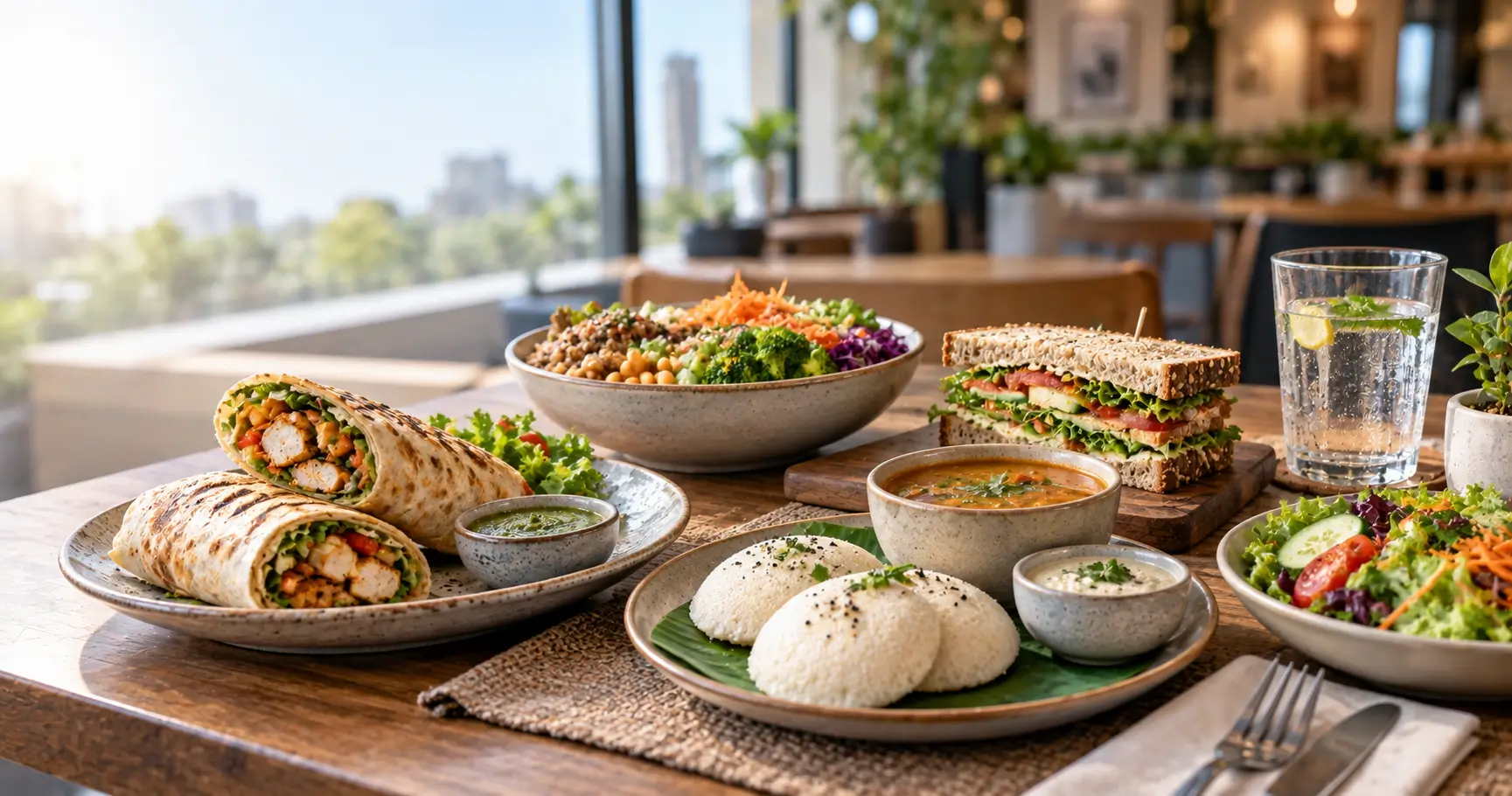

Fast food does not always have to mean a large burger, fries and a sugary drink. When you need a quick meal, you can make a better choice by looking for food that is freshly prepared, properly cooked and balanced with vegetables, protein and less added salt, sugar and unhealthy fat.
Short answer: Some of the better safe fast food choices include grilled chicken or paneer, vegetable wraps, idli, dosa, rice bowls with vegetables and protein, sandwiches with plenty of vegetables, and freshly prepared meals from hygienic outlets. The safest choice depends on both how the food is prepared and what is in the meal.
What Makes Fast Food a Safer Choice?
Food safety and healthy nutrition are not exactly the same thing. A meal can be nutritionally reasonable but still be unsafe if it has been handled poorly. Similarly, food can be hygienically prepared but contain excessive salt, sugar or saturated fat.
FSSAI recommends food businesses follow food-safety and hygiene practices, while its Hygiene Rating Scheme helps consumers make more informed choices about food-service establishments. The scheme covers restaurants, cafeterias, dhabas and other food-service businesses.
When eating outside, look for outlets that appear clean and well managed. Food should be handled properly, cooked thoroughly and served at an appropriate temperature. FSSAI’s food-safety guidance highlights basic principles such as keeping food preparation areas clean, separating raw and cooked foods, cooking thoroughly, maintaining safe temperatures and using safe water and raw materials.
Better Fast Food Options to Choose
Grilled chicken, grilled fish or grilled paneer can be better choices than deep-fried alternatives because grilling can reduce the need for large amounts of added fat. Pair them with vegetables, a modest portion of rice or a whole-grain option when available.
Vegetable and protein-filled wraps or sandwiches can also work well. Choose fillings such as grilled chicken, paneer, beans or vegetables, and ask for sauces or mayonnaise in smaller amounts. A meal with vegetables and a protein source is generally more balanced than one built mainly around refined carbohydrates and fried ingredients.
For Indian fast food, idli and dosa can be practical choices, particularly when they are freshly prepared and paired with sambar. Sambar can add pulses and vegetables to the meal. However, large portions of oily accompaniments or heavily fried sides can change the nutritional balance.
Rice bowls can also be a sensible option when they include vegetables and a protein source such as beans, dal, egg, chicken or paneer. The key is portion balance rather than assuming that every rice-based meal is automatically healthy.
Freshly prepared soups can work as another quick option, but check the ingredients where possible. Restaurant soups may contain significant amounts of salt, so a vegetable-based soup with a protein-rich side can be preferable to a very salty or creamy preparation.
For drinks, water is the simplest choice. Unsweetened tea or coffee can also be reasonable options depending on how much sugar or cream is added. WHO recommends limiting free sugars and keeping sodium intake below 2 grams per day, equivalent to less than 5 grams of salt for adults.
What to Limit When Ordering Fast Food
Deep-fried foods are best kept as occasional choices rather than everyday meals. This includes large servings of fries, fried chicken, heavily fried snacks and other foods that combine refined carbohydrates with substantial amounts of added fat.
You should also watch portions. A meal can become excessive even when individual ingredients do not seem particularly problematic. Choosing a smaller serving, sharing a side or skipping an unnecessary add-on can make a meaningful difference.
Sugary drinks are another easy source of excess sugar. Replacing a soft drink or sweetened beverage with water can improve the overall nutritional profile of the meal without requiring major changes to the food itself.
WHO recommends a varied diet based largely on vegetables, fruits, legumes, whole grains and other nutritious foods while limiting foods high in unhealthy fats, free sugars and sodium.
The most practical rule is simple: choose food that is freshly prepared, properly cooked, reasonably balanced and not dominated by fried ingredients, sugary drinks or very salty sauces.
Fast food can fit into a balanced lifestyle when it is treated as a convenient meal rather than the foundation of the diet. If you eat out regularly, focus on better choices most of the time and pay attention to both food hygiene and nutritional quality.
FAQ
1. What is the safest fast food to eat?
Freshly prepared, thoroughly cooked food from a clean and well-managed outlet is generally a safer choice. Grilled meals, freshly prepared wraps, idli, dosa and balanced rice meals can be practical options.
2. Is fast food healthy?
Some fast-food meals can fit into a healthy diet, but many are high in salt, sugar, saturated fat or calories. Choosing better ingredients and portions makes a difference.
3. Is grilled food better than fried food?
Grilled food often requires less added fat than deep-fried food, making it a useful alternative. However, the complete meal and preparation method still matter.
4. What should I drink with fast food?
Water is the simplest option. Unsweetened beverages can also be considered. Sugary soft drinks and other sweetened drinks are better limited.
5. How can I tell if a fast-food outlet is hygienic?
Look for clean preparation and dining areas, proper food handling and good overall hygiene. In India, FSSAI’s Hygiene Rating Scheme can also help consumers make informed choices at participating establishments.
Disclaimer
This article provides general nutrition and food-safety information. Individual dietary needs can vary, especially for people with medical conditions, allergies or specific nutritional requirements. Check current guidance from qualified health professionals when necessary.

[…] practical goal is not to find “perfect” food. It is to learn how to make better-quality choices most of the […]