
Losing weight does not require giving up Indian food, skipping meals or following an expensive diet plan. A balanced Indian diet that includes vegetables, pulses, whole grains, protein-rich foods and appropriate portions can support healthy weight management.
The most useful approach is to build eating habits that you can maintain over time. No single food automatically causes weight loss, and no particular meal can guarantee that you will lose a specific number of kilograms.
This guide explains what to eat, which foods to limit, how to plan everyday Indian meals and how to make sustainable changes without extreme dieting.
What is a healthy diet for weight loss?
A healthy weight-loss diet provides essential nutrients while helping you manage your overall energy intake.
When your body consistently uses more energy than it receives from food and drinks, stored energy is used and body weight may decrease. However, weight is also influenced by physical activity, sleep, medicines, health conditions, hormones, age and other individual factors.
The ICMR–National Institute of Nutrition’s Dietary Guidelines for Indians recommend a varied diet and healthy lifestyle practices to help prevent overweight and obesity.
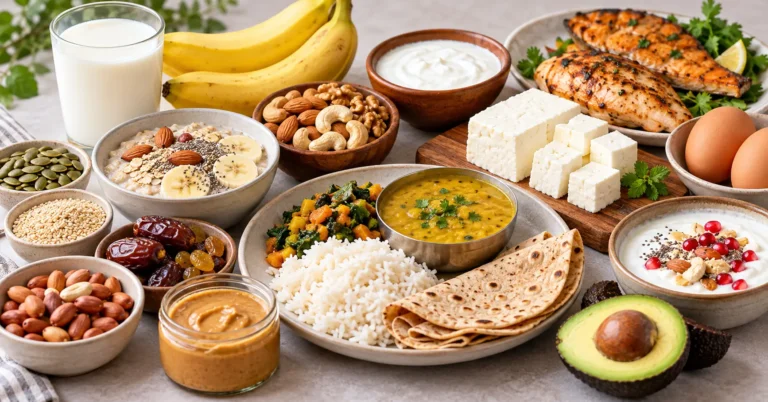
A practical Indian eating pattern can include:
- Vegetables and green leafy vegetables
- Whole grains and millets
- Dal, beans, chickpeas and other pulses
- Eggs, fish, chicken or other suitable protein sources
- Milk, curd or appropriate alternatives
- Whole fruits
- Nuts and seeds in suitable portions
The aim is not to eliminate an entire food group. It is to improve the overall quality and balance of your meals.
Best foods to include in an Indian weight-loss diet
There is no scientifically established list of foods that independently guarantee weight loss. However, many everyday foods can make balanced eating easier because they provide fibre, protein, vitamins, minerals or satisfying meal volume.
1. Vegetables
Vegetables are useful components of a balanced diet. Many provide fibre, water and important micronutrients.
Examples include:
- Spinach and other green leafy vegetables
- Cauliflower
- Cabbage
- Bhindi
- Lauki
- Tori
- Carrots
- Beans
- Tomatoes
- Cucumber
Try to include vegetables in lunch and dinner. Choose different colours and varieties throughout the week.
Steaming, boiling, roasting or cooking with a moderate amount of oil can help keep meals practical and balanced.
2. Pulses, dal and beans
Pulses provide protein, fibre and other nutrients. They are also affordable and widely available in India.
Useful choices include:
- Moong dal
- Masoor dal
- Chana dal
- Rajma
- Chole
- Lobia
- Whole moong
- Sprouted pulses
Dal can be part of a weight-management meal when the overall meal and portion sizes suit your needs.
For a more balanced plate, combine pulses with vegetables and a suitable portion of rice, roti or another grain.
3. Whole grains and millets
Carbohydrates are not automatically harmful for weight loss. They provide energy and can be part of a healthy diet.
Choose a variety of grains, such as:
- Whole-wheat roti
- Oats
- Brown rice
- Dalia
- Jowar
- Bajra
- Ragi
- Other whole grains and millets
Whole grains generally provide more fibre than highly refined grains.
You do not need to stop eating rice or roti. Instead, consider the portion, preparation method and foods served alongside them.
4. Protein-rich foods
Protein supports muscle maintenance and many normal body functions. Including protein-containing foods in meals can also help make meals more satisfying.
Vegetarian options include:
- Dal and beans
- Chickpeas
- Soybeans
- Tofu
- Paneer
- Milk and curd
- Nuts and seeds
Non-vegetarian options include:
- Eggs
- Fish
- Chicken
- Other suitable lean meat choices
The right amount depends on your age, body size, activity level and health needs. People with kidney disease or other conditions may require individual protein guidance.
5. Whole fruits
Whole fruits provide fibre, water and nutrients.
Examples include:
- Guava
- Apple
- Orange
- Papaya
- Watermelon
- Pear
- Seasonal Indian fruits
Fruit does not need to be avoided simply because it contains natural sugar.
Whole fruit is generally a better everyday choice than fruit juice because it retains more of the fruit’s fibre and is often more satisfying.
6. Curd and other suitable dairy foods
Plain curd, milk and other dairy foods can provide protein and calcium.
Choose products according to your nutritional needs, preferences and tolerance. Sweetened flavoured dairy products may contain added sugar, so check the label when comparing options.
7. Nuts and seeds
Nuts and seeds contain healthy fats and several nutrients.
Examples include:
- Almonds
- Walnuts
- Peanuts
- Flaxseeds
- Chia seeds
- Sesame seeds
They are nutritious but energy-dense. A suitable portion can be included without treating them as unlimited snack foods.
Foods and eating habits to limit
Weight management does not require declaring individual foods forbidden. However, regularly consuming large amounts of certain foods and drinks can make balanced eating more difficult.
Consider limiting:
Sugary drinks
Examples include:
- Soft drinks
- Sweetened packaged beverages
- Frequent sugary tea or coffee
- Energy drinks with added sugar
- Large amounts of sweetened juice
Water or unsweetened drinks can be practical alternatives.
Frequent deep-fried foods
Foods such as samosas, pakoras, puri and fried snacks can fit occasionally into a varied diet. Frequent large portions may increase overall energy intake.
Consider how often you eat them and whether they are replacing more nutrient-rich foods.
Highly processed snack foods
Biscuits, chips, namkeen, packaged sweets and similar foods may be high in salt, sugar or fat.
Read nutrition labels when available and pay attention to serving size.
Excessive added sugar
Frequent sweets, sweetened desserts and sugar added to drinks can contribute to excess energy intake.
You do not need to eliminate every traditional sweet. Portion awareness and frequency are more realistic than strict food rules.
Crash diets and extreme restriction
Avoid plans that encourage:
- Skipping most meals
- Eating only one type of food
- Detox drinks or slimming teas
- Severe calorie restriction without professional supervision
- Dehydration to reduce scale weight
- Unverified weight-loss supplements
Rapid weight-loss approaches can be unsafe and difficult to maintain.
How to build a balanced Indian meal
A simple meal framework can help you make better food choices without counting every calorie.
At lunch or dinner, consider including:
| Meal component | Everyday examples |
|---|---|
| Vegetables | Sabzi, salad or cooked vegetables |
| Protein-rich food | Dal, rajma, chole, eggs, fish, chicken or tofu |
| Grain or staple | Roti, rice, millet or another grain |
| Additional food | Curd, fruit or another suitable item, depending on the meal |
The exact proportions should be adjusted to your appetite, activity level, nutritional needs and health conditions.
ICMR–NIN’s dietary guidance emphasises variety across food groups rather than dependence on a single food.
A sample Indian day of eating
This is an illustrative meal pattern, not a personalised calorie prescription. Adjust portions to your needs.
| Time | Example meal |
|---|---|
| Breakfast | Vegetable poha with curd, or oats with milk and fruit |
| Mid-morning | A whole fruit, if hungry |
| Lunch | Roti or rice, dal, vegetable sabzi and curd |
| Evening | Roasted chana, a small portion of nuts or another suitable snack |
| Dinner | Roti or rice with vegetables and a protein-rich food such as dal, tofu, eggs or fish |
You can change the foods according to your region, budget, preferences and availability.
A Punjabi household, a South Indian household and a Bengali household may eat different staples. All can build balanced meals using locally familiar foods.
Practical food swaps for everyday life
Small changes can be easier to maintain than a completely new diet.
| Instead of making this a frequent habit | Consider this practical alternative |
|---|---|
| Sugary drinks every day | Water or an unsweetened drink |
| Frequent packaged snack foods | Fruit, roasted chana or another suitable snack |
| Large meals with very little vegetables | Add a vegetable or salad component |
| Repeatedly eating while distracted | Sit down and pay attention to the meal |
| Skipping meals and becoming extremely hungry | Plan regular meals that suit your routine |
| Following a strict short-term diet | Build a balanced eating pattern you can maintain |
These are general suggestions, not rules that every person must follow.
Do you need to stop eating rice or roti to lose weight?
No. Rice and roti can both be included in a balanced diet.
Weight management depends on the overall eating pattern, not the removal of one staple food.
You may find it useful to:
- Choose whole-grain options more often when practical.
- Include vegetables and protein-rich foods with your staple.
- Adjust portions to your activity and hunger.
- Avoid adding excessive oil, butter or ghee simply because a meal contains whole grains.
Carbohydrates are an important source of energy. Eliminating them completely is not necessary for most people.
How important is portion size?
Portion size can influence total energy intake, but it should not become a reason to eat too little.
A useful starting point is to serve a balanced meal, eat slowly and pay attention to hunger and fullness.
Avoid automatically taking repeated servings when you are already comfortably satisfied. At the same time, do not ignore hunger or use very small portions that leave you weak or excessively hungry.
People with high physical activity levels, pregnancy, certain medical conditions or other specific nutritional needs may require different portions.
Combine healthy eating with physical activity
Food choices are important, but weight management is not only about diet.
The World Health Organization recommends regular physical activity for adults, including aerobic activity and muscle-strengthening exercise.
Useful activities may include:
- Walking
- Cycling
- Swimming
- Yoga
- Strength training
- Other enjoyable forms of movement
Choose activities that match your fitness level and increase gradually.
Adequate sleep and stress management can also support healthy routines.
How long does it take to lose weight with a healthy diet?
There is no universal timeline.
Weight changes depend on your starting point, eating pattern, activity level, health conditions and consistency. Scale weight can also fluctuate because of water retention, digestion and other normal factors.
A sustainable approach is generally preferable to trying to lose weight as quickly as possible.
You can monitor progress through:
- Weight trends over time, if weighing is appropriate for you
- Changes in waist measurement, when useful
- Energy and physical function
- Consistency with balanced meals
- Improvements in activity and daily habits
Do not judge your progress by a single day’s weight.
When should you seek professional guidance?
A registered dietitian or qualified healthcare professional can help you develop an appropriate plan if you:
- Have diabetes or kidney disease
- Are pregnant or breastfeeding
- Have a history of an eating disorder
- Take medicines that affect blood glucose or body weight
- Have unexplained weight changes
- Need a diet for a specific medical condition
- Are considering a very restrictive diet
A personalised plan may be safer and more useful than following a generic online meal chart.
Frequently asked questions
What is the best Indian food for weight loss?
There is no single best food. Vegetables, pulses, whole grains, suitable protein sources and whole fruits can all contribute to a balanced eating pattern.
Can I eat rice while trying to lose weight?
Yes. Rice can be included in suitable portions alongside vegetables and protein-rich foods.
Is roti better than rice for weight loss?
Neither is automatically better for everyone. The type, portion, preparation and overall meal matter more than treating one staple as universally superior.
Which Indian breakfast is suitable for weight management?
Options such as vegetable poha, oats, idli with sambar, dal chilla or eggs with suitable accompaniments can fit into a balanced breakfast. Choose according to your nutritional needs and preferences.
Should I avoid fruit because it contains sugar?
No. Whole fruits provide fibre and nutrients. Limiting fruit juice and frequent sugary drinks is a different recommendation from avoiding whole fruit.
Can I lose weight without starving myself?
Yes. Sustainable weight management does not require starvation. A balanced eating pattern, appropriate portions, physical activity and consistency are more useful than extreme restriction.
The bottom line
A healthy Indian diet for weight loss does not need to be complicated or expensive.
Build meals around vegetables, pulses, whole grains, suitable protein foods and whole fruits. Limit frequent sugary drinks and highly processed snacks, pay attention to portions and remain physically active.
Most importantly, choose a way of eating that supports your health and fits your everyday life.