
Food quality is often reduced to a simple question: Does this food look fresh and healthy? But that is only part of the picture.
A high-quality food choice can involve several characteristics at once: food safety, nutritional value, degree of processing, freshness, storage and how the food fits into your overall diet. Food scientists and international food organizations treat quality as a broader concept than taste or appearance alone.
For Indian consumers, this distinction matters because a food can be nutritious but poorly stored, fresh-looking but contaminated, or packaged and processed without necessarily being nutritionally poor.
The practical goal is not to find “perfect” food. It is to learn how to make better-quality choices most of the time.
What is food quality?
Food quality refers to the collection of characteristics that determine a food’s value, acceptability and suitability for consumers.
These characteristics can include:
- safety
- nutritional composition
- taste
- aroma
- texture
- appearance
- freshness
- storage stability
- processing
- accurate product information
FAO describes food quality as a complex characteristic that includes safety, nutritional value and sensory properties such as appearance, colour, texture and taste.
That means “quality” is not the same as “expensive.”
A ₹200 food is not automatically higher quality than a ₹50 food. Similarly, a food marketed as “premium,” “natural” or “traditional” is not automatically healthier.
Food quality vs food safety
These terms overlap but are not identical.
Food safety is primarily about whether a food can cause harm because of biological, chemical or physical hazards.
Food quality is broader. It includes safety but also considers nutritional characteristics, freshness, sensory properties and other factors affecting suitability and acceptability.
For example, an apple with bruised skin may have lower sensory quality but still be safe to eat after appropriate inspection and preparation.
Conversely, a food can look perfectly normal but contain a contaminant that cannot be detected by sight or smell.
That is why appearance alone cannot prove food safety.
In India, FSSAI establishes science-based food standards and regulates food safety and standards across the food chain.
The 5 things that determine food quality
1. Safety comes first
Before thinking about whether a food is nutritious, the basic question is whether it is safe.
Food can become unsafe through:
- microbial contamination
- chemical contaminants
- physical contamination
- poor handling
- inappropriate storage
- adulteration
FSSAI’s food-testing system includes checks for microbiological hazards, pesticide residues, heavy metals, toxins, adulterants and nutritional or labelling information.
At home, practical food-safety habits include buying from reliable sources, checking packaging integrity, following storage instructions and avoiding foods that show obvious spoilage.
However, do not assume that a food is safe simply because it smells or looks normal. Some hazards cannot be detected by the senses.
2. Nutritional quality matters
A food can be safe but nutritionally poor.
For example, a sugary beverage may meet food-safety requirements but contribute relatively little nutritional value compared with foods such as vegetables, pulses, fruits, whole grains, nuts or appropriate protein sources.
WHO’s current healthy-diet guidance emphasizes adequacy, balance, moderation and diversity. It recommends a varied dietary pattern based on foods such as vegetables, fruits, pulses, whole grains and nuts, while limiting excessive free sugars, sodium and unhealthy fats.
ICMR-NIN’s Dietary Guidelines for Indians 2024 similarly emphasize dietary variety, vegetables and legumes, appropriate protein sources, moderation of fats, safe and clean foods, and minimizing high-fat, high-sugar, high-salt and ultra-processed foods.
So nutritional quality should be judged by what the food contributes—not simply by whether it contains a particular nutrient.
3. Processing matters, but “processed” does not mean “bad”
This is one of the most common misunderstandings about food quality.
Many foods are processed in some way.
Rice is cooked.
Wheat can be milled into flour.
Milk can be fermented into curd.
Vegetables can be frozen.
Pulses can be dried.
Processing can improve convenience, shelf life and, in some situations, safety.
The more useful question is:
What has processing done to the food?
ICMR-NIN’s 2024 dietary guidelines specifically advise minimizing high-fat, high-sugar, high-salt and ultra-processed foods and preferring fresh and minimally processed foods such as whole grains, millets, pulses, vegetables, fruits, nuts and seeds.
That does not mean every packaged food should be avoided.
Plain curd, frozen vegetables, unsweetened oats or a packaged whole-grain product can fit very differently into a diet from a sugary drink or highly processed snack.
4. Freshness and storage affect quality
Freshness is particularly important for foods that spoil easily.
Poor storage can affect:
- taste
- texture
- nutrient quality
- shelf life
- microbial safety
This is why storage instructions matter.
For packaged foods, check:
- expiry or use-by information where applicable
- package integrity
- storage instructions
- unusual swelling or leakage
- visible spoilage
- refrigeration requirements after opening
Do not rely only on smell or appearance when food-safety risk is possible.
5. Look at the whole diet, not one “perfect” food
Food quality becomes most meaningful when considered at the diet level.
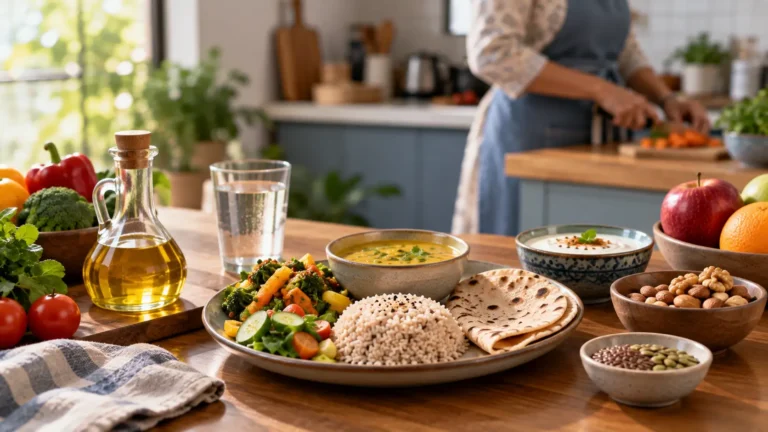
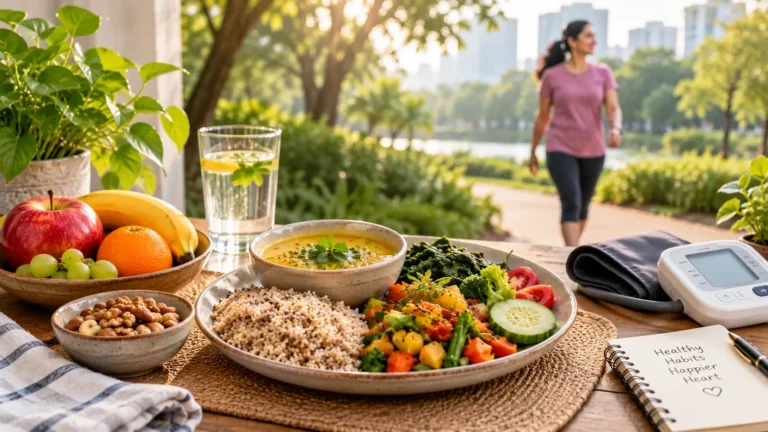
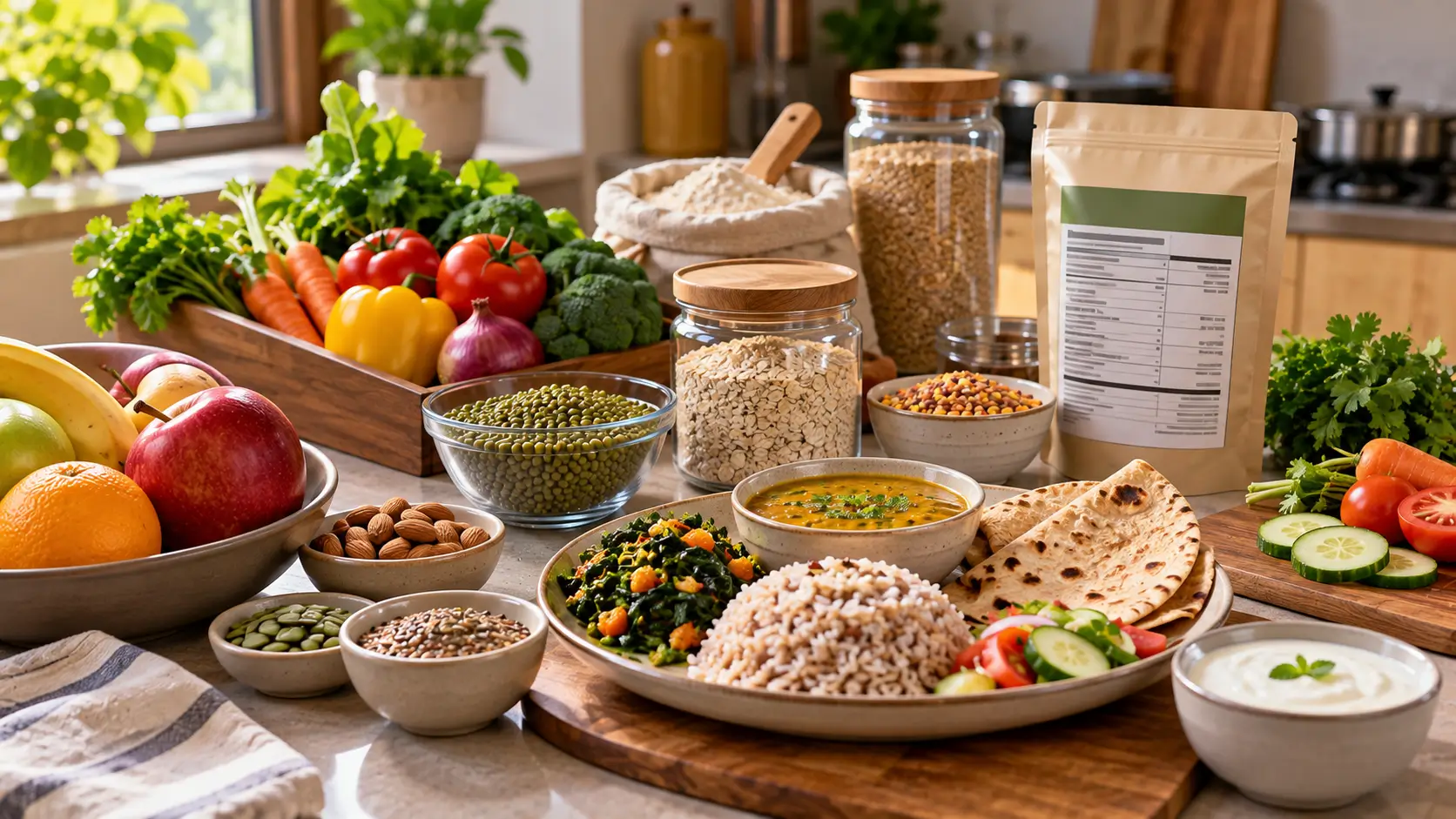
A meal containing dal, vegetables, roti or rice, curd and fruit may offer a different nutritional profile from a meal dominated by refined snacks and sugary beverages.
But you do not need to make every meal perfect.
WHO emphasizes dietary diversity, balance and moderation rather than one rigid formula.
That is a useful principle for Indian households because diets naturally vary across regions, cultures, budgets and preferences.
Is fresh food always better?
Not necessarily.
Fresh foods can be excellent choices, but frozen, dried, canned or otherwise processed foods can also provide nutritional value.
For example, frozen vegetables may be convenient and nutritionally useful when fresh vegetables are unavailable.
The better question is:
What is the food’s nutritional profile, how has it been processed, and how is it stored and prepared?
WHO explicitly notes that frozen and canned fruits and vegetables can fit a healthy diet when they do not contain excessive added sugars or sodium.
How to judge packaged food
When buying packaged foods in India, look beyond the front of the packet.
Check:
- Ingredient list
- Nutrition information
- Serving size
- Added sugar where declared
- Sodium/salt
- Fat profile
- Fibre where provided
- Allergen information
- Date and storage information
- Food-business and regulatory information
ICMR-NIN’s 2024 guidelines specifically include reading food-label information to make informed and healthier food choices.
FSSAI also provides consumer services for checking food information, reporting concerns and accessing food-safety resources.
What about food adulteration?
Adulteration is a food-quality and safety concern, but consumers should be careful about viral “home tests” that claim to identify every adulterant.
FSSAI provides consumer-oriented adulteration-awareness resources and simple demonstrations for certain common adulterants. These can be educational, but they should not be treated as a universal laboratory-quality test for food safety.
If you have a serious concern about a product, use the appropriate regulatory or laboratory route rather than relying on a social-media test.
FSSAI recognizes and notifies accredited food laboratories for food analysis.
Common food-quality mistakes
Mistake 1: Assuming expensive means healthier
Price is not a reliable measure of nutritional quality.
Mistake 2: Treating “natural” as a guarantee
Natural does not automatically mean safe, nutritious or appropriate.
Mistake 3: Avoiding every packaged food
Packaging and processing are not synonymous with poor nutrition.
Mistake 4: Judging food only by appearance
Some safety hazards are invisible.
Mistake 5: Focusing on one nutrient
A food’s overall nutritional profile and its role in the diet matter more than one isolated nutrient.
Mistake 6: Trying to eat “perfectly”
Overall dietary pattern matters more than whether every individual meal is ideal.
A simple food-quality checklist
Before choosing a food, ask:
Is it safe?
What nutrients does it provide?
How heavily is it processed?
How much added sugar, sodium or unhealthy fat does it contain?
How fresh is it and has it been stored correctly?
Does the label provide useful information?
Does it contribute something useful to my overall diet?
You do not need a complicated scoring system.
This checklist is enough to make many everyday choices more thoughtfully.
Practical takeaway
Food quality is not one characteristic.
For everyday nutrition, think about safety, nutritional value, processing, freshness and the overall dietary pattern.
For Indian households, that can mean regularly including foods such as dal, rajma, chana, vegetables, fruits, whole grains, nuts, seeds, curd, eggs, fish or other suitable protein sources, while keeping foods high in free sugars, excessive sodium and unhealthy fats from dominating the diet. WHO and ICMR-NIN both support dietary variety, balance and moderation.
The goal is not to find a perfect food.
It is to build a better-quality diet consistently.
FAQ
What is food quality?
Food quality is the collection of characteristics that determine a food’s safety, nutritional value, freshness, sensory properties and suitability for consumers.
Is food quality the same as food safety?
No. Food safety focuses primarily on preventing harm from hazards such as pathogens and contaminants, while food quality is broader and also includes nutritional and sensory characteristics.
Is processed food automatically low quality?
No. Processing ranges from simple methods such as freezing, milling and fermentation to extensive industrial processing. The nutritional composition and purpose of processing matter.
What makes a food nutritionally high quality?
A nutritionally high-quality food generally provides useful nutrients relative to its energy content and fits into a varied dietary pattern. Vegetables, fruits, pulses, whole grains, nuts, seeds and appropriate protein sources are examples of foods emphasized in healthy-diet guidance.
Is fresh food always healthier than frozen food?
No. Frozen foods can still be nutritious. WHO notes that frozen and canned fruits and vegetables can fit a healthy diet when they do not contain excessive added sugar or sodium.
How can I improve food quality in my diet?
Build meals around varied nutrient-dense foods, include vegetables and fruits regularly, use pulses and appropriate protein sources, choose whole grains where practical, and limit foods high in free sugars, sodium and unhealthy fats.
How can I check food quality in India?
For packaged food, read the ingredient and nutrition information, check storage and date information and use FSSAI’s consumer resources when you have safety or labelling concerns.
Can you tell if food is unsafe by looking at it?
Not always. Some microbial and chemical hazards cannot be reliably detected by appearance, smell or taste. Serious safety concerns may require appropriate testing.
MEDICAL DISCLAIMER
This article is for general nutrition, food-quality and food-safety education and does not replace individualized medical or dietary advice.
Nutritional needs vary with age, activity level, pregnancy, health conditions, allergies, medications and other factors. People with specific medical or nutritional needs should seek advice from an appropriately qualified healthcare professional or registered dietitian.
Food-safety concerns involving suspected contamination or serious illness should be handled through appropriate medical and regulatory channels rather than relying solely on home tests or online advice.