
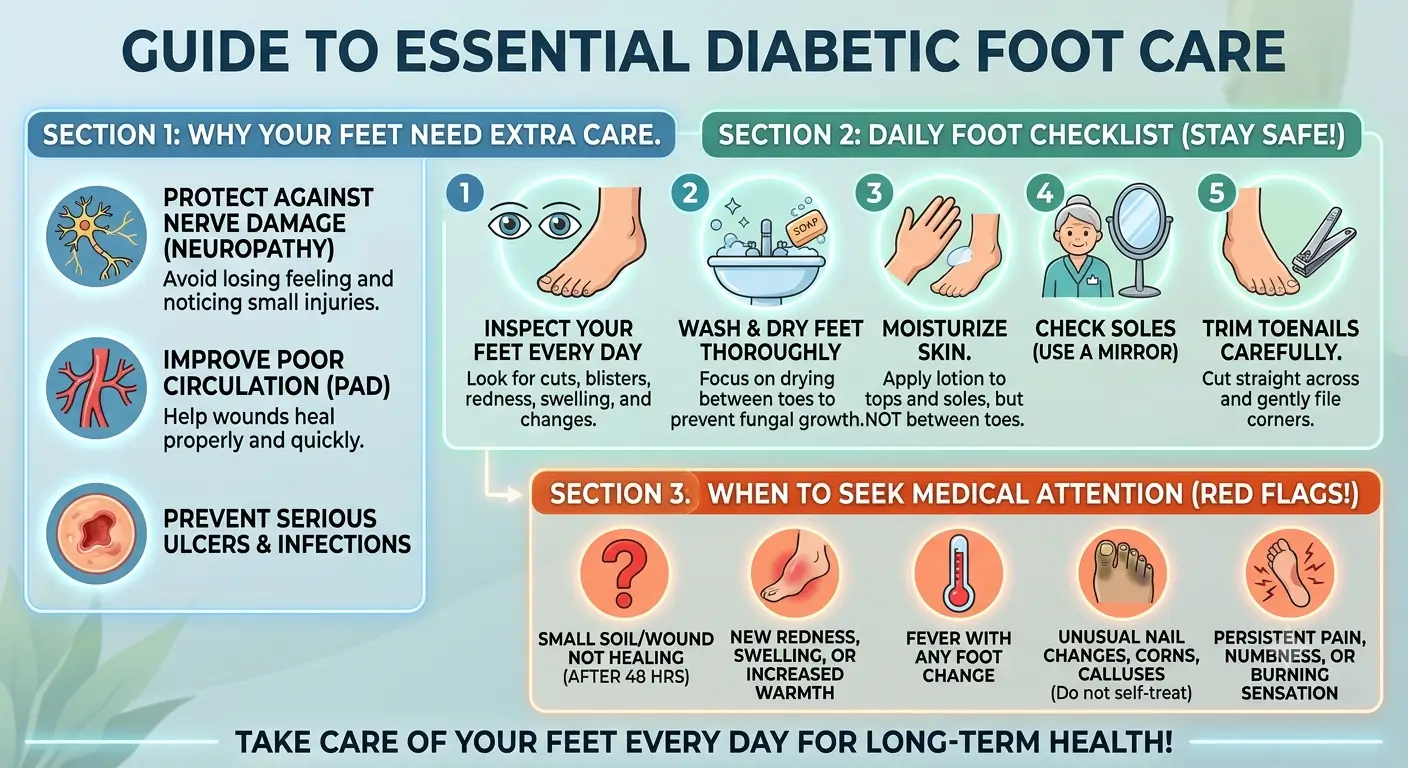

If you or a family member live with diabetes, you may have heard doctors emphasize the importance of foot care. High blood sugar level—commonly referred to in everyday language in India as “sugar” or “sugar diabetes”—can significantly affect the nerves and blood vessels supplying your legs and feet.
Understanding how high blood sugar influences foot health allows you to take simple, proactive daily steps to prevent serious complications like non-healing ulcers, nerve damage, and infections.
How High Blood Sugar Impacts Your Feet
Persistent high blood glucose damages your body’s vascular and nervous systems in two primary ways:
The “Silent Injury” Cycle
When nerve damage reduces pain sensation, a small pebble inside a shoe, a tight strap, or a tiny blister can go completely unnoticed. Combined with poor blood circulation, your body struggles to repair the tissue damage naturally, turning a minor abrasion into a slow-healing diabetic foot ulcer.
Early Warning Signs to Watch For
Check your feet daily under bright light. If you notice any of the following signs, do not ignore them:
- Sensory Changes: Constant tingling, “pins and needles,” or a sensation like walking on cotton wool.
- Visual Changes: Skin discoloration (redness, darkening, or pale skin), cracks around the heels, or calluses.
- Temperature Differences: One foot feeling significantly colder or hotter than the other.
- Structural Changes: Swelling, changes in the shape of toes (claw toes), or unexplained fungal nail infections.
- Sores or Discharge: Any open break in the skin, oozing fluid, or unusual odor—even if it does not hurt.
Daily Foot Care Guide tailored for Indian Lifestyles
1. Wash and Dry Daily (Avoid Prolonged Soaking)
Wash your feet daily with mild soap and room-temperature water. Test the water temperature using your elbow or wrist—never your toes, as reduced nerve sensitivity can prevent you from feeling scalding water.
- Crucial Step: Thoroughly dry between your toes using a soft towel. Trapped moisture inside toes promotes fungal growth in humid Indian weather.
2. Moisturize Wisely
Apply a plain moisturizing cream or coconut oil to the tops and soles of your feet to prevent dry skin and heel cracks.
- Exception: Do not apply cream or oil between your toes, as excessive moisture breeds infections.
3. Never Walk Barefoot
In many Indian households and places of worship, walking barefoot is common practice. However, if you have diabetes, walking barefoot greatly increases the risk of step-on injuries (splinters, sharp objects, hot floor tiles).
- Wear comfortable, cushioned indoor slippers or footwear inside the house at all times.
4. Choose the Right Footwear
- Inspect the inside of your shoes for small stones, torn linings, or rough seams before putting them on.
- Buy shoes in the evening when feet are naturally slightly swollen to ensure a proper fit.
- Avoid narrow, pointed-toe shoes or flat, unpadded plastic flip-flops (chappals). Opt for soft, well-fitted, protective therapeutic footwear if recommended by your physician.
5. Trim Nails Straight Across
Trim toe nails straight across using a clean fingernail clipper. Use a nail file to gently smooth sharp corners. Avoid digging into the corners of your toenails to prevent ingrown nails, and never use razor blades or sharp knives to cut corns or calluses yourself.
Common Myths vs. Evidence-Informed Reality
- Myth:“If my foot injury doesn’t hurt, it isn’t serious.”
- Fact: Loss of pain sensation (neuropathy) is precisely why small wounds become dangerous. An unpainful ulcer can be deeply infected without causing pain.
- Myth:“Soaking feet in hot salt water cures diabetic foot numbness.”
- Fact: Soaking feet in hot water can cause severe thermal burns due to reduced heat sensitivity, and salt soaks worsen dry, cracking skin.
- Myth:“Applying herbal pastes or homemade remedies will heal foot ulcers quickly.”
- Fact: Applying non-sterile pastes or powders directly onto broken skin introduces bacteria and delays evidence-based medical treatment.
When to See a Doctor Immediately
Seek prompt medical evaluation from a physician, endocrinologist, or foot care specialist if you experience any of the following emergency red flags:
- An open cut, sore, blister, or ulcer that does not heal within 24 to 48 hours.
- Increasing redness, swelling, warmth, or red streaks spreading up the foot/leg.
- Pus, discharge, or a foul odor originating from a wound or nail bed.
- Blackened or darkened skin around a wound or toe (a sign of tissue death or gangrene).
- High fever or chills accompanied by a foot injury or redness.
Summary Checklist for Daily Foot Health
- [ ] Inspect soles, heels, and between toes under clear light.
- [ ] Wash feet with mild soap; dry thoroughly between toes.
- [ ] Apply lotion to tops and bottoms of feet (never between toes).
- [ ] Wear clean, seamless cotton socks and cushioned footwear indoors and outdoors.
- [ ] Shake out shoes before putting them on.
- [ ] Maintain target blood sugar levels ($HbA1c$, fasting, and postprandial) as advised by your healthcare provider.
Frequently Asked Questions (FAQ)
Q1: Why do my feet burn or tingle more at night if I have high sugar?
A: Diabetic neuropathy often feels worse at night because quiet environments increase awareness of nerve signals. Additionally, blood pressure drops and changes in nerve micro-circulation during sleep can intensify tingling or burning sensations.
Q2: Is it safe to use a pumice stone or metal scraper on calluses if I have diabetes?
A: No. Scrapers, pumice stones, and corn plasters can breach the fragile outer layer of skin, causing wounds that lead to serious infections. Always consult a podiatrist or trained medical professional to handle calluses safely.
Q3: Can diabetic foot nerve damage be reversed?
A: While existing severe structural nerve damage is generally irreversible, strict control of blood sugar levels, regular exercise, and medical management can significantly halt progression and relieve pain symptoms.