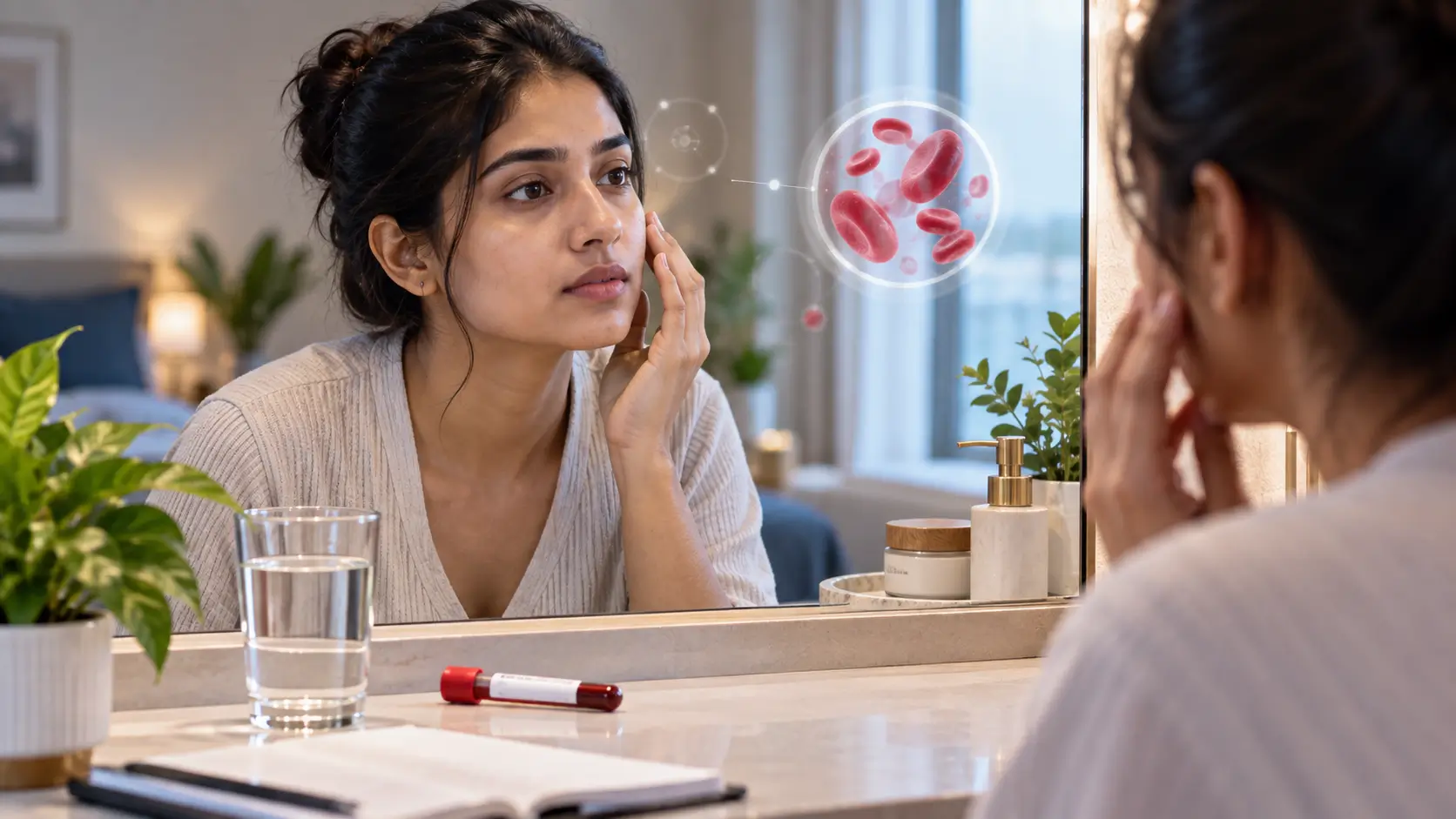

If your skin suddenly looks pale, dull or tired and social media tells you that you have “ferritin face,” pause before ordering an iron supplement.
“Ferritin face” is not a recognized medical diagnosis. It is a social-media term used to describe a tired-looking appearance that some people associate with low iron stores. There is a real medical issue underneath the trend: iron deficiency can affect the body, and iron-deficiency anaemia can make skin look paler than usual. But a person’s face cannot reliably tell you whether their ferritin is low.
Ferritin is a protein that stores iron, and ferritin testing is used as part of the assessment of iron status. The important question is therefore not “Do I look like I have ferritin face?” but “Could I have iron deficiency, and how can it be properly assessed?”
Quick Answer
“Ferritin face” is a viral wellness term, not a medical condition.
Low iron can contribute to symptoms such as fatigue and, when iron deficiency progresses to anaemia, paler-than-usual skin. Hair shedding can also be associated with low iron in some people. However, dark circles, dull skin, dry skin or a tired-looking face have many possible causes and cannot diagnose iron deficiency on their own.
If iron deficiency is suspected, medical assessment and appropriate blood testing are more useful than judging your appearance in a mirror.
What Is “Ferritin Face”?
“Ferritin face” is a recent social-media phrase associated with features such as:
- pale or washed-out-looking skin
- a tired-looking complexion
- dark circles under the eyes
- dry or dull-looking skin
- cracked lips
- increased hair shedding
The term has spread through TikTok and other wellness-focused social media, with users sometimes posting before-and-after photographs and linking changes in their appearance to ferritin levels. Recent reporting from Vogue India, The Guardian, The Washington Post and The Conversation has highlighted the trend.
But there is an important medical limitation:
There is no established clinical definition of “ferritin face.”
A doctor does not diagnose iron deficiency by looking at someone’s face.
Is Ferritin Face a Medical Diagnosis?
No.
Ferritin is real. Iron deficiency is real. Iron-deficiency anaemia is real.
“Ferritin face” is not a recognized medical diagnosis.
That distinction matters because a social-media label can make several nonspecific symptoms appear to have one obvious cause.
For example, dark circles can be influenced by genetics, pigmentation, skin thickness, allergies, sleep, ageing and other factors. A dull-looking complexion can occur with dehydration, illness, stress, inadequate sleep or nutritional problems.
Similarly, hair shedding has many possible causes.
So even if a person has one or several features associated with “ferritin face,” those features do not establish low ferritin.
What Does Ferritin Actually Measure?
Ferritin is a protein that stores iron in the body.
A ferritin blood test therefore provides information about the body’s iron stores. WHO recommends ferritin as an important indicator for assessing iron status.
Iron is essential for producing haemoglobin, the protein in red blood cells that carries oxygen from the lungs to tissues.
Iron deficiency develops in stages. Iron stores can become depleted before haemoglobin falls enough to produce iron-deficiency anaemia. NIH notes that ferritin can fall during early iron depletion, before iron-deficiency anaemia develops.
This is one reason ferritin can be clinically useful.
But ferritin is not interpreted in isolation. Inflammation and some illnesses can raise ferritin, potentially making the result harder to interpret. A healthcare professional may therefore consider ferritin alongside other blood tests and the clinical history.
Can Low Iron Affect Your Appearance?
Yes—but this needs to be described carefully.
Pale skin
Paler-than-usual skin is a recognized symptom of iron-deficiency anaemia. The NHS lists pallor alongside tiredness, shortness of breath, palpitations and headaches among possible symptoms.
This provides part of the medical basis behind the online trend.
However, there is a major difference between:
“Iron-deficiency anaemia can cause pale skin.”
and:
“You can look at your face and know that your ferritin is low.”
The first is medically established.
The second is not.
Hair shedding
Iron deficiency has also been investigated in relation to hair loss.
A systematic review and meta-analysis found lower ferritin levels among women with nonscarring alopecia, although the researchers noted that the evidence base has limitations and the relationship is not simple. Earlier dermatology reviews have also described conflicting evidence regarding iron deficiency and hair loss.
So it is reasonable for a clinician evaluating unexplained hair shedding to consider iron status in appropriate circumstances.
It is not reasonable to conclude that hair loss automatically means low ferritin.
Dark circles and dull skin
This is where social-media claims become much less certain.
Dark circles and a tired-looking complexion are common and nonspecific. Current evidence does not establish a characteristic “ferritin face” pattern that can be diagnosed visually.
The safest conclusion is:
Low iron can have physical effects, but your face is not a ferritin test.
Can You Have Low Ferritin Without Anaemia?
Yes.
Iron deficiency can progress from depleted iron stores to reduced iron availability for red-blood-cell production and eventually iron-deficiency anaemia.
This means someone may have depleted iron stores before their haemoglobin meets the criteria for anaemia. NIH describes this progression and notes that ferritin can identify depleted iron stores earlier in the process.
That is another reason not to use “I don’t look pale” as proof that your iron status is normal.
Conversely, looking pale does not prove that your ferritin is low.
Both directions matter.
How Is Iron Deficiency Checked?
If a healthcare professional suspects iron deficiency, they may consider blood tests such as:
- complete blood count (CBC)
- haemoglobin
- ferritin
- serum iron and other iron measurements when appropriate
- additional tests depending on the person’s symptoms and medical history
There is no single universal testing panel that is appropriate for every person.
Ferritin is particularly useful for assessing iron stores, but inflammation can complicate interpretation. WHO specifically addresses the use of ferritin for assessing iron status, while NIH notes that healthcare providers may use multiple measurements.
Who May Be More Likely to Develop Iron Deficiency?
Risk varies from person to person.
Groups that can have increased risk include:
- people with heavy menstrual bleeding
- pregnant people
- young children and adolescents during periods of rapid growth
- frequent blood donors
- people with gastrointestinal conditions that interfere with absorption
- people with ongoing blood loss
- people whose diets provide insufficient iron
NIH identifies several of these groups as having increased risk of inadequate iron intake or iron deficiency.
In India, ICMR-NIN’s 2024 Dietary Guidelines emphasize iron-rich foods and note that plant sources such as pulses, green leafy vegetables and dry fruits contain iron. The guidelines also explain that vitamin-C-rich foods can improve absorption of iron from plant foods.
What Can You Do About Your Iron Intake?
If you simply want to support a nutritionally adequate diet, include varied sources of iron.
Indian meals can provide iron through foods such as:
- dal
- rajma
- chana
- other pulses and legumes
- green leafy vegetables
- nuts and seeds
- meat
- fish
- poultry
- fortified foods where available
ICMR-NIN notes that vitamin-C-rich foods such as guava, citrus fruits and other sources can improve absorption of plant-based iron. Its 2024 guidelines also advise avoiding tea around meals because tea can reduce dietary iron absorption.
But eating more iron-rich food is not the same thing as treating confirmed iron deficiency.
If deficiency is significant, dietary changes alone may not be enough, and the underlying reason for the deficiency may need to be identified.
Should You Take Iron Supplements Because of “Ferritin Face”?
No—not based on appearance alone.
Iron is an essential nutrient, but taking iron when you do not need it is not automatically harmless.
The correct response to symptoms such as persistent fatigue, unusual paleness or unexplained hair shedding is assessment, not self-diagnosis.
If testing confirms iron deficiency, a healthcare professional can determine whether dietary changes, oral iron or another treatment approach is appropriate.
The cause also matters.
Iron deficiency can result from inadequate intake, impaired absorption, increased requirements or blood loss. Simply increasing iron without investigating an ongoing source of blood loss may miss the underlying problem.
What “Ferritin Face” Gets Wrong
The trend contains a small kernel of truth but turns it into a much larger claim.
Claim: “Pale skin means low ferritin.”
Reality: Pale skin can occur with iron-deficiency anaemia, but many other conditions can cause pallor.
Claim: “Dark circles mean your ferritin is low.”
Reality: Dark circles have many possible causes and are not a diagnostic test for iron deficiency.
Claim: “Hair loss proves low ferritin.”
Reality: Iron status can be relevant when evaluating hair loss, but hair shedding has many possible causes.
Claim: “You can diagnose ferritin face from a selfie.”
Reality: A photograph cannot measure ferritin or establish iron deficiency.
Claim: “You should take iron if you have ferritin face.”
Reality: Iron supplementation should be based on an appropriate clinical assessment rather than a social-media symptom checklist.
When Should You Talk to a Healthcare Professional?
Consider medical evaluation if you have persistent or unexplained:
- fatigue
- weakness
- shortness of breath
- paler-than-usual skin
- dizziness
- heart palpitations
- significant hair shedding
- heavy menstrual bleeding
- unusual cravings for non-food substances such as ice
- other symptoms that concern you
The NHS lists fatigue, breathlessness, paler skin and palpitations among symptoms of iron-deficiency anaemia and advises medical assessment when iron-deficiency anaemia is suspected.
If you have heavy bleeding, black or bloody stools, chest pain, severe breathlessness, fainting or rapidly worsening symptoms, seek prompt medical attention rather than trying to correct the problem through diet or supplements alone.
The Bottom Line
“Ferritin face” is a catchy social-media term, not a medical diagnosis.
There is a genuine connection between iron status and health. Iron deficiency can develop before anaemia, and iron-deficiency anaemia can cause paler-than-usual skin. Iron status may also be relevant when evaluating some forms of hair loss.
But your face cannot tell you whether your ferritin is low.
If you are concerned about fatigue, paleness, hair shedding or other possible symptoms, the useful next step is not to diagnose yourself from TikTok or a mirror. Discuss the symptoms with a healthcare professional and ask whether appropriate blood testing is needed.
The most important lesson from the “ferritin face” trend is therefore simple:
Look after your iron status—but don’t diagnose it from your face.
A blood test and clinical context are far more informative than a viral beauty checklist.
FAQ
What is ferritin face?
“Ferritin face” is a social-media term for a tired, pale or dull-looking facial appearance that users associate with low iron stores. It is not a recognized medical diagnosis.
Is ferritin face real?
The term itself is not a medical diagnosis. Iron deficiency is real and can cause symptoms including pallor when anaemia develops, but there is not enough evidence to use a specific facial appearance as a diagnostic sign of low ferritin.
Can low ferritin cause dark circles?
There is not enough evidence to say that dark circles specifically diagnose low ferritin. Dark circles have many possible causes.
Can iron deficiency cause pale skin?
Yes. Paler-than-usual skin is a recognized symptom of iron-deficiency anaemia.
Can low ferritin cause hair loss?
Low iron stores may be associated with some forms of hair loss, but the relationship is not definitive and hair shedding has many causes.
Can you have low ferritin without anaemia?
Yes. Iron stores can become depleted before haemoglobin falls enough for iron-deficiency anaemia to develop.
Should I take iron supplements if I think I have ferritin face?
No. Facial appearance alone cannot establish iron deficiency. Discuss symptoms and appropriate blood testing with a healthcare professional before starting iron supplementation.
What foods provide iron in an Indian diet?
Indian diets can provide iron through pulses such as dal, rajma and chana, green leafy vegetables, nuts and seeds, as well as meat, fish and poultry. ICMR-NIN also notes that vitamin-C-rich foods can improve absorption of plant-based iron.
MEDICAL DISCLAIMER
This article is for general health education and does not diagnose or treat iron deficiency, anaemia or any other condition.
“Ferritin face” is a social-media term rather than a recognized medical diagnosis. Facial appearance alone cannot determine ferritin status. If you have persistent fatigue, unusual paleness, significant hair shedding, heavy menstrual bleeding or other concerning symptoms, discuss them with a qualified healthcare professional.
Do not start high-dose iron supplements solely because of a social-media trend or facial appearance. Iron treatment should be appropriate to the individual’s clinical situation.