
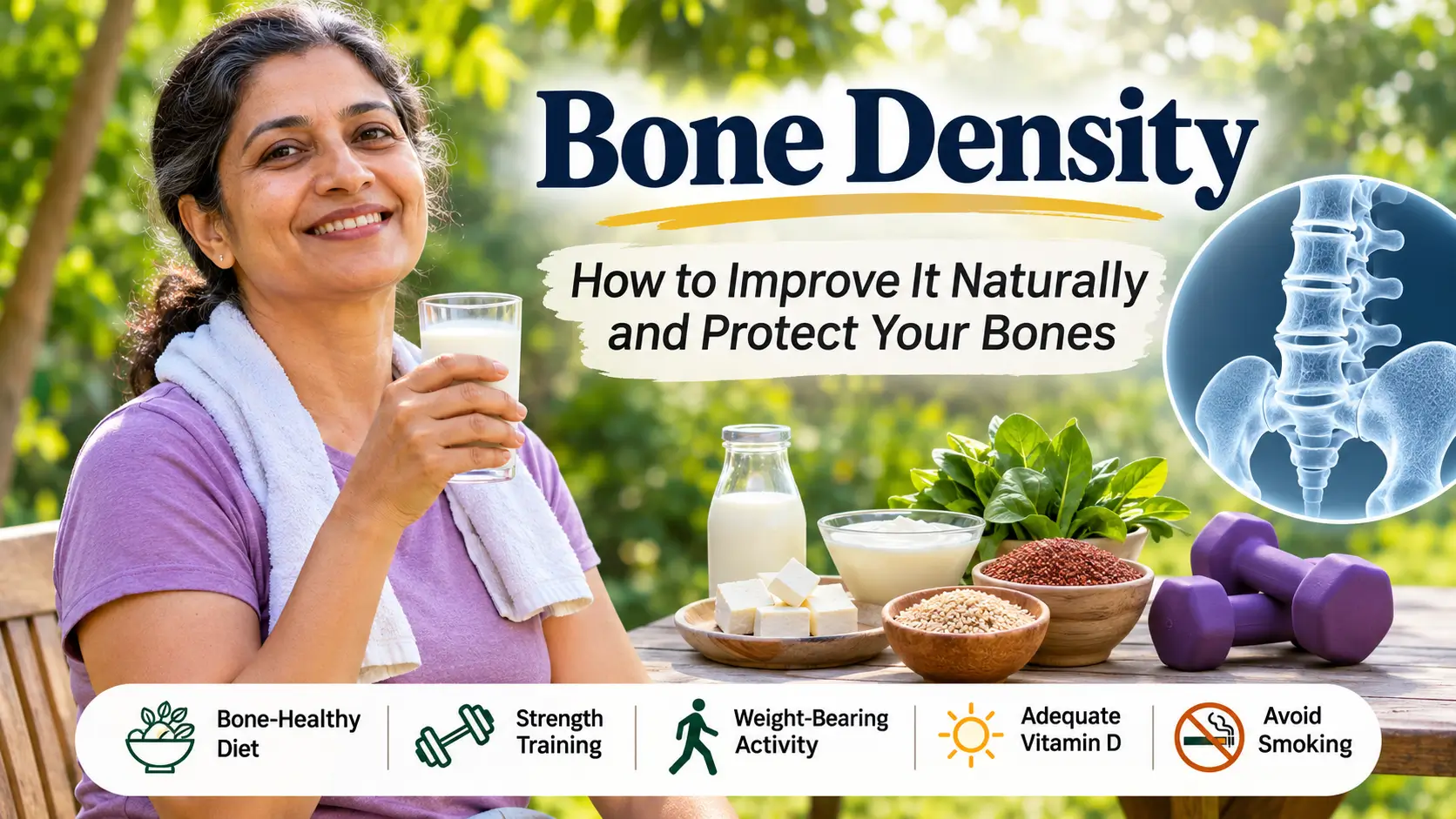

Bone density is an important indicator of skeletal health. It describes the amount of mineral matter packed into a specific area of bone. Healthy bones provide structural support, protect internal organs and help the body move.
However, bone density can gradually decrease with age, hormonal changes, nutritional deficiencies, certain medical conditions and lifestyle factors. When bones become weaker, the risk of fractures can increase.
The good news is that several everyday habits can support bone health. Eating a balanced diet, getting enough calcium and vitamin D, performing appropriate strength-training exercises and avoiding smoking can all contribute to healthier bones.
But improving bone density is not simply about drinking more milk or taking calcium tablets. Understanding your individual risk, maintaining muscle strength and getting the right medical assessment when necessary are equally important.
This guide explains what bone density means, why it decreases, how it is measured and what Indian adults can do to protect their bones.
Medical information note: This article is for general educational purposes. It does not replace individual medical assessment or treatment.
What Is Bone Density?
Bone density, also called bone mineral density (BMD), refers to the amount of minerals, mainly calcium and phosphate, present in a measured area of bone.
These minerals contribute to the strength and structure of bones.
Throughout life, bones undergo a continuous process called bone remodelling. Old bone tissue is broken down and replaced with new tissue.
When bone formation and breakdown remain appropriately balanced, skeletal health can be maintained. However, when bone breakdown exceeds bone formation over time, bone density may decline.
Bone density is particularly important because lower bone mineral density is associated with an increased risk of fractures.
Nevertheless, bone strength is influenced by more than density alone. Bone structure, age, muscle strength, balance, previous fractures and the likelihood of falling also matter.
Why Is Bone Density Important?
Bones are living tissues that perform several essential functions.
They:
- Support the body’s structure.
- Protect organs such as the brain, heart and lungs.
- Help muscles produce movement.
- Store minerals, particularly calcium and phosphorus.
- Contain bone marrow, which produces blood cells.
Maintaining healthy bone density is important throughout life, not only during old age.
Low bone density can increase the likelihood of osteoporosis and fractures. A fracture involving the hip or spine can seriously affect mobility, independence and quality of life.
What Causes Low Bone Density?
Bone density can decrease for several reasons. Some are associated with ageing, while others may be influenced by diet, lifestyle or underlying medical conditions.
1. Ageing
Bone remodelling changes as people grow older.
Bone breakdown can gradually exceed bone formation, contributing to a reduction in bone density.
The risk becomes more important with advancing age.
2. Menopause and Hormonal Changes
Oestrogen plays an important role in maintaining bone health.
After menopause, oestrogen levels decrease, which can accelerate bone loss in women.
Women who experience early menopause or premature ovarian insufficiency may require earlier assessment of their bone health.
Other hormonal disorders can also affect bone metabolism.
3. Inadequate Calcium Intake
Calcium is a major structural component of bones.
When dietary calcium intake is consistently inadequate, the body can draw on calcium stored in the skeleton to maintain normal blood calcium levels.
Over time, inadequate calcium intake may contribute to poor bone health.
4. Vitamin D Deficiency
Vitamin D helps the body absorb calcium from the intestine.
Insufficient vitamin D can affect calcium absorption and bone mineralisation.
Although India receives substantial sunlight, people can still have inadequate vitamin D status because of indoor lifestyles, clothing, environmental conditions and limited dietary sources.
5. Physical Inactivity
Bones respond to mechanical loading.
Regular weight-bearing activity and resistance exercise help maintain bone and muscle strength.
A largely sedentary lifestyle can contribute to weaker muscles and poorer skeletal health.
6. Smoking and Excessive Alcohol Consumption
Smoking is associated with poorer bone health and an increased risk of fractures.
Excessive alcohol consumption can also adversely affect bone metabolism and increase the likelihood of falls.
Avoiding smoking and limiting alcohol are sensible components of bone-health prevention.
7. Low Body Weight and Poor Nutrition
Being underweight can be associated with lower bone mass and a greater risk of fractures.
Insufficient energy, protein and essential nutrients can also affect bone and muscle health.
8. Certain Medical Conditions and Medicines
Some health conditions can contribute to bone loss, including:
- Hyperthyroidism.
- Hyperparathyroidism.
- Rheumatoid arthritis.
- Coeliac disease and other conditions affecting nutrient absorption.
- Certain chronic kidney and liver disorders.
- Some hormonal disorders.
Long-term use of certain medicines, particularly glucocorticoid steroids, can also increase osteoporosis risk.
People taking long-term steroid medication should discuss bone-health monitoring with their doctor. They should not stop prescribed medication independently.
What Are the Signs of Low Bone Density?
One important fact about low bone density is that it usually does not cause noticeable symptoms during its early stages.
A person can have osteoporosis without experiencing pain or obvious physical changes.
In some cases, the first indication is a fracture following a minor fall or relatively small injury.
Possible warning signs of established osteoporosis or spinal fractures include:
- Persistent or unexplained back pain.
- Loss of height over time.
- A gradually hunched or rounded upper back.
- A fracture following a minor fall.
These symptoms do not independently confirm osteoporosis. Back pain and postural changes have several possible causes and require appropriate assessment.
If you have experienced a fracture after a minor injury, consult a healthcare professional about possible underlying bone weakness.
How Is Bone Density Measured?
The most established method for measuring bone mineral density at the hip and spine is a DXA scan, also known as a DEXA scan.
DXA stands for dual-energy X-ray absorptiometry.
What Happens During a DXA Scan?
During this examination, a scanning machine uses low-dose X-rays to measure bone mineral density.
The test commonly examines:
- The lumbar spine.
- The hip, including the femoral neck.
It is generally a quick, non-invasive examination.
A healthcare professional interprets the results alongside the person’s age, medical history and fracture risk.
Understanding Bone Density T-Scores
For postmenopausal women and men aged 50 or older, bone density reports commonly use a T-score.
| T-score | Classification |
|---|---|
| -1.0 or above | Normal bone density |
| Below -1.0 but above -2.5 | Low bone mass (osteopenia) |
| -2.5 or below | Osteoporosis |
These categories follow the established densitometric classification.
Importantly, a T-score is not a complete measurement of someone’s fracture risk. Previous fractures, age, medical conditions and other clinical factors must also be considered.
For younger adults, including premenopausal women and men under 50, Z-scores are generally preferred for interpretation.
A Z-score compares bone density with that of people of a similar age and sex. A Z-score of -2.0 or lower is described as below the expected range for age.
Do not interpret a scan result independently or begin treatment based only on an online explanation.
How to Improve and Maintain Bone Density Naturally
There is no single food, exercise or supplement that guarantees an increase in bone density.
However, a combination of adequate nutrition, appropriate physical activity and healthy lifestyle habits can support skeletal health.
The following strategies are practical starting points.
1. Include Calcium-Rich Foods in Your Diet
Calcium is essential for maintaining bone structure.
Indian diets offer several sources of calcium, including dairy products, pulses, nuts and selected green leafy vegetables.
Useful options include:
- Milk.
- Curd and yoghurt.
- Paneer.
- Ragi (finger millet).
- Sesame seeds (til).
- Soybeans and calcium-set tofu.
- Chickpeas and other pulses.
- Selected green leafy vegetables.
- Small fish eaten with their edible bones.
The calcium content and absorption of these foods vary.
For example, some green leafy vegetables contain compounds that reduce calcium absorption. Therefore, eating a variety of calcium-containing foods is more practical than relying on a single ingredient.
People who avoid dairy can consider fortified foods and suitable plant-based calcium sources.
2. Maintain Adequate Vitamin D
Vitamin D helps the body absorb calcium and supports normal bone mineralisation.
Potential sources include:
- Sensible outdoor sunlight exposure.
- Fatty fish.
- Egg yolks.
- UV-exposed mushrooms.
- Vitamin-D-fortified foods.
The amount of vitamin D produced through sunlight varies with location, season, skin pigmentation, clothing and other factors.
There is no universal sunlight duration that guarantees adequate vitamin D for everyone.
If you have a diagnosed deficiency or a medical condition affecting vitamin D metabolism, follow a clinician-guided treatment plan.
Avoid taking repeated high-dose vitamin D products without medical advice.
For further information, read our guide: Best Source of Vitamin D: Sunlight, Foods, Fortified Foods or Supplements?
3. Perform Regular Strength Training
Resistance exercise is useful for maintaining muscle strength and supporting bone health.
Examples include:
- Squats.
- Wall push-ups.
- Resistance-band exercises.
- Step-ups.
- Light weight training.
- Supported lunges, where appropriate.
Start with an appropriate level of difficulty and gradually increase resistance.
Adults should generally include muscle-strengthening activity involving major muscle groups on at least two days per week, adjusted to their health and physical ability.
People with diagnosed osteoporosis, previous spinal fractures or significant fracture risk should obtain professional guidance before starting unfamiliar exercises.
4. Include Weight-Bearing Physical Activity
Weight-bearing activities involve supporting your body weight while moving.
Examples include:
- Walking.
- Stair climbing.
- Dancing.
- Hiking.
- Appropriate jogging.
These activities can support bone and muscle health.
Walking is a convenient starting point for many adults, although walking alone may not provide sufficient stimulus to improve bone density in every individual.
People with established osteoporosis or a history of fragility fractures should choose activities according to their clinical condition.
5. Eat Enough Protein
Protein supports muscle maintenance and contributes to the structure of bone tissue.
Useful Indian dietary sources include:
- Dal.
- Chickpeas.
- Rajma.
- Soybeans.
- Milk and curd.
- Paneer.
- Eggs.
- Fish.
- Chicken.
- Nuts and seeds.
Adequate protein intake becomes particularly important with ageing because maintaining muscle strength can help support mobility and reduce fall risk.
People with kidney disease or other conditions requiring dietary protein restrictions should seek individual nutritional advice.
6. Maintain a Healthy Body Weight
Being underweight can be associated with reduced bone mass and increased fracture risk.
Maintaining a healthy weight through balanced nutrition and appropriate physical activity supports overall musculoskeletal health.
Avoid extreme dieting, prolonged nutritional restriction or rapid weight-loss programmes.
7. Avoid Smoking
Smoking is an established risk factor for poor skeletal health.
Quitting smoking is a worthwhile step towards improving overall health and reducing avoidable risks.
8. Limit Alcohol Consumption
Excessive alcohol intake can adversely affect bone health and increase fall risk.
Avoiding excessive consumption is an important part of fracture prevention.
9. Focus on Balance and Fall Prevention
Strong bones matter, but preventing falls is also essential.
Balance exercises can help improve stability and mobility.
Practical precautions include:
- Keep walking areas free from clutter.
- Use adequate lighting at home.
- Wear appropriate footwear.
- Install handrails where necessary.
- Address vision problems.
- Review medicines that may cause dizziness with a healthcare professional.
Older adults and people with previous fractures may benefit from supervised balance and strength programmes.
Best Indian Foods for Bone Health
A balanced Indian diet can provide several nutrients involved in maintaining bone health.
| Food | Potential nutritional contribution |
|---|---|
| Milk | Calcium and protein |
| Curd | Calcium and protein |
| Ragi | Calcium |
| Sesame seeds | Calcium and other minerals |
| Paneer | Calcium and protein |
| Soybeans | Protein and minerals |
| Chickpeas | Protein and minerals |
| Green leafy vegetables | Calcium and other micronutrients |
| Fish with edible bones | Calcium and protein |
| Eggs | Protein and several micronutrients |
Food composition varies according to variety, preparation and portion size.
No single food can prevent osteoporosis or reverse established bone loss.
The ICMR-NIN Dietary Guidelines for Indians (2024) recommend a varied, balanced diet rather than depending on one food group.
Does Walking Increase Bone Density?
Walking is a useful weight-bearing activity that supports general fitness, mobility and muscle function.
However, its effect on bone density depends on factors such as walking intensity, frequency, age, existing bone health and the amount of mechanical loading.
For people with normal bone health, brisk walking can be a sensible part of an active lifestyle.
For people with low bone density, resistance training and other appropriately selected weight-bearing exercises may provide additional benefits.
Walking should therefore be considered one component of a broader bone-health programme rather than a guaranteed treatment for osteoporosis.
Do Calcium and Vitamin D Supplements Improve Bone Density?
Calcium and vitamin D supplements may be appropriate for people who cannot meet their nutritional requirements through food or who have a diagnosed deficiency or specific medical indication.
However, supplements should not automatically be recommended to everyone.
Taking excessive calcium can cause problems, including constipation and, in susceptible individuals, an increased risk of kidney stones.
Excessive vitamin D supplementation can cause high blood calcium levels and potentially serious complications.
A healthcare professional can help determine whether supplementation is necessary, which preparation is suitable and how much is appropriate.
Supplements also cannot replace prescribed osteoporosis treatment when medical treatment is indicated.
Who Should Consider a Bone Density Test?
A bone density test may be appropriate for people with particular age-related or clinical risk factors.
The International Society for Clinical Densitometry identifies several groups for BMD testing, including:
- Women aged 65 and older.
- Men aged 70 and older.
- Younger postmenopausal women with relevant risk factors.
- Men under 70 with risk factors for low bone mass.
- Adults who have experienced a fragility fracture.
- People with medical conditions associated with bone loss.
- People taking medicines associated with bone loss.
The Indian Menopause Society’s 2026 menopause guidelines also support targeted osteoporosis case-finding rather than indiscriminate population-wide DXA screening in India.
Screening decisions should be individualised. The appropriate age and timing can differ according to medical history and local clinical guidance.
Can Bone Density Improve After 40?
Yes, bone health can still be supported after 40.
However, the extent to which bone density improves depends on several factors, including baseline bone density, hormonal status, nutrition, age, underlying conditions and treatment.
Appropriate exercise and nutritional changes can support bone health and help maintain strength.
People with osteoporosis may also require medical treatment to reduce fracture risk.
The goal should not be to promise that everyone can restore their bone density to a particular level naturally. It should be to reduce avoidable bone loss, maintain function and manage fracture risk.
When Should You Consult a Doctor?
Consider a medical assessment if you:
- Experience a fracture following a minor fall.
- Have persistent or unexplained back pain.
- Notice progressive height loss.
- Have undergone early menopause.
- Have a family history of hip fracture.
- Have been taking long-term steroid medication.
- Have a condition that affects calcium or vitamin D absorption.
- Have received an abnormal bone density report.
Seek urgent medical assessment after a significant fall or injury, especially if you experience severe pain, inability to stand or bear weight, or suspected fracture.
A doctor may recommend DXA testing, relevant blood investigations or other assessments depending on your symptoms and risk factors.
Frequently Asked Questions About Bone Density
1. What is a normal bone density score?
For postmenopausal women and men aged 50 or older, a DXA T-score of -1.0 or above is classified as normal bone density under the standard densitometric classification.
2. How can I improve bone density naturally?
Eating calcium-rich foods, maintaining adequate vitamin D, performing appropriate resistance and weight-bearing exercise, avoiding smoking and maintaining adequate nutrition can support bone health.
3. Which Indian foods are good for bone health?
Milk, curd, paneer, ragi, sesame seeds, pulses, soy products, selected green leafy vegetables and fish with edible bones can contribute nutrients important for bone health.
4. Does milk increase bone density?
Milk provides calcium and protein, both of which contribute to normal bone health. However, drinking milk alone does not guarantee an increase in bone density or prevent osteoporosis.
5. Can walking improve bone density?
Walking is a weight-bearing activity that supports physical fitness and bone health. However, its effect on bone density varies, and it may need to be combined with resistance exercise.
6. What is the best exercise for bone density?
Appropriately selected resistance training and weight-bearing exercise can support bone health. The safest programme depends on age, fitness, fracture history and existing bone conditions.
7. Can low bone density be reversed?
Bone density can sometimes improve with appropriate interventions, but the results vary. People with osteoporosis may require medical treatment in addition to lifestyle changes.
8. Is osteoporosis painful?
Osteoporosis itself usually does not cause pain. Pain can develop when a fracture occurs, particularly in the spine, hip or other bones.
9. At what age should bone density be checked?
Testing depends on age and individual risk. International guidance commonly recommends testing women aged 65 or older and men aged 70 or older, with earlier assessment for people with relevant risk factors. Indian clinical decisions should also consider local guidelines.
10. Are calcium supplements necessary for everyone?
No. People who obtain sufficient calcium through their diet may not need supplements. Supplementation should be based on nutritional intake, medical needs and professional advice.
Final Takeaway
Bone density is an important part of long-term health, but protecting your bones requires more than taking calcium tablets or drinking milk.
A balanced diet, adequate vitamin D, regular strength training, suitable weight-bearing activity and avoiding smoking can all support healthy bones.
Just as importantly, people with osteoporosis risk factors or a history of fragility fractures should not rely exclusively on home remedies or exercise routines.
A properly interpreted bone density assessment and individualised medical advice can help identify problems early and guide appropriate care.
Healthy bones are built and protected through consistent habits, informed decisions and timely medical attention.