
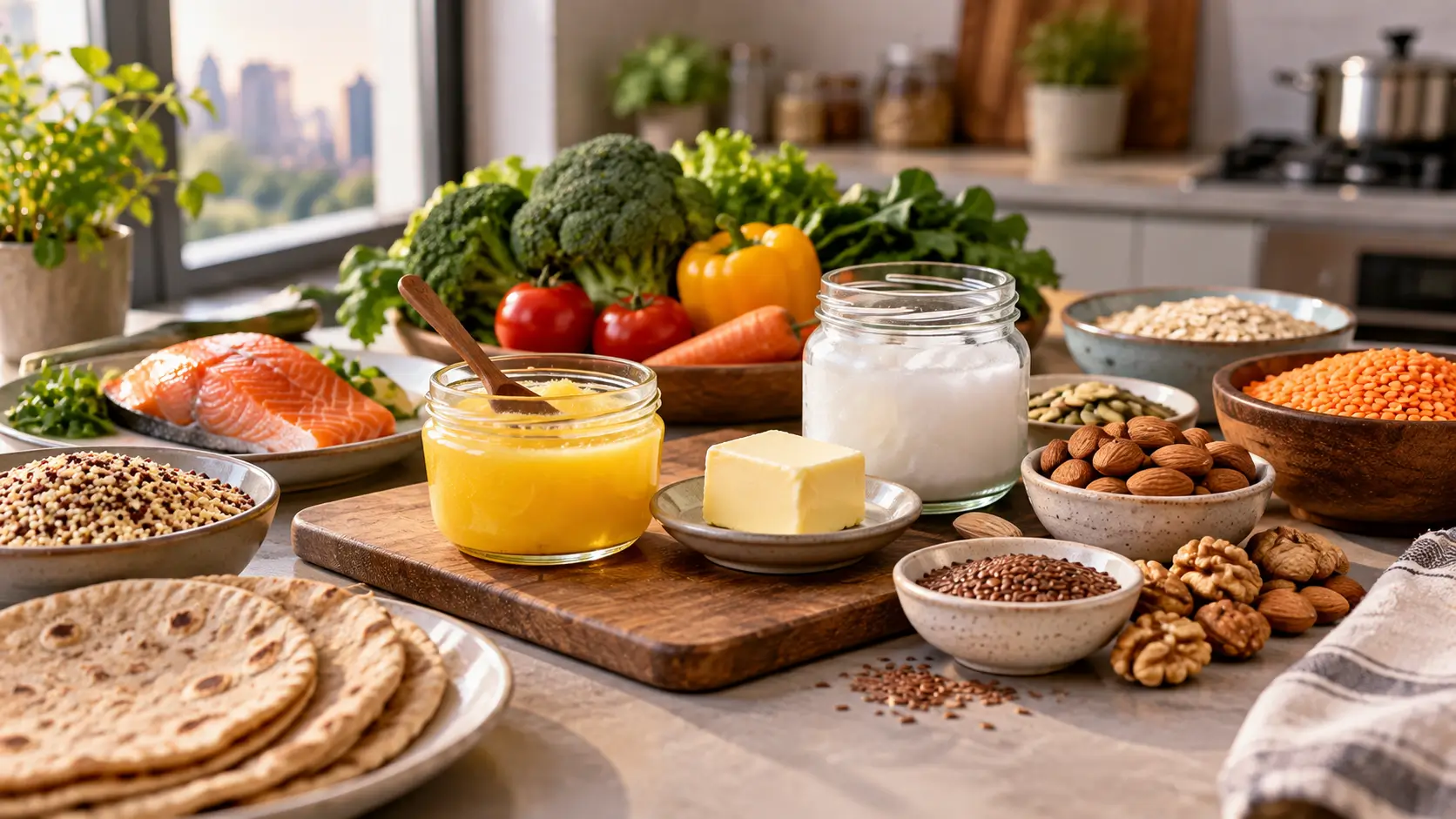

Saturated fat is a type of dietary fat found in foods including ghee, butter, full-fat dairy, fatty meats, coconut oil and palm oil. It is not necessary to eliminate all foods containing saturated fat, but consistently high intake is something health authorities recommend limiting. The main reason is its effect on blood lipids, particularly LDL cholesterol, alongside the broader quality of the diet.
The most useful way to think about saturated fat is not simply “good” or “bad.” The amount you consume and what replaces it both matter. WHO recommends reducing saturated fat to no more than 10% of total energy intake and replacing it with unsaturated fats or carbohydrates from naturally fibre-rich foods such as whole grains, vegetables, fruits and pulses.
For Indian diets, this means looking at the overall pattern of ghee, butter, full-fat dairy, fatty meats, coconut or palm oil, fried foods and sweets rather than blaming one individual food.
Quick Answer
Saturated fat is one of several types of fat in food. It is common in animal fats and some tropical oils. Eating too much can raise LDL cholesterol, which is an important cardiovascular risk factor.
WHO recommends keeping saturated fat below 10% of daily energy intake. On a 2,000-calorie diet, that works out to roughly 22 grams of saturated fat per day. This is a general population guideline, not a personalised target.
If you reduce saturated fat, the replacement matters. Swapping butter or ghee for foods rich in unsaturated fats, such as nuts, seeds and appropriate plant oils, generally fits heart-healthy dietary guidance better than simply replacing the calories with refined carbohydrates.
What Is Saturated Fat?
Saturated fats are fatty acids whose carbon chains contain no double bonds. They are found naturally in many foods, and most foods contain a mixture of different fatty acids.
Common sources include:
- ghee and butter
- cream and full-fat dairy
- cheese
- fatty cuts of meat
- some processed meats
- coconut oil
- palm oil
- many fried and baked foods
ICMR-NIN’s 2024 Dietary Guidelines explain that dietary fats include saturated, monounsaturated and polyunsaturated fatty acids and recommend using oils and fats in moderation. The guidelines also note that high saturated-fat intake increases cardiovascular risk.
Importantly, fat itself is not something the body can simply do without. Dietary fat contributes energy and helps with physiological functions. Essential fatty acids such as linoleic acid and alpha-linolenic acid must come from food. Saturated fatty acids, in contrast, can be synthesized by the body.
Why Does Saturated Fat Matter?
The strongest practical concern is its effect on blood cholesterol.
Saturated fat can increase LDL cholesterol, often referred to as “bad” cholesterol. Higher LDL cholesterol is associated with greater cardiovascular risk.
This does not mean that eating one serving of paneer, a small amount of ghee or an occasional dessert will suddenly cause heart disease. Cardiovascular risk develops through multiple interacting factors, including overall diet, blood pressure, smoking, physical activity, diabetes, genetics and blood lipid levels.
That is why dietary advice should focus on the overall eating pattern, not fear surrounding one nutrient.
How Much Saturated Fat Should You Eat?
WHO recommends that adults and children reduce saturated fat to 10% or less of total energy intake, with a recommendation to replace it with healthier alternatives.
For someone eating approximately 2,000 calories per day:
10% of 2,000 calories = 200 calories
Because fat provides about 9 calories per gram:
200 ÷ 9 ≈ 22 grams of saturated fat
This is only a mathematical example based on the WHO percentage. Individual energy needs vary considerably, so the number should not be treated as a universal personal prescription.
The American Heart Association’s 2026 dietary guidance similarly emphasizes dietary patterns that favor unsaturated fats instead of saturated fat and notes that heart-healthy dietary patterns are generally consistent with keeping saturated fat below 10% of energy.
Which Indian Foods Can Contribute Saturated Fat?
Some common sources can add substantial saturated fat when consumed frequently or in large quantities.
Ghee and butter
Ghee and butter are concentrated sources of saturated fat. They can be used in cooking or as part of a meal, but using large amounts routinely can make it harder to stay within recommended saturated-fat intake.
The practical question is therefore not “Is ghee toxic?” It is:
How much ghee are you using, how often, and what else does your diet contain?
Full-fat dairy and paneer
Milk, cheese, paneer, cream and other dairy products can contribute saturated fat. Lower-fat options can help people who need to reduce saturated fat while still wanting dairy foods.
Coconut oil
Coconut oil is often promoted as a uniquely healthy cooking oil. However, it is high in saturated fat, and WHO specifically lists coconut oil among the major saturated-fat sources.
That does not make coconut oil poisonous. It means it should not automatically be classified as a low-saturated-fat alternative to unsaturated plant oils.
Palm oil and vanaspati
Palm oil contains substantial saturated fat. Vanaspati can also be a concern because partially hydrogenated fats have historically been an important source of industrial trans fats.
Trans fats are a separate issue and should be minimized; WHO recommends keeping trans-fat intake below 1% of energy and avoiding industrially produced trans fats.
What Should Replace Saturated Fat?
This may be the most important part of the discussion.
If you reduce saturated fat, do not simply replace it with biscuits, refined flour products, sugary foods or other refined carbohydrates.
Better options can include:
- nuts and seeds
- fish
- pulses and legumes
- appropriate plant oils
- vegetables
- whole grains
- other foods rich in unsaturated fats or dietary fibre
WHO recommends replacing saturated fat with polyunsaturated fats, plant-derived monounsaturated fats, or carbohydrates from foods containing naturally occurring fibre such as whole grains, vegetables, fruits and pulses.
This is consistent with evidence showing that the replacement nutrient influences cardiovascular outcomes.
What Does the Research Say About Heart Disease?
The broad scientific picture supports limiting excessive saturated fat, but the evidence is more nuanced than some headlines suggest.
A Cochrane review of 15 trials involving more than 56,000 participants found that reducing saturated fat was associated with a 17% reduction in cardiovascular disease events, with benefits particularly apparent when saturated fat was replaced with polyunsaturated fat or certain carbohydrate sources. The review rated the overall evidence as moderate quality.
However, newer evidence illustrates why the replacement question matters.
A 2025 systematic review and meta-analysis of 17 randomized trials involving 66,337 participants found relatively small or uncertain effects of saturated-fat reduction on mortality overall, while finding more meaningful evidence for some cardiovascular outcomes among higher-risk groups, particularly when saturated fat was replaced with polyunsaturated fat.
Another systematic review found that replacing saturated fat with polyunsaturated fat generally provides more favourable cardiovascular effects than replacing it with refined carbohydrates.
So the responsible conclusion is not “saturated fat causes every heart problem.” It is that reducing excessive saturated fat and replacing it with nutritionally preferable foods is supported by major dietary guidance and a substantial body of evidence.
Practical Ways to Reduce Excess Saturated Fat
You do not need to redesign your entire diet overnight.
Try a few realistic changes:
- Measure cooking fat rather than pouring freely.
This can make total intake easier to control. - Use smaller amounts of ghee or butter.
You do not necessarily need to eliminate them. - Choose unsaturated plant oils more often.
Different oils have different fatty-acid profiles, so variety can be useful. - Include nuts and seeds regularly.
They provide unsaturated fats and other nutrients. - Choose pulses frequently.
Dal, chana, rajma and other legumes can provide protein and fibre without being major sources of saturated fat. - Limit frequent deep-fried and heavily processed foods.
These foods can contribute substantial amounts of fat, energy, salt and/or sugar. - Look at the whole meal.
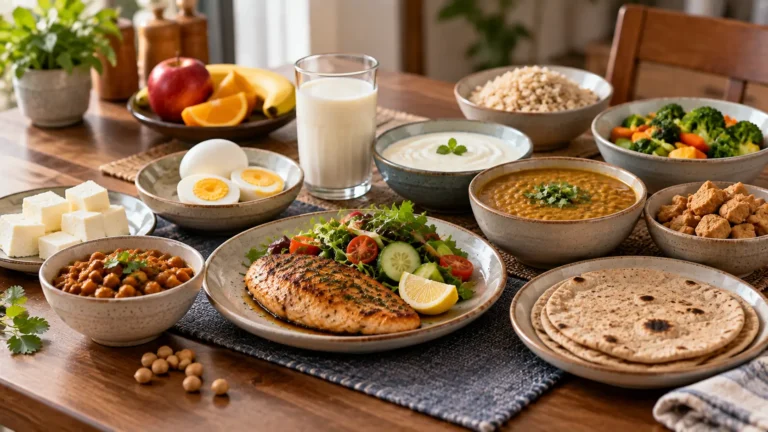
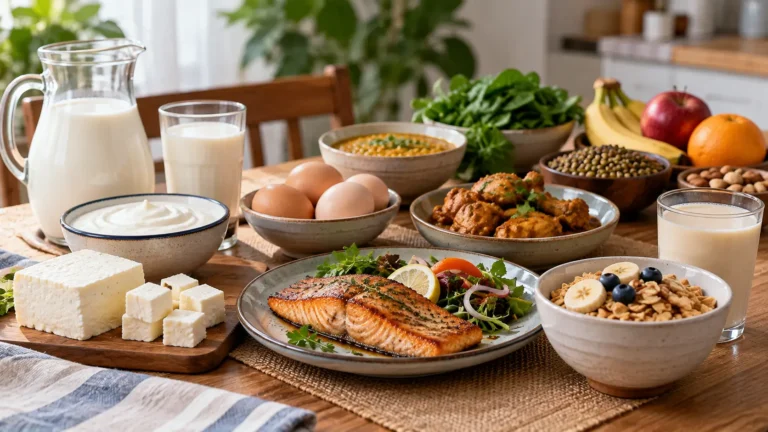
A diet based mainly on vegetables, fruits, pulses, whole grains, nuts, seeds and appropriate protein sources is more meaningful than focusing on one nutrient in isolation.
Common Myths About Saturated Fat
Myth: You must eliminate saturated fat completely.
Fact: Major guidelines recommend limiting saturated fat, not eliminating every food that contains it.
Myth: Natural saturated fat is automatically healthy.
Fact: Being natural does not determine whether a fat is beneficial. Ghee and coconut oil are natural foods, but both contribute substantial saturated fat.
Myth: Replacing saturated fat with any carbohydrate is healthy.
Fact: The quality of the replacement matters. Refined carbohydrates are not equivalent to whole grains, vegetables, fruits or pulses.
Myth: Dietary fat should be avoided.
Fact: Fat is an essential part of a healthy diet. The type and overall amount matter.
When Should You Get Personalised Advice?
General dietary guidance may not be enough if you have conditions such as high LDL cholesterol, established cardiovascular disease, diabetes, kidney disease or other health concerns that affect dietary needs.
A doctor or qualified dietitian can help interpret your overall diet, blood tests, medications and individual risk factors.
Do not make medication changes based on dietary information alone.
Practical Takeaway
Saturated fat is not something that needs to be feared or completely eliminated. But regularly consuming large amounts can make it harder to follow heart-healthy dietary guidance and can raise LDL cholesterol.
For most adults, the practical goal is moderation: keep saturated fat below the recommended proportion of total energy and, when reducing it, replace it with foods rich in unsaturated fats or naturally occurring dietary fibre.
For an Indian diet, that can mean using less ghee or butter, being mindful of coconut and palm oils, choosing nuts, seeds, pulses and appropriate plant oils more often, and reducing frequent consumption of heavily fried or highly processed foods.
The bigger picture matters more than any single ingredient.
FAQ
Is saturated fat bad for you?
High intake of saturated fat can raise LDL cholesterol, and major health organizations recommend limiting it. The overall effect on cardiovascular health also depends on what replaces the saturated fat.
How much saturated fat should you eat per day?
WHO recommends that saturated fat provide no more than 10% of total daily energy intake. On a 2,000-calorie diet, this is approximately 22 grams per day. Individual needs vary.
Is ghee high in saturated fat?
Yes. Ghee is a concentrated source of saturated fat, so using large quantities regularly can substantially increase saturated-fat intake.
Is coconut oil high in saturated fat?
Yes. Coconut oil is high in saturated fat. WHO lists coconut oil among foods/oils that contribute saturated fat and recommends replacing saturated fat with unsaturated fats where appropriate.
Should you completely avoid saturated fat?
No. Major guidelines recommend limiting saturated fat rather than eliminating every food containing it.
What should replace saturated fat?
Good replacements include foods rich in polyunsaturated or plant-based monounsaturated fats, such as nuts, seeds and suitable plant oils, as well as fibre-rich foods including whole grains, vegetables, fruits and pulses.
Does saturated fat increase LDL cholesterol?
Yes. Saturated fat can increase LDL cholesterol, which is an important cardiovascular risk factor.
Is saturated fat worse than sugar?
There is no simple universal comparison. The health effect depends on the type and amount of food, the overall dietary pattern and what nutrient replaces the saturated fat. Replacing saturated fat with refined carbohydrates is not considered equivalent to replacing it with unsaturated fats or fibre-rich foods.
MEDICAL DISCLAIMER
This article is for general educational and informational purposes and does not replace individualized medical or dietary advice. Nutritional needs vary with age, health status, medications, allergies, pregnancy, activity level and other factors. If you have high cholesterol, cardiovascular disease, diabetes, kidney disease or another medical condition requiring dietary management, discuss your diet with an appropriately qualified healthcare professional or registered dietitian.


[…] term unsaturated refers to the chemical structure of the fatty acid. Unlike saturated fatty acids, unsaturated fatty acids contain one or more double […]