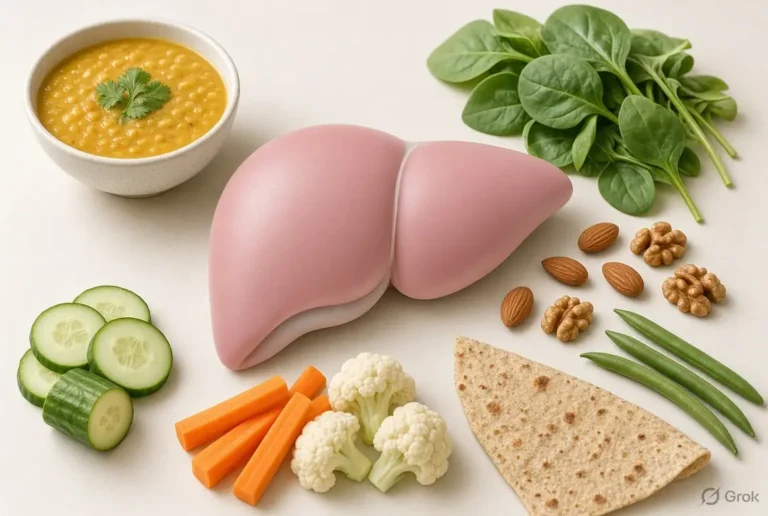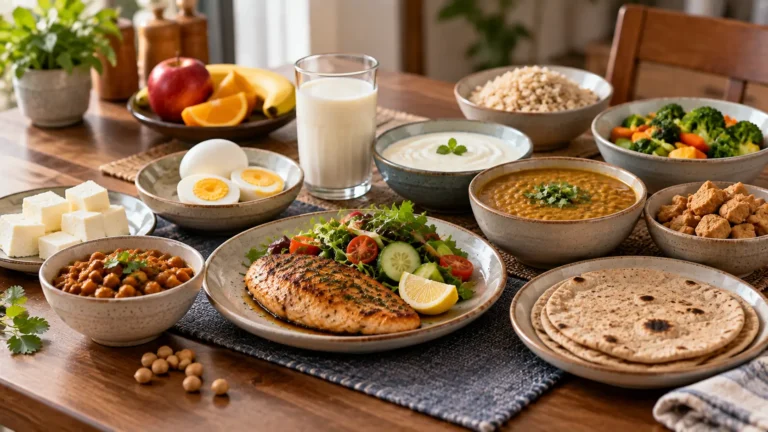
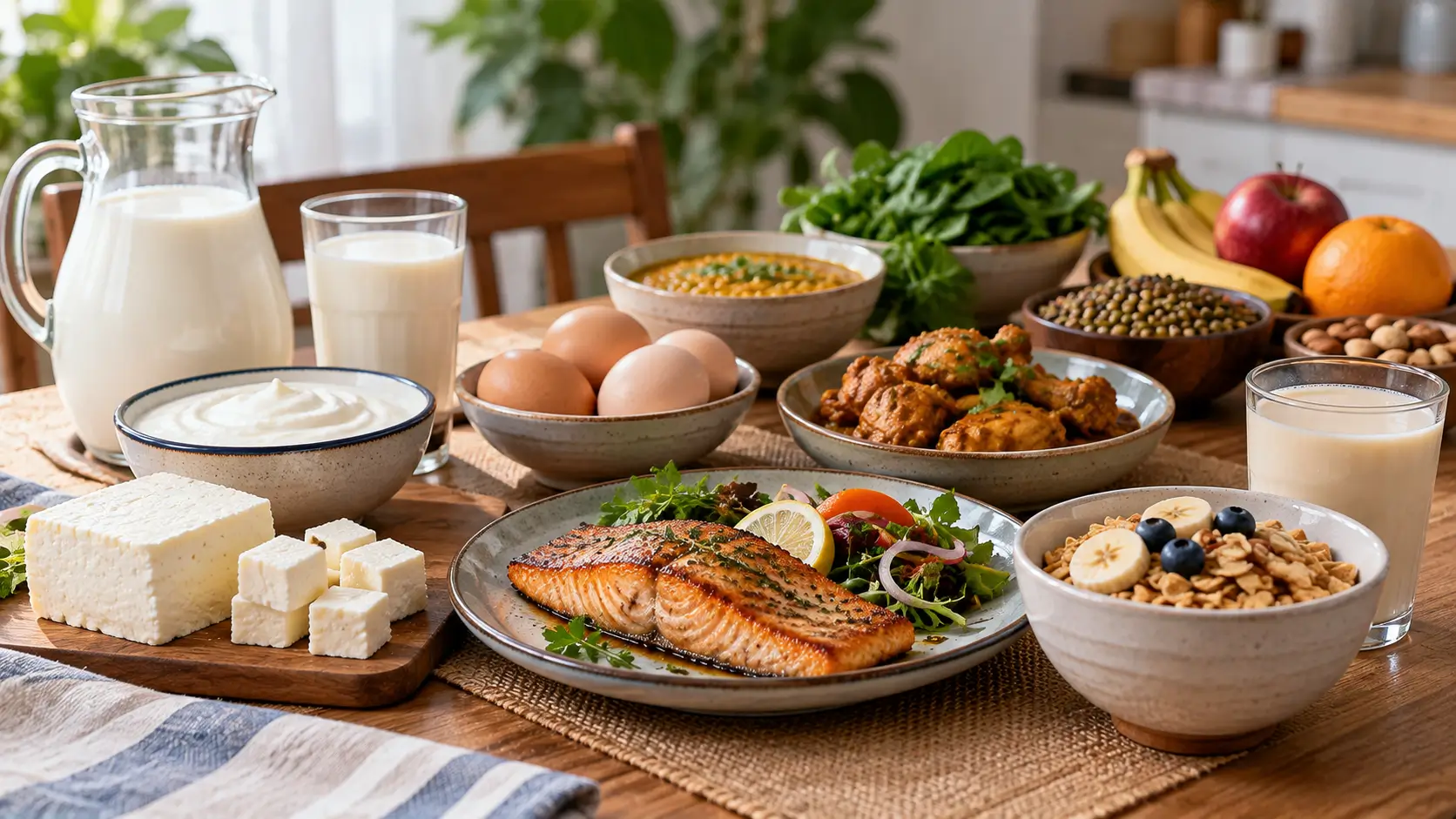

Vitamin B12 is found naturally mainly in animal-derived foods, including fish, meat, poultry, eggs and dairy products. For people who do not eat animal foods, reliable sources generally come from foods fortified with vitamin B12, such as some breakfast cereals, nutritional yeast products and plant-based beverages.
That distinction matters because many online lists incorrectly describe ordinary fruits, vegetables, mushrooms or other plant foods as dependable sources of vitamin B12.
Quick Answer
Foods containing vitamin B12 naturally include fish and seafood, meat, poultry, eggs, milk, curd, cheese and other dairy foods. Some foods that do not naturally contain B12 can have it added during manufacturing; these include certain fortified breakfast cereals, nutritional yeast products and plant-based milk alternatives.
If you follow a vegetarian or vegan diet, check food labels rather than assuming a plant-based product contains B12. If you have diagnosed B12 deficiency or an absorption problem, simply adding B12-rich foods may not be sufficient.
What Is Vitamin B12?
Vitamin B12, also called cobalamin, is a water-soluble vitamin involved in several important biological processes.
It is required for:
- healthy red blood-cell formation
- normal nervous-system function
- DNA synthesis
- normal cellular metabolism
The body absorbs B12 through a process involving stomach acid and a protein called intrinsic factor, which helps the vitamin reach the part of the small intestine where absorption occurs.
This is why vitamin B12 nutrition is not simply a matter of counting how much B12 is present in food.
Which Foods Contain Vitamin B12?
1. Fish and seafood
Fish and seafood are among the more concentrated natural food sources of vitamin B12.
Examples include:
- salmon
- tuna
- sardines
- shellfish
- oysters
- clams
- other fish varieties
The NIH lists 3 ounces of cooked Atlantic salmon at about 2.6 mcg of B12, while canned light tuna provides about 2.5 mcg per 3 ounces. Clams and oysters can contain substantially more.
For Indian households, locally available fish can also contribute B12, although the amount varies considerably according to species and preparation.
2. Meat and poultry
Meat and poultry naturally contain vitamin B12.
Examples include:
- chicken
- goat meat
- beef
- turkey
- other meats
The NIH lists approximately 2.4 mcg of B12 in 3 ounces of cooked ground beef and about 0.3 mcg in 3 ounces of roasted turkey breast.
A North Indian food-composition study that specifically measured common animal-source foods reported approximately 2.45 mcg B12 per 100 g of goat meat and 2.42 mcg per 100 g of chicken. These figures are useful Indian examples, but they should not be treated as universal values because nutrient content varies by food and preparation.
3. Eggs
Eggs contain vitamin B12 and can be a useful source for people who eat them.
The NIH lists about 0.5 mcg of B12 in one large cooked egg.
A North Indian study measuring commonly consumed foods found approximately 1.01 mcg per 100 g of whole hen’s egg. Again, this is food-composition data rather than a guarantee for every egg.
For an Indian vegetarian who eats eggs, including eggs in an otherwise balanced diet can therefore contribute some B12.
4. Milk and dairy products
Milk, curd, yogurt and cheese contain vitamin B12.
The NIH lists about:
| Food | Approximate B12 per listed serving |
|---|---|
| Milk, 1 cup | 1.3 mcg |
| Plain yogurt, 6 oz | 1.0 mcg |
| Cheddar cheese, 1½ oz | 0.5 mcg |
| One large cooked egg | 0.5 mcg |
These values come from the NIH’s selected-food table and can differ between products and serving sizes.
Indian food-composition research also found B12 in cow’s milk, curd and paneer, although the measured concentrations were relatively modest compared with some fish and meats.
This makes dairy particularly relevant for lacto-vegetarians, although dietary adequacy depends on the person’s overall intake and absorption.
5. Liver and other organ meats
Liver is an exceptionally concentrated source of vitamin B12.
The NIH lists approximately 70.7 mcg in 3 ounces of cooked beef liver.
However, “highest in B12” does not automatically mean “eat it every day.” Liver is also extremely rich in other nutrients, including preformed vitamin A, so it should be considered a concentrated food rather than a reason to consume very large quantities.
6. Fortified breakfast cereals
Some breakfast cereals have vitamin B12 added during manufacturing.
The important word is fortified.
Not every cereal contains B12. The NIH lists one example of a fortified cereal providing about 0.6 mcg per serving, but actual products vary substantially.
Check the nutrition label for vitamin B12 rather than assuming that a cereal is fortified.
7. Fortified plant-based milk
Soy, oat, almond and other plant-based drinks may contain added vitamin B12.
Whether they do depends on the individual product.
For vegetarians and vegans, this makes label reading particularly important. A plant-based beverage can be nutritionally useful while still providing no B12 if the manufacturer has not added it.
NHS guidance specifically identifies fortified soya drinks and other fortified products as useful sources for people following vegan diets.
8. Fortified nutritional yeast
Nutritional yeast is another option used in vegetarian and vegan diets.
It does not automatically contain B12.
Some products are fortified and can provide substantial amounts, while others may provide little or none. The NIH lists fortified nutritional yeast as a B12 source and emphasizes checking the product.
What About Fruits and Vegetables?
Most ordinary fruits and vegetables are not reliable natural sources of vitamin B12.
This includes commonly mentioned foods such as:
- bananas
- spinach
- beetroot
- carrots
- potatoes
- tomatoes
- apples
- oranges
The NIH’s food table lists banana, spinach and kidney beans among foods containing essentially no B12, while confirming that plant foods generally do not naturally provide the vitamin.
That does not make these foods unhealthy. They provide fibre, vitamins, minerals and other useful compounds. They simply should not be counted as dependable B12 sources unless a product has been fortified.
Peaceful Health has a separate guide specifically addressing the misconception around fruits and vegetables and vitamin B12.
What About Mushrooms, Seaweed and Fermented Foods?
Claims about mushrooms, seaweed, algae and fermented foods can be confusing.
Some products may contain B12-like compounds or variable amounts of B12, but ordinary unfortified plant foods should not be treated as dependable sources.
For practical nutrition planning, a safer approach is to rely on clearly labelled fortified foods if you do not consume animal products. NIH and NHS guidance both support fortified foods as a useful strategy for people following plant-based diets.
How Much Vitamin B12 Do You Need?
For reference, the U.S. NIH lists an adult recommended intake of 2.4 mcg per day, with higher amounts during pregnancy and breastfeeding.
ICMR-NIN publishes India’s nutrient requirements and recommended dietary allowances, including its 2020 RDA/EAR report, and its 2024 Dietary Guidelines provide broader dietary guidance for Indians.
For this article, the U.S. NIH figure is presented as a reference value rather than being represented as India’s official RDA.
Can Food Alone Correct Vitamin B12 Deficiency?
Not necessarily.
A person can have inadequate B12 because they consume too little, but deficiency can also occur because the body cannot absorb B12 properly.
Problems involving the stomach or small intestine, pernicious anemia, some gastrointestinal surgeries and certain medicines can affect B12 status. Long-term use of metformin and some acid-reducing medicines can also affect B12 levels.
This distinction is important.
If a blood test has confirmed vitamin B12 deficiency, increasing foods containing B12 may be part of the nutritional plan, but the appropriate treatment depends on why the deficiency occurred and how severe it is.
Practical B12 Choices for Indian Diets
If you eat dairy
Useful choices include:
- milk
- curd
- yogurt
- paneer
- cheese
Combine them with a varied diet containing pulses, vegetables, fruits and whole grains.
If you eat eggs
Eggs can contribute B12 alongside other nutritious foods.
If you eat fish or meat
Fish, seafood, poultry and meat provide naturally occurring B12 and can fit into an overall balanced diet according to personal dietary preferences.
If you are vegan
Do not rely on fruits, vegetables, dal, rice, roti, nuts or seeds for B12.
Instead, look for reliably fortified foods and discuss supplementation with an appropriately qualified healthcare professional when necessary. NHS guidance specifically recommends fortified foods or consideration of supplements for nutrients that are difficult to obtain from a vegan diet, including B12.
Common Mistakes to Avoid
Mistake 1: Assuming every vegetarian food contains B12.
Most unfortified plant foods do not.
Mistake 2: Assuming all plant milk contains B12.
Fortification varies by product.
Mistake 3: Treating a food list as treatment for deficiency.
Absorption problems can exist even when dietary intake appears adequate.
Mistake 4: Calling fruits and vegetables “B12-rich.”
They remain valuable foods, but they are not dependable natural B12 sources.
Mistake 5: Taking large-dose supplements without understanding why they are needed.
If deficiency is suspected or confirmed, the underlying cause matters.
When Should You Talk to a Healthcare Professional?
Consider professional evaluation if you have symptoms or risk factors that raise concern about B12 deficiency, particularly if you follow a vegan diet without a reliable B12 source, have a gastrointestinal condition or surgery that may affect absorption, or take medicines that can affect B12 status.
Vitamin B12 deficiency can cause anemia and neurological problems, and symptoms alone cannot reliably establish whether you are deficient. Appropriate clinical assessment and, when indicated, blood testing can help clarify the situation.
Practical Takeaway
The most reliable natural food sources of vitamin B12 are fish, seafood, meat, poultry, eggs and dairy products. For people who avoid animal foods, B12-fortified cereals, plant-based beverages, nutritional yeast and other fortified products can provide alternatives.
The key is reliability: check labels, consider your overall diet, and remember that dietary B12 intake is not the same thing as successful absorption.
FAQ
What foods contain vitamin B12?
Fish, seafood, meat, poultry, eggs and dairy products naturally contain vitamin B12. Some cereals, nutritional yeast products and plant-based beverages contain B12 when they have been fortified.
Which vegetarian foods contain vitamin B12?
Milk, curd, yogurt, cheese and eggs contain B12 if they are part of the person’s vegetarian diet. Vegetarians who eat little or no dairy or eggs may need reliable fortified foods or supplements.
Can vegans get vitamin B12 from food?
Yes, but reliable food-based options generally need to be fortified with B12. Ordinary unfortified fruits, vegetables, grains, pulses, nuts and seeds are not dependable natural B12 sources.
Does milk contain vitamin B12?
Yes. Milk naturally contains vitamin B12. The NIH lists approximately 1.3 mcg in one cup of 2% milk, although the amount can vary by product.
Do eggs contain vitamin B12?
Yes. The NIH lists approximately 0.5 mcg of B12 in one large cooked egg.
Do fruits and vegetables contain vitamin B12?
Ordinary fruits and vegetables are not reliable natural sources of B12. A plant-based food can contain B12 when the manufacturer has added it through fortification.
Can eating B12-rich foods fix a deficiency?
Not always. Dietary deficiency is only one possible cause. Absorption problems and certain medical conditions or medicines can also contribute to deficiency.
Which food contains the most vitamin B12?
Some organ meats, particularly beef liver, and certain shellfish contain very high amounts. The NIH lists 70.7 mcg of B12 in 3 ounces of cooked beef liver and 17 mcg in 3 ounces of cooked clams.
MEDICAL DISCLAIMER
This article is for general nutrition education and does not diagnose or treat vitamin B12 deficiency. Nutritional needs vary with age, diet, pregnancy, health conditions, medications and absorption. If you have suspected or confirmed B12 deficiency, discuss appropriate testing and treatment with a qualified healthcare professional rather than relying on dietary changes alone.