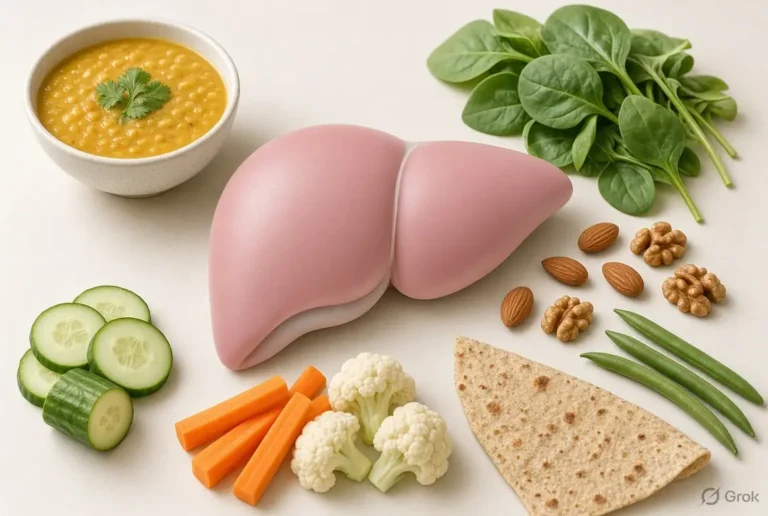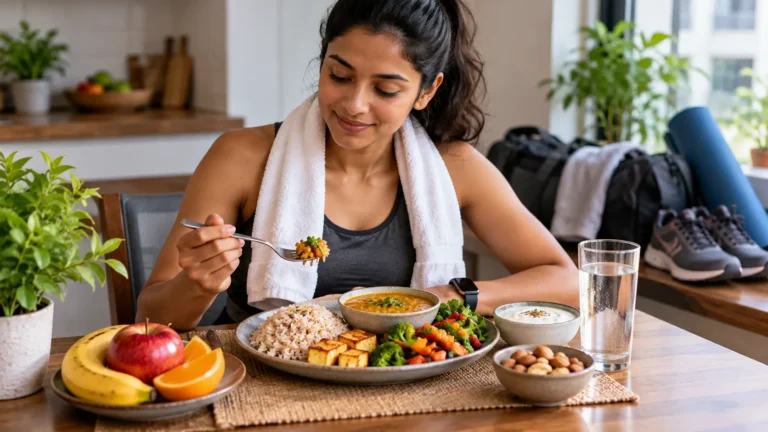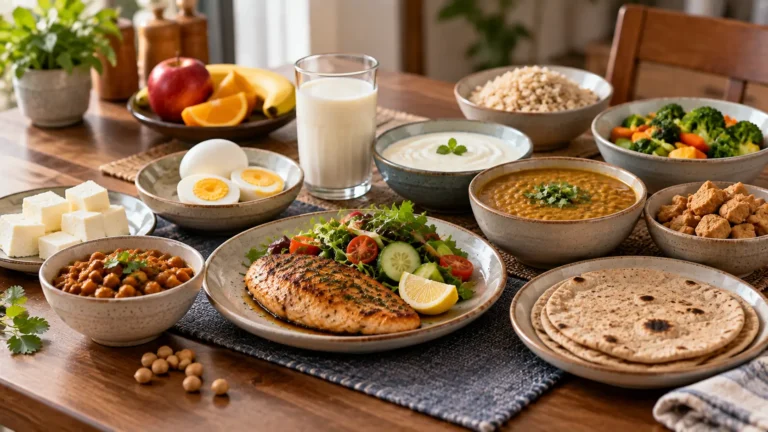
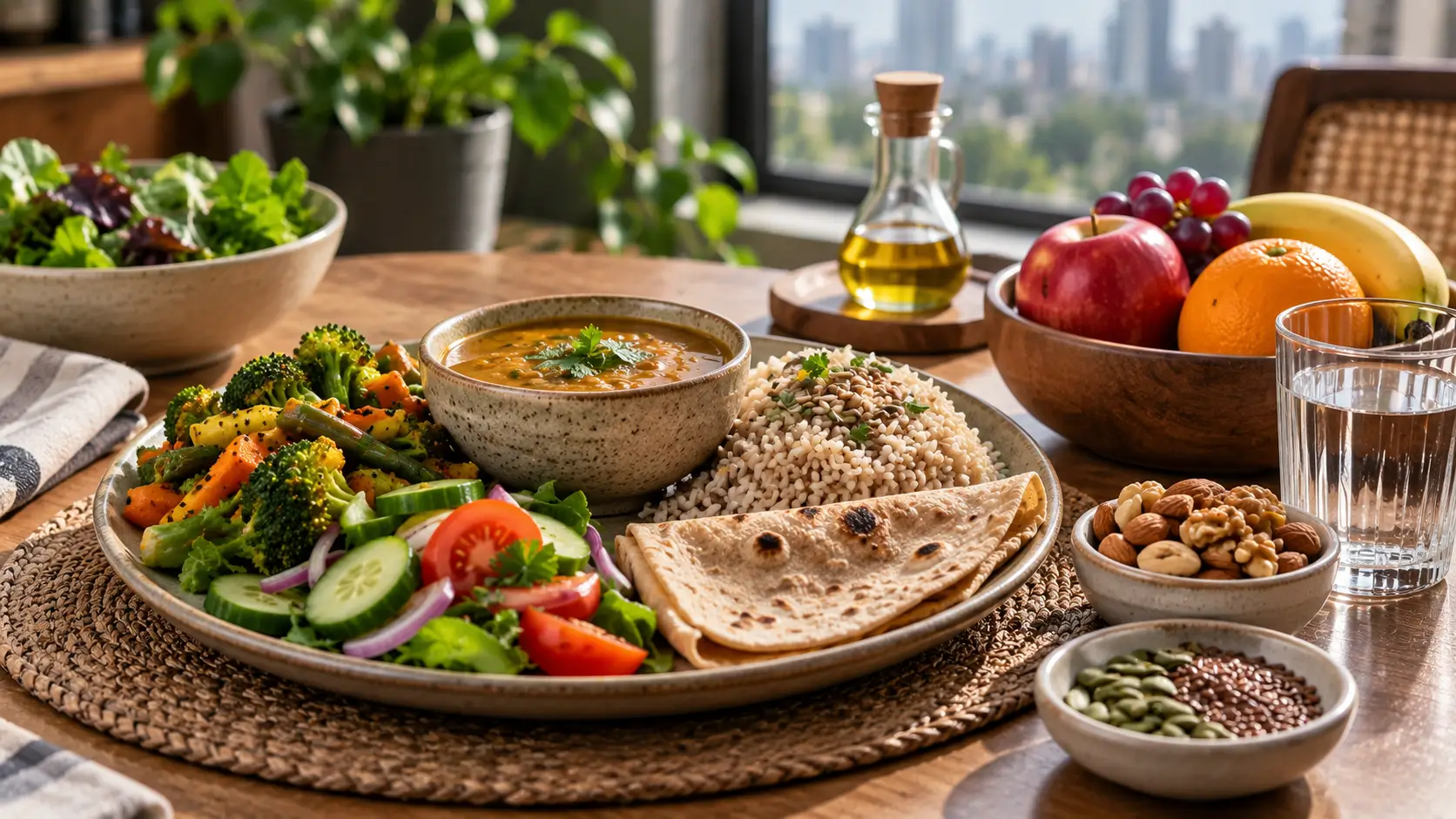

A heart-healthy diet is not about finding one “best” food, eliminating every source of fat or following a rigid diet plan. It is an overall eating pattern built around nutritious foods and sensible limits on excess salt, unhealthy fats, added sugars and highly processed foods.
For Indian adults, that pattern can be built around familiar foods such as vegetables, fruits, dal, rajma, chana, whole grains, nuts, seeds and appropriate sources of protein. The aim is not to make every meal perfect. It is to make the overall pattern more supportive of cardiovascular health.
Quick Answer
A heart-healthy diet generally emphasizes vegetables, fruits, pulses, whole grains, nuts and seeds and appropriate sources of unsaturated fats. It limits excess sodium, saturated fat, industrial trans fat, added sugars and highly processed foods.
The World Health Organization recommends dietary patterns based on variety, balance, moderation and minimally processed foods. ICMR-NIN’s Dietary Guidelines for Indians also emphasize dietary variety and healthy food choices rather than relying on individual “superfoods.”
What Is a Heart-Healthy Diet?
A heart-healthy diet is an eating pattern designed to support cardiovascular health and reduce exposure to several modifiable dietary risk factors.
It is more useful to think about the pattern of food eaten across days and weeks than to label individual foods as simply “good” or “bad.”
A practical pattern includes:
- plenty of vegetables and fruit
- regular pulses and legumes
- whole or less-refined grains
- nuts and seeds in sensible portions
- appropriate sources of unsaturated fats
- adequate protein
- limited highly processed foods
- less excess salt
- less saturated and industrial trans fat
- limited added sugars
This approach is consistent with major public-health and cardiovascular nutrition guidance.
1. Make Vegetables and Fruit Regular Foods
Vegetables and fruits provide dietary fibre, vitamins, minerals and other beneficial compounds.
For an Indian diet, useful choices can include:
- spinach and other leafy vegetables
- cauliflower
- cabbage
- beans
- carrots
- tomatoes
- gourds
- okra
- seasonal vegetables
- guava
- oranges
- papaya
- apples
- bananas and other seasonal fruits
Variety is more useful than searching for one “best” fruit.
Try adding vegetables to lunch and dinner and keeping whole fruit available for snacks or breakfast rather than relying mainly on fruit juices.
2. Make Dal, Beans and Other Pulses Regular Foods
Dal, rajma, chana, peas and other legumes can provide protein and dietary fibre.
They can also help make meals more filling without relying heavily on processed meats or refined foods.
For example, a meal built around dal, vegetables and a whole-grain or less-refined roti can provide a different nutritional balance from a meal dominated by refined flour and fried foods.
The exact portion should depend on individual energy needs and the rest of the meal.
3. Choose Whole or Less-Refined Grains More Often
Whole grains retain more of the grain’s natural structure and fibre than highly refined grain products.
Options that can fit an Indian diet include:
- whole-wheat atta
- oats
- brown rice
- millets
- barley
- other whole grains
This does not mean white rice or other refined grains must automatically be treated as forbidden foods. Overall dietary pattern, portions and what accompanies the grain matter.
A plate containing rice alongside dal, vegetables and other nutritious foods is different from a meal dominated by a large portion of refined carbohydrates with little fibre or protein.
4. Pay Attention to the Type of Fat
Dietary fat is not automatically unhealthy.
The more useful question is what type of fat is being consumed and what it is replacing.
WHO recommends shifting away from saturated and trans fats toward unsaturated fats. Saturated fat is found in foods such as butter, ghee, fatty meats and some dairy products, while industrial trans fats can occur in certain processed, baked and fried foods.
For Indian cooking, the practical lesson is not simply to find a “perfect” oil.
The amount of oil used, the food being cooked, cooking method and overall dietary pattern all matter.
Replacing some foods high in saturated fat with foods containing unsaturated fats can be a more useful strategy than focusing on one oil as a miracle solution.
5. Do Not Ignore Salt
Excess sodium can raise blood pressure, which is an important cardiovascular risk factor.
WHO recommends that adults consume less than 2,000 mg of sodium per day, equivalent to less than 5 g of salt per day.
Salt does not come only from the salt shaker.
Common sources can include:
- packaged snacks
- namkeen
- pickles
- papad
- instant foods
- sauces and condiments
- processed foods
- restaurant meals
A simple starting point is to taste food before automatically adding more salt and to compare packaged foods when nutrition information is available.
People with hypertension, kidney disease or other conditions requiring individualized sodium advice should follow their healthcare professional’s recommendations rather than applying a generic target without context.
6. Limit Highly Processed Foods, Added Sugar and Frequent Fried Foods
A heart-conscious diet does not require eliminating every packaged or restaurant food.
The more useful goal is to avoid making foods high in salt, unhealthy fats, added sugars or excess calories the foundation of everyday eating.
Examples to keep occasional rather than routine can include:
- deep-fried snacks
- heavily salted packaged snacks
- sugar-sweetened drinks
- sweets and desserts in large portions
- commercially baked foods high in unhealthy fats
- heavily processed meats
- meals with very large portions of refined carbohydrates and added fats
The frequency and portion matter.
How to Build a More Heart-Friendly Indian Meal
A simple meal framework can look like this:
Start with vegetables: Add a substantial vegetable component such as sabzi, leafy greens or another seasonal preparation.
Add a pulse or other protein: Dal, rajma, chana, beans, curd, eggs, fish or another appropriate protein can form part of the meal.
Choose a suitable grain: Whole-wheat roti, oats, brown rice, millet or another grain can be used according to preference and dietary needs.
Use fats sensibly: Cooking oil, nuts and seeds can fit into a healthy diet, but portions still matter.
Keep salty and fried extras limited: Pickles, papad, namkeen and fried sides do not need to disappear completely, but they should not dominate the meal.
This is a framework rather than a medical prescription or fixed meal plan.
What About Ghee?
Ghee does not need to be described as either a “superfood” or a forbidden food.
It contains a substantial amount of saturated fat, so treating it as the primary cooking fat or consuming large amounts is not consistent with guidance to reduce saturated-fat intake.
A more useful approach is to consider the total dietary pattern and the amount of saturated fat consumed across the day.
Do You Need Heart-Health Supplements?
Not necessarily.
A healthy dietary pattern should generally be built around foods rather than a collection of supplements. Supplements can also interact with medicines or be inappropriate for some people.
Products marketed as “artery cleansers,” “heart detoxes” or guaranteed cardiovascular-protection products should be approached cautiously.
If you have a diagnosed cardiovascular condition or take prescription medication, discuss supplements with an appropriately qualified healthcare professional before using them regularly.
Can Diet Replace Heart Medicines?
No.
Dietary improvement can support cardiovascular risk management, but it should not be used as a reason to stop, reduce or replace prescribed medicines.
People with high LDL cholesterol, hypertension, diabetes, established heart disease or other cardiovascular conditions may need individualized medical treatment in addition to lifestyle changes.
Common Heart-Diet Mistakes
Mistake 1: Looking for one miracle food.
No single food can compensate for an otherwise poor dietary pattern.
Mistake 2: Eliminating all dietary fat.
Some unsaturated fats are useful components of a balanced diet.
Mistake 3: Changing only the cooking oil.
An oil change does not automatically make a diet healthy if meals remain heavily fried, salty or highly processed.
Mistake 4: Treating every carbohydrate as unhealthy.
Whole grains, pulses, fruits and vegetables provide important nutrients and fibre.
Mistake 5: Assuming “natural” means heart-safe.
Natural foods and supplements are not automatically risk-free.
Practical Takeaway
A heart-friendly Indian diet does not require expensive foods or an extreme meal plan.
Focus on the pattern:
- Eat a variety of vegetables and fruits.
- Include dal, beans and other pulses regularly.
- Choose whole or less-refined grains more often.
- Include nuts and seeds in sensible portions.
- Prefer unsaturated fats over foods high in saturated or industrial trans fats.
- Keep salt and highly processed foods under control.
- Limit frequent deep-fried foods and excess added sugar.
- Combine dietary changes with physical activity and other heart-health habits.
- If you have a cardiovascular condition or important risk factors, use individualized medical guidance alongside lifestyle changes.
The goal is not a perfect diet. It is a sustainable eating pattern that supports cardiovascular health over time.
FAQ
Is there one best heart-healthy diet?
No single diet is necessary for everyone. A heart-healthy pattern generally emphasizes vegetables, fruit, whole grains, pulses, nuts and seeds while limiting excess sodium, saturated fat, trans fat and added sugars.
Which Indian foods are good for heart health?
Dal, rajma, chana, vegetables, fruits, whole or less-refined grains, nuts and seeds can all fit into a heart-conscious dietary pattern. The overall diet and preparation method matter more than one individual food.
Is ghee bad for the heart?
Ghee is high in saturated fat, so large or frequent amounts are not consistent with guidance to limit saturated fat. It should be considered in the context of the overall diet rather than labelled simply as a “heart-protective” food.
How much salt should adults consume?
WHO recommends less than 5 g of salt per day, equivalent to less than 2,000 mg of sodium per day, for adults. Individual medical circumstances can require different advice.
Are whole grains useful for heart health?
Yes. Whole grains can be part of a heart-healthy dietary pattern and generally provide more fibre and nutrients than highly refined grain products.
Are nuts good for the heart?
Nuts and seeds can fit into a heart-conscious diet and provide unsaturated fats and other nutrients. They are energy-dense, so sensible portions still matter.
Can a heart-healthy diet lower cholesterol?
Dietary changes can help improve some cardiovascular risk factors, including LDL cholesterol, particularly when saturated fat is replaced with healthier unsaturated fats and fibre-rich foods are emphasized. Diet does not eliminate the need for medical treatment when treatment is indicated.
Can diet alone prevent heart disease?
No. Diet is one important modifiable factor, but cardiovascular risk also involves physical activity, tobacco exposure, blood pressure, blood glucose, cholesterol, body weight, sleep, age, family history and existing medical conditions.
MEDICAL DISCLAIMER
This article is for general nutrition and health education. It does not diagnose or treat cardiovascular disease and does not replace individualized advice from a qualified healthcare professional or registered dietitian.
Nutritional needs vary according to age, medical conditions, medications, allergies, pregnancy status, activity level and other factors. If you have hypertension, diabetes, kidney disease, high cholesterol, established heart disease or another medical condition, discuss major dietary changes with an appropriately qualified healthcare professional.
Do not start, stop or change prescription medication based solely on this article.