
Why protein matters more than most people realize
Protein is often associated with gym workouts, protein shakes and bodybuilding. But that is only part of the story.
Your body uses protein to build and repair tissues, maintain muscle and support many essential biological functions. The real challenge is not finding one magical protein food. It is building a varied diet that provides enough protein from foods you can actually afford, cook and enjoy.
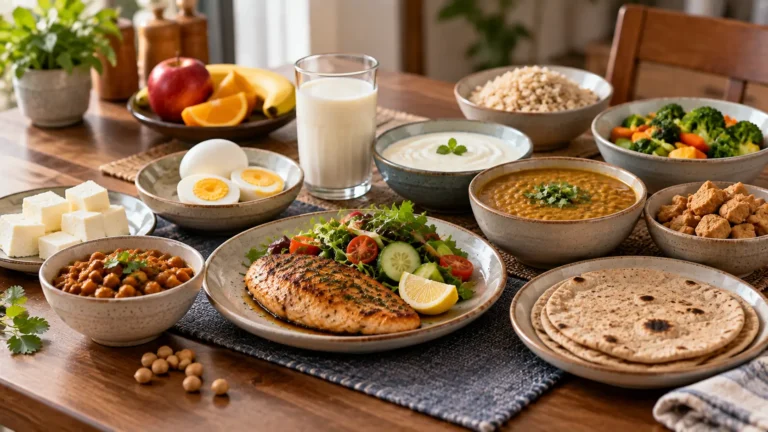
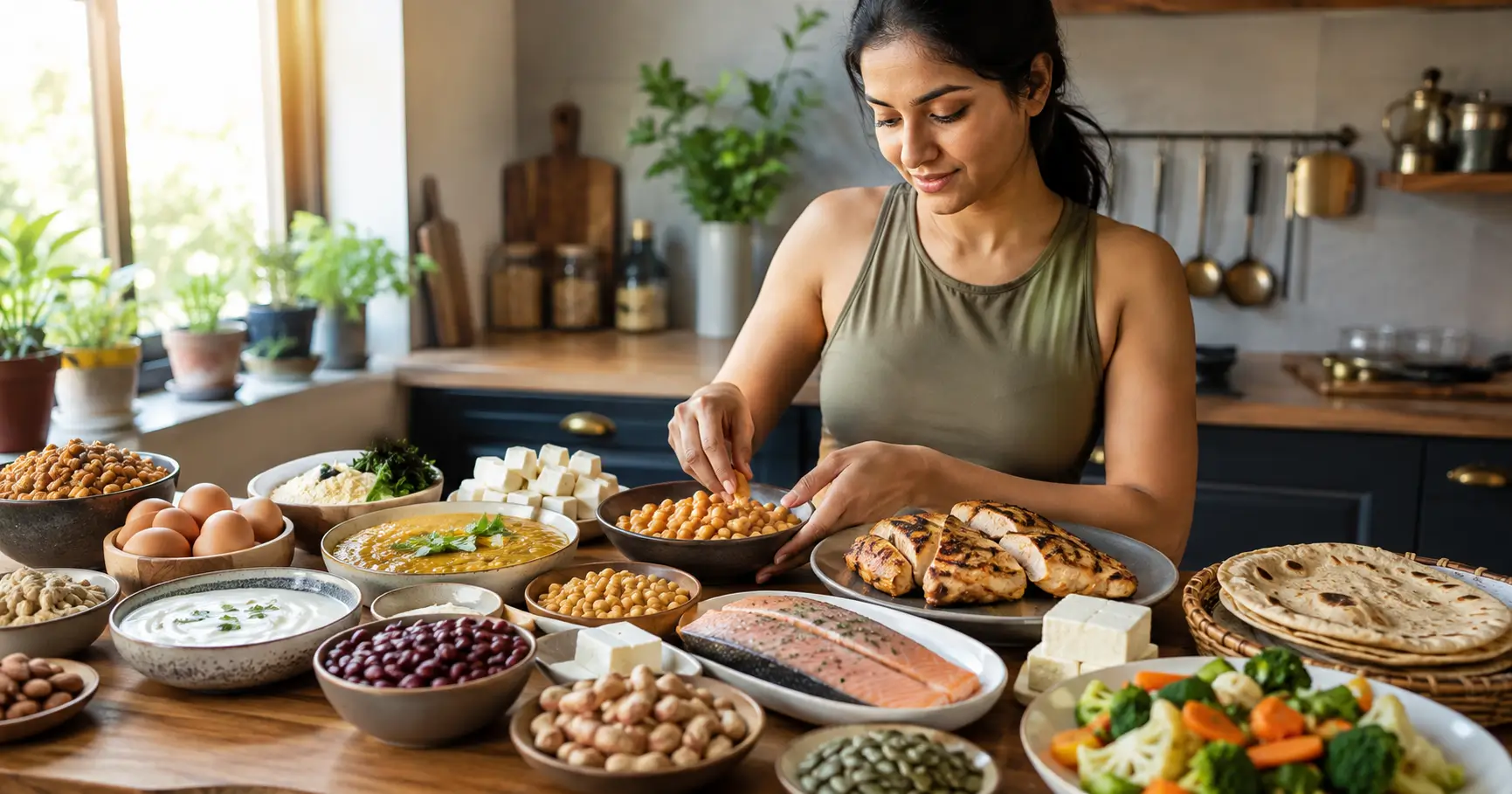
That is why the best protein foods in India are not limited to expensive supplements or imported products. Eggs, milk, paneer, dal, chickpeas, soy, fish, chicken, nuts and seeds can all play useful roles.
India’s 2024 dietary guidelines emphasize variety and recommend combining cereals with pulses or beans to improve protein quality.
So which foods deserve a place on your plate?
Best protein foods in India at a glance
The right choice depends on whether you want affordability, convenience, vegetarian protein, high protein density or a complete protein source.
| Food | Protein reference | Best for |
|---|---|---|
| Chicken breast | ~27 g per 3 oz | High-protein meals |
| Fish | ~20 g/100 g in NIN reference data | Protein + variety |
| Eggs | ~6 g each | Affordable convenience |
| Paneer | ~18.9 g/100 g | Vegetarian diets |
| Milk | ~3.3 g/100 g cow’s milk | Daily meals |
| Lentils/dal | ~18 g/cup cooked in Harvard reference | Budget vegetarian meals |
| Chickpeas | Protein-rich pulse | Vegetarian meals |
| Soy foods | High-quality plant protein | Vegetarian diets |
| Groundnuts | Protein-rich nut/seed group | Budget snacks |
| Almonds | Protein-rich nut | Snacks and meals |
Protein values vary with food variety, preparation, moisture and serving size. The Indian Food Composition Tables are based on analyzed Indian food samples, while other sources may use different food databases and serving definitions.
1. Eggs
Eggs are one of the easiest ways to add protein to an Indian diet.
A typical egg provides about 6 grams of protein, according to the U.S. National Institutes of Health’s Office of Dietary Supplements. Eggs also provide several micronutrients, making them more nutritionally useful than simply looking at their protein number.
Why eggs are practical
- Easy to cook
- Relatively inexpensive
- Convenient for breakfast
- Can be boiled, scrambled or added to meals
- Provide complete protein
For a quick breakfast, eggs can be paired with whole-grain roti, vegetables or fruit.
2. Paneer
Paneer is one of India’s most useful vegetarian protein foods.
The ICMR-NIN Indian Food Composition Tables report approximately 18.86 g of protein per 100 g of paneer in their analyzed samples. The same data also show that paneer can be relatively high in fat, so portion size and preparation matter.
That makes paneer particularly useful for people who do not eat meat or eggs.
Try it grilled with vegetables, added to a balanced curry or combined with pulses rather than automatically treating paneer as a free food.
3. Dal and lentils
Dal is one of the most practical answers to the question: What are the best vegetarian protein foods in India?
Lentils, moong dal, masoor dal, chana dal and other pulses provide protein alongside carbohydrates, fiber and other nutrients.
Harvard’s nutrition guidance notes that a cup of cooked lentils contains about 18 g of protein.
More importantly, dal fits naturally into Indian meals.
Dal with rice, dal with roti or a mixed dal preparation can create a protein-containing meal without requiring expensive ingredients.
4. Chicken
For non-vegetarians, chicken is a convenient high-protein option.
NIH nutrition guidance gives approximately 27 g of protein in 3 ounces of chicken breast.
The preparation matters.
Grilled, roasted or lightly cooked chicken is very different nutritionally from heavily fried chicken covered in refined coatings.
For everyday meals, combine chicken with vegetables and a sensible portion of rice or roti rather than making the entire plate protein.
5. Fish
Fish is another strong protein choice and can add variety to a non-vegetarian diet.
ICMR-NIN’s nutrient reference materials list fish at roughly 20 g protein per 100 g in a general nutrient-rich-food table, although actual values vary considerably by species and preparation.
Fish can be particularly useful when you want protein without relying on chicken every day.
Choose preparations that fit your overall dietary pattern instead of assuming that every fish dish is automatically healthy.
6. Soybeans and soy foods
Soy deserves more attention in Indian vegetarian diets.
Soybeans and products such as tofu can provide substantial plant protein. The important point is to distinguish minimally processed foods from heavily formulated packaged products.
ICMR-NIN’s dietary guidance encourages a diverse food pattern and cautions against relying heavily on highly processed foods.
Tofu can work well in stir-fries, curries and wraps, while traditional soy-based foods can add variety to vegetarian meals.
7. Chickpeas and chana
Chickpeas are a familiar Indian food that can become an excellent protein-building block.
Use them in:
- Chana masala
- Chole
- Chana salad
- Roasted chana
- Hummus-style preparations
- Mixed grain and pulse bowls
They are especially useful because they fit both traditional Indian cooking and modern meal-prep routines.
8. Greek yogurt and curd
Dairy foods can contribute useful protein while also fitting naturally into Indian meals.
Curd can be served with lunch, used in raita or combined with fruit and nuts for a snack. Greek yogurt generally provides more protein per serving than ordinary curd, although the exact amount depends on the product.
Current Indian consumer trends also show growing interest in Greek yogurt and protein-focused dairy products.
Check the nutrition label when buying packaged products because protein, sugar and calorie content can vary significantly between brands.
9. Milk
Milk is not the most protein-dense food on this list, but it is easy to incorporate.
The ICMR-NIN Indian Food Composition Tables report about 3.26 g protein per 100 g for cow’s whole milk in analyzed samples.
Milk can therefore complement other protein sources rather than serving as the sole protein source in a meal.
10. Groundnuts and peanuts
Peanuts are an affordable and familiar Indian protein-containing food.
ICMR-NIN’s nutrient-rich food reference lists groundnuts, cashews and almonds among protein-rich nuts and oilseeds, with the group listed at around 23 g protein per 100 g.
But there is an important catch: nuts and seeds are energy-dense.
A handful can be useful. Eating large quantities simply because a food is called “high protein” can add substantial calories.
11. Almonds and other nuts
Almonds, walnuts and other nuts can complement a balanced diet.
They should not be treated as pure protein foods because they also contain significant amounts of fat.
Harvard recommends paying attention to the overall protein package—what else comes with the protein, such as fiber, healthy fats, vitamins and minerals.
A small serving alongside yogurt, fruit or another protein source can be more useful than relying on nuts alone.
12. Besan
Besan, or gram flour, is one of the easiest ways to turn a traditional ingredient into a protein-containing meal.
Use it to prepare:
- Besan chilla
- Vegetable cheela
- Besan wraps
- Savory pancakes
- Traditional preparations with vegetables
Pairing besan with curd or another protein-rich food can make breakfast more substantial.
13. Sattu
Sattu is another practical Indian option, particularly for people looking for inexpensive traditional foods.
Roasted gram flour can be used in drinks, stuffed preparations and savory meals.
The key is to avoid turning a protein-containing ingredient into a sugary beverage. A savory sattu drink with water, lemon, spices and a suitable meal can be very different from a sugar-heavy packaged beverage.
14. Beans and rajma
Rajma, black beans, lobia and other beans provide plant protein and can contribute fiber to the diet.
WHO guidance recommends regular consumption of legumes and notes that legumes provide vegetable protein and dietary fiber.
A classic rajma-rice meal is therefore not nutritionally “empty” simply because it contains rice.
The combination can be part of a balanced meal—especially when portions are sensible and vegetables are included.
15. Seeds
Pumpkin seeds, sesame seeds, sunflower seeds and other seeds can add protein, fats and micronutrients.
They work particularly well as meal additions rather than the main protein source.
Try sprinkling them over:
- Curd
- Salads
- Oats
- Vegetable dishes
- Homemade snacks
WHO also recommends unsalted nuts and seeds as part of a healthy eating pattern.
Why combining protein foods matters
One of the most useful lessons from India’s dietary guidance is that protein quality matters alongside protein quantity.
ICMR-NIN explains that cereals tend to be lower in lysine, while pulses provide more lysine but relatively less methionine and cysteine. Combining cereals and pulses therefore improves the amino-acid profile of the overall meal.
That principle is already built into many Indian meals.
Think:
Rice + dal
Roti + chana
Khichdi + curd
Roti + rajma
Millet + dal
You do not need to create complicated recipes to improve protein quality.
How much protein do you actually need?
This is where online nutrition advice often becomes confusing.
The ICMR-NIN 2024 dietary guidance gives an estimated average requirement of 0.66 g/kg/day and a recommended dietary allowance of 0.83 g/kg/day for healthy adult men and women. For a 65 kg adult, that corresponds to an RDA of about 54 g protein per day.
However, protein needs are not identical for everyone.
Training status, age, body size, energy intake and health conditions can change nutritional requirements. People involved in regular resistance training may need substantially more protein than sedentary adults; NIH notes higher protein intakes are commonly used in sports nutrition.
The goal should therefore be adequacy, not blindly chasing an extremely high number.
A simple high-protein Indian meal strategy
You do not need protein powder at every meal.
Try this structure:
Breakfast
Choose one:
- Eggs + roti + vegetables
- Besan chilla + curd
- Greek yogurt + nuts + fruit
- Sattu-based savory preparation
Lunch
Build around:
- Dal, rajma or chole
- Rice or roti
- Vegetables
- Curd
Or choose:
- Chicken/fish
- Rice or roti
- Vegetables
- Curd or salad
Evening snack
Try:
- Roasted chana
- Curd
- Milk
- Boiled eggs
- Small serving of nuts
Dinner
Keep it simple:
- Dal + roti + vegetables
- Paneer + vegetables + roti
- Tofu + vegetables
- Fish/chicken + vegetables + a suitable carbohydrate source
This approach spreads protein-containing foods across the day instead of trying to consume almost everything at dinner.
Common mistakes people make
Mistake 1: Thinking only supplements contain protein
They do not.
Meat, fish, eggs, dairy, legumes, nuts and seeds all provide protein. NIH specifically lists meats, poultry, seafood, eggs, dairy, beans and nuts among protein-containing foods.
Mistake 2: Eating unlimited “healthy” protein foods
Protein is not the only factor that matters.
Paneer and nuts can contain significant amounts of fat and calories. Portion size still matters.
Mistake 3: Ignoring vegetables and whole foods
A high-protein diet is not automatically a balanced diet.
ICMR-NIN’s dietary guidance emphasizes variety across food groups and recommends a diverse plate rather than focusing on a single nutrient.
Mistake 4: Choosing ultra-processed protein products automatically
A product can be marketed as “high protein” without being the best everyday food.
Check the full nutrition label for protein, calories, added sugar, fat, sodium and ingredients.
Myths vs facts
| Myth | Fact |
| You need protein powder to build muscle | Food can provide substantial protein; supplements are optional tools |
| Vegetarian diets cannot provide quality protein | Diverse plant-based diets can provide required amino acids |
| More protein is always better | Protein needs depend on the individual and overall diet |
| Paneer is a low-calorie protein | Paneer can be relatively high in fat and calories |
| Dal is not a protein food | Pulses are important plant protein sources |
| Nuts are pure protein | Nuts provide protein but also substantial fat and energy |
ICMR-NIN specifically notes that a diverse diet, including plant foods, can meet protein needs, while emphasizing protein quality and appropriate food combinations.
The smartest way to increase protein intake
If your current diet is low in protein, do not completely redesign it overnight.
Start with three changes:
- Add one protein-rich food to breakfast.
- Include a pulse, dairy, egg, fish, chicken or soy food at lunch and dinner.
- Replace low-nutrient snacks with options such as curd, eggs, roasted chana or a modest serving of nuts.
Then monitor your overall diet rather than obsessing over one food.
The best diet is the one you can maintain consistently.
FAQ
What are the best protein foods in India?
Eggs, paneer, dal, chicken, fish, milk, curd, soy foods, chickpeas, rajma, peanuts and seeds are practical protein-containing choices for Indian diets. The best option depends on dietary preference, budget and overall nutritional needs.
Which Indian vegetarian food is highest in protein?
Several vegetarian foods can provide substantial protein, including paneer, pulses, soy foods, besan, chickpeas, beans, nuts and seeds. Protein quality can also improve when cereals and pulses are combined.
How much protein does an adult need per day?
ICMR-NIN’s 2024 guidance gives an RDA of about 0.83 g/kg/day for healthy adult men and women. Individual needs can differ depending on age, body size, activity and health status.
Is dal a good source of protein?
Yes. Dal and other pulses are important plant-based protein sources. Combining pulses with cereals such as rice or wheat can also improve the overall amino-acid profile of the meal.
Are eggs better than paneer for protein?
Neither is universally “better.” Eggs provide complete protein and are convenient, while paneer offers a substantial amount of protein for vegetarian diets. Paneer can also be considerably higher in fat, so the overall nutrition and portion size matter.
Do I need protein powder if I eat a balanced diet?
Not necessarily. Many people can obtain adequate protein from ordinary foods. Protein supplements can be convenient in some situations, particularly when dietary intake is difficult to achieve, but they are not automatically required.
Conclusion
The best protein foods in India are not necessarily the most expensive products on a supermarket shelf.
Some of the most useful choices are already part of everyday Indian cooking: dal, chickpeas, rajma, eggs, paneer, curd, milk, soy, fish, chicken, peanuts and seeds.
The bigger lesson is to think beyond individual foods. A balanced diet combines different food groups, and ICMR-NIN specifically highlights the value of dietary variety and cereal-pulse combinations for improving protein quality.
If you want to increase your protein intake, start small. Add a protein-rich breakfast, include a meaningful protein source at your main meals and choose smarter snacks.
You do not need a complicated diet to eat more protein. You need a consistent one.
Disclaimer
This article is intended for general educational purposes and should not be treated as individualized medical or dietary advice.
Protein requirements can vary according to age, body size, activity level, pregnancy or lactation status, medical conditions and other factors. People with kidney disease, liver disease, food allergies, metabolic conditions or other health concerns should consult a qualified healthcare professional or registered dietitian before making major dietary changes.
Nutrient values are approximate and can vary according to food variety, brand, cooking method, serving size and food-composition database. Always check product labels where applicable.