
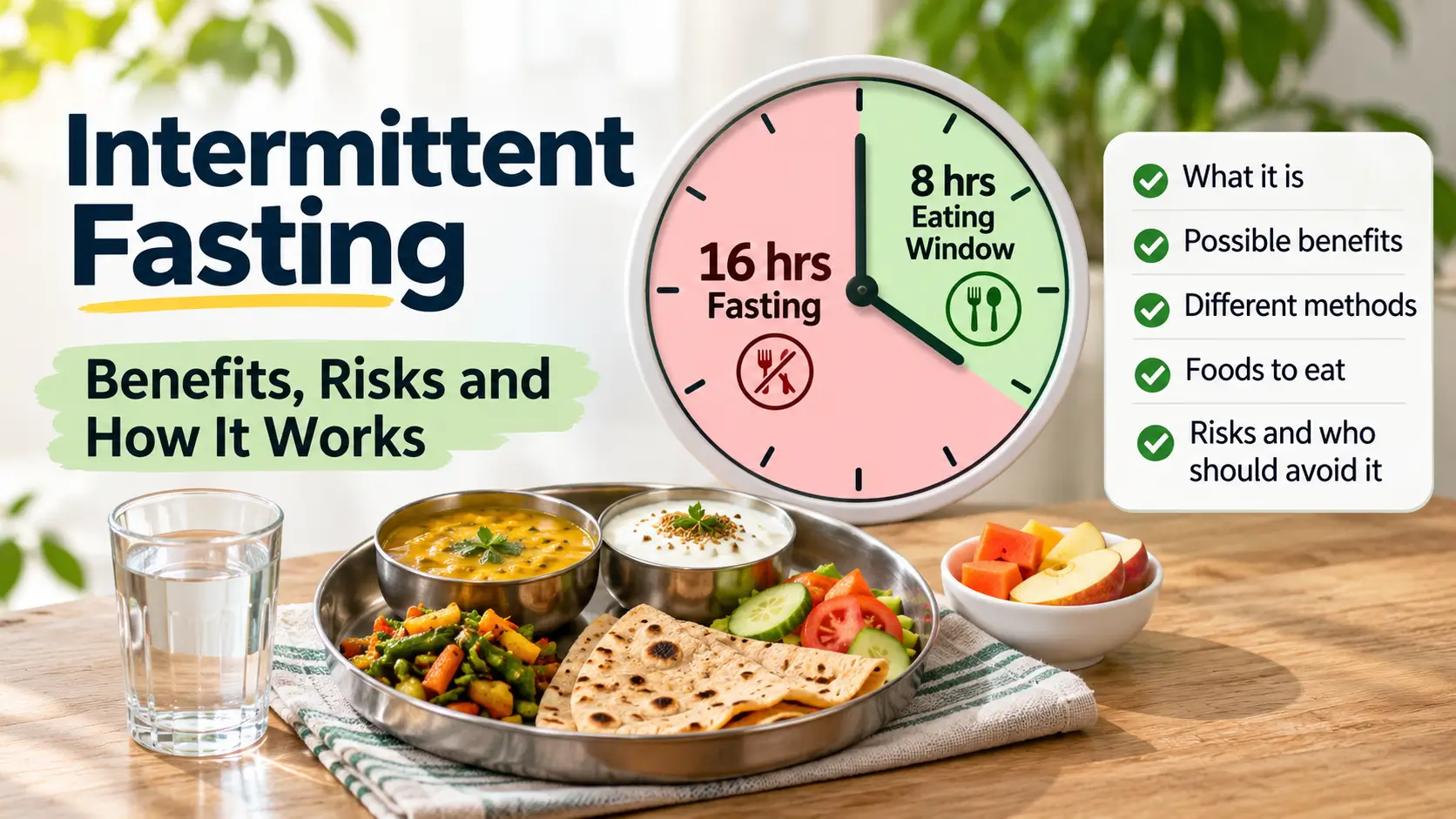

Intermittent fasting has become a popular eating approach among people interested in weight management, metabolic health and healthier lifestyle habits. Instead of focusing entirely on what you eat, this approach focuses on when you eat and how long you go without consuming calories.
Some people follow intermittent fasting to manage their calorie intake, while others are interested in its possible effects on blood sugar regulation and metabolic health. However, does it really work, and is it suitable for everyone?
The scientific evidence suggests that intermittent fasting can support weight management for some adults. However, it is not necessarily more effective than conventional calorie restriction, and it may not be appropriate for people with certain medical conditions.
This guide explains how intermittent fasting works, its potential benefits, different methods, possible side effects and important safety considerations, with practical examples for Indian readers.
What Is Intermittent Fasting?
Intermittent fasting is an eating pattern that alternates between periods of eating and periods of fasting.
Unlike many conventional diets, it does not necessarily specify which foods you should eat. Instead, it establishes particular times during which you consume meals and periods when you avoid calorie-containing foods and beverages.
For example, someone following a 16:8 eating pattern might eat between 10 AM and 6 PM and fast for the remaining 16 hours.
During the fasting period, water and other calorie-free drinks are generally permitted in common time-restricted eating protocols.
Intermittent fasting is not a requirement for good health. People can maintain healthy eating habits without following a fasting schedule.
How Does Intermittent Fasting Work?
The human body uses energy obtained from food to support everyday functions.
After eating, the body digests food and uses nutrients, including glucose, to provide energy. When someone goes without food for an extended period, the body gradually changes how it obtains and uses energy.
During fasting:
- Insulin levels generally decrease as the period without food continues.
- The body uses stored energy to support its activities.
- The use of stored fat for energy can increase.
- The body undergoes changes in metabolic processes.
These responses are part of normal human physiology.
However, it is important to understand that changes in metabolism during fasting do not automatically translate into substantial weight loss or long-term health improvements.
The overall quality of the diet, total energy intake, physical activity, sleep and individual health conditions also matter.
Different Types of Intermittent Fasting
There are several approaches to intermittent fasting. They differ in the length and frequency of fasting periods.
1. The 16:8 method
The 16:8 method involves fasting for 16 hours and consuming meals within an eight-hour eating window.
For example:
| Time | Activity |
|---|---|
| 10 AM | First meal |
| 1:30 PM | Lunch |
| 5:30 PM | Dinner |
| 6 PM–10 AM | Fasting period |
This is one of the most commonly discussed forms of time-restricted eating.
However, an eight-hour eating window is not automatically suitable for everyone.
2. The 14:10 method
This method involves 14 hours of fasting and a 10-hour eating window.
For example, someone might eat between 8 AM and 6 PM.
It allows a longer eating period than the 16:8 approach. Nevertheless, there is insufficient evidence to establish one universally best fasting schedule.
3. The 5:2 method
The 5:2 approach involves eating normally on five days of the week and substantially reducing calorie intake on two non-consecutive days.
The reduced-calorie days are not necessarily complete fasting days.
This approach can be difficult to maintain and may not be suitable for people with certain medical conditions.
4. Alternate-day fasting
Alternate-day fasting involves alternating between fasting days and eating days.
Some variations allow a limited amount of food on fasting days, while others involve more substantial restrictions.
Because this approach can involve considerable dietary restriction, it should not be treated as an appropriate starting point for beginners.
Potential Benefits of Intermittent Fasting
Research has identified several possible benefits, although the strength of evidence varies between outcomes.
1. May support weight management
Weight management is one of the main reasons people try intermittent fasting.
Restricting eating hours may help some people reduce unnecessary snacking and overall calorie consumption.
For example, someone who regularly consumes late-night snacks and additional evening meals might reduce their total daily energy intake by changing their eating schedule.
However, intermittent fasting does not guarantee weight loss.
A 2025 Cochrane review found little to no meaningful difference in weight loss between intermittent fasting and conventional dietary advice for adults with overweight or obesity.
This suggests that the overall dietary pattern and ability to maintain healthy habits may matter more than the fasting method itself.
2. May influence blood sugar regulation
Some research suggests that time-restricted eating can influence blood glucose regulation and insulin-related measurements.
However, results vary depending on the study population, fasting schedule, dietary intake and other lifestyle factors.
People with diabetes should not independently introduce fasting or change their medication schedules.
3. May help reduce late-night eating
A structured eating schedule can help some individuals establish more consistent meal routines.
For example, someone who regularly eats snacks late at night may find that setting a reasonable dinner time helps reduce unnecessary eating.
This is a potential behavioural advantage rather than proof that fasting has a unique metabolic effect.
4. May improve dietary awareness
Intermittent fasting can encourage people to pay more attention to their eating habits.
Some individuals become more aware of their meal timing, portion sizes and unnecessary snacking.
However, a healthy relationship with food should not depend on strict fasting rules or excessive dietary restriction.
What Does Scientific Research Say About Intermittent Fasting?
Scientific evidence is more balanced than many online fasting claims suggest.
A major 2025 systematic review and network meta-analysis published in The BMJ evaluated 99 randomised clinical trials involving 6,582 adults.
The researchers compared different intermittent fasting strategies with continuous energy restriction and unrestricted eating.
The findings indicated that several fasting strategies could reduce body weight compared with unrestricted eating. Alternate-day fasting showed a small additional weight-loss advantage over continuous energy restriction.
However, differences between approaches were generally modest, and the included trials had a median follow-up of only 12 weeks.
This means that long-term benefits and sustainability remain important research questions. BMJ+1
A separate 2025 randomised trial also found no significant advantage of time-restricted eating over calorie restriction or unrestricted eating for several measured outcomes over 12 weeks. PubMed Central (PMC)+1
The practical conclusion: Intermittent fasting is one possible dietary approach, not a scientifically established shortcut to better health.
What Should You Eat During Intermittent Fasting?
The quality of food remains important, even when someone follows a fasting schedule.
Eating windows should provide sufficient energy, protein, fibre, vitamins, minerals and other essential nutrients.
Indian readers can use familiar foods to build balanced meals.
Protein-rich foods
Protein supports muscle maintenance, tissue repair and several important bodily functions.
Suitable options include:
- Dal and other pulses.
- Chickpeas and rajma.
- Paneer.
- Curd and milk.
- Eggs.
- Fish and chicken.
- Soybeans and tofu.
Fibre-rich foods
Fibre supports digestive health and contributes to a balanced diet.
Include:
- Seasonal fruits.
- Green vegetables.
- Oats.
- Whole-wheat roti.
- Millets.
- Beans and lentils.
- Nuts and seeds.
Healthy dietary fats
Include appropriate quantities of:
- Almonds and walnuts.
- Flaxseeds.
- Chia seeds.
- Peanuts.
- Mustard, groundnut or other suitable cooking oils.
Example of a balanced Indian eating pattern
The following is an illustrative food pattern, not a prescribed intermittent fasting diet.
| Meal | Example |
|---|---|
| Breakfast | Vegetable poha with curd |
| Lunch | Roti, dal, seasonal vegetables and salad |
| Snack | Fruit and a small portion of nuts |
| Dinner | Vegetable khichdi with curd or paneer |
Individual food requirements vary according to age, activity level, health conditions and nutritional needs.
The ICMR–NIN Dietary Guidelines for Indians provide broader guidance on balanced eating, dietary diversity and healthy lifestyle habits. ICMR-National Institute of Nutrition
Who Should Avoid Intermittent Fasting?
Intermittent fasting is not suitable for everyone.
Certain individuals should avoid it, while others need individualised medical guidance before considering it.
People who should not start intermittent fasting without appropriate medical assessment include:
- Pregnant women: Nutritional needs increase during pregnancy, and routine intermittent fasting is not recommended.
- Breastfeeding women: Adequate energy and nutrient intake are important for maternal and infant health.
- People with a history of eating disorders: Restrictive eating schedules can trigger or worsen unhealthy eating behaviours.
- Children and adolescents: Their growth and development require adequate nutritional intake.
- People with diabetes: Fasting can affect blood glucose levels and medication requirements.
- People who are underweight or malnourished: Additional dietary restriction may worsen nutritional deficiencies.
- Older adults at risk of frailty or muscle loss: Inadequate energy and protein intake may contribute to loss of muscle mass.
People undergoing cancer treatment or managing significant medical conditions should also discuss dietary changes with their treating healthcare team.
The NIDDK highlights the need for careful medication planning in people with diabetes who wish to fast. NIDDK+3
Possible Side Effects of Intermittent Fasting
Some people experience temporary discomfort when changing their eating schedule.
Potential side effects include:
- Hunger.
- Headaches.
- Irritability.
- Fatigue.
- Difficulty concentrating.
- Dizziness.
- Constipation.
- Changes in sleep or eating patterns.
More serious concerns can arise in vulnerable individuals, particularly when fasting interacts with medical conditions or medications.
For example, people taking insulin or certain diabetes medicines may develop hypoglycaemia if their eating schedule changes without appropriate medication management.
Do not ignore persistent dizziness, fainting, confusion, severe weakness or other concerning symptoms. Stop fasting and seek appropriate medical care. Severe symptoms require urgent assessment.
Common Intermittent Fasting Mistakes
People sometimes focus so heavily on fasting hours that they overlook the quality of their diet.
Here are some common mistakes to avoid.
1. Eating too little during the eating window
A shorter eating window should not become an excuse for inadequate nutrition.
2. Ignoring protein intake
Insufficient protein can make it harder to maintain muscle mass, particularly during weight loss.
3. Overeating after fasting
Eating excessively to compensate for fasting may undermine the intended dietary changes.
4. Ignoring hydration
Drink adequate water during the day. Ordinary time-restricted eating generally does not require restricting fluids.
5. Following extreme fasting schedules
Long fasting periods and alternate-day fasting are not necessary for achieving a healthy lifestyle.
6. Ignoring medical conditions
People with chronic health conditions should not assume that a popular fasting routine is automatically safe.
Is Intermittent Fasting Better Than a Normal Balanced Diet?
Not necessarily.
A balanced eating pattern can provide all the nutrients the body needs without requiring a strict fasting schedule.
Intermittent fasting may be convenient for people who prefer structured meal timings. However, other individuals may find regular meals easier to maintain.
The best dietary approach is one that supports nutritional adequacy, fits individual circumstances and can be sustained without creating unnecessary physical or psychological stress.
For many Indian adults, improving food quality, controlling excessive portions, eating more vegetables and pulses, maintaining physical activity and getting adequate sleep may be more useful starting points than adopting a restrictive fasting schedule.
Frequently Asked Questions About Intermittent Fasting
1. Is intermittent fasting good for weight loss?
It can help some people lose weight by reducing overall calorie intake. However, research does not establish that it consistently produces better results than conventional calorie restriction.
2. Is 16:8 fasting suitable for beginners?
Not necessarily. Although it is a popular method, it is not appropriate for everyone. People should consider their nutritional requirements and medical circumstances before changing their eating schedule.
3. Can I drink water during intermittent fasting?
Yes. Water is generally permitted during common time-restricted eating protocols. Adequate hydration is important.
4. Does intermittent fasting burn belly fat?
Intermittent fasting does not selectively burn abdominal fat. Changes in body fat depend on several factors, including overall energy balance and physical activity.
5. Can people with diabetes follow intermittent fasting?
Some people with type 2 diabetes may be able to follow a fasting schedule under professional supervision. However, medication adjustments and glucose monitoring may be necessary. Never change diabetes medication independently.
6. Is intermittent fasting safe for women?
It may be appropriate for some adult women, but individual circumstances matter. It is not recommended during pregnancy or breastfeeding, and people with a history of eating disorders should avoid restrictive fasting approaches.
7. Can I exercise while intermittent fasting?
Physical activity may be possible, but energy intake, hydration, exercise intensity and individual health conditions matter. People who experience weakness, dizziness or other concerning symptoms should stop exercising and seek advice.
8. Does intermittent fasting improve longevity?
Animal research and early human studies have investigated possible effects on ageing and metabolic health. However, there is not sufficient long-term human evidence to claim that intermittent fasting increases lifespan.
Final Thoughts
Intermittent fasting is an eating pattern that may help some adults manage their weight and organise their meal schedules. However, its benefits should not be exaggerated.
Current research suggests that intermittent fasting is not consistently superior to conventional calorie restriction for weight management. Its effectiveness depends on individual circumstances, dietary quality, nutritional adequacy and long-term sustainability.
For Indian adults, a balanced diet containing vegetables, fruits, whole grains, pulses, appropriate protein sources and healthy fats remains an important foundation of good health.
You do not need to follow a strict fasting schedule to eat healthily.
If you have diabetes, take regular medication, are pregnant or breastfeeding, have a history of eating disorders or have another significant medical condition, consult an appropriately qualified healthcare professional before considering intermittent fasting.
Health information disclaimer: This article is intended for general educational purposes. It does not replace individual medical advice, diagnosis or treatment.