
If your LDL cholesterol is higher than recommended, the most useful approach is usually not a single “cholesterol-lowering” food or drink. LDL can often be improved by changing the overall pattern of eating, becoming more physically active, managing weight when appropriate, avoiding tobacco and addressing other health risks. Some people, however, need cholesterol-lowering medication as well as lifestyle changes.
LDL stands for low-density lipoprotein. Higher levels of LDL cholesterol can contribute to plaque buildup in arteries and increase cardiovascular risk. High cholesterol usually causes no symptoms, so a blood test is needed to know where your levels stand.
Quick answer: How can you lower LDL cholesterol?
The most useful lifestyle steps include:
- Reduce foods high in saturated fat, particularly frequent portions of fatty meats, butter, ghee, cream and full-fat dairy.
- Replace saturated fats with unsaturated fats from foods such as nuts, seeds and suitable vegetable oils.
- Eat more soluble-fibre-rich foods, including oats, barley, beans, lentils, fruits and vegetables.
- Choose whole grains and pulses more often instead of refined grains and highly processed foods.
- Be physically active regularly.
- Work toward a healthy weight if you have overweight or obesity.
- Avoid tobacco.
- Take prescribed cholesterol medicine as directed when your healthcare professional recommends it.
These changes work as a pattern rather than as isolated tricks. NHLBI recommends a heart-healthy eating pattern that limits saturated fat and includes whole grains, fruits, vegetables, nuts and legumes, while regular physical activity can also support healthier cholesterol levels.
1. Start by reducing saturated fat
One of the clearest dietary targets for LDL cholesterol is saturated fat.
In an Indian diet, this does not mean eliminating all fat. Instead, look at which fats are replacing which.
For example:
| Instead of having frequently | Consider |
|---|---|
| Large amounts of butter | Smaller amounts of an unsaturated cooking fat |
| Heavy cream | Lower-fat dairy options |
| Fatty cuts of meat | Leaner protein choices |
| Frequent fried snacks | Roasted, steamed or home-cooked alternatives |
| Rich bakery foods | Fruit, nuts or simpler whole-food snacks |
| Large amounts of ghee | Use smaller quantities and focus on the overall dietary pattern |
India’s National Institute of Nutrition notes that saturated fats can raise LDL cholesterol and recommends limiting foods rich in saturated fat, including high-fat animal foods.
Important: You do not need to treat every food as “good” or “bad.” Frequency, portion size and what replaces the food matter.
2. Eat more soluble fibre
Soluble fibre is particularly useful for cholesterol management.
Good sources include:
- oats
- barley
- beans
- lentils
- chickpeas
- some fruits
- vegetables
NHLBI specifically recommends increasing soluble fibre as part of its Therapeutic Lifestyle Changes approach. Soluble fibre can interfere with cholesterol absorption in the digestive tract and help reduce LDL.
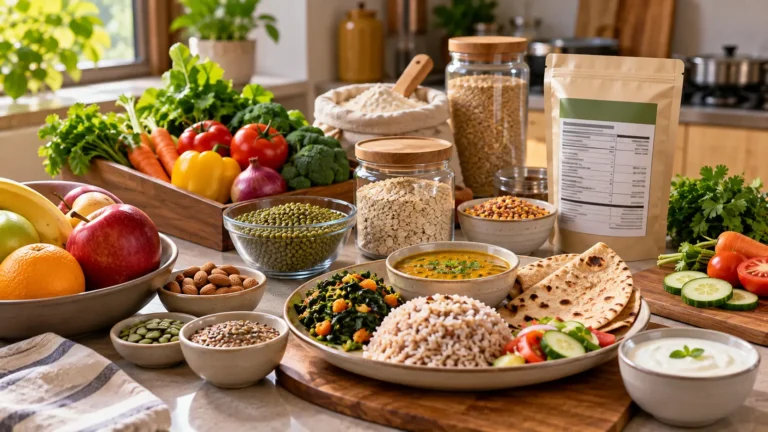
For an Indian meal, this could mean adding dal to lunch, choosing oats or another whole-grain breakfast, including chickpeas or beans in meals, and eating whole fruit rather than relying mainly on fruit juice.
Increase fibre gradually if your current intake is low, because a sudden increase can cause bloating or abdominal discomfort.
3. Choose whole grains and pulses more often
Replacing refined grains with higher-fibre whole-grain choices can make the overall diet more supportive of heart health.
Practical examples include:
- oats instead of a highly refined breakfast
- whole-wheat options instead of refined flour products
- brown rice or other whole grains when suitable for your diet
- barley
- dal
- rajma
- chana
- other pulses
The goal is not to eliminate rice or roti. It is to improve the overall quality and fibre content of the meals you eat regularly.
4. Replace saturated fats with unsaturated fats
A common mistake is to hear “fat is bad for cholesterol” and respond by trying to remove all dietary fat.
That is not the best approach.
The American Heart Association’s 2026 dietary guidance emphasizes choosing unsaturated fats in place of saturated fats as part of an overall heart-healthy eating pattern.
Useful foods can include:
- nuts
- seeds
- flaxseed
- suitable vegetable oils
- fish, for people who eat fish
- other minimally processed foods containing unsaturated fats
NIN also identifies nuts, seeds, pulses and several plant foods as sources of unsaturated fatty acids.
Portions still matter because fats are calorie-dense.
5. Make vegetables, fruit and plant proteins regular parts of meals
A heart-supportive eating pattern is broader than simply counting cholesterol.
The 2026 AHA dietary guidance emphasizes vegetables, fruits, whole grains, beans, nuts, seeds, unsaturated fats and lean proteins, while limiting highly processed foods high in saturated fat, added sugar and sodium.
For Indian households, this can fit naturally into familiar meals:
Breakfast: oats with fruit and nuts, or another fibre-rich breakfast.
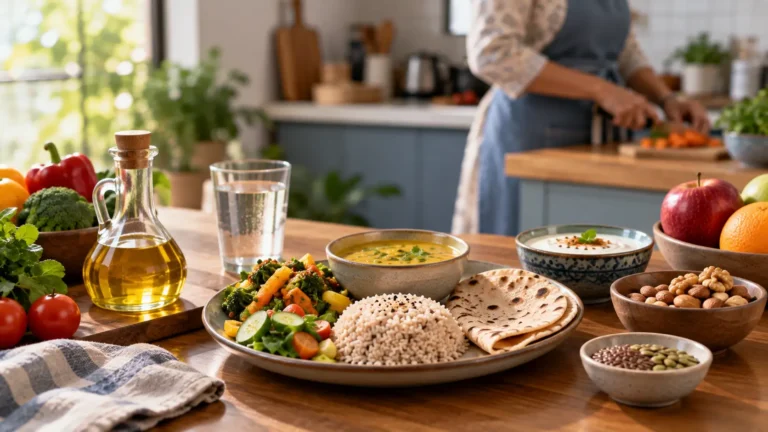
Lunch: roti or another whole-grain choice with dal, vegetables and a suitable protein.
Snack: fruit or a modest portion of unsalted nuts.
Dinner: vegetables plus dal, beans, fish or another lean protein, with an appropriate grain portion.
This is an example rather than a prescription. People with diabetes, kidney disease, food allergies or other medical conditions may need a different dietary plan.
6. Exercise regularly
Physical activity is another important part of cholesterol management.
Regular activity can improve several cardiovascular risk factors, including physical fitness, blood pressure and triglycerides, and can support healthier cholesterol levels.
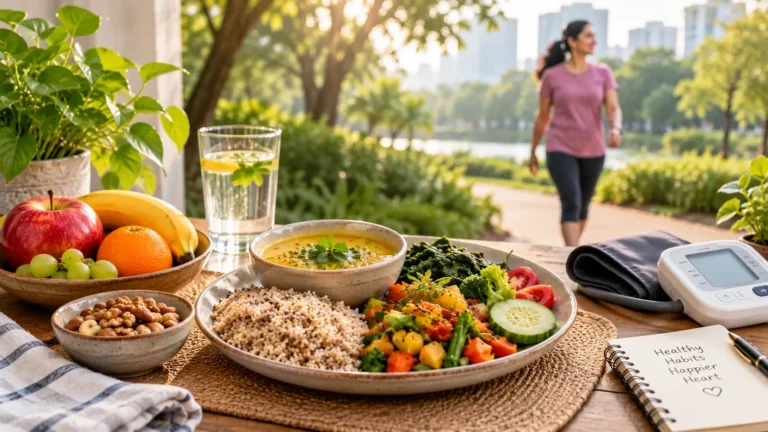
A practical starting point for many adults is brisk walking or another activity they can perform consistently. The AHA’s patient guidance emphasizes regular physical activity as part of cholesterol and cardiovascular-risk management.
If you have been inactive, have known heart disease, significant symptoms or another medical condition that could affect exercise safety, discuss an appropriate activity level with a healthcare professional before starting a demanding programme.
7. Manage weight if you have overweight or obesity
Weight is only one part of cardiovascular health, but excess body weight can be associated with an unhealthy lipid profile.
NHLBI notes that adults with overweight or obesity may improve LDL and other cholesterol measures with weight loss.
The goal should not be rapid weight loss. A sustainable eating pattern, regular movement, adequate sleep and appropriate medical support are more useful than crash diets.
8. Do not smoke or use tobacco
Smoking is harmful to cardiovascular health and is associated with an unhealthy cholesterol profile and greater cardiovascular risk.
If you use tobacco, quitting is a much broader health intervention than simply trying to change your LDL number. CDC identifies smoking as a modifiable risk factor associated with unhealthy cholesterol and cardiovascular disease.
If quitting is difficult, seek structured support rather than relying on willpower alone.
9. Be cautious with supplements and “natural cholesterol cures”
There is a large market for products marketed as natural cholesterol remedies.
Some ingredients can affect cholesterol measurements, but that does not automatically mean they improve long-term cardiovascular outcomes or are appropriate for everyone.
For example, research supports an LDL-lowering effect from plant sterols and stanols, but evidence about their effect on actual cardiovascular events is less certain.
Supplements can also interact with medicines. “Natural” does not mean risk-free.
Do not start a cholesterol supplement, stop a prescribed medicine or replace treatment with a supplement without discussing it with a qualified healthcare professional.
10. Can you lower LDL without medication?
Sometimes, but not always.
Lifestyle changes are an important foundation of cholesterol management, but the appropriate treatment depends on the person’s LDL level, age, medical history and overall cardiovascular risk.
The 2026 ACC/AHA dyslipidemia guideline emphasizes risk-based treatment decisions and earlier attention to elevated LDL and other atherogenic lipoproteins. It also recommends considering factors such as diabetes, kidney disease, family history and previous cardiovascular disease when determining treatment.
People with inherited conditions such as familial hypercholesterolaemia may have very high LDL levels and often require medication in addition to lifestyle measures.
Therefore, “lower LDL naturally without medicine” should not be treated as a universal goal.
The more appropriate goal is the safest evidence-based treatment plan for your individual cardiovascular risk.
When should you talk to a doctor about high LDL?
Professional assessment is particularly important if:
- your LDL is markedly elevated;
- you have already had a heart attack, stroke or other cardiovascular disease;
- you have diabetes;
- you have chronic kidney disease;
- you have a strong family history of early cardiovascular disease;
- very high cholesterol runs in your family;
- lifestyle changes have not adequately improved your results;
- you are already taking cholesterol medication;
- you are considering stopping or changing medication.
The 2026 dyslipidemia guideline also highlights the role of additional risk assessment, including lipoprotein(a) testing at least once in a lifetime for appropriate individuals. Whether this is useful for you is a clinical decision.
What should you do if your LDL stays high?
Do not assume that you have “failed” at lifestyle changes.
LDL is influenced by more than diet. Genetics, other medical conditions, medications and overall cardiovascular risk can all matter.
If your numbers remain high, discuss the results with your healthcare professional. They may review your diet, physical activity, family history, other health conditions and medications, and decide whether additional treatment is appropriate.
If you are prescribed a statin or another cholesterol-lowering medicine, take it as directed and do not stop it on your own. NHLBI specifically advises patients not to change the dose or skip cholesterol medication without speaking with their healthcare provider.
A simple Indian approach to lowering LDL
Rather than trying to completely redesign your diet, start with a few repeatable substitutions:
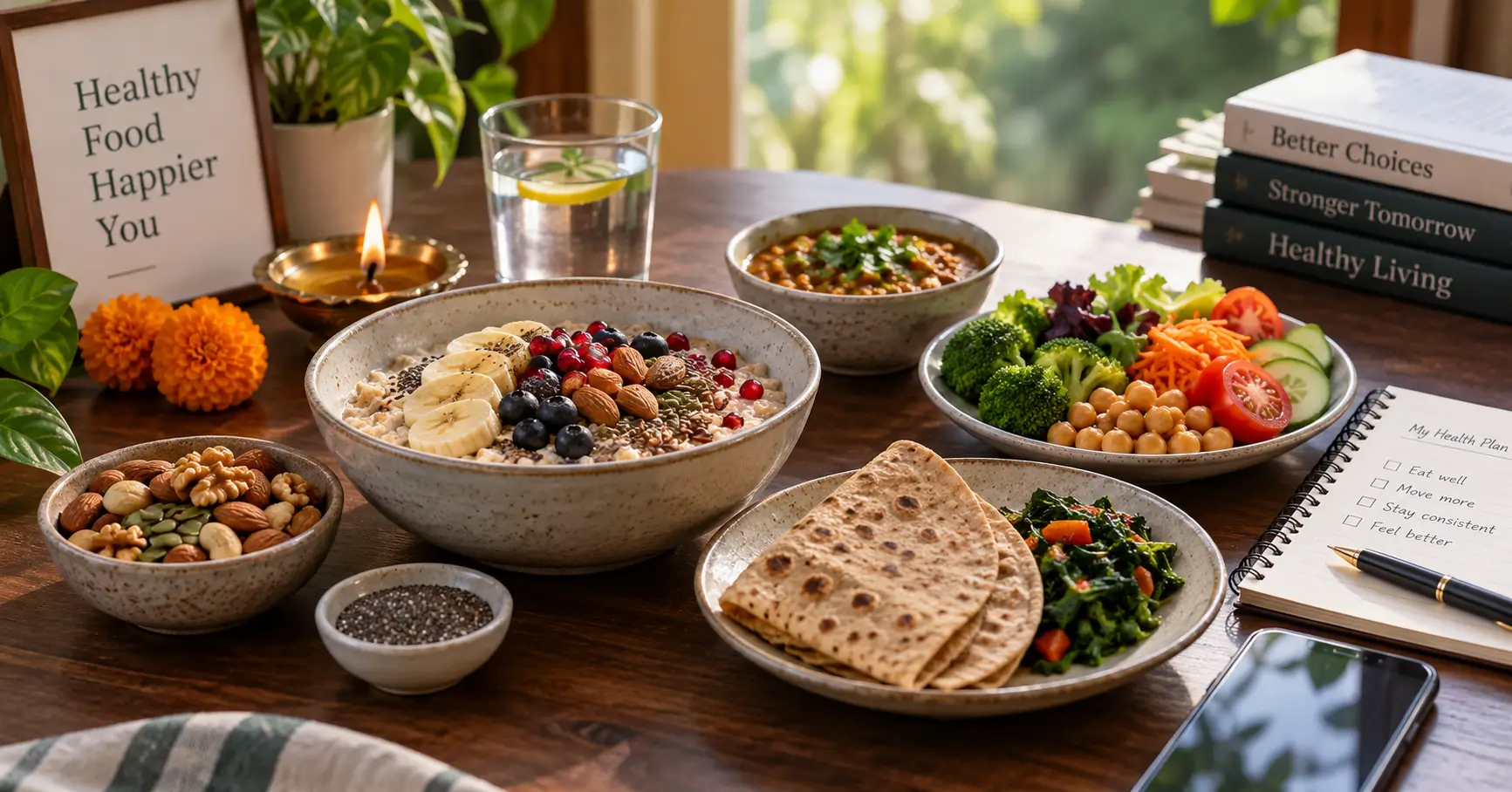
Breakfast: Add oats or another fibre-rich whole grain and include fruit.
Lunch: Make dal, beans or another plant protein a regular part of the meal and add vegetables.
Cooking: Reduce the amount of butter, ghee and other saturated-fat-rich ingredients where practical, while using appropriate amounts of unsaturated oils.
Snacking: Choose fruit, unsalted nuts or another minimally processed option more often than fried or packaged snacks.
Dinner: Build the meal around vegetables and a suitable protein source, with a sensible portion of whole grains or other carbohydrate foods.
Movement: Add regular brisk walking or another activity you enjoy and can maintain.
The objective is not a perfect day. It is a healthier pattern repeated consistently.
Common mistakes to avoid
Mistake 1: Looking for one “superfood”
No single food is likely to solve high LDL on its own. The overall dietary pattern matters more.
Mistake 2: Removing all dietary fat
The type of fat matters. Replacing saturated fat with unsaturated fat is more useful than simply trying to eliminate fat.
Mistake 3: Assuming exercise can cancel an unhealthy diet
Exercise is valuable, but it should complement—not compensate for—a consistently poor diet.
Mistake 4: Stopping medication when LDL improves
A better cholesterol result may reflect effective treatment. Do not discontinue medication without professional guidance.
Mistake 5: Ignoring family history
Genetic conditions can cause very high LDL. Lifestyle is important, but may not be sufficient by itself.
The bottom line
The most reliable way to lower LDL cholesterol is to work on the factors that have good evidence behind them: reduce saturated fat, eat more fibre-rich plant foods and whole grains, choose healthier unsaturated fats, stay physically active, manage weight when appropriate and avoid tobacco.
But lifestyle advice is not a substitute for individual medical assessment. Some people need cholesterol-lowering medication because of their LDL level, cardiovascular history, diabetes, kidney disease, inherited risk or overall cardiovascular risk.
If your LDL is high, the useful next step is not to search for a miracle food. Understand your risk, make sustainable lifestyle changes and discuss your results with a qualified healthcare professional.
Frequently Asked Questions
What is the best way to lower LDL cholesterol?
The strongest practical approach is to combine several lifestyle measures: reduce saturated fat, replace it with unsaturated fat, eat more soluble fibre and minimally processed plant foods, exercise regularly, maintain a healthy weight where appropriate and avoid tobacco. Some people also need medication based on their cardiovascular risk.
Which foods can help lower LDL cholesterol?
Foods rich in soluble fibre—such as oats, barley, beans, lentils and some fruits and vegetables—can help. Nuts, seeds and other sources of unsaturated fats can also fit into a heart-healthy eating pattern. The overall diet matters more than any individual food.
Is ghee bad for LDL cholesterol?
Ghee is a source of saturated fat. Regularly consuming large amounts can make it harder to reduce LDL, particularly when it replaces healthier unsaturated fats. The practical approach is to pay attention to portion size and the overall dietary pattern rather than treating one ingredient as the sole cause of high cholesterol.
Can exercise lower LDL cholesterol?
Regular physical activity can support healthier cholesterol levels and improves other cardiovascular risk factors. It works best as part of a broader lifestyle approach rather than as a replacement for dietary changes or prescribed treatment.
Can high LDL cholesterol have symptoms?
Usually, no. High cholesterol generally does not produce noticeable symptoms, which is why a lipid blood test is important for identifying an unhealthy cholesterol level.
Can LDL be lowered without medicine?
Some people can improve their LDL through lifestyle changes, but not everyone can reach an appropriate level without medication. The decision depends on LDL levels and overall cardiovascular risk. People with established cardiovascular disease, very high LDL, certain medical conditions or inherited cholesterol disorders may require medication.
How often should cholesterol be checked?
The appropriate testing interval depends on your age, health history, cholesterol level and whether you are receiving treatment. If you are taking cholesterol medication, your healthcare professional may recommend a repeat lipid panel after treatment begins or changes and then periodic monitoring.
Medical Disclaimer
This article is provided for general health and educational information only. It is not a personal diagnosis or individualized treatment plan and does not replace advice from a qualified doctor, registered dietitian or other appropriate healthcare professional.
LDL cholesterol targets and treatment decisions vary according to a person’s medical history, cardiovascular risk, age, other health conditions and laboratory results. Do not start, stop or change prescription cholesterol medication based solely on this article.
If you have concerning symptoms such as severe or persistent chest pain, difficulty breathing, sudden weakness, sudden trouble speaking or other possible signs of a medical emergency, seek urgent medical care rather than relying on online health information.