
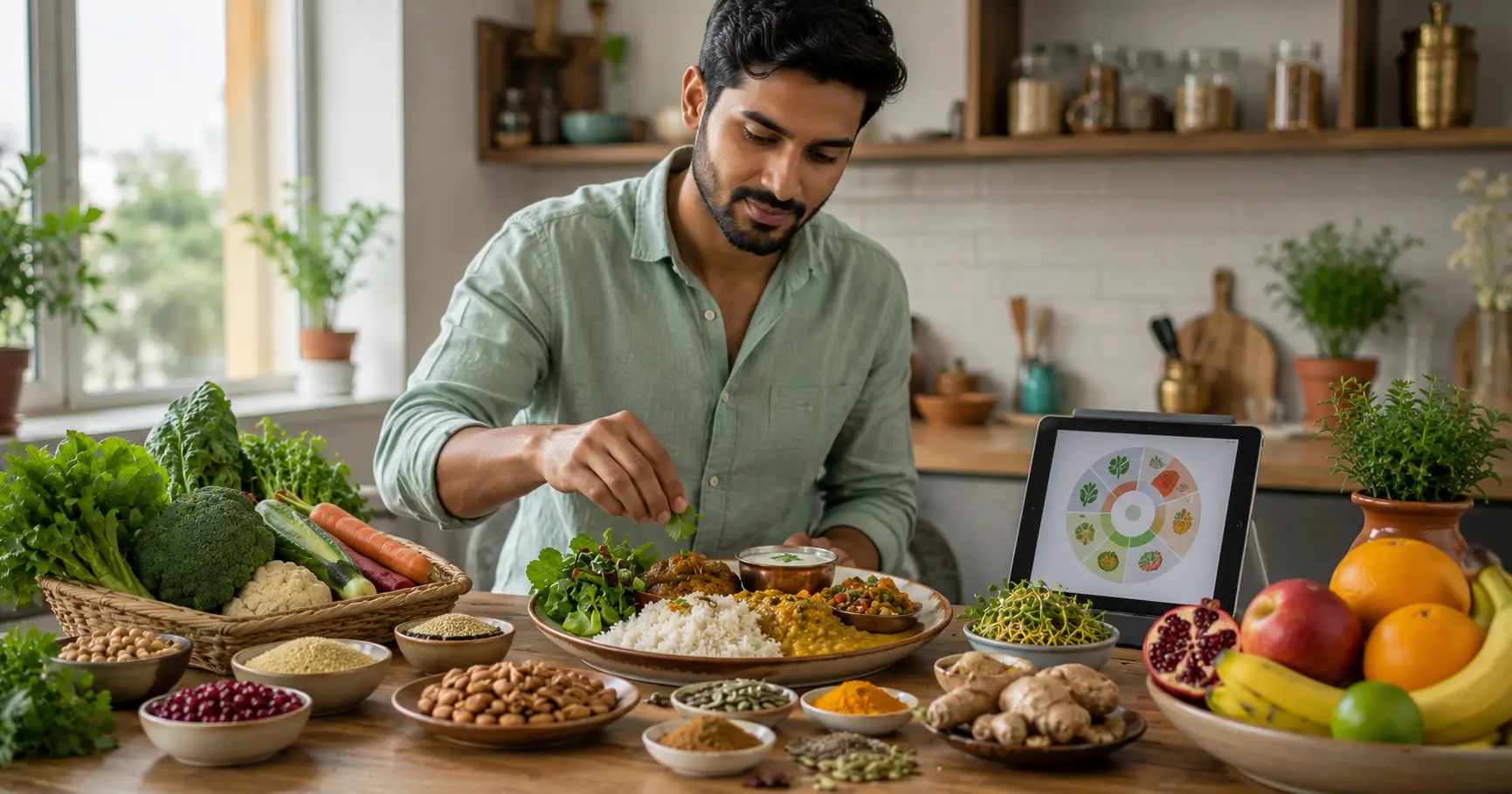

What if improving your diet were not about banning half the foods in your kitchen?
The Ayurvedic diet takes a different starting point. Traditional Ayurveda places considerable emphasis on food quality, preparation, timing, quantity and the individual’s broader lifestyle.
But there is an important modern question: Which parts of this approach are traditional philosophy, and which principles fit comfortably within current nutrition science?
The answer is more nuanced than the internet’s usual list of “dosha foods.”
Ayurveda is an ancient Indian health system that incorporates diet, lifestyle, herbs and other practices. Modern scientific evidence for Ayurveda varies considerably by intervention, and broad claims about its effectiveness should be treated cautiously.
That does not make traditional dietary practices irrelevant.
It means we should understand them accurately—and build meals that are nutritious as well as culturally meaningful.
What is an Ayurvedic diet?
An Ayurvedic diet is a traditional approach to eating influenced by the principles of Ayurveda.
Rather than defining one universal menu, Ayurveda considers factors such as prakriti, or individual constitution, traditional classifications of foods, meal timing, preparation methods, quantity and seasonal routines.
Traditional Ayurvedic guidance also uses the concepts of pathya and apathya—foods or dietary practices considered suitable or unsuitable in particular contexts.
Government of India Ayurveda guidance describes pathya ahara as part of healthy dietary and lifestyle regimens and emphasizes appropriate quantity, preparation and eating practices.
This is different from saying that every Ayurvedic food rule has been proven by modern clinical research.
A practical modern interpretation is to preserve the useful behaviors—such as eating mostly minimally processed foods, emphasizing variety and paying attention to portions—while avoiding unsupported disease-treatment claims.
What are Vata, Pitta and Kapha?
One of the most recognizable features of Ayurveda is the dosha framework.
Traditional Ayurveda describes three doshas:
| Dosha | Traditional description | Common dietary emphasis |
| Vata | Associated traditionally with movement and qualities such as lightness and dryness | Warm, cooked and nourishing foods |
| Pitta | Traditionally associated with transformation and qualities such as heat | Cooling, less intensely spicy foods |
| Kapha | Traditionally associated with stability and qualities such as heaviness | Lighter foods and appropriate portions |
These descriptions belong to the traditional Ayurvedic framework.
They should not be presented as medically validated biological categories equivalent to blood groups, hormones or clinical diagnoses.
A person’s dietary needs in modern nutrition depend on factors such as age, activity, health conditions, allergies, pregnancy, medications and overall dietary pattern.
The strongest practical approach is therefore to use dosha concepts as part of cultural or traditional dietary practice rather than as a substitute for medical nutrition assessment.
What foods are commonly included?
An Ayurvedic-style eating pattern can include many familiar Indian foods.
Whole grains and traditional staples
Depending on individual needs and cultural preferences, meals can include:
- Rice
- Wheat
- Oats
- Millets
- Barley
- Traditional whole-grain preparations
Modern nutrition guidance also supports whole grains as an important source of carbohydrates and dietary fiber. WHO recommends that carbohydrates come primarily from foods such as whole grains, vegetables, fruits and pulses.
Pulses and legumes
Dal, chickpeas, kidney beans, peas and other legumes provide protein, fiber and micronutrients.
They are particularly useful in Indian vegetarian diets because they can help build meals around plant-based protein.
Vegetables
A wide variety of vegetables can fit comfortably into an Ayurvedic-inspired meal pattern.
Examples include:
- Lauki
- Carrot
- Pumpkin
- Spinach
- Beans
- Bottle gourd
- Cauliflower
- Beetroot
- Okra
- Seasonal local vegetables
WHO recommends a diverse diet containing vegetables, fruits, legumes, nuts and whole grains.
Fruits
Seasonal fruits can provide fiber, vitamins, minerals and other beneficial plant compounds.
Examples include:
- Guava
- Papaya
- Apple
- Orange
- Pomegranate
- Banana
- Melons
- Seasonal berries
There is no need to turn fruit into a “detox” food. Its nutritional value is sufficient.
Nuts and seeds
Almonds, walnuts, sesame, flaxseed and other nuts and seeds can contribute healthy fats, protein, minerals and energy.
Portion size matters because these foods are nutrient-dense but calorie-dense.
What does “sattvic food” mean?
The term sattvic comes from the traditional Indian philosophical and yogic framework rather than modern nutrition science.
Government of India’s Morarji Desai National Institute of Yoga describes sattvic foods in its consumer material as naturally grown, fresh and relatively mild foods, including fruits, seasonal vegetables, cereals, sprouts, pulses and dairy products.
In popular wellness culture, “sattvic” is often used to describe clean, fresh and simple eating.
That can overlap with sensible nutrition choices.
However, claims that a particular food automatically “raises consciousness,” removes toxins or cures disease should not be presented as established medical facts.
7 practical principles for an Ayurvedic diet
The most useful lessons are often surprisingly simple.
1. Favor variety
Don’t build your diet around one “superfood.”
Rotate grains, pulses, vegetables, fruits, nuts and seeds.
Dietary diversity increases the likelihood of meeting different nutrient needs. WHO identifies diversity, adequacy, balance and moderation as core principles of healthy eating.
2. Prefer minimally processed foods
Traditional Indian diets contain many naturally minimally processed foods.
Dal, vegetables, fruits, whole grains, nuts and seeds can form the foundation of a nutritious diet.
Highly processed foods can still fit occasionally, but they should not dominate the plate.
3. Pay attention to meal quantity
Ayurvedic traditions place importance on appropriate quantity.
Modern nutrition reaches a similar practical conclusion from a different direction: energy needs vary between individuals, and portion size matters.
The goal is not to leave the table hungry.
It is to avoid routinely eating far beyond your body’s energy needs.
4. Eat mindfully
Put the phone away occasionally.
Slow down.
Notice taste, texture and fullness.
Mindful eating is not uniquely Ayurvedic, but it is a useful behavioral strategy for becoming more aware of eating patterns.
5. Use spices for flavor
Indian cooking naturally offers a wide range of spices:
- Turmeric
- Cumin
- Coriander
- Ginger
- Cardamom
- Cinnamon
- Fennel
- Black pepper
Spices can make simple foods more appealing without requiring excessive sugar or salt.
However, avoid turning culinary spices into exaggerated medical claims.
6. Adjust food to your circumstances
An office worker, endurance athlete, pregnant woman and older adult do not have identical nutritional requirements.
A useful Ayurvedic diet should not become so rigid that it ignores basic nutrition.
7. Eat with seasonal and local variety
Seasonal eating can make meals more diverse and practical.
It can also reduce dependence on a small number of foods.
This fits well with both traditional Indian food culture and modern advice to consume a wide variety of nutrient-dense foods.
What does a balanced Ayurvedic plate look like?
Instead of following an extremely restrictive “Ayurvedic diet chart,” start with a balanced Indian meal.
| Meal component | Examples |
| Whole-grain/staple | Roti, brown rice, millet, oats |
| Protein | Dal, beans, chickpeas, curd, paneer, eggs or other suitable sources |
| Vegetables | Two or more seasonal vegetables |
| Fruit | One serving when appropriate |
| Healthy fat | Nuts, seeds or a moderate amount of cooking oil |
| Flavor | Herbs and spices |
The exact quantities should depend on the person’s energy requirements and health goals.
ICMR-NIN’s 2024 Dietary Guidelines for Indians similarly organize balanced eating around cereals/millets, pulses and beans, green leafy vegetables, other vegetables, roots and tubers, fruits, nuts, milk/curd and fats/oils.
That makes a useful bridge between traditional Indian food culture and contemporary dietary guidance.
A simple Ayurvedic-inspired Indian day of eating
This is an illustrative meal pattern, not a personalized prescription.
Morning
Start with water according to your normal hydration needs.
Breakfast could include:
- Vegetable poha
- A serving of curd if tolerated
- Seasonal fruit
- A small portion of nuts
The goal is a nourishing meal rather than a “detox drink.”
Midday meal
A practical lunch could contain:
- Two rotis or a suitable rice portion
- Dal
- Seasonal vegetable sabzi
- Salad
- Curd or another suitable protein source
This creates a meal with carbohydrates, protein, fiber and micronutrients.
Evening
Instead of automatically reaching for biscuits or fried snacks, consider:
- Fruit
- Roasted chana
- Unsalted nuts
- Homemade snack
- Unsweetened or lightly sweetened beverage
Dinner
Keep the meal appropriate to your appetite and daily energy requirements.
For example:
- Moong dal khichdi
- Vegetable soup or cooked vegetables
- Curd if suitable
- A small serving of vegetables or salad
The meal does not need to be identical every day.
Ayurvedic diet for beginners: what to change first
Trying to overhaul everything on Monday morning is a common mistake.
Instead, make three changes.
Week 1: Improve food quality
Replace some highly processed snacks with fruit, nuts, roasted legumes or homemade foods.
Week 2: Improve meal composition
Add a protein source and vegetables to major meals.
Week 3: Improve consistency
Create predictable meal routines that fit your work, sleep and activity schedule.
This gradual approach is more realistic than trying to follow a complicated list of 50 Ayurvedic rules.
Foods to limit
There is no universal scientific list of foods that every person must eliminate because of Ayurveda.
Traditional Ayurvedic texts and modern Ayurvedic guidelines may classify foods differently depending on the context.
For general health, however, modern dietary guidance consistently supports limiting foods and drinks high in free sugars, unhealthy fats and excessive sodium. WHO also recommends emphasizing minimally processed and unprocessed foods.
A practical list to reduce includes:
- Sugary beverages
- Excess sweets
- Highly processed snacks
- Frequent deep-fried foods
- Excessively salty packaged foods
- Large amounts of alcohol
This is a modern nutrition recommendation rather than proof that every such food is “dosha-imbalancing.”
Can an Ayurvedic diet help with weight loss?
It can potentially help if the resulting eating pattern improves overall diet quality and energy balance.
For example, replacing sugary drinks and frequent fried snacks with vegetables, pulses, whole grains and appropriately sized meals may reduce overall calorie intake.
But it is misleading to claim that a particular dosha diet automatically causes fat loss.
WHO emphasizes that healthy diets depend on adequacy, balance, moderation and diversity, while energy intake should be balanced with expenditure.
Sustainable weight management generally requires attention to food intake, physical activity, sleep, behavior and individual circumstances.
Can an Ayurvedic diet improve digestion?
Many Ayurvedic dietary practices emphasize cooked foods, meal routines, mindful eating and attention to food quantity.
Those behaviors may be comfortable and useful for some people.
But digestive symptoms have many possible causes.
Persistent bloating, abdominal pain, vomiting, blood in the stool, unexplained weight loss or ongoing changes in bowel habits should not simply be labeled as a “dosha imbalance.”
Such symptoms warrant appropriate medical evaluation.
Ayurvedic diet and modern nutrition: where they overlap
The two frameworks are not identical, but there are areas of practical overlap.
| Traditional emphasis | Modern nutrition perspective |
| Fresh foods | Often consistent with minimally processed food choices |
| Seasonal variety | Supports dietary diversity |
| Appropriate quantity | Consistent with managing energy intake |
| Pulses and grains | Important sources of carbohydrates, protein and fiber |
| Fruits and vegetables | Strongly supported as nutrient-dense foods |
| Mindful eating | Useful behavioral practice |
| Excessive food avoidance | Can become problematic if overly restrictive |
WHO recommends diets built around a variety of vegetables, fruits, legumes, nuts and whole grains while limiting excess salt, free sugars and unhealthy fats.
The overlap is therefore strongest when Ayurvedic eating is interpreted as a whole-food, varied and mindful approach, rather than as a rigid system of disease cures.
Common mistakes with Ayurvedic diets
Mistake 1: Treating doshas as medical diagnoses
Vata, Pitta and Kapha are traditional Ayurvedic concepts.
They should not replace clinical diagnoses or laboratory testing.
Mistake 2: Following extreme elimination diets
Removing large food groups can create nutrient gaps.
NCCIH notes that restrictive special diets can put people at risk of nutritional deficiencies when major food groups are eliminated.
Mistake 3: Calling every Ayurvedic herb “safe”
“Natural” does not automatically mean risk-free.
Some Ayurvedic preparations have been found to contain potentially toxic metals, including lead, mercury and arsenic.
Mistake 4: Using an Ayurvedic diet instead of medical treatment
Diet can support overall health.
It should not be used as a reason to delay diagnosis or discontinue prescribed treatment.
NCCIH specifically advises people not to use Ayurvedic medicine to postpone conventional medical care.
Mistake 5: Confusing traditional claims with scientific evidence
A claim appearing in an ancient text is evidence of traditional use, not automatically evidence of clinical efficacy.
That distinction makes health content more trustworthy.
Myths vs Facts
Myth: Ayurvedic food is always healthier than modern food.
Fact: A food’s nutritional value depends on its composition, quantity, preparation and the overall diet. Traditional labeling alone does not determine healthfulness.
Myth: Everyone should follow the same dosha diet.
Fact: Traditional Ayurveda emphasizes individualization, while modern nutrition also recognizes differences in age, activity, health and nutritional needs.
Myth: Ayurvedic diets require expensive herbs and powders.
Fact: A practical Indian diet can be built around ordinary foods such as dal, vegetables, grains, fruits, nuts and seeds.
Myth: Ayurvedic diets can cure chronic diseases.
Fact: Evidence for Ayurveda varies by intervention, and broad cure claims are not supported by strong clinical evidence.
Myth: More restrictive means more Ayurvedic.
Fact: Excessive restriction can make it harder to meet nutritional needs and sustain the diet.
Is an Ayurvedic diet safe for everyone?
Not automatically.
Pregnant or breastfeeding people, children, older adults and people with diabetes, kidney disease, gastrointestinal conditions or other medical problems may have specific dietary requirements.
People taking medication should also be careful with herbal preparations because supplements and herbs can interact with medicines. NCCIH recommends discussing complementary products with healthcare professionals, particularly when health conditions or medications are involved.
An Ayurvedic-inspired food pattern based on ordinary nutritious foods is very different from taking concentrated herbal or mineral preparations.
That distinction matters.
The smartest modern approach to an Ayurvedic diet
You do not need to choose between tradition and nutrition science.
A sensible approach can combine the strengths of both.
Start with these five principles
- Build meals around minimally processed foods.
- Eat a wide variety of vegetables, fruits, pulses, grains, nuts and seeds.
- Use spices and herbs for flavor rather than relying heavily on sugar or salt.
- Choose portions that match your energy needs.
- Treat herbs, supplements and disease claims with much greater caution.
This approach also aligns with WHO’s core principles of adequacy, balance, moderation and diversity.
Key takeaways
An Ayurvedic diet is best understood as a traditional Indian approach to food, eating habits and lifestyle, not as a single scientifically standardized diet.
The most practical lessons are:
- Prioritize variety and minimally processed foods.
- Include vegetables, fruits, pulses and whole grains.
- Pay attention to portions and eating habits.
- Use dosha concepts as traditional frameworks, not medical diagnoses.
- Avoid extreme elimination diets.
- Do not assume every Ayurvedic herb or preparation is harmless.
- Do not replace necessary medical treatment with dietary practices.
- Combine traditional food wisdom with modern nutrition principles.
The most sustainable Ayurvedic-inspired meal may not be the most exotic one.
It could simply be a balanced plate of dal, vegetables, whole grains, curd or another protein source, seasonal fruit and a sensible amount of healthy fat, eaten with attention rather than distraction.
That is a far more useful starting point than chasing the next “miracle” Ayurvedic food.
FAQ
What is an Ayurvedic diet?
An Ayurvedic diet is a traditional approach to eating based on Ayurvedic concepts involving food quality, preparation, quantity, timing, individual constitution and lifestyle. It is not one standardized modern diet.
What foods are included in an Ayurvedic diet?
Common foods can include grains, millets, rice, pulses, vegetables, fruits, nuts, seeds, dairy and culinary herbs and spices. The exact foods traditionally recommended can vary according to Ayurvedic principles and individual circumstances.
What are Vata, Pitta and Kapha?
Vata, Pitta and Kapha are three traditional Ayurvedic doshas used to describe different patterns of qualities and functions. They are concepts within Ayurveda and should not be treated as modern medical diagnoses.
Can an Ayurvedic diet help with weight loss?
It may support weight management when it encourages balanced portions, minimally processed foods, vegetables, pulses and other nutritious foods. However, there is no evidence that following a particular dosha diet automatically causes weight loss.
Is an Ayurvedic diet scientifically proven?
Evidence varies substantially across Ayurvedic practices. Some individual interventions have been studied, but NCCIH notes that relatively few well-designed clinical trials allow broad conclusions about Ayurveda’s effectiveness.
Is an Ayurvedic diet safe?
A food-based diet emphasizing varied, minimally processed foods can be part of a healthy eating pattern, but restrictive diets and Ayurvedic herbal or mineral preparations require more caution. Some Ayurvedic products may contain toxic metals or interact with medications.
Conclusion
The Ayurvedic diet does not need to mean an expensive collection of herbs, complicated food restrictions or a rigid seven-day detox.
At its most practical, it can encourage people to pay attention to food quality, preparation, variety, quantity, seasonality and the experience of eating.
Modern nutrition supports several of those practical principles too. WHO recommends dietary diversity, minimally processed foods, whole grains, pulses, vegetables and fruits while limiting excessive free sugars, sodium and unhealthy fats. ICMR-NIN’s 2024 Dietary Guidelines similarly emphasize a diverse combination of cereals or millets, pulses, vegetables, fruits, nuts and other food groups.
The important boundary is evidence.
Vata, Pitta and Kapha are traditional Ayurvedic concepts—not substitutes for medical diagnoses. And herbs or Ayurvedic preparations should not automatically be assumed to be safe simply because they are described as natural.
For someone starting today, the simplest approach is also one of the most sustainable: build balanced Indian meals around vegetables, pulses, whole grains, fruits, nuts and appropriate protein; keep highly processed foods moderate; and adapt portions to your individual needs.
Start with one meal.
Make it balanced, fresh and enjoyable.
Then build the habit from there.
Disclaimer
This article is intended for general health, nutrition and educational purposes and does not constitute individualized medical or dietary advice.
Ayurveda is a traditional medical system with its own concepts and practices. Traditional Ayurvedic claims should not automatically be interpreted as scientifically established medical facts. Evidence varies considerably across Ayurvedic interventions.
Dietary requirements differ according to age, activity level, pregnancy status, medical conditions, medications, allergies and other factors. People with diabetes, kidney disease, gastrointestinal disorders, eating disorders or other health conditions should seek individualized advice from an appropriately qualified healthcare professional or registered dietitian.
Do not discontinue prescribed medication or delay medical diagnosis in favor of an Ayurvedic diet or other complementary practice.
Extra caution is appropriate with concentrated Ayurvedic herbal or mineral preparations because some products have been associated with contamination or potentially toxic levels of heavy metals.

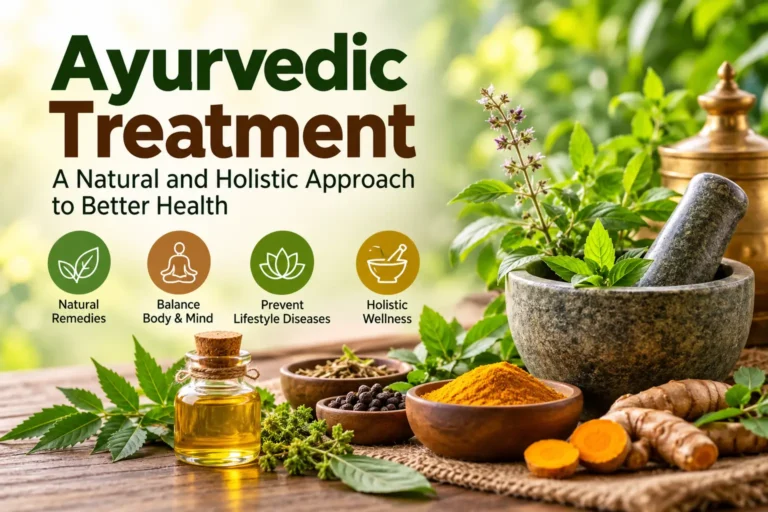
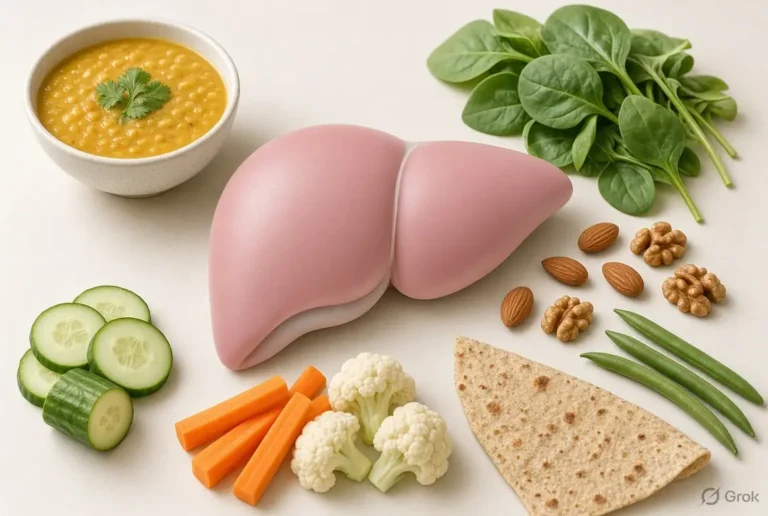
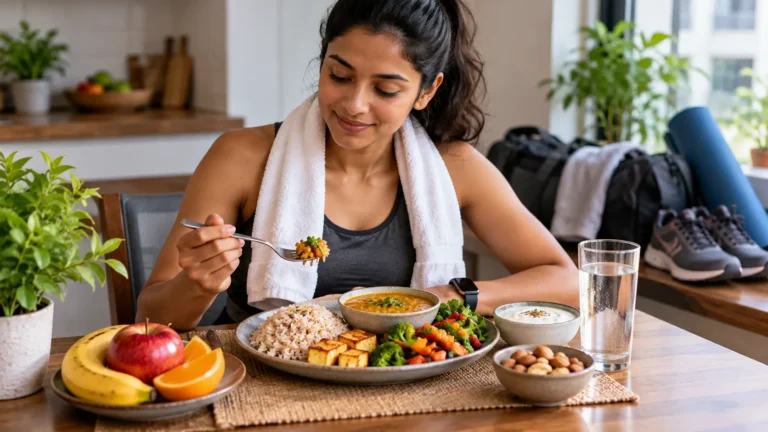
[…] treatment is a traditional Indian approach to health that may include herbal medicines, dietary recommendations, lifestyle changes, massage and other therapeutic practices. It is widely known in India and is […]