
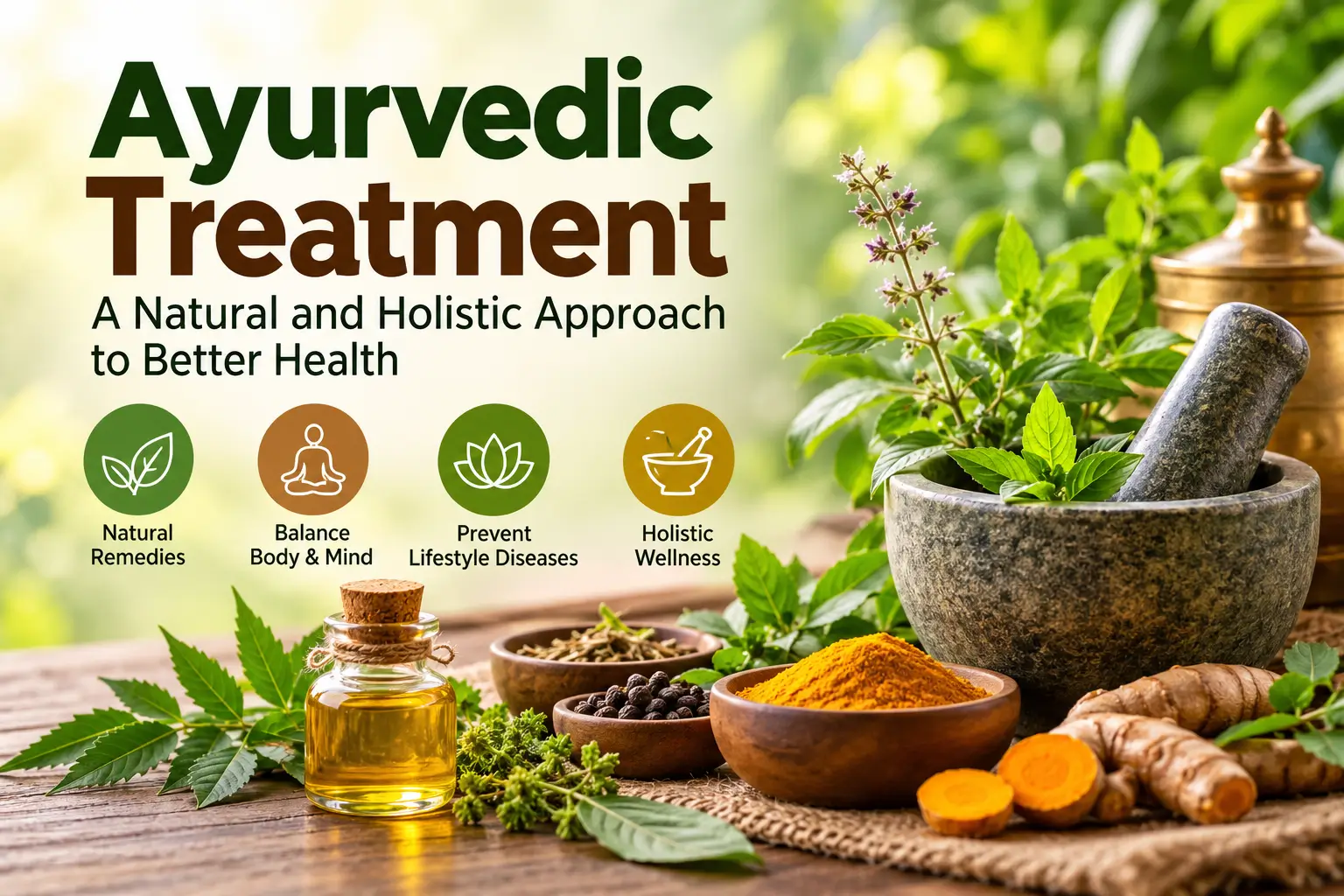

Ayurvedic treatment is a traditional Indian approach to health that may include herbal medicines, dietary recommendations, lifestyle changes, massage and other therapeutic practices. It is widely known in India and is often explored by people seeking a holistic approach to wellbeing.
However, the benefits and safety of Ayurvedic treatment depend on the specific therapy, preparation, health condition and individual circumstances. Some approaches may support general wellbeing, while the evidence for many disease-specific treatments remains limited. Certain preparations can also cause side effects or interact with prescribed medicines.
This guide explains what Ayurvedic treatment involves, what scientific research says about its potential benefits, how to reduce risks and when to seek conventional medical care.
Medical disclaimer: This article provides general health information, not an individual diagnosis or treatment plan. It has not been medically reviewed by a named qualified professional.
What Is Ayurvedic Treatment?
Ayurveda is a traditional system of medicine that originated in India. It takes a broad approach to health, considering diet, daily habits, physical activity, sleep and other aspects of lifestyle alongside specific treatments.
Depending on the practitioner’s approach and the person’s needs, Ayurvedic care may involve:
- Herbal preparations: Products made from plant ingredients or combinations of ingredients.
- Dietary guidance: Recommendations concerning food choices, meal patterns and eating habits.
- Lifestyle practices: Daily routines, movement, relaxation and sleep-related habits.
- Massage and external therapies: Treatments that may be used for relaxation or particular symptoms.
- Specialized procedures: Certain practices, including Panchakarma, offered in some Ayurvedic settings.
These approaches are not interchangeable. Evidence supporting one particular intervention does not establish that every Ayurvedic medicine or therapy is effective.
The World Health Organization has published benchmarks for the practice of Ayurveda that address practitioner qualifications, service organization, treatment practices and patient safety.
Source: WHO — Benchmarks for the Practice of Ayurveda.
What Are the Potential Benefits of Ayurvedic Treatment?
Ayurvedic treatment is used for a wide range of health concerns. However, it is important to distinguish traditional uses and possible benefits from effects demonstrated in reliable clinical studies.
1. Support for relaxation and general wellbeing
Some people use massage, relaxation practices and lifestyle guidance as part of their approach to wellbeing. These practices may help with relaxation or provide a structured daily routine.
The benefit depends on the particular intervention and the person’s circumstances. Feeling relaxed after a treatment does not necessarily mean that an underlying medical condition has improved.
2. Possible symptom relief for certain conditions
Some studies have investigated specific Ayurvedic preparations and approaches for conditions such as osteoarthritis and type 2 diabetes. A few findings are promising, but the available studies are often small or have methodological limitations.
The National Center for Complementary and Integrative Health notes that the evidence is insufficient to draw firm conclusions about many Ayurvedic treatments.
Source: NCCIH — Ayurvedic Medicine: In Depth.
Patients should not assume that a treatment is effective for a particular disease simply because it is traditionally used for that condition.
3. Greater attention to daily habits
Some Ayurvedic care plans emphasize food choices, activity, sleep and regular routines. These areas are relevant to everyday health and can complement an appropriate healthcare plan.
For example, an individual may benefit from a more consistent sleep schedule, regular physical activity and a balanced diet. Such benefits should not automatically be attributed to an herbal medicine or specialized Ayurvedic procedure used at the same time.
4. A complementary approach to healthcare
Some people prefer to discuss traditional approaches alongside conventional medical care. When appropriately assessed, selected practices may be considered as complementary options.
Complementary care should not delay diagnosis or replace effective treatment for serious or progressive diseases. Discuss any proposed treatment with the healthcare professionals responsible for managing your condition.
What Does Scientific Research Say About Ayurveda?
The scientific evidence is not uniform across Ayurvedic treatments.
Research findings must be interpreted according to the intervention studied, the quality of the research, the number of participants, the duration of follow-up and whether the results have been independently replicated.
| Research question | What can reasonably be concluded? |
|---|---|
| Does Ayurveda improve general wellbeing? | Some individual practices may support relaxation or healthy routines, but results cannot be generalized to all Ayurvedic interventions. |
| Can Ayurvedic medicines treat specific diseases? | Evidence varies by product and condition; many claims need better-quality research. |
| Are all Ayurvedic products safe? | No. Product composition, dosage, manufacturing quality and interactions affect safety. |
| Can Ayurveda replace prescribed treatment? | It should not replace necessary medical treatment without an appropriate clinical decision. |
The WHO’s Traditional Medicine Strategy 2025–2034 emphasizes strengthening evidence, improving safety and quality, and supporting appropriate integration into health systems.
Source: WHO — Global Traditional Medicine Strategy.
The practical takeaway is straightforward: evaluate each treatment on its own evidence and risks rather than treating Ayurveda as a single intervention with one established level of effectiveness.
What Are the Risks and Side Effects of Ayurvedic Treatment?
Ayurvedic treatment is not automatically risk-free because a product is described as natural or traditional.
Potential risks include the following.
1. Side effects from herbal ingredients
Herbal ingredients can produce unwanted effects. The risk may depend on the substance, amount consumed, duration of use, existing health conditions and other medicines.
Stop and seek medical advice if you develop a suspected reaction after starting a product. Severe allergic symptoms or breathing difficulty require emergency medical attention.
2. Heavy metal contamination or exposure
Some Ayurvedic preparations may contain lead, mercury or arsenic at potentially harmful levels. Certain traditional formulations deliberately incorporate metals or minerals, while contamination and manufacturing problems can create additional risks.
A systematic scoping review published in 2021 examined heavy metals in Indian traditional medicines and identified important product-quality and safety concerns.
Source: PubMed — Heavy Metals in Indian Traditional Systems of Medicine.
This does not mean that every Ayurvedic medicine contains toxic metals. It does mean that product composition and quality should not be assumed from marketing claims alone.
3. Interactions with prescribed medicines
An herbal product may affect the action or safety of another medicine. This is particularly important for people taking medicines for diabetes, blood pressure, blood clotting or other long-term conditions.
Tell your doctor and pharmacist about every herbal preparation, supplement and traditional medicine you use. Do not independently stop or reduce prescribed medication.
4. Delayed diagnosis or treatment
A major risk arises when a person relies on traditional treatment for symptoms that require timely medical investigation.
Persistent fever, unexplained weight loss, worsening pain, unusual bleeding or continuing digestive problems should not automatically be attributed to an imbalance that can be corrected through an alternative therapy.
Serious conditions such as cancer, severe infections and complications of diabetes require appropriate medical evaluation and evidence-based care.
5. Risks from unsuitable procedures
Some therapies may be inappropriate for certain people. Pregnancy, older age, childhood, chronic illness and recent surgery can change the risk profile.
Ask a qualified practitioner to explain the intended benefit, contraindications, possible complications and alternatives before agreeing to a procedure.
How to Choose Ayurvedic Treatment More Safely in India
If you are considering Ayurveda, use the following checklist before beginning treatment.
1. Check the practitioner’s credentials. Verify the practitioner’s relevant qualifications and registration with the appropriate state or national authority. Do not rely solely on a clinic’s promotional claims.
2. Share your complete medical history. Explain your symptoms, allergies, existing diagnoses, pregnancy status where relevant, and all medicines or supplements you take.
3. Ask for the exact product details. Obtain the product name, ingredient list, manufacturer, batch information, recommended use and applicable warnings.
4. Ask about the evidence. Find out what the treatment is expected to achieve, how success will be assessed, what uncertainties remain and what alternatives are available.
5. Avoid guaranteed-cure claims. Be cautious of anyone promising to cure every chronic disease, advising you to abandon prescribed treatment, or pressuring you to purchase expensive packages.
6. Agree on follow-up. Establish when the treatment should be reviewed and what symptoms or adverse effects require stopping it or seeking medical care.
India’s Ministry of Ayush supports pharmacovigilance through Ayush Suraksha, which collects suspected adverse reactions and monitors misleading advertisements associated with Ayush medicines.
Source: Ayush Suraksha — Official Patient Safety and Pharmacovigilance Platform.
Ayurvedic Treatment vs Modern Medicine
Ayurveda and conventional medicine differ in their historical foundations, diagnostic approaches and treatment methods. The appropriate choice depends on the condition, available evidence, individual risks and the urgency of care.
| Consideration | Ayurvedic care | Conventional medical care |
|---|---|---|
| Approach | May combine traditional medicines, diet and lifestyle practices | Uses established diagnostic methods and a range of medical and surgical treatments |
| Evidence | Varies substantially by therapy and condition | Varies by intervention, with established guidelines and evidence for many conditions |
| Product or treatment risks | Can include adverse reactions, interactions and product-quality concerns | Also carries risks, including medication side effects and procedural complications |
| Best next step | Verify credentials, product quality and evidence | Seek appropriate diagnosis and treatment based on the condition |
This comparison should not be interpreted as a claim that every conventional treatment is effective or every traditional treatment is ineffective. Both benefits and risks must be assessed carefully.
For a serious condition, seek timely medical evaluation and discuss any complementary treatment with the clinician responsible for your care.
Who Should Be Especially Careful?
Speak with an appropriately qualified healthcare professional before starting Ayurvedic medicines or intensive therapies if you:
- Are pregnant or breastfeeding.
- Are considering treatment for a child.
- Have kidney or liver disease.
- Have diabetes, cardiovascular disease or another long-term condition.
- Take prescription medicines or multiple supplements.
- Are preparing for surgery or recovering from a major illness.
- Have symptoms that are severe, persistent or unexplained.
These circumstances do not automatically rule out every Ayurvedic practice. They do make individualized safety assessment particularly important.
Frequently Asked Questions About Ayurvedic Treatment
Is Ayurvedic treatment effective?
Effectiveness depends on the particular treatment and condition. Some approaches have promising preliminary findings, but evidence remains limited for many claims. Consult reliable research and qualified healthcare professionals before relying on a treatment for a disease.
Is Ayurvedic treatment safe for everyone?
No. Some preparations can cause side effects, interact with medicines or contain harmful levels of heavy metals. Individual health conditions, product quality and the way treatment is used all affect safety.
Can Ayurvedic treatment cure chronic diseases?
There is no sound basis for claiming that Ayurveda cures all chronic diseases. Do not replace proven treatment for diabetes, cancer, heart disease or other serious conditions with an unverified therapy.
Can I take Ayurvedic medicine with allopathic medicine?
Not without checking for potential interactions. Tell your doctor or pharmacist the exact names and ingredients of all products you use before combining treatments.
Is Ayurvedic treatment better than modern medicine?
Neither system should be declared universally better for every condition. Treatment decisions should reflect the diagnosis, quality of evidence, expected benefits, risks and availability of effective care.
How can I identify a qualified Ayurvedic practitioner in India?
Check relevant qualifications and professional registration with the appropriate authority. Ask about experience with your particular condition, treatment risks, evidence, follow-up and referral arrangements.
Are Ayurvedic herbal products always free from heavy metals?
No. Some preparations contain metals or minerals by design, and contamination can also occur. Product-specific quality and safety assessment is important.
Final Takeaway
Ayurvedic treatment is an important part of India’s traditional healthcare heritage, but its potential benefits should be considered alongside the available scientific evidence and possible risks.
The safest approach is to choose qualified practitioners, verify products, disclose all medicines and health conditions, and avoid unsupported cure claims. Use conventional medical care when a condition requires diagnosis or proven treatment, and discuss complementary approaches with your healthcare professional.
At Peaceful Health, the goal is to help readers make informed health decisions through balanced explanations, credible evidence and practical safety guidance.