
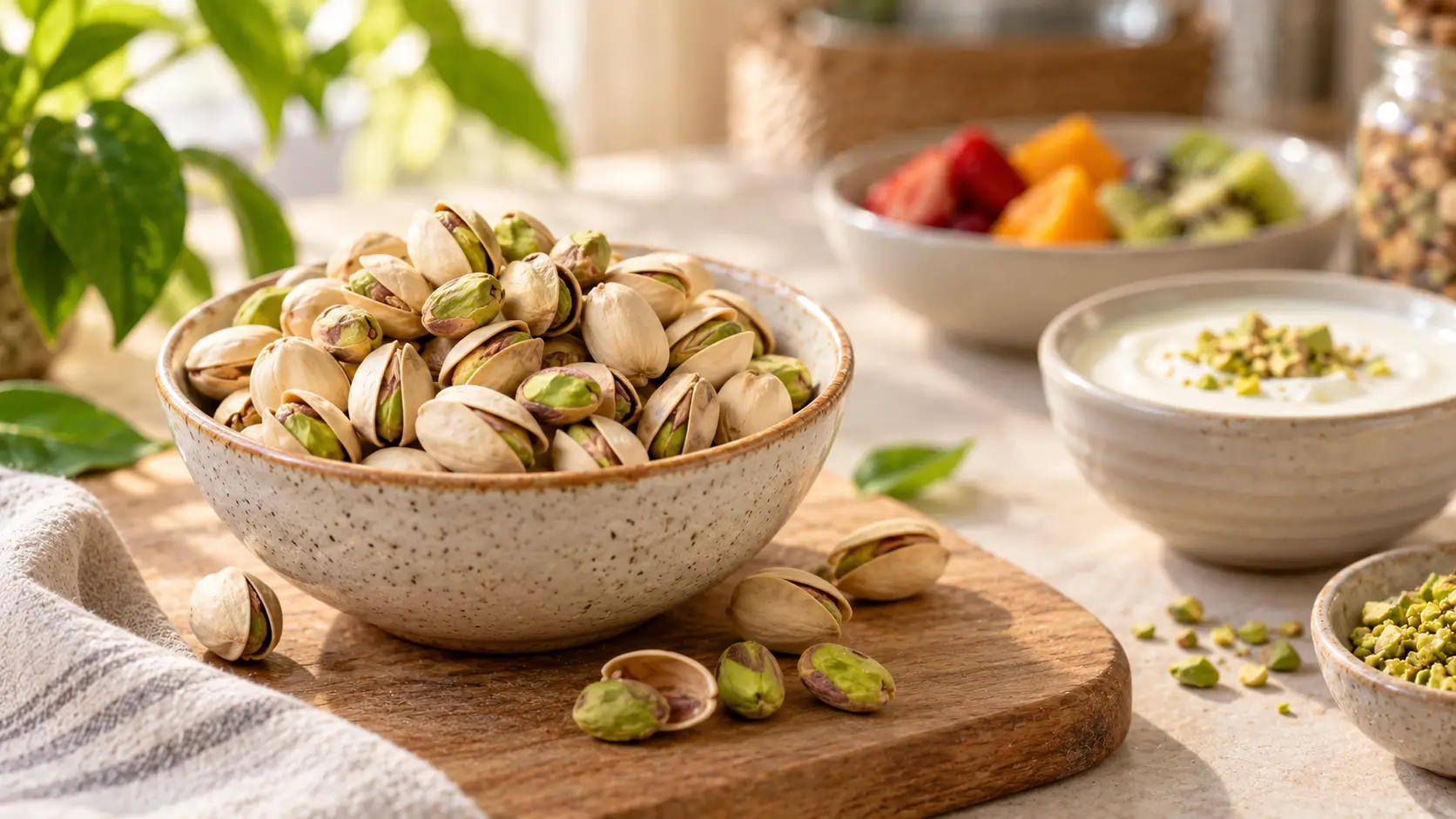

Pistachios, commonly called pista in India, are more than a popular dry fruit. They provide unsaturated fats, plant protein, fibre and a range of micronutrients and plant compounds, making them a useful part of a balanced diet.
But many online articles go further than the evidence allows, describing pista as a food that can prevent diabetes, cause weight loss or protect against several diseases. The reality is more measured. Research suggests pistachios can contribute to a healthy dietary pattern and may improve some cardiometabolic measures, but they are not a treatment for any disease.
This guide explains the main pistachio benefits, what human research actually shows, how much may be a sensible portion, and who should be cautious.
Quick Answer
Pistachios are nutrient-dense nuts containing unsaturated fats, protein, fibre, minerals and plant compounds such as lutein and phytosterols. Regularly including an appropriate portion of unsalted pistachios in a balanced diet may support cardiovascular and metabolic health.
Research has found potentially beneficial effects on measures such as blood pressure and fasting blood glucose, although studies have limitations and results should not be interpreted as proof that pistachios treat hypertension or diabetes.
For most adults, a small handful — about 1 ounce or 28 grams — is a practical portion.
What Are Pistachios?
Pistachios are the edible seeds of the pistachio tree, Pistacia vera. They belong to the tree-nut group and are commonly eaten raw, roasted or incorporated into foods such as salads, yoghurt, rice dishes and desserts.
The 2024 Dietary Guidelines for Indians from ICMR-NIN specifically include pistachios in the nuts, oilseeds, oils and fats food group. The guidelines also emphasize dietary variety and modest portions of nuts or seeds as part of a healthy meal.
That distinction matters: pistachios are one useful food within a varied diet, not a replacement for vegetables, fruits, pulses, whole grains or other nutritious foods.
Pistachio Nutrition
Pistachios provide several nutrients that help explain their place in a healthy eating pattern.
They contain:
- unsaturated fats
- plant protein
- dietary fibre
- potassium
- phosphorus
- magnesium
- vitamin B6
- copper
- vitamin K
- carotenoids such as lutein and zeaxanthin
- plant sterols and other bioactive compounds
They are also energy-dense. For example, Mayo Clinic lists about 162 calories and 13 grams of fat in 1 ounce (28.4 grams) of dry-roasted pistachios.
The nutritional advantage therefore comes from what those calories provide, rather than from being a low-calorie food.
1. Pistachios Can Support Heart-Healthy Eating
One of the better-studied areas is cardiovascular health.
Pistachios contain predominantly unsaturated fats, along with fibre, plant protein and other compounds found in nuts. Replacing some less nutritious snacks or foods high in saturated fat with nuts can therefore improve the overall quality of a diet.
Pistachio-specific clinical research is also encouraging. Systematic reviews of randomized controlled trials have reported reductions in systolic blood pressure and improvements in some lipid or metabolic measures.
However, these studies are not evidence that eating pistachios alone prevents heart attacks or treats high blood pressure.
The more accurate conclusion is that pistachios can be one component of a heart-supportive eating pattern.
2. They May Help With Blood-Sugar Control
Pistachios have attracted interest in blood-glucose research because they combine fat, protein and fibre rather than being primarily a refined carbohydrate food.
A systematic review and meta-analysis of randomized trials found that pistachio consumption, when exchanged for other foods, reduced fasting blood glucose and insulin concentrations in people at high cardiovascular risk. However, the analysis did not find a significant improvement in every measure of insulin resistance, and the researchers noted limitations in the available studies.
This means pistachios may fit well into a balanced diet for people concerned about metabolic health, but they should not be described as a diabetes treatment.
People with diabetes should continue following their individualized dietary and medical plan.
3. Pistachios May Fit Into Weight-Management Diets
Pistachios are relatively filling because they provide fat, protein and fibre. This can make them a useful alternative to highly processed snack foods.
Importantly, however, “healthy snack” does not mean “unlimited snack.”
Pistachios still contain substantial calories. Eating large amounts in addition to an already adequate diet can increase total energy intake.
Research on pistachios and body weight is encouraging but not definitive. One meta-analysis of randomized controlled trials found a modest reduction in BMI but no significant reduction in body weight or waist circumference.
So the sensible message is simple: pistachios can be part of a weight-management diet, particularly when they replace less nutritious snacks, but they do not automatically cause weight loss.
4. Pistachios Provide Nutrients Relevant to Eye Health
Pistachios contain the carotenoid lutein, along with zeaxanthin.
These compounds are found in the retina and contribute to macular pigment. Recent human research is particularly interesting: a small randomized controlled trial involving 36 healthy adults found that consuming pistachios for 12 weeks increased macular pigment optical density.
That is a useful research finding, but it should not be exaggerated.
The study was small and involved a specific group of adults. It does not establish that pistachios prevent age-related macular degeneration or replace an eye-health treatment.
The strongest practical conclusion is that pistachios can contribute lutein and other nutrients to a varied diet that includes vegetables, fruits and other nutrient-rich foods.
5. They May Support a Healthy Gut Environment
Pistachios contain fibre and plant compounds that can interact with the gut microbiome.
Research on nuts as a broader category has found changes in certain gut bacterial groups, but the evidence specifically for pistachios remains limited. A systematic review of randomized trials included only one pistachio trial among the studies examining nuts and gut microbiota.
Therefore, it is reasonable to say pistachios provide fibre that contributes to a healthy diet, but it is too early to promise a specific “gut-healing” effect from pistachios.
6. They Add Nutritional Variety to an Indian Diet
One of the most practical pista benefits is not a single medical effect.
Pistachios can add variety to meals and snacks.
For example, you can use a small portion of unsalted pistachios with:
- plain curd and fruit
- oats or a breakfast bowl
- a vegetable salad
- homemade trail mix
- roasted chana
- whole-grain dishes
- a small snack between meals
They can also be eaten on their own instead of biscuits, confectionery or other highly processed snacks.
How Many Pistachios Should You Eat?
There is no universal number that every adult should eat every day.
A useful portion guide is approximately 1 ounce (28 grams), or a small handful.
The exact amount that fits your diet depends on your overall calorie needs, other sources of nuts and seeds, activity level and health status.
If you are trying to manage your weight, measuring the portion rather than eating directly from a large packet can make it easier to avoid unintentionally overeating.
Raw, Roasted or Salted Pista?
For everyday eating, unsalted or lightly salted pistachios are generally the better choice.
Raw and dry-roasted versions can both fit a healthy diet. Mayo Clinic recommends raw or dry-roasted nuts rather than nuts cooked in oil.
Salted pistachios are not automatically unhealthy, but frequent consumption can add sodium to the diet.
Flavoured pistachios may also contain added sugar or other ingredients, so checking the nutrition label is useful.
Who Should Avoid or Limit Pistachios?
People with a pistachio allergy
Anyone with a known pistachio allergy should avoid pistachios and follow their healthcare professional’s allergy-management plan. Food-allergic reactions can range from mild symptoms to life-threatening anaphylaxis.
Pistachios are tree nuts, and clinically important cross-reactivity can occur between pistachios and cashews.
People with kidney disease
Pistachios contain potassium and phosphorus. People with chronic kidney disease do not necessarily need to avoid nuts, but some may need individualized limits depending on kidney function, blood test results and dialysis status.
A kidney dietitian or healthcare professional can determine whether pistachios fit a particular renal diet.
People following sodium-restricted diets
Choose unsalted or lightly salted pistachios if sodium intake needs to be controlled.
Common Pista Myths
Myth: Pistachios automatically cause weight loss.
Not true. They can be filling and can replace less nutritious snacks, but portion size still matters.
Myth: Pistachios cure diabetes.
There is no evidence that pistachios cure diabetes. Research suggests possible improvements in some glucose-related measures.
Myth: More pistachios means more health benefits.
Not necessarily. Pistachios are nutritious but energy-dense, so more is not always better.
Myth: Salted pistachios are just as good as unsalted ones.
The nut itself remains nutritious, but added sodium makes unsalted or lightly salted options preferable for many people.
Practical Takeaway
Pistachios are a nutritious food that can fit well into a balanced Indian diet. Their strongest practical advantages are their combination of unsaturated fats, plant protein, fibre, minerals and bioactive compounds.
Human research suggests possible benefits for blood pressure and blood-glucose measures, while newer research on eye health is promising but still limited.
The best way to eat pista is therefore not as a “superfood cure,” but as a moderate portion of a varied diet — preferably unsalted or lightly salted and used in place of less nutritious snack choices.
If you have a tree-nut allergy, kidney disease or a medically prescribed diet, your individual requirements may be different.
FAQ
Are pistachios good for health?
Yes. Pistachios provide unsaturated fats, plant protein, fibre and several micronutrients and plant compounds. They can form part of a balanced diet.
How many pistachios should I eat a day?
A practical portion is about 1 ounce or 28 grams, roughly a small handful. Individual needs vary, so this is a portion guide rather than a universal prescription.
Are pistachios good for the heart?
They can contribute to a heart-healthy dietary pattern. Randomized trials have reported improvements in some cardiovascular risk markers, including systolic blood pressure, but pistachios should not be considered a treatment for heart disease.
Can pistachios help control blood sugar?
Research suggests pistachio consumption may improve fasting blood glucose in some populations, but evidence is not strong enough to describe pistachios as a diabetes treatment.
Do pistachios help with weight loss?
Not directly. Pistachios can be filling and may fit into a weight-management diet, particularly when replacing less nutritious snacks, but they are still calorie-dense and do not guarantee weight loss.
Are pistachios good for the eyes?
Pistachios contain lutein and zeaxanthin. A small randomized trial found that 12 weeks of pistachio consumption increased macular pigment optical density, but more research is needed before making disease-prevention claims.
Who should avoid pistachios?
People with a known pistachio allergy should avoid them. Some people with kidney disease may also need to limit pistachios because of potassium or phosphorus, depending on their individual medical situation.
Is salted pista healthy?
Salted pistachios still contain the nutrients found in pistachios, but added sodium can make them less suitable for people trying to restrict sodium. Unsalted or lightly salted versions are generally preferable.
MEDICAL DISCLAIMER
This article is for general educational and informational purposes and does not replace individualized medical or dietary advice. Nutritional needs vary according to health status, medications, allergies, kidney function, pregnancy, activity level and other factors.