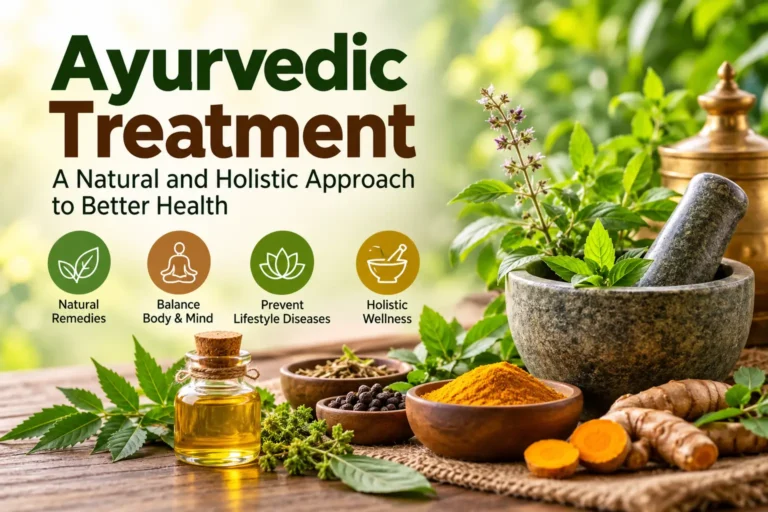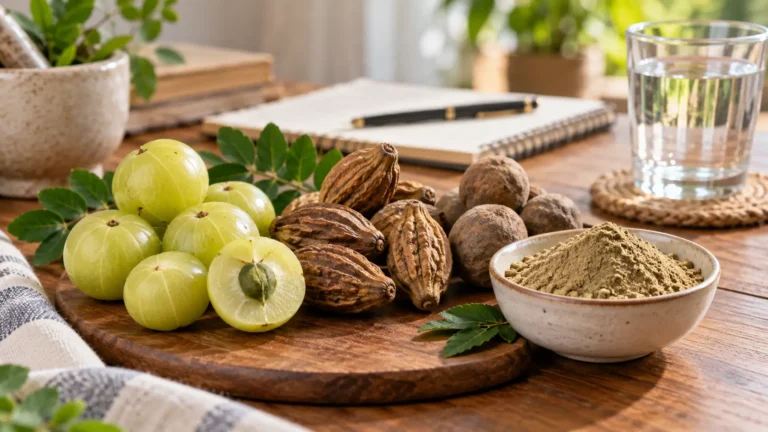
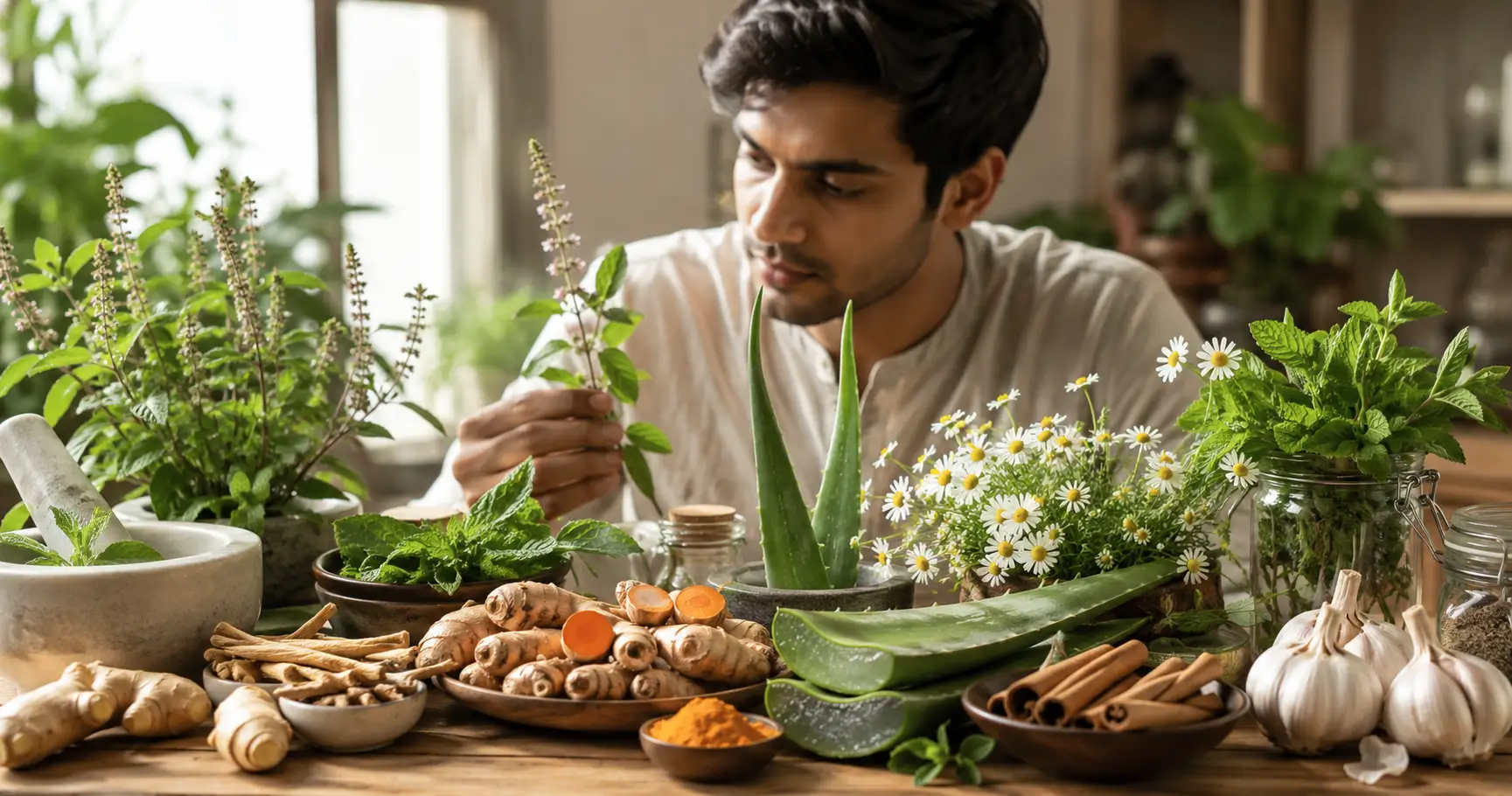

For centuries, people have turned to plants when they wanted more than food from their gardens. Some became traditional remedies, some became ingredients in modern medicines, and others gained popularity long before scientists had the tools to study them.
That history makes medicinal plants fascinating—but it can also create confusion. A plant being traditionally used does not automatically mean that every health claim made about it has been scientifically proven.
Today, herbal medicine is widely used around the world. The World Health Organization defines herbal medicines as products containing plant parts, plant materials, herbal preparations or finished products in which plants provide the active ingredients.
So which medicinal plants are worth knowing, what are they traditionally used for, and where does modern evidence stand?
Let’s look at 15 widely recognized examples.
What are medicinal plants?
Medicinal plants are plants that contain naturally occurring compounds that have been used traditionally or scientifically investigated for health-related purposes.
These compounds can include polyphenols, alkaloids, terpenes, flavonoids and other bioactive substances.
However, “medicinal” does not mean “automatically safe” or “proven to cure disease.”
The scientific evidence varies considerably from one plant to another. Some have been studied in clinical trials, while others have mainly been investigated in laboratory or traditional settings. WHO also emphasizes that traditional medicine should be evaluated for quality, safety and effectiveness rather than accepted solely because of its long history.
15 medicinal plants and their traditional uses
The following plants are among the best-known examples in traditional medicine and modern herbal research.
| Medicinal plant | Common traditional use | What to know about evidence |
|---|---|---|
| Tulsi (holy basil) | Traditionally used for respiratory and general wellness purposes | Human evidence is still developing |
| Turmeric | Traditionally used for inflammation and digestive health | Curcumin has been extensively studied, but results vary by preparation |
| Ginger | Digestive discomfort and nausea | Some uses have meaningful clinical evidence |
| Ashwagandha | Stress, sleep and traditional Ayurvedic use | Some preparations show promising evidence for stress and insomnia |
| Aloe vera | Skin care and certain digestive uses | Evidence differs considerably by preparation and route |
| Peppermint | Digestive discomfort and cooling preparations | Some evidence supports specific digestive applications |
| Chamomile | Relaxation and traditional digestive use | Evidence varies according to the condition |
| Ginseng | Energy, fatigue and traditional vitality claims | Research is mixed and interactions are possible |
| Garlic | Cardiovascular and general wellness traditions | Some effects have been studied, but it is not a replacement for treatment |
| Fenugreek | Traditional digestive and metabolic uses | Evidence remains condition-specific |
| Cinnamon | Traditional digestive and metabolic uses | Clinical evidence is mixed |
| Neem | Traditional skin and oral-health applications | Safety depends on preparation and dose |
| Lemongrass | Traditional digestive and calming uses | Human evidence is limited for many claims |
| Echinacea | Traditionally used around colds and respiratory illness | Studies have produced inconsistent results |
| Ginkgo biloba | Traditionally associated with memory and circulation | Evidence for many popular claims remains inconclusive |
The important distinction is that traditional use, laboratory evidence and clinical evidence are not the same thing.
1. Tulsi
Tulsi, also called holy basil, has a long history in Indian traditional medicine.
It is commonly used in household preparations such as teas and traditional remedies. Researchers have investigated its antioxidant, anti-inflammatory and other biological properties.
However, evidence from laboratory studies should not automatically be interpreted as proof that tulsi can prevent or treat a particular disease.
2. Turmeric
Turmeric is one of the most recognizable medicinal herbs associated with South Asian traditions.
Its major research interest comes from curcumin, a group of compounds responsible for much of turmeric’s characteristic color.
Researchers have studied curcumin in areas including inflammation and joint health. But products differ in formulation and absorption, so results from one preparation cannot automatically be applied to every turmeric supplement.
3. Ginger
Ginger has an unusually strong connection between traditional use and modern research.
It has traditionally been used for digestive discomfort, and research has examined its potential role in nausea and vomiting.
The lesson from ginger is important: a plant can have a legitimate evidence base for one specific use without being a universal remedy.
4. Ashwagandha
Ashwagandha, scientifically known as Withania somnifera, is an important Ayurvedic medicinal plant.
Modern studies have examined its potential effects on stress and sleep. NCCIH notes that some preparations may help with insomnia and stress, although studies have often been small and have used different preparations.
It is not risk-free. Reported concerns include gastrointestinal effects and rare cases of liver injury. NCCIH also advises against its use during pregnancy and breastfeeding and highlights possible interactions with several medicines.
5. Aloe vera
Aloe vera is best known for its use in skin products and traditional remedies.
The gel and latex are different parts of the plant with different properties, which is one reason simply saying “aloe vera is good for you” is misleading.
Product formulation matters. Internal use should not be treated casually, particularly because concentrated preparations can have adverse effects.
6. Peppermint
Peppermint contains menthol and has been used traditionally for digestive discomfort and as a cooling herbal preparation.
Certain peppermint preparations have been studied for digestive symptoms.
Again, the preparation matters. Drinking peppermint tea is not equivalent to taking a concentrated peppermint oil product.
7. Chamomile
Chamomile is widely used as a tea and traditional calming herb.
Research has explored its potential effects on anxiety and other conditions, but results are not uniform.
It also demonstrates why “natural” does not eliminate the need for caution. People with allergies to related plants may need particular care.
8. Ginseng
Asian ginseng has been investigated for fatigue, cognition, blood sugar and other health claims.
Some research suggests possible benefits for specific outcomes, but evidence remains mixed. NCCIH also notes potential interactions with medications, including some blood-pressure medicines and statins.
9. Garlic
Garlic is both a food and a traditional medicinal ingredient.
Its sulfur-containing compounds have generated extensive scientific interest, particularly around cardiovascular health.
But garlic supplements are not interchangeable with culinary garlic, and concentrated products can interact with medicines.
10. Fenugreek
Fenugreek seeds are common in South Asian cooking and traditional medicine.
They have been investigated for digestive, metabolic and other applications.
Because research findings differ according to preparation and condition, it is better to evaluate a specific health claim rather than assume that all fenugreek products produce the same effect.
11. Cinnamon
Cinnamon has a long history in traditional medicine and is now frequently promoted for metabolic health.
Although researchers have studied its effects on blood glucose and other markers, evidence does not justify treating cinnamon as a substitute for medical treatment.
Large supplemental amounts can also differ significantly from normal culinary consumption.
12. Neem
Neem is deeply associated with traditional Indian medicine.
Different parts of the plant have been investigated for antimicrobial, dermatological and other biological properties.
However, traditional popularity should not be confused with established clinical efficacy. Neem preparations can vary considerably, making product quality and appropriate use important.
13. Lemongrass
Lemongrass is commonly consumed as a culinary herb and tea ingredient.
Traditional uses include digestive and calming applications, while laboratory research has investigated several of its plant compounds.
Human clinical evidence is much more limited for many of the health claims made online.
14. Echinacea
Echinacea is particularly popular in products marketed around seasonal respiratory illnesses.
Research has produced mixed findings, meaning it should not be presented as a guaranteed way to prevent or cure a cold.
This is another example of why a plant’s popularity does not necessarily equal strong evidence.
15. Ginkgo biloba
Ginkgo has become one of the world’s most recognizable herbal supplements.
It is commonly marketed for memory and cognitive health. However, evidence for many of these claims remains inconsistent, and ginkgo can interact with medications.
NCCIH specifically identifies concerns about interactions with medicines such as warfarin.
What science actually tells us about medicinal plants
The biggest mistake in herbal health content is treating every piece of evidence as equal.
There is a major difference between:
- Traditional evidence — a plant has been used for generations.
- Laboratory evidence — compounds demonstrate biological activity in cells or experimental models.
- Animal research — effects are observed in animals.
- Observational research — researchers identify associations in people.
- Clinical trials — a treatment is tested in people under controlled conditions.
- Systematic reviews — researchers evaluate multiple studies together.
The further down this list the evidence travels, the more useful it generally becomes for answering questions about human health.
Even then, a clinical trial involving one standardized extract does not automatically prove that a homemade preparation has the same effect.
Why “natural” does not always mean safe
This is perhaps the most important lesson about herbal medicine.
Natural substances can be biologically active—and biologically active substances can cause side effects.
NCCIH warns that herbal supplements can interact with medicines and that contamination or undeclared ingredients can also be concerns.
WHO similarly emphasizes pharmacovigilance—the monitoring and prevention of adverse effects associated with traditional medicine products.
A 2023 review also highlighted adverse reactions and toxicity as important concerns in herbal medicines.
Who should be especially careful?
Extra caution is appropriate for people who:
- Take prescription medicines
- Are pregnant or breastfeeding
- Are preparing for surgery
- Have chronic medical conditions
- Have liver or kidney problems
- Are giving supplements to children
- Take medicines with a narrow therapeutic range
For example, NCCIH notes that St. John’s wort can affect multiple medicines, while some other herbs can alter drug levels or effects.
How to choose medicinal plants more responsibly
If you want to explore herbal medicine, avoid treating an internet list as a prescription.
Use this five-step approach instead.
1. Identify the exact plant
Common names can be confusing.
Whenever possible, check the scientific name, plant part and preparation.
2. Define the specific purpose
Do not ask only, “What is this herb good for?”
Ask a narrower question such as, “What evidence exists for this specific preparation and health outcome?”
That makes it much easier to distinguish credible information from marketing.
3. Check human evidence
Look for systematic reviews, clinical trials and authoritative health resources.
WHO and NIH’s NCCIH are useful starting points because they distinguish traditional use from scientific evidence.
4. Check interactions
Make a complete list of medicines and supplements you already use.
NCCIH recommends telling healthcare professionals about all supplements because interactions can increase or decrease medication effects.
5. Evaluate product quality
A plant’s identity is only one part of the equation.
Processing, storage, contamination, adulteration, concentration and labeling can all affect what a person actually consumes.
WHO’s current traditional-medicine work places significant emphasis on quality standards, regulation and safety monitoring.
Common mistakes people make with herbal remedies
Mistake 1: Assuming traditional means proven
Traditional use is valuable knowledge, but it is not the same as a controlled clinical trial.
Mistake 2: Taking several herbs at once
Combining multiple products makes it harder to identify side effects and increases uncertainty about interactions.
Mistake 3: Confusing food with concentrated extracts
A culinary amount of an herb can behave very differently from a concentrated supplement.
Mistake 4: Replacing prescribed treatment
Herbal products should not be used as a reason to stop prescribed medicines without professional guidance.
Mistake 5: Trusting “100% natural” marketing
Naturalness is not a scientific measure of safety.
Myths vs facts
| Myth | Fact |
|---|---|
| Natural herbs are always safe | Some herbs can cause adverse effects or interactions |
| Traditional use proves effectiveness | Traditional use and clinical evidence are different |
| More herb means better results | Higher doses can increase risk |
| Herbal products never interact with medicines | Many clinically important interactions are documented or suspected |
| All products containing the same herb are equivalent | Preparation, concentration and quality can differ |
| Herbal medicine is completely separate from modern medicine | People often use both, making interaction management important |
A practical example: why preparation matters
Imagine two people using turmeric.
One adds a small amount to food as part of a normal diet. Another takes a concentrated extract designed to deliver a much higher amount of specific compounds.
Calling both simply “using turmeric” hides a major difference.
The same principle applies across herbal medicine: plant identity, plant part, dose, formulation, route and duration all matter.
The future of medicinal plants
The future of herbal medicine is unlikely to be a simple battle between “natural” and “modern.”
Instead, the more useful direction is evidence-informed integration.
WHO’s Traditional Medicine Strategy 2025–2034 emphasizes evidence, safety, quality, regulation and appropriate integration into healthcare systems.
Researchers are also working toward better methods for evaluating medicinal plants, including standardized safety assessment and improved pharmacovigilance.
That approach respects traditional knowledge while demanding the same basic questions we ask of any health intervention:
Does it work? For whom? At what dose? In what preparation? What are the risks? And what happens when it is combined with other treatments?
Key takeaways about medicinal plants
- Medicinal plants have a long history across many cultures.
- Their scientific evidence varies dramatically from plant to plant.
- Traditional use does not automatically prove clinical effectiveness.
- Natural products can cause side effects and drug interactions.
- The exact plant, plant part, preparation and dose matter.
- People taking medicines should discuss herbal supplements with a healthcare professional.
- High-quality information should distinguish traditional claims from human clinical evidence.
- WHO and NIH resources are useful starting points for evaluating herbal medicine claims.
The most useful way to think about medicinal plants is neither blind enthusiasm nor blanket skepticism.
They are biologically active natural resources with a fascinating history, genuine research potential and real safety considerations. Used responsibly—and evaluated according to the strength of evidence—they can be understood far more clearly than they are through viral “miracle herb” lists.
FAQ
What are medicinal plants?
Medicinal plants are plants or plant materials traditionally used for health-related purposes or scientifically investigated for their biological effects. Their effectiveness and safety vary by plant, preparation, dose and intended use.
Which medicinal plants are commonly used?
Commonly recognized examples include tulsi, turmeric, ginger, ashwagandha, aloe vera, peppermint, chamomile, garlic, ginseng and ginkgo biloba.
Are medicinal plants scientifically proven to work?
Some medicinal plants have evidence supporting specific uses, but evidence varies widely. A traditional claim or laboratory finding does not automatically prove that a plant treats a disease in humans.
Are medicinal plants safe?
Not necessarily. Some herbal products can cause side effects, interact with medicines or contain contaminants. NCCIH specifically advises consumers to consider safety and potential interactions before using herbal supplements.
Can medicinal plants interact with prescription medicines?
Yes. Some herbs can increase or decrease the effects of medicines. St. John’s wort, for example, is known to interact with numerous medicines, while other herbs may affect drugs with a narrow therapeutic range.
Should I consult a doctor before using herbal supplements?
If you take medication, are pregnant or breastfeeding, have a medical condition, are preparing for surgery, or are considering concentrated herbal products, discussing them with a qualified healthcare professional is the safer approach.
Conclusion
Medicinal plants sit at an interesting intersection between traditional knowledge, modern science and everyday wellness.
Plants such as tulsi, turmeric, ginger and ashwagandha have fascinating histories and active areas of scientific research. But the most responsible approach is to ask better questions rather than accept every herbal claim at face value.
Remember the essentials:
- Traditional use is not the same as clinical proof.
- Natural products can still have risks.
- Preparation and dose matter.
- Herb–drug interactions are real.
- Evidence should be judged for the specific plant, preparation and health outcome.
If you’re exploring herbal medicine, start with one plant, one specific question and reliable evidence.
That simple approach can turn a confusing world of herbal claims into a much clearer—and safer—learning journey.
Disclaimer
Disclaimer: This article is intended for general educational and informational purposes only. It does not constitute medical advice, diagnosis or treatment, and it should not be used as a substitute for consultation with a qualified healthcare professional. Traditional uses described in this article do not necessarily represent scientifically proven medical benefits. Herbal products can vary in quality, concentration and formulation and may cause side effects or interact with prescription or over-the-counter medicines. If you take medication, have a medical condition, are pregnant or breastfeeding, are preparing for surgery, or intend to use concentrated herbal products, consult an appropriate healthcare professional before use.