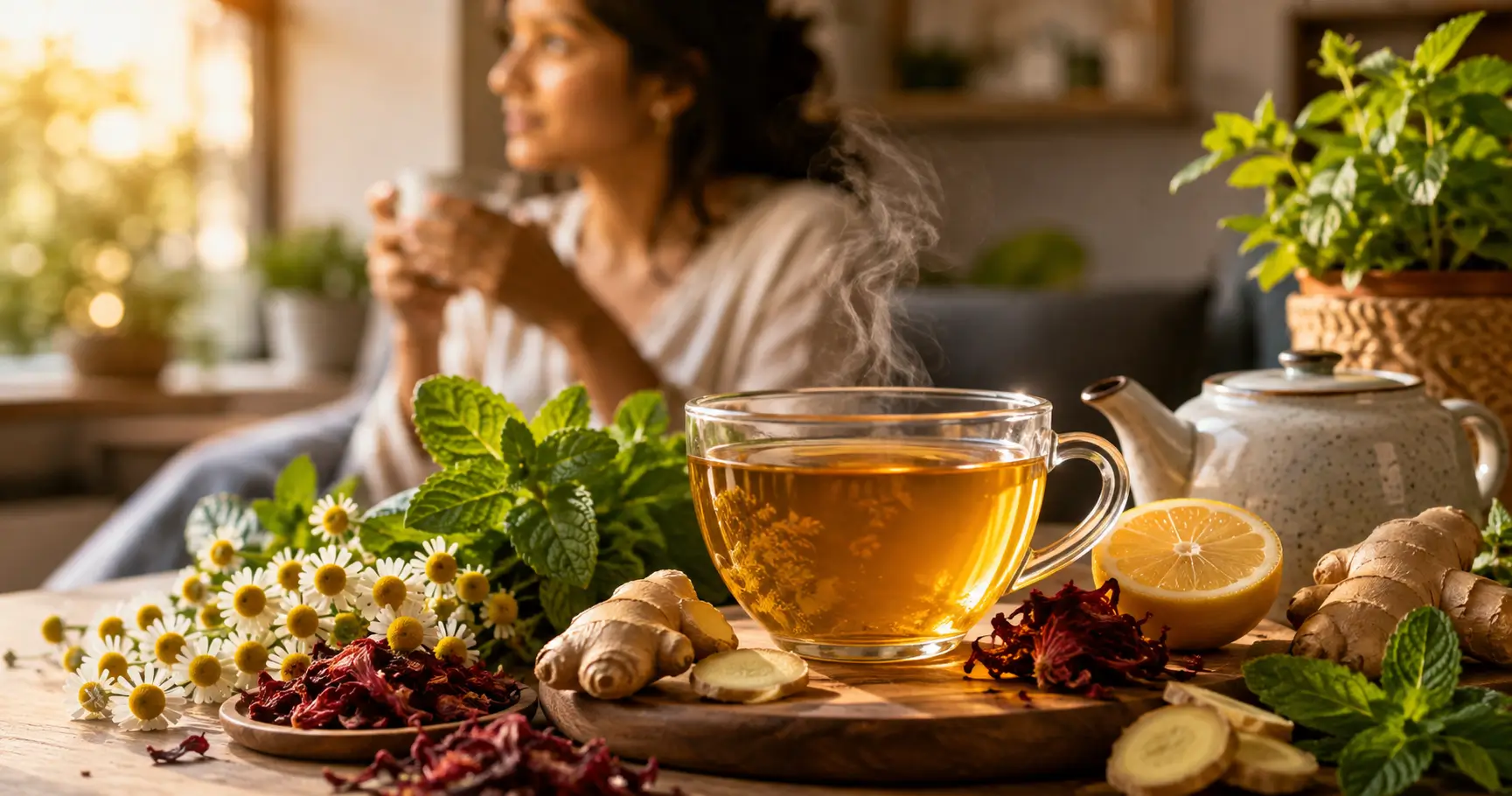

A cup of herbal tea can look deceptively simple: hot water, dried leaves, flowers, roots or spices. Yet what is actually in that cup can vary dramatically.
Unlike traditional tea made from the Camellia sinensis plant, herbal tea is generally made from other plants and botanical ingredients. That means chamomile, peppermint, ginger, hibiscus and many other infusions can have very different properties.
That difference matters.
Some herbal teas are mainly enjoyable caffeine-free beverages. Others have been studied for specific health effects, although the evidence is often limited or dependent on the herb, preparation and amount consumed.
So what are the real herbal tea benefits, and where does marketing get ahead of science?
Here is what you should know before making herbal tea part of your daily routine.
What Is Herbal Tea?
Herbal tea is an infusion made from botanical ingredients other than the traditional tea plant, Camellia sinensis.
Depending on the blend, it may contain:
- Flowers such as chamomile
- Leaves such as peppermint
- Roots such as ginger
- Fruits or peels
- Seeds and spices
- Other edible plant materials
The term “tea” is commonly used because these ingredients are steeped in hot water, but botanically they are different from green, black, white and oolong tea.
That distinction also explains why many herbal teas are naturally caffeine-free.
However, always check the ingredient list. A blend containing green or black tea will contain caffeine.
9 Potential Herbal Tea Benefits
The benefits depend heavily on the specific plant.
A 2019 scoping review found that research into herbal teas has examined areas including female health, diabetes, cardiovascular health and weight management, but the authors also noted that relatively few clinical studies have evaluated herbal teas themselves.
So it is better to think of herbal tea as a potentially useful part of a healthy lifestyle rather than a substitute for medical treatment.
1. It Can Be a Caffeine-Free Alternative
For people trying to reduce caffeine, herbal tea can provide a warm and flavorful alternative to coffee or conventional tea.
Chamomile and peppermint infusions, for example, are commonly consumed as teas and are generally considered safe for most people when used as beverages.
This can be particularly useful in the evening when someone wants a comforting drink without deliberately adding caffeine.
Still, don’t assume every “herbal” blend is caffeine-free.
Always read the ingredients.
2. It Can Help You Drink More Fluids
One of the simplest benefits is also one of the most overlooked.
Unsweetened herbal tea contributes to daily fluid intake. For someone who finds plain water boring, changing flavors throughout the day can make hydration more enjoyable.
This isn’t a special detoxification effect.
It is simply a practical way to consume a flavorful beverage without relying on sugary drinks.
3. Some Herbal Teas May Support Digestion
Peppermint and chamomile are traditionally used in connection with digestive comfort.
The National Institutes of Health notes that chamomile and peppermint are commonly consumed in teas for digestion and are generally considered safe for most people.
However, “supports digestion” is different from “treats digestive disease.”
Persistent abdominal pain, repeated vomiting, unexplained weight loss, blood in stool or other concerning symptoms should be evaluated by a healthcare professional rather than managed with tea alone.
4. Chamomile Tea May Support Relaxation
Chamomile is one of the most popular herbal teas for winding down.
Some preliminary research has examined chamomile for anxiety, but evidence remains limited. NCCIH notes that there is very little information about chamomile’s effect on insomnia, and a 2019 review identified only one insomnia study that found no benefit.
That means a cup of chamomile tea may be a pleasant part of a bedtime routine, but it should not be presented as a proven treatment for insomnia.
The ritual itself may also matter: sitting down, reducing stimulation and drinking a warm beverage can encourage a calmer evening routine.
5. Ginger Tea Can Be a Convenient Way to Consume Ginger
Ginger has a long history of culinary and traditional use.
Ginger tea is particularly popular after meals or when someone wants a warming, spicy beverage.
But there is an important distinction between evidence for ginger as a botanical and evidence specifically proving that a particular cup of ginger tea treats a medical condition.
Tea strength, preparation and quantity vary considerably.
That is why broad claims about ginger tea should be interpreted cautiously.
6. Hibiscus Tea Offers a Distinctive Tart Flavor
Hibiscus tea is known for its deep color and naturally tart flavor.
It is often served hot or chilled and can be an appealing alternative to sugar-heavy beverages.
Some research has investigated hibiscus preparations and cardiovascular measures, but results from studies of specific preparations should not automatically be applied to every commercially available hibiscus tea.
This is a recurring theme with herbal products:
The plant, dose, preparation and study design all matter.
7. It Can Replace Sugary Beverages
This may be one of the most practical benefits for everyday health.
Consider someone who normally drinks several sweetened beverages every day.
Replacing some of them with unsweetened herbal tea can reduce added sugar intake without eliminating flavor altogether.
The benefit comes primarily from the replacement, not from a magical fat-burning property of tea.
That distinction is important when evaluating online claims about “weight-loss teas.”
8. It Can Become a Useful Daily Wellness Ritual
Health is not only about individual nutrients or compounds.
Daily routines influence eating patterns, stress management and beverage choices.
A simple herbal tea ritual can create a predictable pause during a busy day.
For example:
Morning: ginger or a flavorful botanical blend.
Afternoon: peppermint or another refreshing caffeine-free option.
Evening: chamomile or another mild, caffeine-free infusion.
The goal isn’t to consume tea constantly.
The goal is to build a sustainable routine that supports better choices.
9. Different Herbs Offer Different Experiences
There is no single “best herbal tea.”
Chamomile, peppermint, ginger, hibiscus and other botanicals have different flavors, traditional uses and evidence profiles.
That gives herbal tea an advantage over one-size-fits-all wellness trends.
Instead of asking, “Which tea is healthiest?”
Ask:
“Which herbal tea fits my purpose, preferences and safety considerations?”
That is a much more useful question.
Best Herbal Tea Types to Try
| Herbal tea | Common reason people choose it | Important consideration |
| Chamomile | Relaxing evening beverage | Evidence for insomnia remains limited |
| Peppermint | Refreshing flavor and digestive comfort | May not suit everyone with reflux |
| Ginger | Warming flavor and traditional digestive use | Strong preparations may be unsuitable for some people |
| Hibiscus | Tart flavor and chilled tea | Research findings depend on preparation |
| Rooibos | Naturally caffeine-free alternative | Health claims should still be evidence-based |
| Lemon-based herbal blends | Fresh flavor | Check whether the blend contains actual tea leaves |
| Lavender blends | Aromatic evening drink | Evidence varies by preparation |
The key lesson is that a tea’s reputation is not the same thing as clinical evidence.
How to Choose a Better Herbal Tea
Buying herbal tea doesn’t need to be complicated.
Use this simple checklist.
1. Read the Ingredient List
Look beyond the large words on the front of the package.
A product marketed as a “herbal wellness blend” may contain numerous ingredients.
Knowing exactly what is inside makes safety and comparison easier.
2. Prefer Transparent Labeling
Look for products that clearly identify their botanical ingredients and provide appropriate preparation instructions.
Quality and regulation vary between countries and product categories.
WHO emphasizes the importance of evidence, quality, safety and appropriate regulation in traditional and herbal medicine.
3. Avoid Miracle Claims
Be skeptical of products promising:
- Instant weight loss
- Complete detoxification
- Guaranteed hormone balance
- Disease cures
- Permanent fat loss
- “No side effects”
The more extraordinary the claim, the more important it is to look for high-quality evidence.
4. Choose Unsweetened When Possible
If your goal is a healthier everyday beverage, adding large amounts of sugar can undermine the advantage of switching from another sweetened drink.
Try cinnamon, lemon or naturally aromatic herbs for flavor instead.
How to Make Herbal Tea at Home
A basic herbal infusion is simple.
- Choose your herb or blend.
- Place it in a cup or teapot.
- Add freshly boiled water.
- Cover and steep according to the product instructions.
- Strain if using loose botanicals.
- Taste before adding sweetener.
Don’t assume that longer steeping is always better.
A longer infusion can produce a stronger flavor and may extract different amounts of plant compounds.
For commercial products, follow the manufacturer’s preparation instructions.
Common Herbal Tea Mistakes
Mistake 1: Assuming Natural Means Safe
“Natural” is not a synonym for “risk-free.”
The NIH Office of Dietary Supplements explains that botanical safety depends on factors such as chemical composition, preparation and amount used.
Mistake 2: Confusing Tea With Concentrated Extracts
A cup of peppermint tea is not equivalent to a concentrated peppermint oil product.
Different preparations can have dramatically different concentrations.
This distinction is especially important when moving from food-level consumption to supplements or extracts.
Mistake 3: Using Herbal Tea to Replace Medical Care
Tea can be part of a healthy lifestyle.
It should not be used to delay diagnosis or replace prescribed treatment.
Mistake 4: Ignoring Medication Interactions
Some herbs can interact with prescription or over-the-counter medicines.
NCCIH specifically warns that herb-drug interactions can alter medication effects, while certain medicines with narrow therapeutic ranges require particular caution.
If you regularly take medication, ask your doctor or pharmacist before introducing medicinal-strength herbal products.
Myths vs Facts
| Myth | Fact |
| All herbal tea is caffeine-free. | Many are, but blends containing green or black tea can contain caffeine. |
| Herbal tea detoxes the body. | Your liver and kidneys already perform major waste-processing functions; “detox tea” claims are often exaggerated. |
| Natural means completely safe. | Botanical products can have side effects and interactions. |
| More tea means more benefits. | Higher amounts do not automatically mean better results. |
| Herbal tea can replace medicine. | Herbal beverages should not automatically replace evidence-based medical treatment. |
| Every herbal tea has proven health benefits. | Evidence varies widely by herb and condition. |
Who Should Be Especially Careful?
Most common food-level herbal teas are tolerated by many healthy adults, but individual circumstances matter.
Talk with a healthcare professional before regularly using medicinal-strength herbal products if you:
- Take prescription medicines
- Are pregnant or breastfeeding
- Have a chronic medical condition
- Have a history of significant allergies
- Are preparing herbal products for children
- Are considering concentrated extracts or supplements
For example, NCCIH says chamomile is likely safe in amounts commonly found in teas and foods, but there is limited information about its safety during pregnancy and breastfeeding.
Mayo Clinic also emphasizes that herbal supplements can interact with prescription medicines, including medicines used for cardiovascular conditions.
The Most Important Takeaway About Herbal Tea
The healthiest way to think about herbal tea is not as a miracle drink.
Think of it as a category of botanical beverages with different ingredients, effects, evidence and safety considerations.
A cup of unsweetened herbal tea can be a useful alternative to sugary drinks and a pleasant part of a daily routine.
But specific health claims require specific evidence.
That distinction helps you enjoy herbal tea without falling for exaggerated wellness marketing.
FAQ
Is herbal tea good for you?
Herbal tea can be a healthy beverage choice, particularly when it is unsweetened and replaces sugary drinks. However, benefits depend on the specific herb, and not every health claim has strong clinical evidence.
Is herbal tea caffeine-free?
Many herbal teas are naturally caffeine-free because they are made from plants other than Camellia sinensis. However, some blends contain green or black tea, so check the ingredient list.
What is the best herbal tea to drink daily?
There is no universally best herbal tea. Chamomile, peppermint, ginger and other herbal infusions have different flavors, uses and safety considerations. Choose according to your preferences and individual circumstances.
Can you drink herbal tea every day?
Many common herbal teas can be consumed as beverages by healthy adults, but safety depends on the specific herb, preparation and amount. People taking medicines or using concentrated herbal products should seek professional advice.
Does herbal tea help with sleep?
Some people use herbal tea as part of a relaxing bedtime routine. Chamomile is commonly used for this purpose, but clinical evidence that chamomile treats insomnia remains limited.
Can herbal tea help with digestion?
Certain herbal teas, including peppermint and chamomile, are traditionally used for digestive comfort. However, herbal tea should not be used to self-treat persistent or serious digestive symptoms.
Conclusion
Herbal tea is best understood as a diverse group of botanical beverages, not a single health product.
Chamomile, peppermint, ginger, hibiscus and other herbs offer different flavors and traditional uses, while the strength of scientific evidence varies from one botanical to another. Research on herbal teas is promising in some areas, but the overall clinical evidence remains limited.
The smartest approach is simple:
- Choose clearly labeled products.
- Prefer unsweetened preparations.
- Don’t confuse tea with concentrated extracts.
- Be skeptical of miracle “detox” and weight-loss claims.
- Check for medication interactions when relevant.
- Use herbal tea as part of a healthy lifestyle, not as a replacement for medical care.
The goal isn’t to find a magical tea. It’s to choose the right beverage for your routine while understanding what the evidence actually says.
That combination of curiosity, moderation and evidence-based decision-making is what makes herbal tea a useful addition to everyday wellness.
Disclaimer
Health Disclaimer: This article is intended for general educational and informational purposes only. It does not constitute medical advice, diagnosis or treatment. Herbal teas and botanical products can affect individuals differently, and scientific evidence varies considerably between herbs, preparations and health conditions.
“Natural” does not necessarily mean safe. Some herbs may cause side effects or interact with prescription and over-the-counter medicines. People who are pregnant or breastfeeding, have an underlying medical condition, take medication, or are considering concentrated herbal extracts should consult a qualified healthcare professional before using them regularly.
Do not use herbal tea as a substitute for prescribed medication or professional medical care. If you have persistent, severe or unexplained symptoms, seek appropriate medical evaluation.