
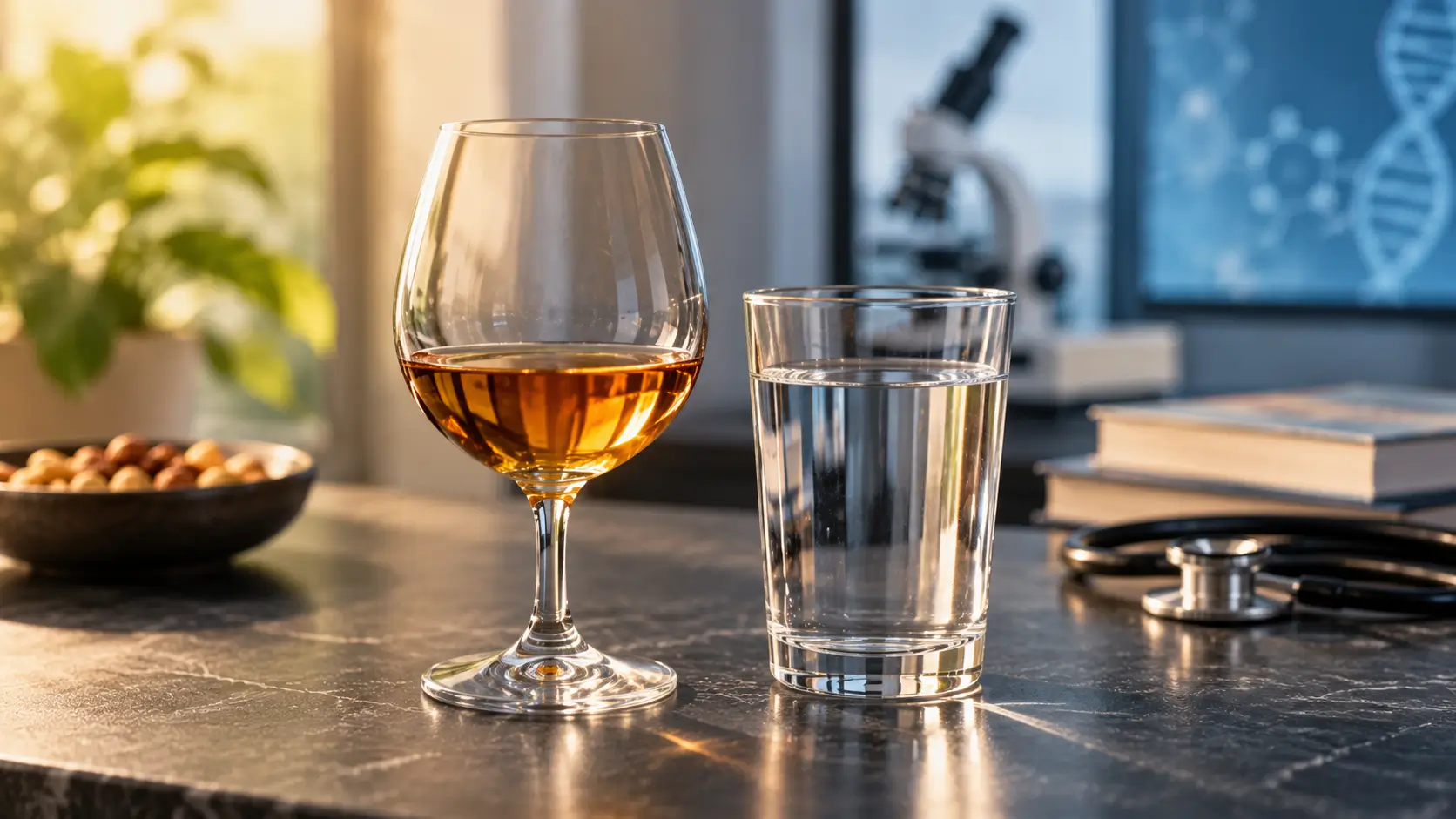

If you drink alcohol, it is reasonable to wonder whether it affects your cancer risk. The answer is yes: alcohol consumption is an established cause of several cancers.
The International Agency for Research on Cancer (IARC), part of the World Health Organization, classifies alcoholic beverages as carcinogenic to humans. Strong evidence links alcohol cancers of the mouth, throat, voice box, oesophagus, liver, colorectum and female breast.
That does not mean that everyone who drinks alcohol will develop cancer. Cancer usually results from multiple interacting factors. But alcohol is a modifiable risk factor, which means reducing or avoiding it can be one practical way to lower exposure to a known carcinogen.
For cancer prevention, major cancer-prevention organizations say that not drinking alcohol is the lowest-risk choice. If you currently drink, reducing consumption is generally better than continuing to drink more.
Quick answer: Does alcohol cause cancer?
Yes. Alcohol causes several types of cancer, and cancer risk generally increases as alcohol consumption increases.
The evidence is strongest for cancers of the:
- Mouth
- Pharynx or throat
- Larynx or voice box
- Oesophagus
- Liver
- Colorectum, including colon and rectum
- Female breast
IARC classifies alcohol as a Group 1 carcinogen—the highest category used for substances for which there is sufficient evidence of causing cancer in humans.
The important point is that “carcinogenic” describes the hazard associated with alcohol. It does not mean that every person exposed to alcohol will develop cancer.
Which cancers are linked to alcohol?
The strongest evidence concerns seven cancer types.
| Cancer | Evidence linking alcohol |
|---|---|
| Mouth/oral cavity | Strongly established |
| Pharynx/throat | Strongly established |
| Larynx/voice box | Strongly established |
| Oesophagus | Strongly established |
| Liver | Strongly established |
| Colorectal/colon and rectum | Strongly established |
| Female breast | Strongly established |
IARC has identified alcohol consumption as a causal factor for all seven.
The National Cancer Institute also identifies alcohol as a known human carcinogen and reports increased risks for these major cancer sites.
Does the amount of alcohol matter?
Yes.
Cancer risk generally increases with increasing alcohol consumption. That does not mean that a particular quantity suddenly changes from “safe” to “dangerous.” Rather, the relationship for several alcohol-related cancers is dose-dependent: more alcohol generally means greater risk.
This is why the statement “I only drink occasionally” should not be interpreted as meaning that alcohol has no effect on cancer risk.
At the same time, the increase in risk from a small amount can be relatively small in absolute terms for an individual. Relative risk and absolute risk are not the same thing.
For example, saying that alcohol raises the relative risk of a cancer does not tell you that you have a particular percentage chance of developing that cancer.
Your overall risk depends on many factors, including:
- Amount and frequency of alcohol use
- Age
- Sex
- Tobacco use
- Body weight and metabolic health
- Genetics
- Infections such as HPV or hepatitis viruses
- Family history
- Other environmental exposures
Is there a “safe” amount of alcohol for cancer prevention?
This question needs careful wording.
Major cancer-prevention organizations do not identify a level of alcohol consumption that can be considered risk-free for cancer.
The World Cancer Research Fund’s recommendation is that, for cancer prevention, it is best not to drink alcohol. It notes that there is no threshold below which cancer risk is known to remain completely unchanged for all alcohol-related cancers.
This does not mean that having one drink guarantees cancer.
It means that alcohol should not be described as harmless or cancer-neutral simply because consumption is low.
That distinction is important.
Is beer safer than wine or whisky?
For cancer risk, switching from one alcoholic beverage to another is not a reliable way to eliminate the problem.
Beer, wine and spirits all contain ethanol, the type of alcohol responsible for the relevant biological exposure.
The World Cancer Research Fund concludes that alcoholic drinks of different types have a similar effect on cancer risk when considering the alcohol consumed.
So the idea that:
“Wine is healthy, but whisky is unhealthy”
is too simplistic when discussing cancer prevention.
The type of drink may change the amount of ethanol in a serving, but no alcoholic beverage should be treated as a cancer-preventive drink.
Does red wine protect against cancer?
There is no good reason to start drinking red wine for cancer prevention.
Resveratrol and other compounds found in grapes have attracted considerable scientific interest, but that does not establish that drinking red wine prevents cancer.
The National Cancer Institute notes that research has not established a protective association between moderate red-wine consumption and overall cancer risk.
If you do not drink alcohol, there is no cancer-prevention reason to start.
How can alcohol cause cancer?
Alcohol’s relationship with cancer is biologically plausible and supported by several mechanisms.
1. Alcohol is converted into acetaldehyde
The body breaks down ethanol into acetaldehyde.
Acetaldehyde is toxic and can damage DNA. DNA damage can contribute to the development of cancer when cells accumulate harmful changes.
This is one of the most important mechanisms used to explain alcohol-related cancer.
2. Alcohol can increase oxidative stress
Alcohol metabolism can increase the production of reactive oxygen species.
These molecules can damage cellular components, including DNA.
Repeated or substantial exposure can contribute to biological conditions associated with cancer development.
3. Alcohol can affect hormones
Alcohol consumption can increase circulating estrogen levels.
This is one mechanism thought to contribute to the association between alcohol and breast cancer.
4. Alcohol can interfere with nutrient metabolism
Alcohol can interfere with the absorption and metabolism of nutrients, including folate.
Changes in folate-related pathways can affect DNA synthesis and repair.
5. Alcohol can make tobacco-related carcinogens more harmful
Alcohol can act as a solvent and may make it easier for carcinogens from tobacco smoke to reach vulnerable tissues in the mouth and upper digestive tract.
This is particularly important for people who both smoke and drink.
Why is alcohol plus smoking especially concerning?
Alcohol and tobacco are individually important cancer risk factors, but using both can produce a substantially greater risk for certain cancers than using either alone.
The National Cancer Institute notes particularly strong combined effects for cancers of the mouth, pharynx, larynx and oesophagus.
This is one reason that someone who both smokes and drinks has an especially important opportunity to reduce cancer risk by addressing both exposures.
If you use tobacco, reducing or quitting tobacco remains one of the most important health steps you can take.
Does stopping alcohol reduce cancer risk?
Yes, there is evidence that reducing or stopping alcohol can lower the risk of at least some alcohol-related cancers.
IARC’s detailed evaluation found sufficient evidence that cessation or reduction of alcohol consumption lowers the incidence of cancers of the oral cavity and oesophagus.
For some other alcohol-related cancers, including breast, colorectal and laryngeal cancers, the evidence concerning risk reduction after stopping is more limited.
That distinction matters.
It would be inaccurate to say:
“Stopping alcohol immediately eliminates your cancer risk.”
It does not.
Previous exposure matters, and cancer risk may take years to move toward the level seen in people who never drank.
But it is also incorrect to assume that stopping drinking is pointless because previous exposure has already occurred.
The National Cancer Institute says studies have found lower risks of oral and oesophageal cancers after stopping alcohol, with possible reductions for some other alcohol-related cancers as well.
What if you have been drinking for many years?
It is understandable to think that long-term drinking means the damage is already done.
That is not the best interpretation of the evidence.
Reducing or stopping alcohol can still be beneficial.
IARC found evidence that some biological pathways involved in alcohol-related carcinogenesis can reverse after cessation, including pathways involving acetaldehyde, DNA damage and immune or inflammatory changes.
However, the degree and speed of cancer-risk reduction vary by cancer type and individual circumstances.
There is therefore no scientifically responsible way to promise that stopping alcohol will “reset” someone’s cancer risk after a particular number of days, weeks or months.
What can you reasonably do if you drink alcohol?
If your goal is to reduce cancer risk, the most evidence-based direction is straightforward:
1. Consider drinking less
Less alcohol generally means less exposure.
If you drink regularly, look honestly at:
- How often you drink
- How much you drink on a typical occasion
- Whether some occasions turn into heavy drinking
- Whether you drink alone or primarily in social situations
- Whether you have tried to cut down before
You do not need to make the change perfect on the first day.
2. Consider alcohol-free days
If you are able to drink safely without withdrawal symptoms, having regular alcohol-free days can be a practical way to reduce total consumption.
The goal is not to use alcohol-free days to justify heavier drinking on the remaining days.
The overall amount matters.
3. Avoid treating wine as a health food
If you do not drink, there is no reason to start because of claims about antioxidants or heart health.
You can obtain beneficial nutrients from foods without taking on alcohol-related cancer risk.
4. Pay particular attention if you also use tobacco
Alcohol and tobacco together are particularly concerning for several cancers.
If both are part of your routine, consider getting structured support to address them rather than treating them as unrelated habits.
5. Do not rely on supplements to “cancel out” alcohol
There is no supplement proven to neutralize the cancer risk of drinking alcohol.
A healthy diet is valuable, but eating vegetables or taking vitamins does not make alcohol harmless.
6. Don’t replace medical care with lifestyle advice
Reducing alcohol can lower health risks, but it does not diagnose or treat cancer.
If you have symptoms that concern you, speak with a qualified healthcare professional rather than attempting to manage them through diet, supplements or alcohol reduction alone.
An important safety issue: don’t always stop suddenly
For many people who drink lightly or occasionally, stopping alcohol does not create a dangerous withdrawal syndrome.
But this is not true for everyone.
People who drink heavily and regularly—particularly those who have developed alcohol dependence—can experience potentially serious or life-threatening withdrawal if they suddenly stop.
Symptoms can include:
- Shaking
- Sweating
- Anxiety
- Nausea or vomiting
- Rapid heartbeat
- Insomnia
- Confusion
- Hallucinations
- Seizures
If you drink heavily every day, have experienced withdrawal symptoms before, or feel that you need alcohol to avoid becoming unwell, talk to a healthcare professional before attempting to stop.
Medical support can make withdrawal safer.
This warning is important because “stop drinking immediately” is not appropriate advice for every person with alcohol dependence.
What does alcohol cancer risk mean for an individual?
Cancer risk is not an on/off switch.
Drinking alcohol does not mean you will develop cancer, just as avoiding alcohol cannot guarantee that you will never develop cancer.
Instead, alcohol is one modifiable factor among many.
Think about risk as a collection of exposures:
- Tobacco
- Alcohol
- Excess body weight
- Physical inactivity
- Diet
- Certain infections
- Ultraviolet exposure
- Environmental exposures
- Family history and genetics
- Age
Some cannot be changed.
Others can.
Reducing alcohol is one of the modifiable steps that can reduce exposure to a known carcinogen.
Key takeaway
The evidence on alcohol and cancer is much stronger than many people realize.
Alcohol is an established cause of cancers of the mouth, throat, larynx, oesophagus, liver, colorectum and female breast.
Beer, wine and spirits all contain ethanol, so changing the type of alcoholic drink does not remove the underlying cancer risk.
For cancer prevention, not drinking is the lowest-risk option. If you already drink, reducing consumption can reduce exposure, and stopping has been shown to reduce the risk of at least some alcohol-related cancers.
If you drink heavily or regularly and suspect you may be dependent on alcohol, do not assume that suddenly stopping on your own is always safe. Professional medical guidance may be necessary.
The goal is not fear.
It is informed choice: less alcohol means less exposure to an established carcinogen, and avoiding alcohol is the lowest-risk option for cancer prevention.
FAQ
Does alcohol cause cancer?
Yes. Alcohol consumption is an established cause of several cancers, including cancers of the mouth, pharynx, larynx, oesophagus, liver, colorectum and female breast.
Is there a safe amount of alcohol for cancer prevention?
There is no alcohol intake level that can be described as completely risk-free for cancer. For cancer prevention, the World Cancer Research Fund recommends not drinking alcohol.
Is red wine safer than beer or whisky?
Not in terms of eliminating alcohol-related cancer risk. Beer, wine and spirits all contain ethanol, and evidence does not support starting to drink wine to prevent cancer.
Which cancers are most clearly linked to alcohol?
The strongest established links are with cancers of the oral cavity, pharynx, larynx, oesophagus, liver, colorectum and female breast.
Can stopping alcohol reduce cancer risk?
Yes. IARC found sufficient evidence that reduction or cessation lowers the incidence of oral and oesophageal cancers. Evidence for some other alcohol-related cancers is more limited.
Does alcohol and tobacco together increase cancer risk?
Yes. Their combined effect is particularly concerning for cancers of the mouth, throat, larynx and oesophagus.
Can I stop drinking suddenly?
It depends on your drinking pattern. People who drink heavily and regularly may experience dangerous withdrawal if they stop suddenly. If you have withdrawal symptoms or suspect alcohol dependence, seek medical advice before stopping.
Does drinking alcohol mean I will get cancer?
No. Alcohol increases risk; it does not make cancer inevitable. Individual cancer risk depends on multiple factors, including genetics, age, tobacco exposure, infections and other lifestyle and environmental factors.
Medical Disclaimer
This article is for general health education and does not provide a personal diagnosis or individualized medical advice. Alcohol-related cancer risk varies between individuals, and this article cannot determine your personal risk.
If you drink heavily or regularly and experience symptoms such as shaking, sweating, anxiety, nausea, hallucinations or seizures when you reduce alcohol, do not attempt abrupt withdrawal without medical guidance. Seek appropriate healthcare support.
If you have symptoms that could indicate cancer or another serious condition, speak with a qualified healthcare professional rather than relying on lifestyle advice alone. Emergency symptoms require urgent medical attention.