
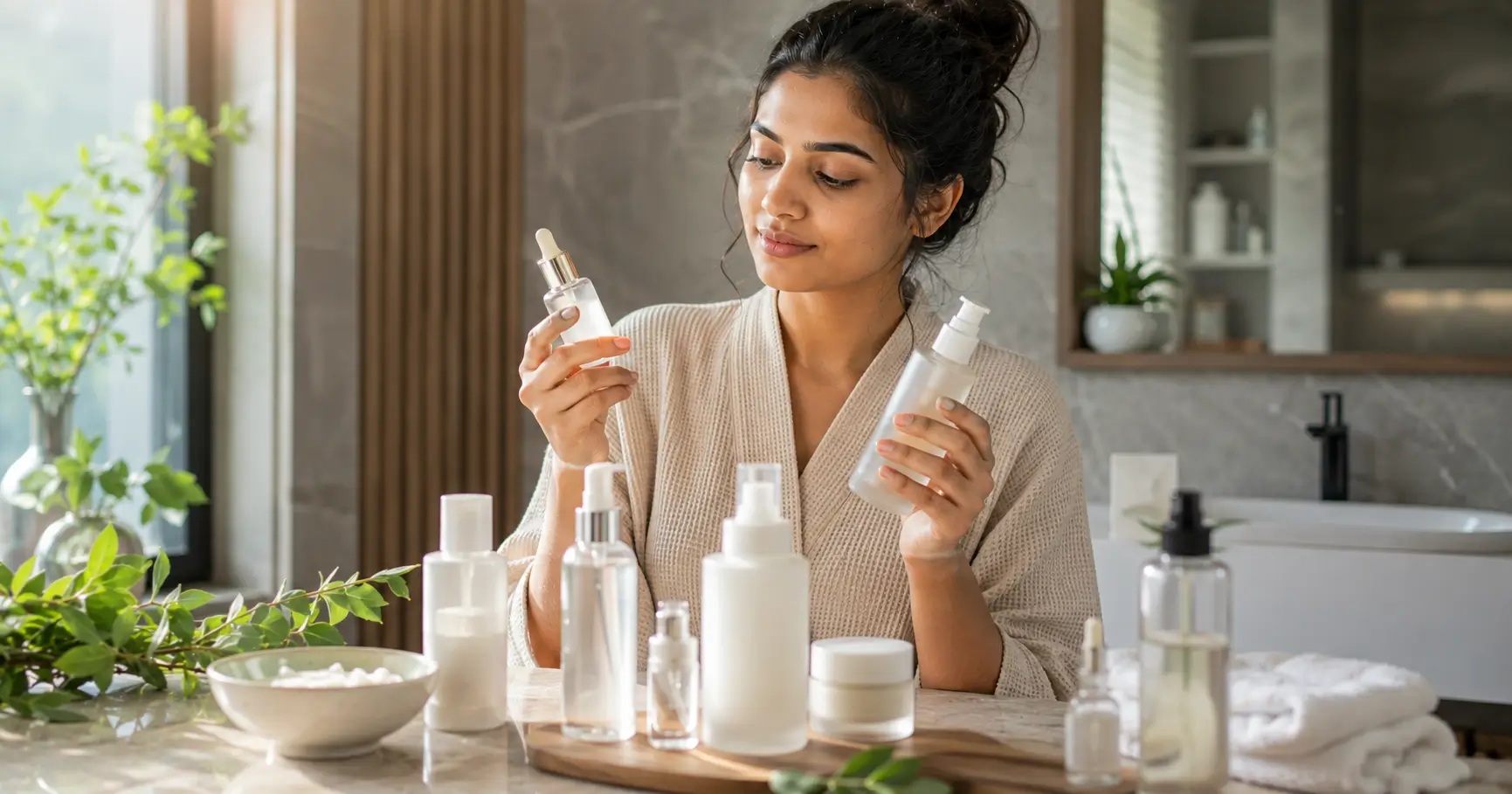

Korean skincare has moved far beyond K-dramas and viral beauty videos.
Today, Korean skin care products in India are available across major beauty retailers and online marketplaces, with consumers increasingly looking for serums, sunscreens, essences, moisturizers and barrier-focused products.
But there is a catch.
With dozens of brands and thousands of individual products available, choosing the right K-beauty product can be harder than discovering K-beauty in the first place.
The answer isn’t to build a 10-step routine overnight.
A smarter approach is to identify your skin type, choose products around a specific need and introduce new ingredients gradually.
Why Korean skincare is becoming so popular in India
K-beauty has grown rapidly in India, driven by Korean pop culture, social media, ingredient-focused beauty content and the growing availability of Korean brands through Indian retailers.
Industry reporting in 2025 highlighted more than 60 Korean skincare brands available in India, while marketplace analysis tracked more than 51,000 K-beauty SKUs across 38 brands during a 10-month period.
The appeal isn’t only about “glass skin.”
Korean skincare has popularized concepts such as hydration, skin-barrier care, gentle cleansing and targeted treatment.
Those ideas can be useful for Indian consumers too.
However, Korean skincare is not automatically better simply because it is Korean.
The formulation, ingredients and suitability for your skin matter more than the country printed on the package.
What makes Korean skincare different?
Traditional K-beauty routines tend to emphasize prevention, hydration, consistency and layering products from lighter to heavier textures.
A classic routine may include an oil cleanser, water-based cleanser, toner, essence, treatment, sheet mask, moisturizer and sunscreen.
But even Healthline’s overview of Korean skincare notes that the number of steps can be adapted rather than treated as a fixed rule.
That’s an important lesson for beginners.
You don’t need 10 products
A practical routine can be much simpler:
Morning
- Gentle cleanser, if needed
- Treatment serum, if appropriate
- Moisturizer
- Sunscreen
Evening
- Cleanser
- Treatment
- Moisturizer
You can add an essence, toner or mask later if it actually serves a purpose.
More skincare does not automatically mean better skincare.
Korean skincare products in India: what should you actually buy?
The best products depend on your skin type and concern.
Instead of asking for one universal “best Korean product,” choose by function.
| Skin concern | Product category to consider | Ingredients commonly used |
|---|---|---|
| Dryness | Hydrating serum/moisturizer | Hyaluronic acid, glycerin, ceramides |
| Oily skin | Lightweight moisturizer | Niacinamide, humectants |
| Acne-prone skin | Gentle cleanser/targeted treatment | Salicylic acid, niacinamide |
| Uneven tone | Brightening treatment | Vitamin C, niacinamide, azelaic acid |
| Sensitive skin | Barrier-focused moisturizer | Ceramides, panthenol, centella |
| Sun protection | Broad-spectrum sunscreen | Approved UV filters |
| Dehydrated skin | Essence/serum | Humectants and barrier-supportive ingredients |
The important word here is “consider.”
An ingredient can be useful for one person and irritating for another.
Best Korean skincare products for beginners
If you’re completely new to K-beauty, don’t buy an entire shelf.
Start with four essentials.
1. Gentle cleanser
Your cleanser should remove sweat, sunscreen, makeup and daily buildup without leaving your skin feeling excessively tight.
If your skin feels stripped immediately after washing, your cleanser may be too aggressive for your routine.
2. Moisturizer
Moisturizer helps support the skin barrier and reduce dryness.
Even oily or acne-prone skin can benefit from moisturization. The American Academy of Dermatology notes that moisturizers can be particularly useful when acne treatments cause dryness and irritation.
3. Sunscreen
For daytime skincare, sunscreen deserves much more attention than an elaborate collection of essences.
The AAD recommends broad-spectrum, water-resistant sunscreen with SPF 30 or higher for people spending time outdoors.
For Indian weather, especially in areas with strong sun exposure, sunscreen should be treated as a daily protection step rather than an occasional cosmetic.
4. One treatment product
Only after your basic routine is stable should you add a targeted serum.
Choose the treatment according to your main concern.
Don’t treat five problems at once.
Korean skincare ingredients worth understanding
K-beauty can introduce shoppers to many interesting ingredients, but the ingredient name should never replace understanding what the product is designed to do.
Snail mucin
Snail secretion filtrate has become one of the most recognizable K-beauty ingredients.
Brands such as COSRX prominently feature snail-mucin products, including its Advanced Snail 96 Mucin Power Essence.
It is primarily marketed for hydration and skin-conditioning benefits.
Don’t interpret “snail mucin” as a guarantee of acne treatment, scar removal or dramatic anti-aging results.
Centella asiatica
Centella, often called cica, appears frequently in products designed around soothing and barrier support.
It can be an appealing ingredient when your routine focuses on reducing unnecessary irritation.
But sensitive skin can still react to any cosmetic formulation.
Niacinamide
Niacinamide is a form of vitamin B3 widely used in skincare.
It appears in products targeting concerns such as uneven tone, oil control and the appearance of pores.
COSRX, for example, currently offers products containing different concentrations of niacinamide.
Higher concentration isn’t automatically better.
Hyaluronic acid
Hyaluronic acid is primarily used as a humectant to help attract and retain water.
It is particularly common in products marketed toward dehydrated skin.
Retinol
Retinol is a vitamin A derivative used in skincare for concerns including fine lines, uneven tone, texture and some acne-related concerns.
But it deserves more caution than a basic hydrating serum.
The AAD notes that retinoids can irritate skin and recommends appropriate selection and use, particularly for people with dryness, allergies or inflammatory skin conditions.
Start slowly rather than combining retinol with several other strong actives immediately.
Korean skincare for Indian skin: does it work?
Yes, Korean products can work for Indian consumers.
But “Indian skin” is not one skin type.
India includes enormous variation in:
- Skin tone
- Oil production
- Climate
- Humidity
- Acne tendency
- Sensitivity
- Age
- Existing skincare routines
A person living in humid Mumbai may have very different skincare needs from someone living in a dry northern climate.
That is why a Korean product should be selected according to your skin’s behavior, not your nationality.
Interestingly, Indian K-beauty retailers and brands have increasingly emphasized local consumer needs as the category expands. India Today reported that brands have been adapting products and ranges to local conditions, including humid-weather concerns.
How to build a Korean skincare routine in India
You can build a simple routine in five steps.
Step 1: Identify your skin type
Ask yourself:
- Does my face become oily quickly?
- Does it feel tight after cleansing?
- Do I get frequent breakouts?
- Is my skin easily irritated?
- Do I have both oily and dry areas?
You don’t need a complicated skin analysis device to begin.
Your everyday observations can tell you a lot.
Step 2: Choose one primary concern
Pick the issue that matters most.
For example:
Acne → targeted acne-friendly routine
Dryness → hydration and barrier support
Dark spots → sun protection plus an appropriate brightening strategy
Sensitivity → simplify and reduce potential irritants
Step 3: Build the basics
Start with:
Cleanser → Moisturizer → Sunscreen
Then add one treatment.
Step 4: Introduce products gradually
Don’t introduce four new serums on the same day.
If your skin reacts, you’ll have no idea which product caused the problem.
The AAD recommends testing new skincare products on small areas before broader use and notes that ingredients such as retinol and glycolic acid can cause irritation.
Step 5: Give your routine time
Skincare isn’t a one-night transformation.
Changing products constantly can make it difficult to understand whether something is actually working.
Consistency is more useful than chasing every viral launch.
How to buy authentic Korean skincare products in India
This is one of the most important parts of the buying process.
The growing popularity of K-beauty also creates opportunities for counterfeit or improperly sourced products.
India’s Central Drugs Standard Control Organisation states that imported cosmetics must meet applicable requirements and that cosmetics imported into India require registration under the Cosmetic Rules, 2020. CDSCO also issued a July 2026 circular specifically concerning vigilance over imported cosmetics sold domestically without a valid import registration certificate.
Use this authenticity checklist
1. Prefer authorized retailers.
For example, Beauty of Joseon currently lists Amazon, Maccaron, FOXY, Beauty Barn, CARE & CLASS, Kindlife and Nykaa among its authorized online retailers for India.
2. Check seller information.
Don’t assume every marketplace seller is an authorized source.
3. Compare packaging.
Look for suspicious differences in fonts, seals, batch information and packaging quality.
4. Check the ingredient list.
An unusually different formula can be a warning sign.
5. Be cautious of extreme discounts.
A huge price difference deserves investigation.
6. Keep your invoice.
It can help if you need to return a suspicious product.
Popular Korean skincare brands available to Indian shoppers
The Indian K-beauty market now includes both established and newer brands.
Depending on availability and authorized distribution, shoppers may encounter names such as:
- COSRX
- Beauty of Joseon
- Laneige
- Innisfree
- The Face Shop
- Anua
- Round Lab
- Skin1004
- Medicube
- Torriden
- Etude
This list isn’t a ranking.
The right brand depends on the individual product and your skin concern.
COSRX’s current official catalog, for example, spans acne, dryness, pores, dullness, sensitivity, sun care and other categories.
Beauty of Joseon describes its approach as Hanbang-inspired skincare designed around different skin types and everyday routines.
A simple K-beauty routine for oily Indian skin
If your skin becomes oily easily, resist the temptation to strip it aggressively.
Morning
- Gentle cleanser
- Lightweight treatment, if needed
- Lightweight moisturizer
- Broad-spectrum sunscreen
Night
- Cleanser
- Targeted treatment
- Lightweight moisturizer
Avoid stacking several exfoliating acids simply because your skin feels oily.
Oily does not mean indestructible.
A simple routine for dry skin
Dry skin generally benefits from a stronger focus on hydration and barrier support.
Morning
- Gentle cleanser or water rinse depending on your needs
- Hydrating serum or essence
- Moisturizer
- Sunscreen
Night
- Gentle cleanser
- Hydrating treatment
- Barrier-supportive moisturizer
Look for ingredients such as glycerin, hyaluronic acid, ceramides and panthenol.
A simple routine for acne-prone skin
Acne-prone skin requires more caution.
Avoid turning your routine into an experiment with multiple acids, retinoids and exfoliating products simultaneously.
Start with:
- Gentle cleanser
- Suitable moisturizer
- Sunscreen
- One targeted acne treatment when appropriate
The AAD notes that skincare should complement acne treatment rather than unnecessarily irritating the skin.
If acne is persistent, painful or leaving scars, professional dermatological advice is more useful than continually changing cosmetic products.
What about the famous 10-step routine?
Here’s the part many beginners get wrong.
You do not need 10 steps to benefit from Korean skincare.
The traditional routine can include:
- Oil cleanser
- Water cleanser
- Exfoliant
- Toner
- Essence
- Serum/treatment
- Sheet mask
- Eye cream
- Moisturizer
- Sunscreen
But these are categories, not mandatory daily requirements.
Healthline’s overview similarly emphasizes adapting the routine to individual needs rather than treating a fixed number of steps as mandatory.
For most beginners, four or five well-chosen products are more useful than ten poorly matched ones.
Common mistakes Indian shoppers should avoid
Buying because TikTok or Instagram made it viral
Popularity doesn’t tell you whether a product matches your skin.
Mixing too many actives
Retinol + multiple acids + strong vitamin C + exfoliating pads can create an unnecessarily aggressive routine.
Ignoring sunscreen
A brightening routine without consistent sun protection can undermine your efforts.
Buying from unknown sellers
The cheaper listing isn’t necessarily the better deal.
Assuming “natural” means irritation-free
Botanical ingredients can still cause reactions.
The AAD specifically warns that some ingredients, including preservatives and fragrance-related ingredients, can trigger contact dermatitis.
Copying someone else’s entire routine
A skincare routine is personal.
Copy the principle, not the person’s bathroom shelf.
Myths vs Facts
| Myth | Fact |
|---|---|
| Korean skincare always requires 10 steps | A simple routine can be effective |
| Korean products automatically suit Indian skin | Skin type and climate matter more |
| More products mean faster results | More products can increase irritation |
| Snail mucin treats every skin problem | It is primarily used for conditioning and hydration |
| Expensive K-beauty is always better | Formulation and suitability matter more than price |
| Natural ingredients cannot irritate skin | Botanical ingredients can trigger reactions |
| Higher active concentration is always better | Stronger formulas may increase irritation |
| Every marketplace seller is authentic | Check authorized distribution and seller details |
The smart way to shop Korean skincare in India
Before pressing “Buy Now,” ask five questions:
1. What is my main skin concern?
2. What does this product actually contain?
3. Do I already own a product that performs the same function?
4. Is the seller trustworthy or authorized?
5. Can my current routine tolerate this new active?
If you cannot answer those questions, don’t buy the product yet.
Save it, research it and compare the ingredient list.
That simple pause can prevent a surprisingly large amount of skincare waste.
The bottom line
Korean skincare has earned serious attention in India, but the biggest K-beauty mistake is confusing more products with better skincare.
The most useful Korean skin care products in India are the ones that solve a specific need, fit your skin type and come from a reliable source.
Start with the basics:
Cleanse → Treat → Moisturize → Protect
Then add products only when you have a clear reason.
And when you shop, prioritize ingredients, formulation, seller authenticity and skin compatibility over viral popularity.
That approach will help you get the useful part of K-beauty without turning your skincare shelf into a laboratory.
FAQ
Which Korean skincare products are best in India?
The best products depend on your skin type and concern. Beginners should generally start with a gentle cleanser, moisturizer, sunscreen and one targeted treatment rather than buying a complete 10-step routine.
Is Korean skincare good for Indian skin?
Yes, Korean skincare can work well for Indian consumers, but products should be selected according to individual skin type, climate, sensitivity and concerns rather than nationality alone.
Which Korean skincare brands are available in India?
Brands available to Indian shoppers include COSRX, Beauty of Joseon, Laneige, Innisfree, The Face Shop, Anua, Round Lab, Skin1004, Medicube and others. Availability and authorized distribution can change, so verify the retailer before purchasing.
Where can I buy authentic Korean skincare products in India?
Use established retailers and check the brand’s authorized-seller list whenever possible. Beauty of Joseon, for example, currently lists Amazon, Maccaron, FOXY, Beauty Barn, CARE & CLASS, Kindlife and Nykaa as authorized online retailers for India.
Do I need a 10-step Korean skincare routine?
No. A basic routine with cleansing, appropriate treatment, moisturizing and sunscreen can be sufficient. Add extra products only when they address a specific need.
Is Korean skincare safe for sensitive skin?
Some Korean products may suit sensitive skin, but no product is guaranteed to work for everyone. Patch-test new products and be especially cautious with fragrances, strong exfoliants and retinoids if your skin is easily irritated.
Conclusion
The K-beauty boom in India is real, but you don’t need every viral Korean skincare product to build an effective routine.
The smarter strategy is simple:
- Know your skin type.
- Identify your main concern.
- Start with cleanser, moisturizer and sunscreen.
- Add one targeted treatment at a time.
- Learn what ingredients actually do.
- Don’t assume higher concentrations are automatically better.
- Patch-test new products when appropriate.
- Buy from reputable or authorized retailers.
- Treat viral popularity as a clue—not proof.
The biggest K-beauty upgrade isn’t having a 10-step shelf.
It’s learning to choose fewer products that actually make sense for your skin.
And with India’s Korean skincare market continuing to expand, that ability to separate useful formulations from hype will become even more valuable.
Disclaimer
Disclaimer: This article is intended for general educational and informational purposes and does not constitute medical or dermatological advice. Cosmetic products can affect individuals differently, and even products marketed for sensitive skin may cause irritation or allergic reactions. Always check the current ingredient list, product directions, seller information and applicable warnings before purchasing or using a skincare product. Introduce new active ingredients gradually and patch-test when appropriate. If you experience persistent acne, severe irritation, swelling, painful skin lesions, significant pigmentation changes or another ongoing skin concern, consult a qualified dermatologist. Product formulations, prices, availability and authorized retailers can change over time.



[…] you want to know how to get glowing skin naturally, start by looking beyond expensive serums. Your skin is a living barrier that constantly responds […]
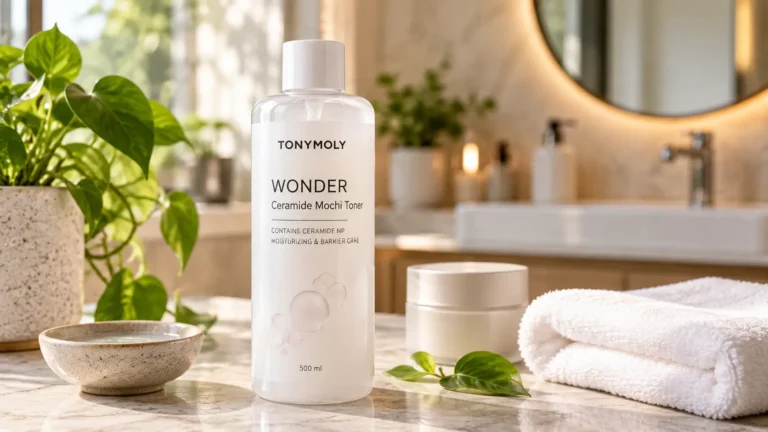
[…] toner has become a familiar name in Korean skincare, particularly the Wonder Ceramide Mochi Toner. Its appeal is straightforward: a large-format […]