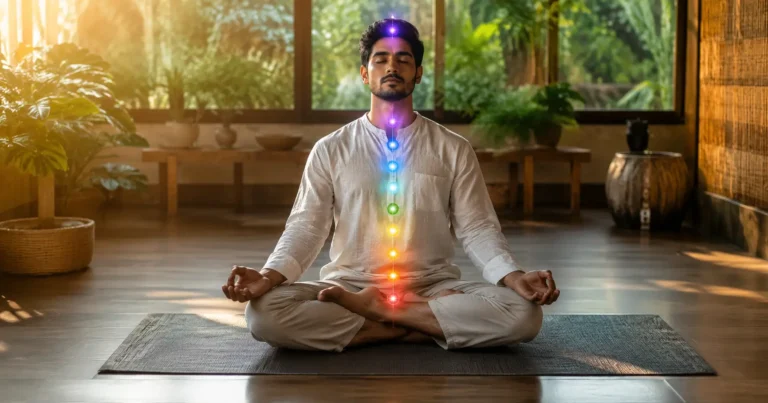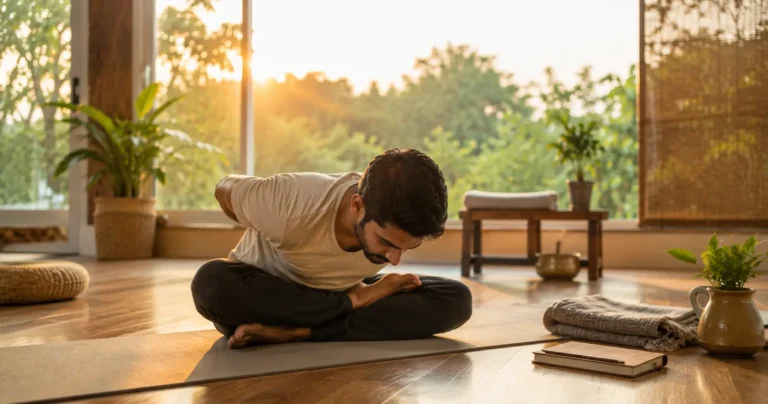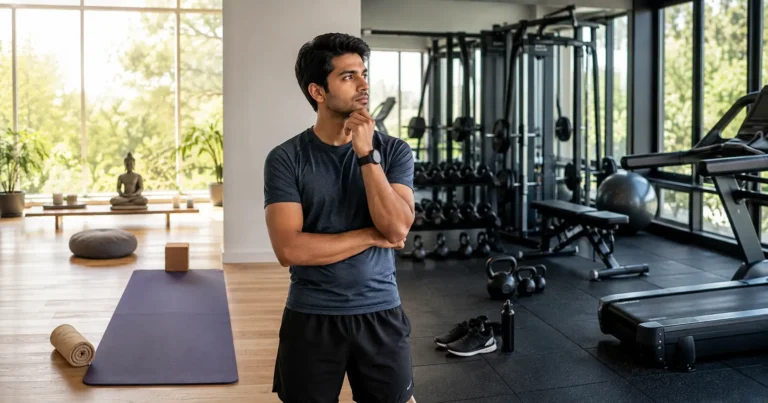
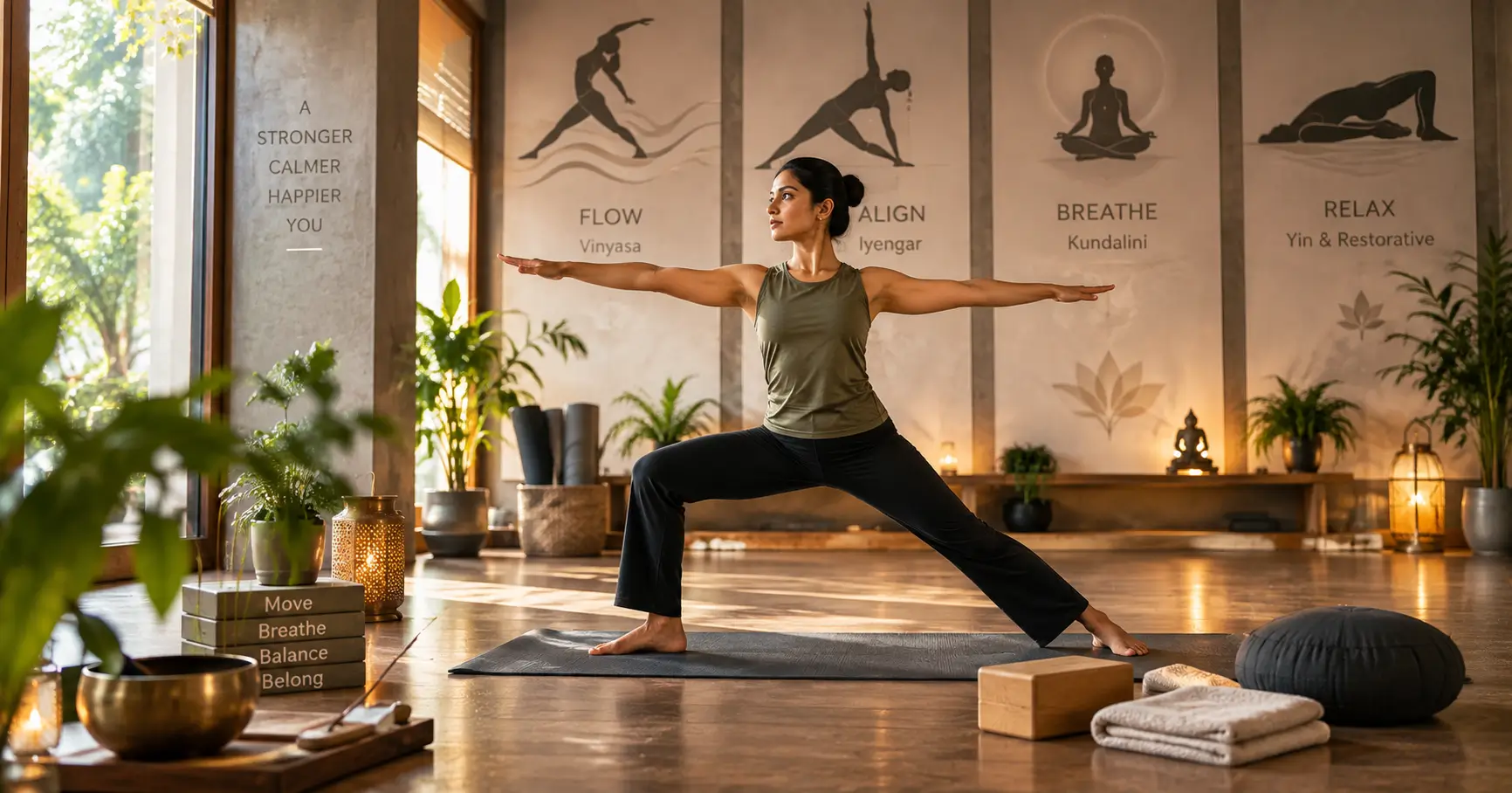

There is no single official list of “types of yoga.” Yoga has developed through many philosophies, traditions, lineages and teaching systems. India’s Ministry of Ayush, for example, identifies traditional schools including Jnana Yoga, Bhakti Yoga, Karma Yoga, Patanjala Yoga, Kundalini Yoga, Hatha Yoga, Dhyana Yoga, Mantra Yoga, Laya Yoga and Raja Yoga, among others.
For people choosing a modern yoga class, however, the most familiar styles include Hatha, Vinyasa, Ashtanga, Iyengar, Kundalini, Yin, Restorative, Power and Hot Yoga.
Short answer: If you are new to yoga, Hatha is often a practical starting point because classes generally move at a slower pace and give more time to learn individual poses. If you want flowing movement, try Vinyasa; for a more demanding practice, consider Ashtanga or Power Yoga; for slower relaxation, Yin or Restorative Yoga may be more appropriate.
1. Hatha Yoga
Hatha Yoga is one of the most familiar names in modern yoga. In contemporary classes, Hatha usually involves holding postures for several breaths, with attention to alignment, breathing and body awareness.
It can be a good choice for beginners because the slower pace gives students more time to understand each posture rather than constantly moving from one pose to another.
Best suited for: Beginners, flexibility, body awareness and learning yoga fundamentals.
2. Vinyasa Yoga
Vinyasa Yoga connects movement with breathing and usually follows a continuous sequence of poses. Classes can vary considerably because instructors create different sequences.
Compared with a slower Hatha class, Vinyasa can feel more dynamic and physically active.
Best suited for: People who enjoy flowing movement, variety and a more active class.
3. Ashtanga Yoga
Ashtanga is a structured and physically demanding style built around established sequences. It requires consistency and can be challenging for people who are completely new to physical yoga practice.
Because the practice is more systematic, it can appeal to people who enjoy routine and progressive training.
Best suited for: Experienced beginners, disciplined practitioners and people who enjoy structured workouts.
4. Iyengar Yoga
Iyengar Yoga places strong emphasis on alignment, precision and controlled positioning. Props such as blocks, straps and chairs may be used to help practitioners perform poses with appropriate support.
Cleveland Clinic describes Iyengar as a slower, strong practice that can be adapted for people with different abilities and uses props to assist alignment.
Best suited for: People who want detailed technique, alignment work and a methodical practice.
5. Kundalini Yoga
Kundalini Yoga can combine physical postures with breathing, meditation, mantra and other practices. It is therefore different from classes focused almost entirely on physical exercise.
India’s Ministry of Ayush includes Kundalini Yoga among the traditional schools and lineages that have developed within the broader yoga tradition.
Best suited for: People interested in combining movement, breathwork, meditation and traditional yogic practices.
6. Yin Yoga
Yin Yoga is slow and involves holding postures for longer periods. It is generally less about continuous movement and more about stillness and sustained stretching.
It should not automatically be treated as the same thing as Restorative Yoga. Yin can involve a sustained physical sensation, while restorative practice emphasizes supported relaxation.
Best suited for: People who prefer slower sessions, stillness and flexibility-focused practice.
7. Restorative Yoga
Restorative Yoga uses supported, gentle postures and props to encourage relaxation. Sessions are generally much less physically demanding than vigorous flow-based styles.
For someone who wants a quiet practice rather than an intense workout, restorative yoga can be a useful option.
Best suited for: Relaxation, gentle movement and people who prefer a low-intensity practice.
8. Power Yoga
Power Yoga generally refers to a more vigorous, fitness-oriented approach to yoga. Classes may include challenging sequences, strength work and faster transitions.
Unlike some traditional schools, “Power Yoga” does not represent one single standardized sequence, so class intensity can vary considerably between instructors.
Best suited for: Fitness-focused practitioners who want a more active yoga session.
9. Hot Yoga
Hot Yoga is practiced in a heated room. The exact temperature, sequence and teaching approach can differ between studios, so “hot yoga” describes the environment as much as a particular sequence.
Heat can increase physical discomfort and introduces additional concerns around overheating and dehydration. NCCIH specifically advises caution with hot yoga, particularly during pregnancy.
Best suited for: Experienced practitioners who enjoy heated environments and can safely tolerate them.
Which Type of Yoga Is Best for Beginners?
There is no universal winner. Your starting point should depend on your experience, fitness level, goals and any physical limitations.
A simple guide is:
| Your Goal | Style to Consider |
|---|---|
| Learn the basics | Hatha |
| Enjoy flowing movement | Vinyasa |
| Build a structured practice | Ashtanga |
| Improve alignment | Iyengar |
| Explore traditional practices | Kundalini |
| Slow down and stretch | Yin |
| Relax gently | Restorative |
| Get a more active workout | Power |
| Practice in heat | Hot Yoga |
Yoga can contribute to general wellness, stress management, balance, sleep and mental/emotional well-being. Research also suggests potential benefits for some forms of pain and other health concerns, although results vary by condition and type of yoga studied.
Is Yoga Safe for Everyone?
Yoga is generally considered safe for healthy people when practiced appropriately, but it is still physical activity and injuries can occur. Sprains and strains are among the more common yoga-related injuries. NCCIH recommends learning from a qualified instructor, especially when starting, and advises people who are pregnant, older or have health conditions to discuss appropriate modifications with a healthcare professional and instructor.
The best approach is to choose a style that matches your current ability rather than selecting a difficult class simply because it appears more advanced.
Final Takeaway
The different types of yoga range from slow, supported practices to physically demanding flows, while India’s broader yoga tradition includes philosophical and spiritual paths as well as physical practices.
For most beginners, Hatha Yoga is a sensible place to learn the basics. Vinyasa offers more movement, Ashtanga and Power Yoga can provide greater physical challenge, while Yin and Restorative Yoga offer slower alternatives.
The right style is ultimately the one you can practice safely, consistently and comfortably.
FAQ
What are the main types of yoga?
Popular modern styles include Hatha, Vinyasa, Ashtanga, Iyengar, Kundalini, Yin, Restorative, Power and Hot Yoga. Traditional Indian yoga also includes paths such as Bhakti, Karma, Jnana and Raja Yoga.
Which type of yoga is best for beginners?
Hatha Yoga is often a practical starting point because modern Hatha classes generally move more slowly and allow students time to learn individual postures.
What is the difference between Hatha and Vinyasa Yoga?
Hatha classes generally spend more time on individual postures, while Vinyasa typically links movement and breathing through a continuous sequence.
Is Yin Yoga the same as Restorative Yoga?
No. Both can be slow and quiet, but Yin Yoga generally involves sustained physical stress or stretching, whereas Restorative Yoga emphasizes supported relaxation.
Which yoga is best for flexibility?
Several styles can improve flexibility. Hatha, Yin and Iyengar can all be useful depending on the individual’s practice, but flexibility should be developed gradually rather than forced.
Can yoga help reduce stress?
Research suggests yoga may help with stress management and may support mental and emotional well-being, although individual results vary.
Disclaimer
This article is for general educational and wellness information, not medical advice. People who are pregnant, injured, older, or managing a health condition should consult an appropriate healthcare professional before beginning or modifying a yoga practice.