
You may have heard that your body has seven chakras, but what does it actually mean to activate chakras?
In traditional Indian yogic and spiritual systems, chakras are described as subtle energy centers associated with different physical, emotional, mental, and spiritual qualities. Modern medicine does not recognize chakras as anatomical structures, so it is important to distinguish traditional beliefs from established science.
Still, the practices commonly used in chakra work—such as meditation, yoga, breath awareness, mantra repetition, and mindfulness—can be useful wellness practices.
The key is not to chase a dramatic mystical experience. A consistent, grounded practice is usually more useful than trying to force an instant “awakening.”
What Are Chakras?
The word chakra comes from Sanskrit and is commonly translated as “wheel” or “disc.”
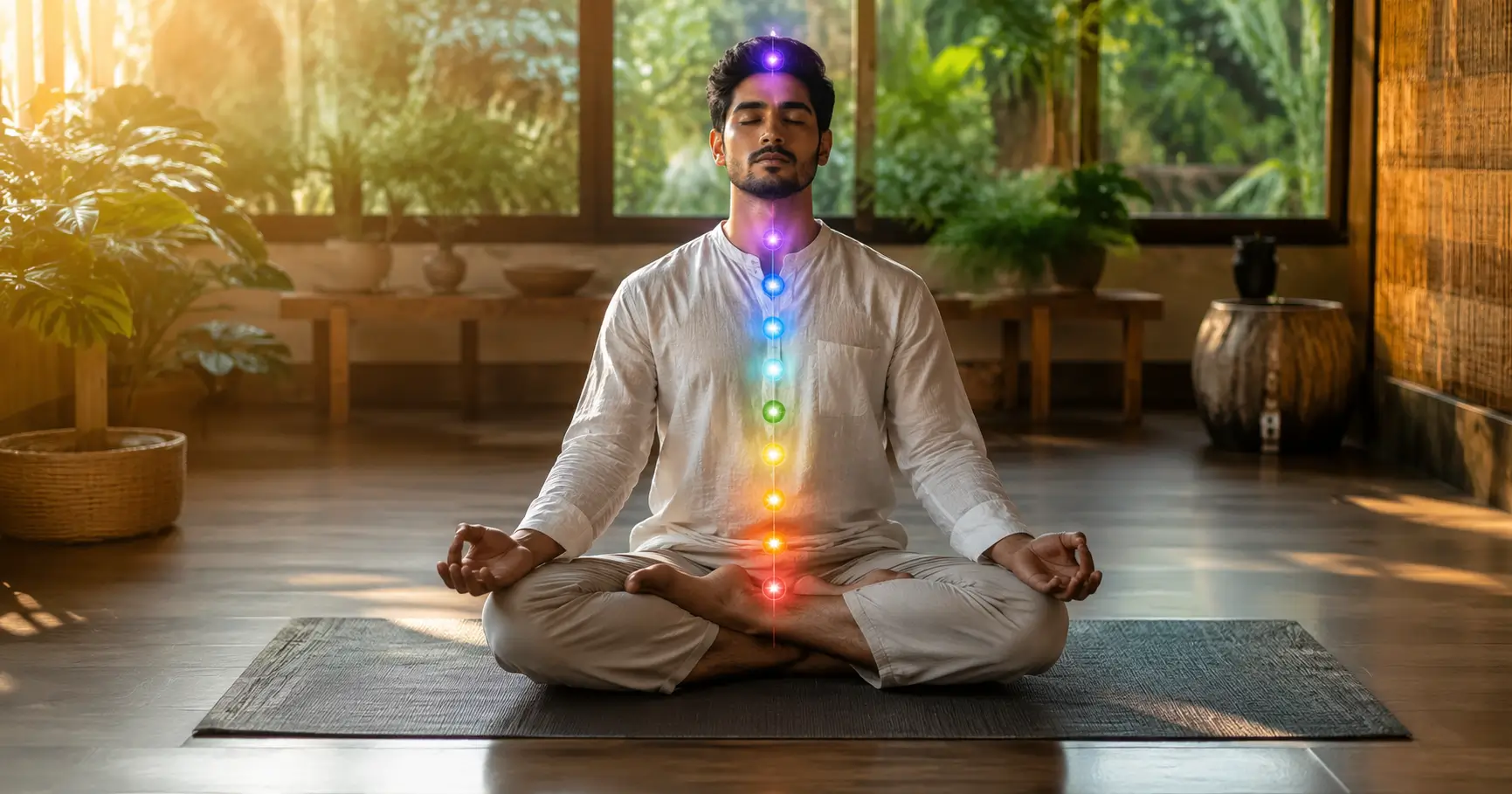
In several Indian philosophical and yogic traditions, chakras represent subtle centers along the body’s central axis. The modern popular model generally focuses on seven major chakras, from the base of the spine to the crown of the head.
Each is traditionally associated with particular themes.
| Chakra | Traditional location | Commonly associated theme |
|---|---|---|
| Muladhara | Base of spine | Grounding and security |
| Svadhisthana | Lower abdomen | Creativity and emotions |
| Manipura | Upper abdomen | Confidence and personal power |
| Anahata | Center of chest | Love and compassion |
| Vishuddha | Throat | Communication and expression |
| Ajna | Between the eyebrows | Intuition and awareness |
| Sahasrara | Crown of head | Spiritual awareness |
These descriptions belong to a traditional spiritual framework rather than modern anatomy.
That distinction matters. You can explore chakra practices without treating spiritual concepts as medical diagnoses.
How to Activate Chakras in a Safe, Practical Way
There is no scientifically established switch that physically “turns on” a chakra.
Instead, chakra activation can be approached as a structured mindfulness and spiritual practice involving attention, breathing, movement, visualization, and reflection.
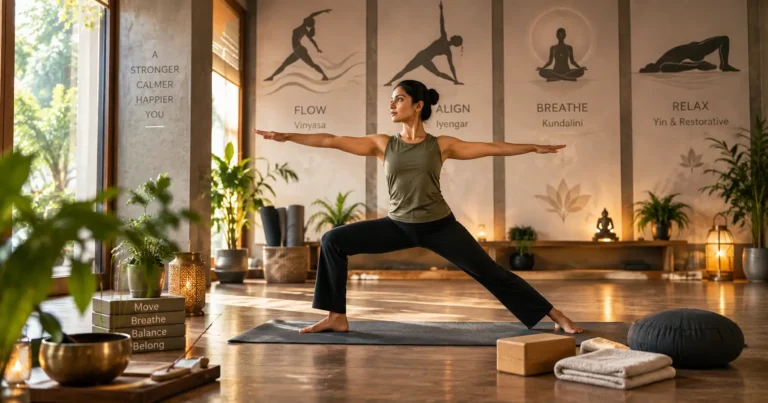
Yoga itself commonly combines physical postures, breathing practices, and meditation. NCCIH notes that research suggests yoga may support stress management, mental and emotional well-being, sleep, and balance.
A simple approach is:
- Choose one chakra or theme.
- Sit comfortably.
- Slow your breathing without forcing it.
- Focus your attention on the traditional location.
- Use an appropriate mantra or affirmation if it helps.
- Practice for 5–15 minutes.
- Finish by noticing how you feel rather than looking for unusual sensations.
Consistency matters more than intensity.
1. Root Chakra — Muladhara
The root chakra is traditionally located at the base of the spine and is associated with grounding, stability, safety, and basic needs.
If you want to work with this chakra symbolically, begin with practices that make you feel physically present.
Try this
Sit with both feet firmly supported by the floor. Take slow, comfortable breaths and notice the physical sensations of your feet, legs, and body.
You can also practice grounding yoga postures such as Mountain Pose or a comfortable standing position.
A simple affirmation is:
“I am grounded, present, and steady.”
The goal is not to force a particular sensation. Instead, use the practice to bring attention back to the present moment.
2. Sacral Chakra — Svadhisthana
The sacral chakra is traditionally associated with the lower abdomen and themes such as creativity, emotions, pleasure, and flexibility.
A useful practice here is gentle movement.
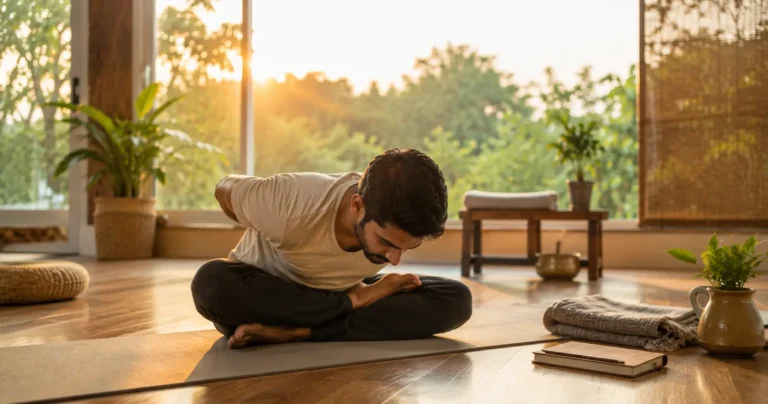
Try slow hip-opening movements or a relaxed seated meditation. Pay attention to emotions without immediately judging or suppressing them.
You might use the affirmation:
“I allow myself to experience and express.”
This can become especially useful as a journaling practice. Write for five minutes about something you enjoy creating, learning, or exploring.
3. Solar Plexus Chakra — Manipura
Manipura is traditionally connected with the upper abdomen and themes of confidence, discipline, motivation, and personal power.
For this practice, combine steady breathing with an upright posture.
Sit or stand tall. Relax your shoulders and breathe naturally while bringing attention to your center.
Then ask yourself:
“What is one action I can take today that is within my control?”
This turns an abstract spiritual concept into a practical behavioral exercise.
Rather than trying to manufacture confidence through visualization alone, connect the practice with a real action.
4. Heart Chakra — Anahata
The heart chakra is traditionally associated with the center of the chest and qualities such as compassion, love, forgiveness, and connection.
A simple heart-centered meditation can involve remembering someone you appreciate.
Breathe slowly and reflect on a person, place, or experience that makes you feel grateful.
You can then extend that feeling toward yourself.
Try:
“May I treat myself and others with compassion.”
Mindfulness and meditation have been studied for their effects on attention, emotional regulation, anxiety, depression, and other areas of well-being, although results vary by technique and population.
5. Throat Chakra — Vishuddha
Vishuddha is traditionally linked with the throat and communication.
Instead of thinking only about “opening” the throat chakra, use this as an opportunity to examine how honestly and respectfully you communicate.
Try five minutes of silent reflection followed by journaling.
Ask:
- What am I avoiding saying?
- Do I listen as carefully as I speak?
- Am I expressing my needs clearly?
- Is there something I need to communicate respectfully?
Some practitioners also use mantra repetition or humming as part of their spiritual routine.
The value can come from focused attention and rhythmic breathing rather than assuming the sound physically activates an anatomical energy center.
6. Third Eye Chakra — Ajna
Ajna is traditionally associated with the space between the eyebrows and themes such as intuition, insight, concentration, and awareness.
For this practice, use focused-attention meditation.
Sit comfortably and choose one simple object of attention, such as your breathing.
When your mind wanders, gently return your attention.
This is one of the most practical ways to approach the concept because concentration and self-awareness are measurable psychological skills.
Research summarized by NCCIH indicates that meditation and mindfulness may help with aspects of mental and emotional well-being, although evidence differs across conditions and meditation techniques.
7. Crown Chakra — Sahasrara
The crown chakra is traditionally associated with the top of the head and themes such as spiritual awareness, consciousness, and connection.
Rather than attempting to create an intense experience, practice quiet observation.
Sit comfortably for 5–10 minutes and allow thoughts to come and go without following each one.
You can finish by reflecting on a larger question:
“What gives my life meaning?”
For some people, this becomes a spiritual practice. For others, it simply becomes a form of quiet reflection.
Both approaches can be meaningful without requiring a supernatural interpretation.
A Simple 15-Minute Seven-Chakra Routine
You do not need a one-hour ritual to begin.
Try this beginner-friendly routine:
- 2 minutes: Sit quietly and settle your body.
- 2 minutes: Practice slow, comfortable breathing.
- 1 minute: Focus on the root chakra.
- 1 minute: Focus on the lower abdomen.
- 1 minute: Focus on the upper abdomen.
- 1 minute: Focus on the center of the chest.
- 1 minute: Focus on the throat.
- 1 minute: Focus between the eyebrows.
- 1 minute: Focus on the crown of the head.
- 4 minutes: Sit quietly and observe your thoughts and body sensations.
Do not force deep breathing or hold your breath for uncomfortable periods.
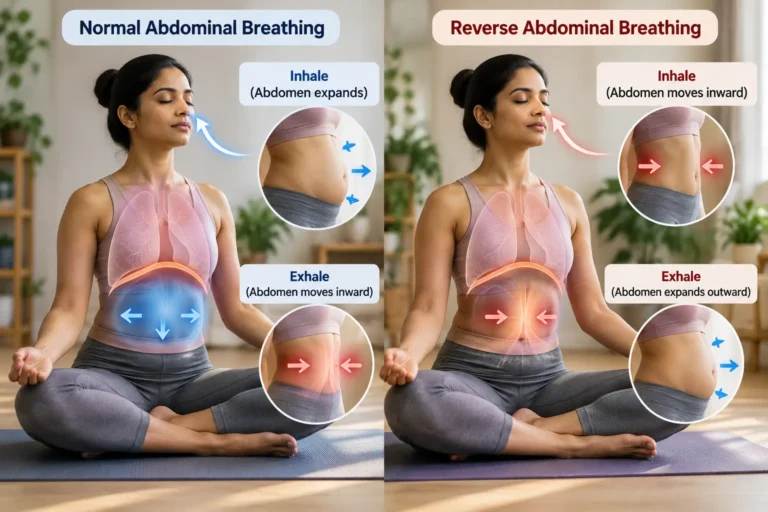
Breath-awareness exercises are commonly used as relaxation practices. NHS guidance describes focusing on the breath and gradually allowing breathing to become comfortable and smooth.
What Does Chakra Activation Feel Like?
There is no single scientifically established sensation that proves a chakra has activated.
People who practice chakra meditation may describe experiences such as:
- Warmth
- Tingling
- Emotional release
- Calmness
- Increased concentration
- A feeling of relaxation
- Greater self-awareness
- Vivid imagery during meditation
However, these sensations have many possible explanations.
For example, focused attention can make ordinary bodily sensations more noticeable. Relaxation can also change breathing, muscle tension, and subjective feelings.
Therefore, do not use a tingling sensation or emotional reaction as proof that a chakra has physically opened.
Chakra Activation: Myth vs Fact
| Myth | Fact |
|---|---|
| Chakras are proven anatomical organs | Chakras belong to traditional spiritual and yogic frameworks |
| Strong sensations prove activation | Sensations can have many psychological or physiological explanations |
| You must activate all seven immediately | Beginners can work gradually and comfortably |
| More intense breathing produces better results | Forceful breathing can be uncomfortable and is not necessary |
| Chakra meditation replaces medical treatment | Spiritual practices should not replace appropriate healthcare |
| Everyone experiences chakra work identically | Experiences vary considerably between individuals |
This evidence-based distinction actually makes chakra practice more useful. You can appreciate its traditional meaning while remaining honest about what science has and has not established.
Common Mistakes Beginners Make
Trying to force an experience
Many beginners expect lights, vibrations, visions, or dramatic emotional changes.
That expectation can create unnecessary pressure.
Meditation does not need to feel extraordinary to be valuable.
Practicing too intensely
Long sessions, aggressive breathwork, or extreme physical postures are unnecessary for beginners.
Start with short, comfortable sessions.
Treating chakras as medical explanations
If you have persistent pain, fatigue, anxiety, sleep problems, or another health concern, do not assume that a “blocked chakra” explains the problem.
Seek appropriate medical or mental-health advice when necessary.
Changing techniques constantly
Trying ten different chakra methods in one week makes it difficult to know what actually helps.
Choose one simple routine and practice consistently.
Ignoring physical safety
Yoga and related practices are generally considered safe when appropriately practiced, but injuries can occur. NCCIH recommends learning yoga appropriately and considering qualified instruction, particularly for people with specific health circumstances.
How Long Does Chakra Activation Take?
There is no scientifically established timeline for “activating” a chakra.
Traditional practitioners may describe different stages of spiritual development, but these are not standardized medical milestones.
A better beginner goal is to measure practice consistency and real-life changes.
For example, after four weeks, ask:
- Am I more consistent with meditation?
- Do I notice stress earlier?
- Can I return my attention more easily?
- Am I communicating more clearly?
- Do I feel more grounded?
- Has my daily routine become healthier?
These questions produce more useful feedback than asking whether a particular chakra is “100% open.”
Can Meditation Really Help?
This is where traditional chakra practice overlaps with contemporary wellness research.
Researchers have studied meditation, mindfulness, yoga, and related mind-body practices for several outcomes. NCCIH reports evidence suggesting potential benefits for stress, anxiety and depression symptoms, sleep, and general wellness, while also noting that research varies by intervention and condition.
That does not prove that chakras themselves are biological structures.
Instead, it suggests that some activities used in chakra-oriented practices may have value independently of the chakra explanation.
This distinction allows readers to explore the tradition without overstating scientific evidence.
A Practical Beginner’s Approach
If you want to explore chakra activation, keep the first month simple.
Week 1: Grounding
Practice five minutes of breathing and body awareness each day.
Week 2: Emotional awareness
Add journaling and gentle movement.
Week 3: Concentration
Introduce focused-attention meditation.
Week 4: Reflection
Combine your preferred practices and evaluate how they affect your daily life.
The objective is greater awareness, not chasing extraordinary experiences.
Key Takeaways
- Chakras are traditionally described as subtle energy centers in Indian spiritual and yogic traditions.
- The commonly discussed system contains seven major chakras.
- There is no scientific evidence establishing chakras as physical anatomical structures.
- Meditation, yoga, breathing, mantra, visualization, and mindfulness are commonly used in chakra practices.
- Research supports potential benefits of some of these practices for areas such as stress management and general well-being.
- Beginners should start slowly and avoid forceful or extreme techniques.
- Chakra practices should complement—not replace—appropriate medical or mental-health care.
- Consistency and self-awareness are more useful goals than trying to force a dramatic “activation.”
FAQ
What are the seven chakras?
The seven commonly discussed chakras are Muladhara, Svadhisthana, Manipura, Anahata, Vishuddha, Ajna, and Sahasrara. They are described in traditional yogic and spiritual systems as subtle energy centers.
How can I activate my chakras naturally?
You can explore chakra practices through meditation, gentle yoga, breath awareness, visualization, mantra repetition, and mindful self-reflection. Begin with short sessions and focus on consistency rather than intense experiences.
Can you activate all seven chakras at once?
Some traditional practices focus on all seven chakras during a single meditation session. However, there is no scientifically established process for physically activating chakras, so beginners may find it more practical to work gradually.
How long does it take to activate chakras?
There is no scientifically established timeframe for chakra activation. Instead, focus on developing consistent meditation, mindfulness, movement, and self-awareness practices.
What does chakra activation feel like?
People may report sensations such as warmth, tingling, relaxation, emotional changes, or increased awareness. However, these experiences do not scientifically prove that a chakra has activated.
Is chakra meditation scientifically proven?
Research supports some practices commonly used in chakra meditation, particularly meditation, mindfulness, yoga, and relaxation, for certain aspects of well-being. However, this evidence does not establish chakras as physical anatomical structures.
Conclusion
Chakra activation does not have to mean chasing a mysterious or overwhelming spiritual experience.
For a beginner, the more useful approach is to treat the seven-chakra system as a structured framework for meditation, movement, attention, reflection, and spiritual practice.
Start with five to fifteen minutes a day. Work through the traditional chakra themes one at a time, use comfortable breathing, and pay attention to how the practice influences your everyday behavior.
Most importantly, keep the distinction between traditional belief and scientific evidence clear. Research supports several practices commonly associated with chakra work—particularly yoga, meditation, mindfulness, and relaxation—but it does not establish chakras as physical organs or medically measurable energy centers.
The best result is not necessarily a dramatic sensation.
It may simply be becoming more grounded, more attentive, calmer, and more aware of yourself.
Start small, practice consistently, and let your experience develop naturally.
Disclaimer
Disclaimer: This article is provided for educational and general wellness information only. Chakras are concepts found in traditional Indian spiritual and yogic systems and are not recognized as anatomical structures by modern medicine. The practices described here, including meditation, yoga, breathing exercises, visualization, and mantra repetition, should not be considered a diagnosis or treatment for any medical or mental-health condition. Do not use chakra practices as a substitute for professional medical care. If you have a health condition, are pregnant, experience significant psychological distress, or are unsure whether a particular exercise is appropriate for you, consult a qualified healthcare professional before beginning a new practice.