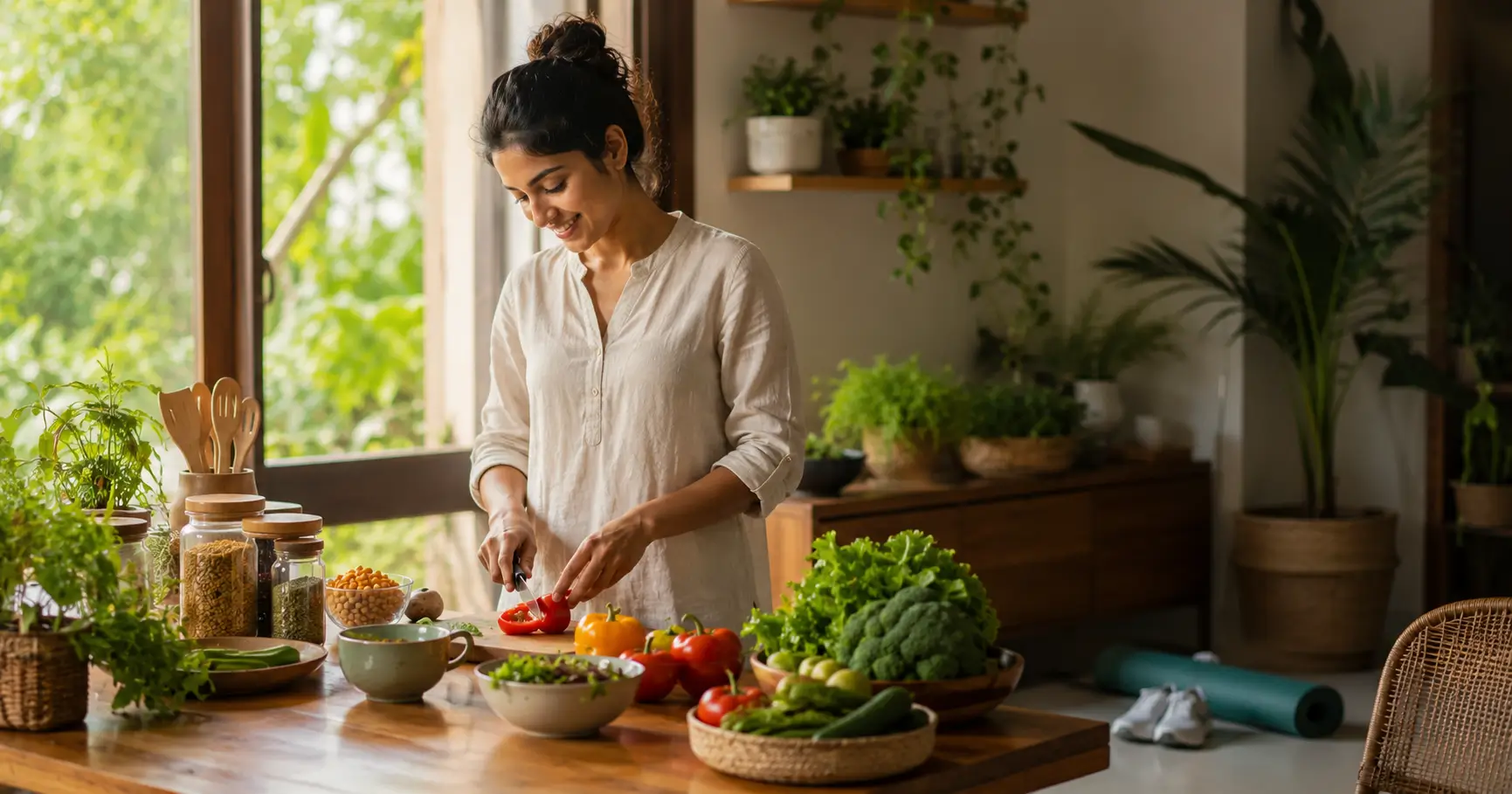

Modern life gives us incredible convenience. We can order food in minutes, work from almost anywhere and stay connected all day.
Yet many people are starting to crave something simpler.
They want better food, more time outdoors, less screen time, healthier routines and a home that feels calm rather than overwhelming.
That is where natural living comes in.
But natural living does not mean abandoning modern medicine, throwing away every household product or following every wellness trend on social media. A more useful definition is much simpler: building everyday habits that support health, simplicity, connection with nature and mindful consumption.
The good news is that you do not need to change your entire life.
A few consistent choices can create a surprisingly different routine.
What Is Natural Living?
Natural living is a lifestyle approach that emphasizes simple, sustainable and health-supportive choices while maintaining a realistic connection with modern life.
It can include eating more minimally processed foods, moving regularly, spending time outdoors, protecting sleep, reducing unnecessary consumption and creating healthier relationships with technology.
There is no official medical definition of “natural living,” and the term should not be treated as a medical treatment.
That distinction matters.
A natural ingredient is not automatically safe, and a synthetic product is not automatically harmful. Good decisions should consider evidence, dosage, individual circumstances, safety and practicality.
The strongest foundation comes from ordinary habits that health organizations already recognize as important, including nutritious food, physical activity, sufficient sleep, stress management and social connection. WHO includes healthy eating, physical activity, adequate sleep and connection with others among important lifestyle choices for self-care.
1. Eat More Foods That Look Like Their Original Form
One of the simplest ways to begin natural living is to improve the quality of your everyday meals.
Think about foods such as:
- Vegetables
- Fruits
- Lentils and beans
- Whole grains
- Nuts and seeds
- Eggs
- Fish or other protein sources
- Plain dairy products, when appropriate
This does not mean every meal has to be homemade.
The goal is to make nutritious, minimally processed foods the regular foundation of your diet rather than trying to follow a perfect “clean eating” rule.
WHO identifies variety, adequacy, balance and moderation as core principles of a healthy diet and recommends a pattern containing foods such as whole grains, legumes, fruits, vegetables and nuts.
A practical example
Instead of completely redesigning your diet, change one meal.
If breakfast normally consists of a packaged snack, consider replacing it several days a week with something simple such as oats with fruit and nuts, eggs with whole-grain toast, or another balanced meal that suits your dietary needs.
Small changes are easier to maintain than extreme rules.
2. Spend More Time Outside
Humans can spend an entire day indoors without realizing it.
A natural lifestyle deliberately creates opportunities to experience daylight, fresh air, greenery and outdoor movement.
You do not need to live in the countryside.
Try:
- Walking through a local park
- Sitting on a balcony or terrace
- Gardening
- Eating one meal outdoors
- Taking a short evening walk
- Spending weekends in natural surroundings
The benefit is not that nature magically “detoxes” the body.
Rather, outdoor time can become an easy way to combine movement, mental recovery and a break from screens.
3. Make Walking Part of Your Daily Routine
Walking is one of the most accessible forms of physical activity.
You do not need an expensive membership or complicated equipment.
Walk after meals when practical. Walk while taking phone calls. Walk to nearby places instead of driving when reasonable.
WHO recommends adults accumulate at least 150 minutes of moderate-intensity physical activity per week, or an equivalent amount of vigorous activity, with additional benefits from higher amounts.
CDC guidance also notes that regular physical activity provides immediate and long-term health benefits and can improve sleep, brain health and mood.
The natural-living lesson is simple:
Move your body regularly rather than treating exercise as something that only happens inside a gym.
4. Protect Your Sleep Like a Basic Health Habit
Many people try to improve their diet while ignoring their sleep.
That is backwards.
Sleep is one of the foundations that supports the rest of your routine.
For adults aged 18–60, the National Institutes of Health recommends 7 or more hours of sleep per night. Older adults have different recommended ranges.
Create a calmer evening by:
- Keeping a reasonably consistent sleep schedule.
- Reducing unnecessary screen use before bed.
- Keeping your bedroom comfortable and dark.
- Avoiding work immediately before trying to sleep.
- Addressing persistent sleep problems with a healthcare professional.
Natural living does not require sleeping in a tent.
It means respecting the body’s need for regular recovery.
5. Create a Healthier Relationship With Technology
Technology itself is not the problem.
Uncontrolled use can be.
Imagine waking up and immediately checking messages, news, social media and email. Your day begins with other people’s priorities before you have considered your own.
Try creating small technology-free periods.
For example:
- No phone during breakfast.
- No unnecessary scrolling during walks.
- Keep your phone away during conversations.
- Turn off nonessential notifications.
- Create a screen-free period before bed.
Mayo Clinic recommends spending less time in front of screens and more time relaxing as part of healthy stress management.
The goal is not digital isolation.
It is intentional use.
6. Choose Simple Household Habits
Natural living can also begin at home.
Instead of buying dozens of products marketed as “clean,” start by making your home more practical.
Use basic habits such as:
- Open windows when appropriate for ventilation.
- Keep living areas clean and uncluttered.
- Store food safely.
- Wash produce appropriately.
- Reduce unnecessary disposable items.
- Repair useful items instead of immediately replacing them.
- Choose durable products when practical.
Do not assume that an expensive “natural” label guarantees a healthier product.
Read ingredients, follow safety instructions and consider whether you actually need the product.
Simplicity is often more useful than marketing.
7. Spend More Time Cooking at Home
Cooking can reconnect you with what you actually eat.
You control the ingredients, portions and preparation method.
It can also make healthy eating easier because you are less dependent on whatever happens to be available when you become hungry.
You do not need elaborate recipes.
Start with five reliable meals that use familiar ingredients.
For example:
- Vegetable and lentil dishes
- Rice with vegetables and a protein source
- Whole-grain meals with beans
- Simple soups
- Eggs with vegetables and whole grains
WHO notes that healthy diets vary according to individual needs, culture, locally available foods and dietary customs.
That means natural living does not require abandoning your cultural food traditions.
In fact, traditional meals can often provide a practical foundation for a balanced diet.
8. Learn to Manage Stress Without Chasing Quick Fixes
Natural living sometimes gets mixed with claims about detoxes, miracle herbs and instant stress cures.
You do not need them to begin.
Stress management can start with ordinary behaviors: movement, adequate sleep, healthy food, relaxation practices, hobbies and supportive relationships.
Mayo Clinic recommends healthy lifestyle habits, physical activity, sleep and relaxation techniques as part of ongoing stress management.
Try a simple reset:
Pause → breathe → identify the stressor → decide what you can control → take one useful action.
This will not eliminate every stressful situation.
It can, however, make your response more deliberate.
9. Grow Something
A small garden can change your relationship with food and nature.
You do not need a large backyard.
Try growing:
- Mint
- Coriander
- Basil
- Chillies
- Tomatoes
- Microgreens
Even a few pots on a balcony can create a reason to spend time caring for something living.
Gardening also provides a practical reminder that healthy growth takes time.
You plant.
You water.
You wait.
Not everything happens immediately.
That is a useful lesson in an age of instant results.
10. Practice Mindful Consumption
Natural living is not simply about buying “natural” products.
It is also about buying less unnecessarily.
Before purchasing something, ask:
- Do I actually need it?
- Will I use it regularly?
- Can I repair something I already own?
- Is there a durable alternative?
- What will happen to this item after I stop using it?
This approach can save money while reducing unnecessary consumption.
Sustainable living does not have to look perfect.
It can begin with one fewer unnecessary purchase.
11. Make Social Connection Part of Your Lifestyle
A natural lifestyle should not become an isolated lifestyle.
Human well-being is also shaped by relationships.
Eat with family.
Call a friend.
Walk with someone.
Join a community activity.
Spend time with people who make you feel supported and respected.
WHO includes connection with others among healthy lifestyle choices for self-care, while broader whole-person health approaches recognize that social and environmental factors influence well-being.
A healthier life is not only about what you eat.
It is also about who you share it with.
12. Build Habits Instead of Chasing Perfection
This may be the most important natural-living habit of all.
People often begin with an ambitious plan:
“No processed food.”
“Two hours of exercise every day.”
“Zero screen time.”
“Everything must be organic.”
Then real life arrives.
Work becomes busy.
Family responsibilities increase.
The routine collapses.
A better approach is to build habits that survive imperfect days.
Harvard Health recommends starting small when changing lifestyle habits and emphasizes consistency and getting back on track after setbacks.
Think in terms of better, not perfect.
One healthy meal is better than waiting for the perfect diet.
A 20-minute walk is better than doing nothing because you cannot complete a full workout.
Going to bed earlier four nights a week is better than giving up because you cannot achieve perfect sleep every night.
Natural Living: What to Prioritize First
If the idea of changing your lifestyle feels overwhelming, use this priority table.
| Habit | Start With | Why It Matters |
|---|---|---|
| Food | Add more whole/minimally processed foods | Supports a balanced diet |
| Movement | Walk more often | Easy way to increase activity |
| Sleep | Create a consistent schedule | Supports recovery and well-being |
| Nature | Spend regular time outdoors | Builds a break from indoor routines |
| Technology | Create phone-free periods | Encourages intentional attention |
| Stress | Use healthy coping strategies | Supports emotional well-being |
| Consumption | Buy less unnecessarily | Supports simplicity and sustainability |
| Relationships | Make time for people | Supports social well-being |
There is no requirement to change all eight simultaneously.
Choose the area where the smallest improvement would make the biggest difference.
A 7-Day Natural Living Reset
Want to know how to start natural living without overwhelming yourself?
Try this one-week experiment.
Day 1: Simplify One Meal
Prepare one meal using mostly familiar, minimally processed ingredients.
Day 2: Take a Walk
Spend at least 20–30 minutes walking at a comfortable pace if your health allows.
Day 3: Create a Phone-Free Hour
Choose one hour when you will use your phone only when genuinely necessary.
Day 4: Spend Time Outdoors
Sit, walk or garden outdoors and pay attention to your surroundings.
Day 5: Improve Your Evening
Start winding down earlier and create a calmer pre-sleep routine.
Day 6: Declutter One Small Area
Choose one drawer, shelf or corner.
Do not attempt the entire house.
Day 7: Review Your Week
Ask:
- Which change felt easiest?
- Which one improved my day?
- Which habit can I continue?
- What should I change rather than force?
The goal is not a seven-day transformation.
It is discovering which small habits fit your actual life.
Common Natural Living Mistakes
Mistake 1: Assuming Natural Always Means Safe
Natural substances can have risks, interactions and side effects.
“Natural” is not a synonym for “harmless.”
Mistake 2: Following Extreme Food Rules
Healthy eating does not require fear of every packaged food.
Overall dietary pattern matters more than perfection.
Mistake 3: Buying More Instead of Living Simply
Purchasing ten “eco-friendly” products you do not need does not necessarily make your lifestyle simpler.
Consume thoughtfully.
Mistake 4: Rejecting Modern Medicine
Natural living should not mean avoiding evidence-based medical care.
Lifestyle habits and professional healthcare can coexist.
Mistake 5: Trying to Change Everything at Once
Large lifestyle overhauls often become difficult to maintain.
Start with one or two behaviors.
Myths vs. Facts
| Myth | Fact |
|---|---|
| Natural products are always safer | Natural substances can still have risks |
| Natural living means avoiding modern technology | It is better understood as using technology intentionally |
| You must eat only organic food | A healthy diet can be built around varied, nutritious foods; affordability and availability matter |
| Natural living requires living in the countryside | Simple habits can be practiced in cities |
| You need expensive wellness products | Many useful habits cost little or nothing |
| Healthy living requires perfection | Consistency and sustainable habits matter more |
The Real Meaning of Natural Living
Natural living does not need to become another lifestyle competition.
You do not need the perfect kitchen, an organic garden, expensive supplements or a house in the countryside.
You can begin with a walk.
Cook a simple meal.
Go outside.
Sleep at a reasonable time.
Put your phone down.
Talk to someone you care about.
Buy something only when you genuinely need it.
These actions may appear ordinary, but ordinary habits repeated consistently are often more useful than dramatic lifestyle changes.
A whole-person approach to health recognizes that food, physical activity, sleep, stress, behavior and environment interact rather than existing as isolated categories. NIH describes whole-person health in this broader way and emphasizes healthy eating, physical activity, sleep, stress management and the surrounding environment.
That is perhaps the most practical way to understand natural living.
It is not about escaping modern life. It is about making modern life more intentional, healthy and connected to what actually matters.
FAQ
What is natural living?
Natural living is a lifestyle approach centered on simple, health-supportive and mindful choices such as nutritious foods, regular movement, sufficient sleep, time outdoors, stress management and thoughtful consumption.
How do I start natural living?
Start with one or two manageable changes. Eat more minimally processed foods, walk regularly, spend time outdoors, improve your sleep routine and reduce unnecessary screen time or consumption.
Is natural living healthier?
Some natural-living practices overlap with well-established healthy lifestyle recommendations, such as eating a balanced diet, exercising, sleeping adequately and managing stress. However, “natural” does not automatically mean safe or healthier.
Does natural living mean avoiding processed food?
No. A healthy diet does not require eliminating every processed food. The overall dietary pattern matters, and WHO emphasizes adequacy, balance, moderation and diversity as core principles of healthy eating.
Can I practice natural living in a city?
Yes. Natural living does not require moving to the countryside. Walking in parks, growing plants, cooking at home, spending time outdoors, reducing unnecessary consumption and creating healthier routines can all be practiced in urban environments.
Is natural living expensive?
It does not have to be. Many useful habits—walking, cooking simple meals, spending time outdoors, reducing unnecessary purchases and improving sleep routines—can cost little or nothing.
Conclusion
Natural living does not have to mean rejecting modern life.
It means becoming more intentional about the things that influence everyday well-being: what you eat, how much you move, how you sleep, how you manage stress, how often you spend time outdoors, how you use technology and what you choose to consume.
The most useful changes are usually not dramatic.
Eat more nourishing foods. Walk regularly. Sleep enough. Go outside. Cook when you can. Reduce unnecessary consumption. Protect your attention. Stay connected with people.
And most importantly, do not turn healthy living into another source of pressure.
Start with one habit that fits your current life.
Make it easy enough to repeat.
Then build from there.
The goal of natural living is not to create a perfect life. It is to create a healthier, simpler and more intentional everyday life—one small choice at a time.
Disclaimer
Disclaimer: This article is intended for general educational and informational purposes only. “Natural living” is a broad lifestyle concept and is not a medical treatment or standardized medical program. Natural products, supplements, herbs and alternative therapies can have risks, side effects or interactions with medicines. Do not stop prescribed treatment or replace professional medical care based on lifestyle content alone. Dietary, exercise and wellness needs differ between individuals. If you have a medical condition, take medication, are pregnant, or have specific health concerns, consult an appropriately qualified healthcare professional before making significant lifestyle changes.