
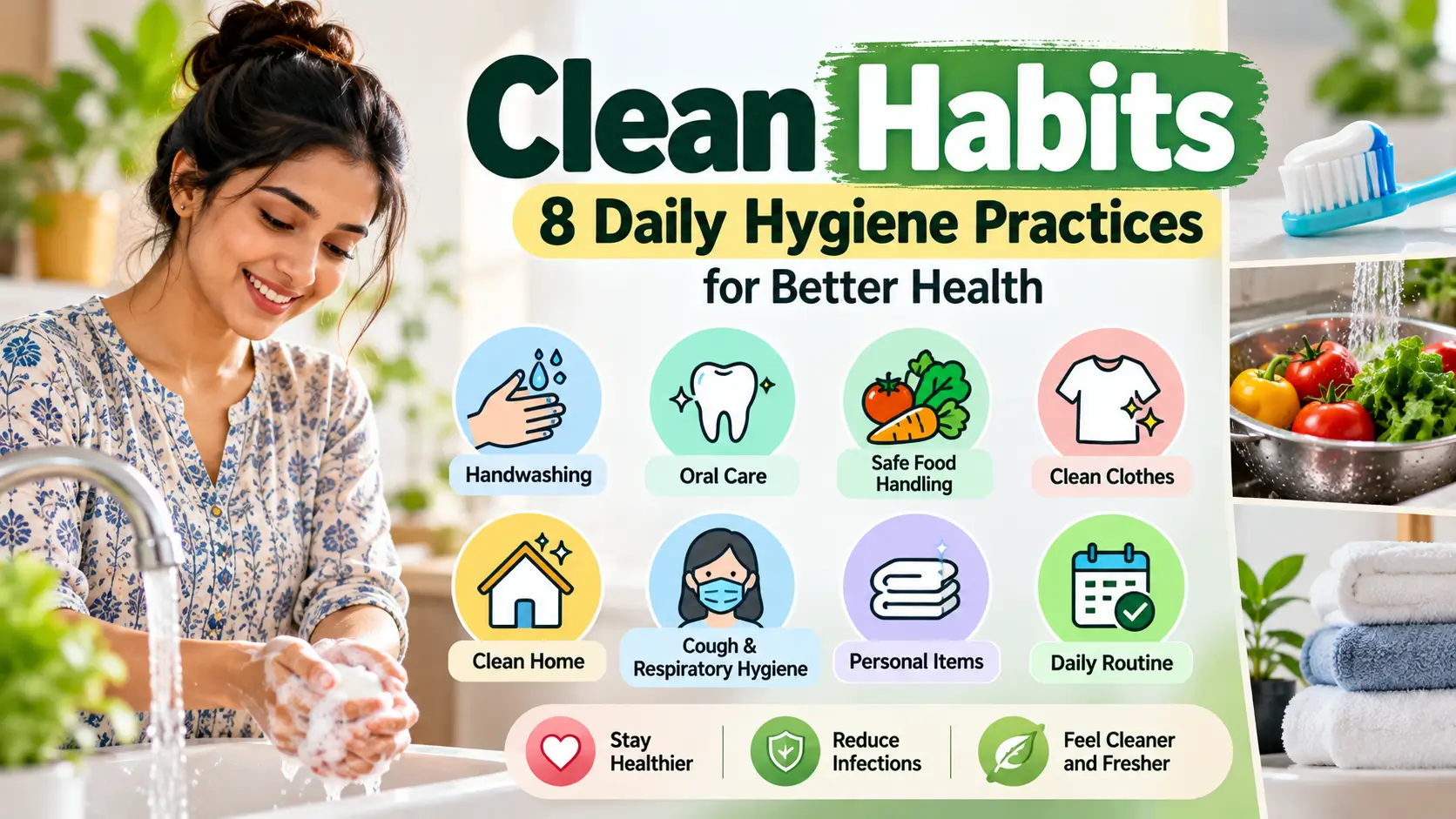

Clean habits are not about keeping every surface spotless or using a different cleaning product for every task. They are about following practical routines that help protect your health, maintain personal comfort and reduce the spread of germs.
For everyday life in India, some of the most useful habits are washing your hands at important moments, caring for your teeth, handling food safely, wearing clean clothes and maintaining a reasonably clean living space. These routines do not need to be expensive or complicated.
The key is to focus on the habits that matter rather than trying to eliminate every germ from your surroundings.
What Are Clean Habits?
Clean habits are regular personal and household practices that support hygiene and everyday well-being. They include washing your hands, brushing your teeth, bathing as appropriate, keeping food preparation areas clean and managing waste safely.
Hygiene is only one part of a healthy lifestyle. Eating a balanced diet, getting adequate sleep, being physically active and seeking appropriate medical care remain important too.
The World Health Organization recognizes healthy lifestyle choices as part of self-care, while its guidance on community hygiene emphasizes the importance of hand hygiene in preventing the spread of infections.
8 Clean Habits Worth Practising Every Day
1. Wash Your Hands at the Right Times
Handwashing is one of the most useful everyday hygiene practices because hands can transfer germs to food, the mouth, the eyes and other people.
Wash your hands with soap and clean, running water:
- After using the toilet.
- Before eating and before preparing food.
- After handling rubbish.
- After coughing, sneezing or blowing your nose.
- After cleaning up bodily fluids or caring for someone with vomiting or diarrhoea.
- After handling animals or their waste.
Wet your hands, apply soap, rub all surfaces—including between the fingers and under the nails—then rinse and dry them with a clean towel or suitable air dryer. The US Centers for Disease Control and Prevention recommends scrubbing for at least 20 seconds.
If soap and water are unavailable, an alcohol-based hand sanitiser containing at least 60% alcohol is a useful alternative in many everyday situations. Soap and water are preferable when hands are visibly dirty or greasy.
Practical tip: Keep soap near the bathroom and kitchen sink so that handwashing becomes an easy routine rather than something you have to remember at the last minute.
2. Maintain a Consistent Oral-Care Routine
Oral hygiene helps protect teeth and gums. It is more effective to maintain a consistent routine than to rely on occasional intensive cleaning.
Useful habits include:
- Brush your teeth twice daily with fluoride toothpaste.
- Clean between your teeth regularly using an appropriate interdental brush or floss.
- Replace a worn toothbrush.
- Limit frequent consumption of sugary foods and drinks.
- Seek dental advice for persistent tooth pain, bleeding gums or other concerning changes.
The CDC recommends brushing twice daily with fluoride toothpaste and cleaning between teeth to help prevent common oral-health problems.
Avoid brushing aggressively in an attempt to make your teeth feel exceptionally clean. Excessive pressure can damage gums and tooth surfaces.
3. Handle Food Safely
Food hygiene matters whether you cook at home, carry lunch to work or buy prepared meals.
Before preparing food, wash your hands and make sure the utensils and surfaces you use are clean. Wash fruits and vegetables under safe running water. Keep raw foods separate from ready-to-eat foods to reduce cross-contamination.
Other useful habits include:
- Use safe drinking water.
- Store perishable foods appropriately.
- Refrigerate foods that require refrigeration without unnecessary delay.
- Cook foods thoroughly.
- Avoid eating food that appears spoiled or has been stored unsafely.
Do not assume that washing food removes every chemical contaminant or makes spoiled food safe. Different hazards require different controls.
For households where refrigeration is unreliable, prepare perishable food in manageable quantities and follow appropriate food-safety guidance for storage and consumption.
4. Keep Your Body and Clothes Clean
Bathing or showering helps remove sweat, dirt and some microorganisms from the skin. How often you need to bathe depends on your activity, climate, work, skin condition and personal needs.
In hot and humid weather, people who sweat heavily or work outdoors may prefer more frequent bathing. Use a gentle cleanser where needed, and avoid excessively hot water or harsh scrubbing if these leave your skin dry or irritated.
Change out of sweaty or dirty clothes when practical. Wear clean underwear and socks, and wash clothing according to its material and level of soiling.
Personal hygiene should support comfort and skin health—not create pressure to bathe repeatedly or scrub the skin until it feels tight.
If you have persistent itching, a rash, painful skin changes or an unusual odour that does not improve with ordinary hygiene, consider seeking medical advice rather than repeatedly increasing washing or applying strong products.
5. Maintain a Reasonably Clean Home
A healthy home does not have to look perfect. Focus on the places and objects that are frequently used or may become contaminated.
Priorities include:
- Cleaning kitchen counters and food-preparation equipment.
- Keeping bathrooms reasonably clean.
- Removing household waste regularly.
- Washing dirty dishes and utensils.
- Cleaning frequently touched surfaces when appropriate.
- Keeping food covered and stored safely.
- Preventing standing water where mosquitoes can breed.
Routine cleaning with an appropriate household cleaner is sufficient for many ordinary tasks. Disinfection may be appropriate in particular circumstances, such as when someone in the household has an infectious illness, but it is not necessary to disinfect every surface constantly.
Never mix household cleaning products, especially bleach with acids or ammonia-containing products. Such mixtures can release dangerous gases. Follow product labels and ensure suitable ventilation.
6. Practise Cough and Respiratory Hygiene
Respiratory hygiene helps reduce the spread of germs that can travel through respiratory particles or contaminated hands.
Cover your mouth and nose with a tissue when coughing or sneezing, dispose of the tissue safely, and clean your hands afterwards. If a tissue is unavailable, cough or sneeze into your elbow rather than your hands.
When you are unwell, avoid close contact with vulnerable people where possible. Improving indoor ventilation and following appropriate advice during respiratory outbreaks can also help reduce exposure.
These measures complement other precautions; they do not guarantee that infections will never spread.
7. Keep Personal Items Clean and Avoid Sharing Items That Need Individual Use
Some personal items are best kept for individual use, particularly when they contact the mouth, eyes, broken skin or bodily fluids.
Examples include toothbrushes, razors and contact lenses. Clean and store reusable items according to their instructions.
Wash towels and bedding regularly, adjusting frequency for sweating, illness, visible dirt and household circumstances. Allow items that need to dry to do so properly, and avoid sharing towels when someone has a suspected contagious skin condition.
There is no universal requirement to wash every item every day. The sensible approach depends on how the item is used, whether it is dirty or damp and whether someone is ill.
8. Build Clean Habits Into Your Daily Routine
The easiest habits to maintain are those attached to activities you already perform.
For example:
- Wash your hands after using the toilet and before meals.
- Brush your teeth after waking and before bed.
- Clean food-preparation surfaces before and after cooking.
- Put dirty clothes in a laundry basket rather than leaving them damp on the floor.
- Dispose of rubbish before it accumulates.
- Clean spills when they occur.
You can also use a simple checklist if it helps you remember essential tasks. It should make your routine easier, not become a source of stress.
A practical routine is more sustainable than an elaborate schedule filled with unnecessary products and repeated cleaning.
Common Cleanliness Mistakes to Avoid
Mistake 1: Assuming Everything Must Be Germ-Free
Germs are present in many ordinary environments, and not all microorganisms are harmful. The goal of everyday hygiene is to reduce relevant risks, not to sterilise your home.
Mistake 2: Using Strong Products for Every Cleaning Task
More product or stronger chemicals do not automatically produce better results. Use a product appropriate to the task, follow its instructions and avoid mixing chemicals.
Mistake 3: Washing Your Skin Too Aggressively
Repeated scrubbing, very hot water and harsh cleansers can irritate the skin. Cleanliness should not come at the expense of your skin barrier.
Mistake 4: Focusing on Appearance Instead of Hygiene
A room can look tidy while food is stored unsafely or hands are not washed before cooking. Conversely, an untidy room does not automatically mean that every surface is unsafe. Prioritise the practices that address genuine hygiene risks.
Mistake 5: Expecting Clean Habits to Prevent Every Illness
Hygiene can reduce some risks, but infections and other health problems have multiple causes. Vaccination, appropriate medical care, safe food and water, adequate sleep and other health behaviours also matter.
A Simple Daily Hygiene Checklist
Use this as a flexible reminder, not a strict rulebook.
Morning
- Brush your teeth.
- Wash your face and bathe as appropriate.
- Put on clean clothes.
- Prepare breakfast using clean hands and utensils.
During the day
- Wash hands at important moments.
- Handle food safely.
- Cover coughs and sneezes.
- Keep personal items clean.
Evening
- Brush your teeth before bed.
- Put dirty clothes in the laundry basket.
- Clean food spills and store leftover food safely.
- Leave frequently used areas reasonably tidy.
Adjust this routine to your work, climate, health, household needs and access to water.
When Should You Seek Professional Advice?
Ordinary hygiene is usually something you can manage at home. However, persistent skin irritation, recurrent infections, ongoing dental pain or unexplained symptoms may need professional assessment.
If cleaning routines become distressing, consume large amounts of time or interfere with everyday life, consider discussing this with a qualified mental-health professional. The aim of hygiene is to support well-being, not to create constant fear of contamination.
Frequently Asked Questions
What are the most important clean habits?
Start with handwashing at key moments, brushing your teeth twice daily, handling food safely, maintaining personal hygiene and keeping frequently used household areas clean.
How many times should I wash my hands daily?
There is no universal number. Wash your hands at important moments, including after using the toilet, before eating or preparing food, after handling rubbish and after coughing or sneezing.
Is bathing every day necessary?
Bathing needs vary with climate, activity, sweating, skin condition and personal circumstances. Choose a routine that keeps you comfortable and clean without irritating your skin.
Does a clean home prevent all infections?
No. Cleaning and appropriate hygiene can reduce certain risks, but they cannot prevent every infection. Safe water, food handling, ventilation, vaccination and appropriate healthcare also play important roles.
Is hand sanitiser as good as washing with soap?
Alcohol-based hand sanitiser containing at least 60% alcohol can be useful when soap and water are unavailable. Soap and water are preferable when hands are visibly dirty or greasy.
Do I need to disinfect my home every day?
Not necessarily. Routine cleaning is enough for many everyday tasks. Disinfection is useful in specific circumstances, including certain illness-related situations, when performed according to product instructions.
Can excessive cleaning harm the skin?
Yes. Frequent harsh washing, aggressive scrubbing and unsuitable cleaning products can irritate or dry the skin. Use gentle methods and seek advice if symptoms persist.
What is the easiest way to maintain clean habits?
Connect habits to existing routines—for example, wash hands before meals and brush your teeth before bed. Start with a few important practices and build consistency over time.
The Bottom Line
Clean habits are most useful when they target real hygiene risks. Wash your hands at important moments, care for your teeth, handle food safely, maintain personal cleanliness and keep your home reasonably clean.
You do not need expensive products, constant disinfecting or a perfect-looking home to practise good hygiene. Focus on practical habits that you can maintain consistently, and seek professional advice when a health concern goes beyond ordinary cleanliness.