
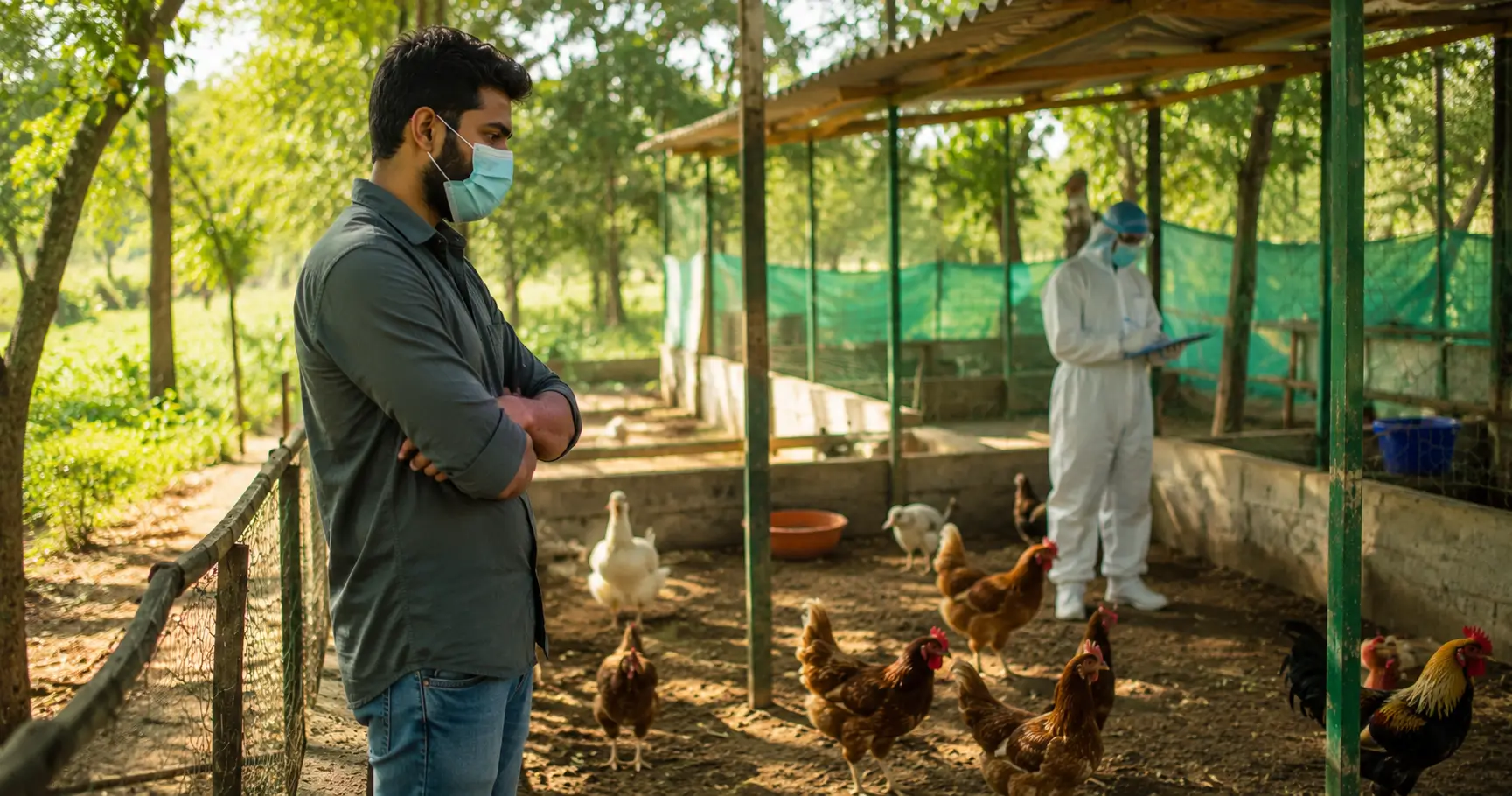

Bird flu usually makes headlines because of sick poultry, wild birds or outbreaks among animals. But one question matters most to people: what happens if bird flu infects a human?
The answer is more complicated than a simple list of flu symptoms.
Bird flu symptoms in humans can range from eye redness and mild respiratory symptoms to serious illness. Recent human cases have often involved people who had close contact with infected animals, although the severity and symptoms can vary.
The virus attracting much of the attention is avian influenza A(H5N1), a type of influenza A virus that primarily affects birds but can infect other animals and, occasionally, people.
Understanding the symptoms is useful. Understanding how exposure happens and what to do afterward is even more important.
What Is Bird Flu?
Bird flu, also called avian influenza, refers to disease caused by influenza viruses that primarily circulate among birds.
Several avian influenza viruses exist. H5N1 is one of the highly pathogenic avian influenza A viruses that has caused widespread infections in wild birds and poultry and has also infected mammals, including humans. CDC describes A(H5) bird flu as widespread in wild birds worldwide, with outbreaks occurring in poultry and dairy cattle and sporadic human infections.
The important point is that bird flu is not the same thing as the seasonal flu that commonly circulates among people.
Human infection generally requires an exposure route that allows virus from an infected animal or contaminated environment to reach the eyes, nose, mouth or respiratory tract.
Bird Flu Symptoms in Humans: What Are the Warning Signs?
Human infections with avian influenza A(H5) viruses can produce different symptoms.
According to CDC, reported symptoms have included:
- Eye redness or irritation
- Fever or feeling feverish
- Cough
- Sore throat
- Runny or stuffy nose
- Muscle or body aches
- Headache
- Fatigue
- Diarrhea
- Nausea or vomiting
Eye redness, also known as conjunctivitis, has been a prominent symptom among recent U.S. H5 cases. Fever may not always occur.
This is important because someone may not initially recognize the illness as something unusual.
More serious symptoms
Severe disease can include:
- High fever
- Difficulty breathing
- Altered consciousness
- Seizures
- Pneumonia
- Respiratory failure
- Acute respiratory distress syndrome
- Kidney injury
- Multi-organ failure
- Sepsis or septic shock
- Inflammation of the brain
Severe complications have been reported with H5N1 infection, although illness varies between individual cases.
Difficulty breathing, severe illness or neurological symptoms require urgent medical evaluation.
How Soon Can Bird Flu Symptoms Appear?
Symptoms do not necessarily appear immediately after exposure.
CDC says the time between exposure and the beginning of respiratory symptoms is generally around three days, with a reported range of approximately two to seven days.
However, public-health monitoring recommendations are broader.
For people exposed to HPAI A(H5N1)-infected birds or other animals, CDC recommends monitoring for symptoms beginning on the day of exposure and continuing for 10 days after the last exposure.
This distinction matters.
A person should not assume that feeling well immediately after an exposure means there is nothing to monitor.
How Does Bird Flu Spread to Humans?
The biggest risk usually comes from close or prolonged contact with infected animals or contaminated environments.
CDC says avian influenza viruses can be present in infected animals’ saliva, mucus, feces and other body fluids. Infection can occur when enough virus reaches a person’s eyes, nose or mouth or is inhaled.
Potential exposure situations include:
- Handling sick or dead poultry
- Handling infected wild birds
- Working with infected livestock
- Contact with animal feces or litter
- Handling contaminated surfaces
- Butchering or processing infected animals
- Contact with contaminated animal environments
- Exposure to raw milk from infected animals
People whose jobs or activities involve frequent contact with infected animals generally face greater exposure risk than the general public.
Can bird flu spread between people?
Limited person-to-person transmission of avian influenza viruses has occurred in some circumstances, but sustained human-to-human transmission of H5N1 has not been established as the main mode of spread.
CDC has described human infections as occurring most often after close, prolonged and unprotected contact with infected birds or other animals.
That is why public-health agencies continue surveillance closely.
If an influenza virus were to acquire efficient and sustained human-to-human transmission, the public-health situation could change substantially.
Who Is at Higher Risk?
Risk is strongly connected to exposure.
People who may have higher exposure include:
- Poultry workers
- Dairy workers
- Backyard flock owners
- Veterinarians and animal-health workers
- Wildlife workers
- People involved in animal outbreak response
- People who handle sick or dead birds
- People who enter environments contaminated by infected animals
CDC specifically advises people to avoid direct contact with sick or dead wild birds, poultry, dairy cows and other potentially infected animals whenever possible.
This does not mean every person who sees a wild bird is at high risk.
Exposure level matters.
What Should You Do After Possible Bird Flu Exposure?
If you have had close contact with a potentially infected animal, do not panic.
Instead, take the situation seriously and follow public-health guidance.
Step 1: Stop further exposure
Move away from sick or dead animals and contaminated areas.
Do not handle the animal again unless you are properly equipped and trained.
Step 2: Report the exposure when appropriate
Contact your local public-health or animal-health authority for guidance, particularly if the animal is suspected or confirmed to have avian influenza.
Step 3: Monitor yourself
Watch for symptoms during the recommended monitoring period.
CDC recommends monitoring exposed people for 10 days after their last exposure.
Step 4: Contact a healthcare professional promptly if symptoms develop
Tell the clinician about the animal exposure.
That information is important because ordinary respiratory symptoms can have many causes, and the exposure history helps healthcare professionals decide whether specialized influenza testing or other evaluation is appropriate.
Step 5: Follow isolation advice if you become ill
CDC advises symptomatic people with relevant H5N1 exposure to isolate away from household members while awaiting appropriate medical evaluation and testing.
How Can You Prevent Bird Flu?
The most effective general precaution is surprisingly simple:
Avoid unnecessary exposure.
CDC recommends avoiding direct contact with sick or dead wild birds, poultry, dairy cows and other potentially infected animals.
If exposure cannot be avoided, appropriate personal protective equipment is important.
For people who work with infected or potentially infected animals, PPE can include respiratory and eye protection, gloves, protective clothing and other equipment appropriate to the task.
Do not touch dead birds with bare hands
If you find a dead wild bird, do not pick it up simply to move it.
Contact the appropriate local wildlife, veterinary or public-health authority for instructions.
Wild birds can carry avian influenza viruses even when they do not appear obviously sick.
Is It Safe to Eat Chicken and Eggs During Bird Flu Outbreaks?
This is one of the questions people ask most often.
Properly handled and thoroughly cooked poultry and eggs are not considered the same exposure risk as handling infected animals.
CDC states that cooking poultry and eggs to an internal temperature of 165°F (74°C) kills bacteria and viruses, including avian influenza A viruses.
Safe food handling remains important.
Follow these precautions
- Cook poultry and eggs thoroughly.
- Prevent raw poultry from contacting ready-to-eat foods.
- Wash hands after handling raw poultry.
- Clean surfaces used for raw poultry preparation.
- Follow local food-safety guidance during outbreaks.
Do not eat raw or undercooked poultry products.
What About Raw Milk and Bird Flu?
Raw milk deserves special attention because avian influenza A viruses have been detected in infected dairy cattle and raw milk from infected animals can contain virus.
CDC recommends choosing pasteurized milk and products made from pasteurized milk. Pasteurization kills bacteria and viruses, including avian influenza A viruses.
This is not a reason to panic about ordinary pasteurized dairy products.
It is a reason to avoid unnecessary exposure to raw milk, especially when infection in dairy animals is suspected or confirmed.
Is Bird Flu a Pandemic Right Now?
No.
The existence of H5N1 infections in animals and sporadic human infections does not automatically mean a human pandemic is occurring.
As of CDC’s surveillance through August 1, 2026, its influenza surveillance systems showed no indicators of unusual influenza activity in people, including avian influenza A(H5).
WHO’s August 2026 assessment reported sporadic human infections at the human-animal interface and continued monitoring.
WHO, FAO and WOAH assessed the overall global public-health risk from Gs/Gd-like HPAI A(H5) viruses as low in their May 2026 joint assessment, while noting that occupational or frequent animal exposure can carry higher risk depending on local conditions and protective measures.
The situation can change.
That is why surveillance matters.
Bird Flu Symptoms vs. Seasonal Flu Symptoms
Symptoms can overlap, which makes exposure history especially important.
| Feature | Bird Flu | Seasonal Flu |
|---|---|---|
| Virus | Avian influenza A viruses such as H5N1 | Human seasonal influenza viruses |
| Common exposure | Often infected animals or contaminated environments | Primarily infected people |
| Eye redness | Can be prominent in H5 cases | Less characteristic |
| Fever | May occur | Common |
| Cough | May occur | Common |
| Body aches | May occur | Common |
| Severe disease | Possible | Possible |
| Testing | Specialized testing may be required | Standard influenza testing is commonly available |
This table is a general comparison, not a diagnostic tool.
Symptoms alone cannot reliably tell someone whether they have bird flu.
Exposure history and appropriate laboratory testing are important.
A Real-World Example: Why Exposure History Matters
Imagine a poultry worker develops eye redness, fatigue and a cough a few days after handling sick birds without adequate protection.
The symptoms could have several causes.
But the animal exposure changes the situation.
Instead of simply assuming it is an ordinary viral infection, the person should promptly tell a healthcare professional or public-health authority about the exposure.
Now consider someone who develops the same symptoms after spending several days around people with seasonal respiratory infections and has had no contact with potentially infected animals.
The likelihood of H5N1 exposure may be very different.
The symptom is only one part of the picture.
Common Mistakes People Make About Bird Flu
Mistake 1: Assuming Every Sick Bird Has Bird Flu
Many diseases can make birds sick.
Do not diagnose an animal yourself.
Mistake 2: Touching Dead Birds With Bare Hands
Even if the bird appears harmless, avoid unnecessary contact.
Follow local wildlife or public-health instructions instead.
Mistake 3: Relying Only on Symptoms
Bird flu symptoms can overlap with other infections.
Exposure history matters.
Mistake 4: Believing “Natural” Remedies Prevent H5N1
There is no reason to rely on unproven remedies instead of established public-health precautions.
Mistake 5: Ignoring Eye Symptoms After Animal Exposure
Conjunctivitis has been a prominent symptom in recent U.S. H5 infections.
If eye redness develops after relevant animal exposure, mention that exposure when seeking medical advice.
Myths vs. Facts
| Myth | Fact |
|---|---|
| Bird flu only affects birds | Avian influenza viruses can infect mammals, including humans |
| Everyone exposed to an infected bird will become sick | Infection depends on exposure and other factors |
| Bird flu always causes severe illness | Human illness has ranged from mild to severe |
| You can identify H5N1 from symptoms alone | Laboratory testing may be needed |
| Properly cooked poultry is automatically dangerous during outbreaks | Thorough cooking kills avian influenza viruses |
| Raw milk is safer because it is “natural” | Pasteurization is recommended because it kills viruses and other pathogens |
CDC notes that properly cooking poultry and eggs to 165°F kills avian influenza A viruses.
What Are the Most Important Takeaways?
If you remember only a few things about bird flu, remember these:
- H5N1 can infect humans, but human infections remain uncommon compared with the enormous number of animal infections.
- Close contact with infected animals is an important risk factor.
- Eye redness, fever, cough, sore throat, fatigue and body aches can occur.
- Severe illness can involve breathing problems, pneumonia and other serious complications.
- People with relevant animal exposure should monitor symptoms for 10 days after their last exposure.
- Avoid sick or dead animals whenever possible.
- Use appropriate PPE when exposure cannot be avoided.
- Cook poultry and eggs thoroughly and choose pasteurized milk.
- Tell healthcare professionals about any relevant animal exposure.
- Follow local public-health instructions because recommendations can change as surveillance information develops.
The Bottom Line
Bird flu deserves attention, but attention should not become unnecessary fear.
The most useful response is informed caution.
Know the bird flu symptoms in humans, understand how exposure occurs, avoid unnecessary contact with sick or dead animals, follow food-safety precautions and seek prompt medical advice if symptoms develop after a relevant exposure.
Current global surveillance continues to show that the main human risk is associated with exposure to infected animals and contaminated environments, while public-health agencies continue monitoring for changes in the virus and its ability to spread among people.
The best protection is not panic. It is knowing the exposure risks, recognizing the warning signs and acting on reliable public-health guidance.
FAQ
What are the symptoms of bird flu in humans?
Bird flu symptoms can include eye redness or irritation, fever, cough, sore throat, runny or stuffy nose, muscle aches, headache and fatigue. Gastrointestinal symptoms such as diarrhea, nausea or vomiting can also occur.
What is the first symptom of H5N1 bird flu?
There is no single first symptom in every case. Eye redness has been a prominent symptom among recent U.S. H5 infections, while fever and respiratory symptoms have also occurred.
How does bird flu spread to humans?
Human infection can occur when virus from infected animals or contaminated environments reaches the eyes, nose or mouth or is inhaled. Close and prolonged unprotected contact with infected animals is an important risk factor.
Can humans get bird flu from chickens?
Yes. Humans can become infected after exposure to infected poultry or contaminated environments. People who work closely with poultry or handle sick or dead birds should follow appropriate protective measures.
Is cooked chicken safe during bird flu outbreaks?
Properly handled and thoroughly cooked poultry is considered safe from avian influenza viruses. CDC recommends cooking poultry and eggs to an internal temperature of 165°F (74°C), which kills avian influenza A viruses.
What should I do if I develop symptoms after bird flu exposure?
Contact a healthcare professional or local public-health authority promptly and clearly explain the animal exposure. CDC recommends monitoring exposed people for symptoms through 10 days after their last exposure.
Conclusion
Bird flu can sound frightening, especially when reports about H5N1 infections appear in the news.
But understanding the facts is more useful than reacting to headlines.
The key points are straightforward:
- Know the symptoms, particularly eye redness, fever and respiratory symptoms.
- Understand the exposure risk, especially close contact with infected animals.
- Avoid sick or dead birds and contaminated animal environments.
- Use appropriate protective equipment when exposure cannot be avoided.
- Cook poultry and eggs thoroughly.
- Choose pasteurized milk rather than raw milk.
- Monitor yourself for 10 days after relevant exposure.
- Tell a healthcare professional about animal exposure if symptoms develop.
Current surveillance indicates that sporadic human infections continue to occur, while public-health agencies continue to monitor H5 viruses for changes that could alter the risk.
The most important protection is informed caution—not panic.
If you encounter information about a new bird-flu outbreak, check the latest guidance from CDC, WHO and your local public-health authorities before sharing or acting on it.
Disclaimer
Disclaimer: This article is provided for general educational and informational purposes and is not a substitute for professional medical advice, diagnosis or treatment. Bird flu and H5N1 surveillance information can change as new epidemiological and laboratory evidence becomes available. If you have had close contact with a potentially infected bird, poultry, livestock or other animal and develop symptoms, contact a qualified healthcare professional or appropriate public-health authority promptly and explain your exposure history. Seek urgent medical care for severe symptoms such as difficulty breathing, altered consciousness or seizures. Always follow current guidance from your local health authorities.