
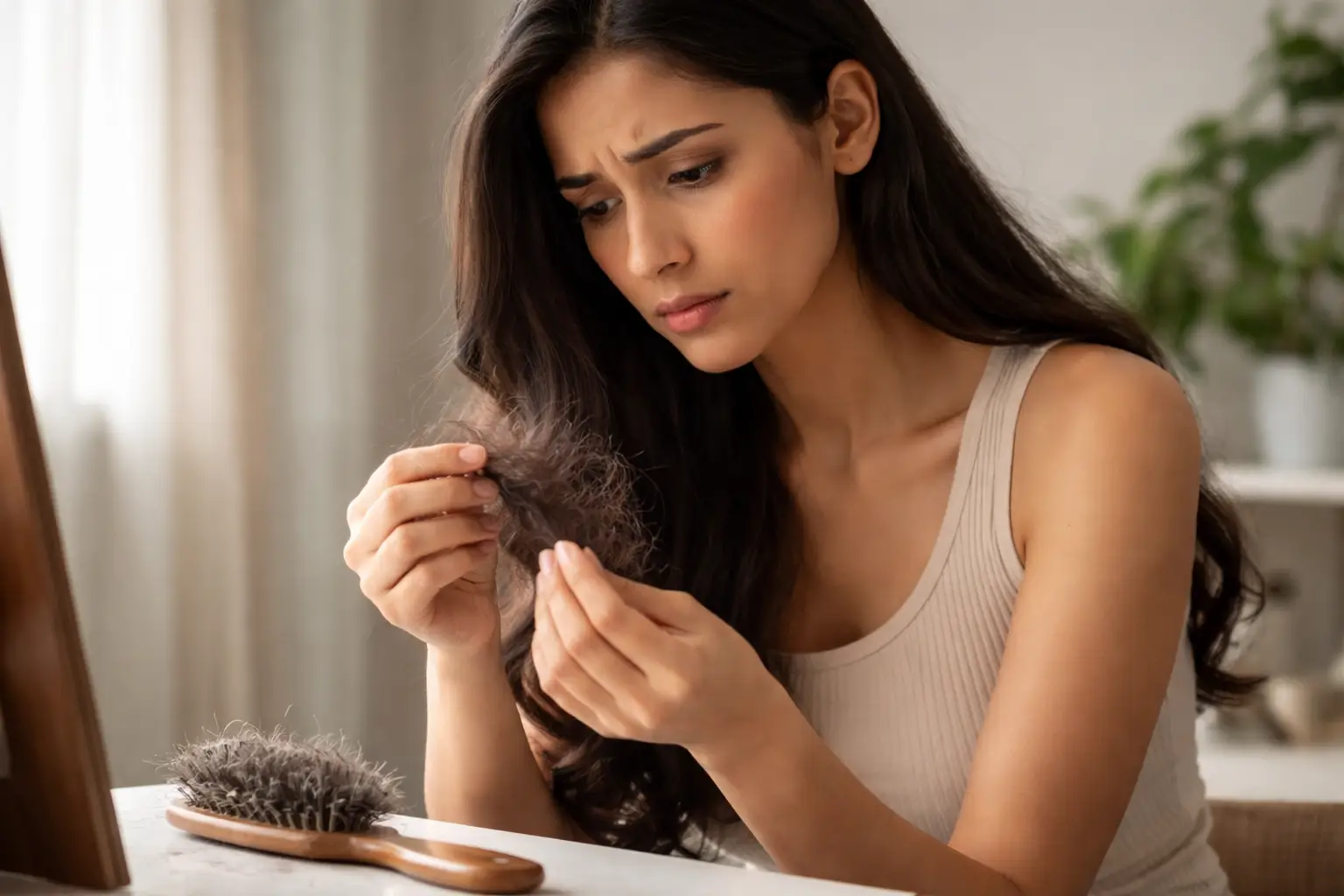

Hair fall rarely feels gradual when you’re the one experiencing it. It feels sudden, alarming, and deeply personal. You notice more strands on your pillow, your comb fills up faster, and your confidence quietly takes a hit. Having worked closely with individuals dealing with acute hair fall episodes, one pattern becomes clear: most people ignore early warning signs until the shedding becomes aggressive. The good news is that immediate intervention can significantly reduce damage and even reverse the cycle when addressed correctly.
Hair fall often spikes due to triggers like stress, nutritional deficiencies, hormonal imbalance, or scalp inflammation. When the hair growth cycle gets disrupted, more follicles shift into the shedding phase, leading to noticeable hair loss. The goal isn’t just to stop hair fall instantly but to stabilize the scalp environment so follicles can recover quickly.
One of the fastest ways to control sudden hair fall is by addressing scalp circulation. Poor blood flow weakens hair roots, making them prone to falling out. A simple but powerful technique is daily scalp massage using lukewarm oil. Oils like coconut or castor oil improve microcirculation and deliver nutrients directly to hair follicles. In my experience, clients who commit to just 5–10 minutes of consistent massage notice reduced shedding within a week. The key is gentle pressure, not aggressive rubbing, as harsh handling can worsen hair fall.
Nutrition plays an equally critical role. Sudden hair fall is often linked to deficiencies in iron, biotin, zinc, and protein. Many people focus only on external treatments while ignoring internal nourishment. Incorporating protein-rich foods like eggs, lentils, and nuts can dramatically improve hair strength. Iron-rich foods such as spinach and beetroot help oxygenate hair roots, preventing premature shedding. A noticeable improvement often occurs within 2–3 weeks when dietary gaps are corrected.
Stress is another silent trigger that accelerates hair fall. High cortisol levels push hair follicles into a resting phase, leading to excessive shedding. Managing stress is not optional—it’s essential. Techniques like deep breathing, meditation, or even short daily walks can help regulate hormonal balance. Many individuals underestimate this factor, but in real-world cases, reducing stress alone has significantly slowed hair fall without any external treatment.
Switching to a mild, sulfate-free shampoo can also produce immediate results. Harsh shampoos strip natural oils, weakening hair shafts and causing breakage. Washing hair with lukewarm water instead of hot water preserves scalp hydration. Overwashing should also be avoided, as it disrupts the scalp’s natural protective barrier. Washing 2–3 times a week is generally optimal for most people dealing with hair fall.
Onion juice remains one of the most talked-about natural remedies, and for good reason. Rich in sulfur, it strengthens hair strands and improves collagen production. Applying fresh onion juice to the scalp for 20 minutes before washing can reduce hair fall significantly. While the smell may be strong, the results are often noticeable within a few applications. This remedy is backed by both anecdotal evidence and small clinical studies showing improved hair regrowth.
Another powerful method is using aloe vera gel directly on the scalp. Aloe vera soothes inflammation, reduces dandruff, and strengthens roots. Inflammation is a hidden cause of hair fall that many people overlook. By calming the scalp environment, aloe vera helps restore healthy hair growth conditions. Applying it twice a week can make a visible difference in hair texture and fall rate.
Heat styling tools like straighteners and curling irons are major contributors to hair damage. When hair is already weak, applying heat accelerates breakage. Avoiding these tools even for a few weeks can help stabilize hair condition. Similarly, tight hairstyles like ponytails or buns create tension on hair roots, leading to traction alopecia. Switching to loose hairstyles reduces stress on follicles and minimizes hair fall.
Hydration is another underrated factor. Dehydration affects scalp elasticity and weakens hair strands. Drinking enough water ensures proper nutrient transport to hair follicles. Most people don’t associate water intake with hair health, but increasing hydration can subtly improve hair strength over time.
Sleep quality also directly impacts hair growth cycles. Poor sleep disrupts hormonal balance, particularly melatonin and cortisol, both of which influence hair health. Ensuring 7–8 hours of quality sleep helps the body repair and regenerate, including hair follicles. Many individuals notice reduced hair fall simply by improving their sleep routine.
Consistency is what ultimately determines success. Quick fixes may reduce hair fall temporarily, but long-term improvement requires a combination of proper nutrition, scalp care, stress management, and gentle handling of hair. In real-life scenarios, individuals who combine these approaches see faster and more sustainable results compared to those relying on a single remedy.
Hair fall can feel overwhelming, but it’s rarely irreversible when addressed early. The body constantly tries to restore balance, and with the right support, hair follicles can recover. Instead of chasing random treatments, focusing on proven, science-backed methods ensures both immediate relief and long-term hair health.