
Is eating non veg food making you stronger—or slowly harming your body?
This is one of the most debated questions in nutrition. Some people swear by chicken, fish, and eggs for strength and muscle growth, while others believe non veg food leads to heart disease, digestion issues, and long-term health risks.
So what’s the truth?
In this article, we break down science, real-life examples, and Ayurvedic insights to answer one simple but powerful question:
👉 Is non veg healthy or unhealthy?
What Does “Non Veg” Actually Include?
Non vegetarian food includes:
- Chicken
- Fish
- Eggs
- Mutton
- Red meat (beef, pork)
- Seafood
Each of these has different nutritional values and health impacts.
Health Benefits of Non Veg Food
1. High-Quality Protein Source
Non veg foods are complete proteins, meaning they contain all essential amino acids.
✔ Helps in:
- Muscle growth
- Tissue repair
- Hormone production
👉 Example: Athletes and gym-goers rely on chicken and eggs for faster recovery.
2. Rich in Essential Nutrients
Non veg foods provide nutrients that are hard to get from plants:
- Vitamin B12 (brain & nerves)
- Iron (prevents anemia)
- Omega-3 (especially in fish)
- Zinc (immunity booster)
👉 Example: Fish like salmon improve brain health and heart function.
3. Boosts Energy Levels
People who consume non veg diets often report:
- Higher stamina
- Better strength
- Reduced fatigue
This is mainly due to iron and protein content.
Health Risks of Non Veg Food
1. Heart Disease Risk (Especially Red Meat)
Excess consumption of red meat can lead to:
- High cholesterol
- Blocked arteries
- Increased heart disease risk
👉 Data Insight: Studies show high processed meat intake increases cardiovascular risk.
2. Digestive Issues
Non veg food is heavier to digest compared to vegetarian food.
Common issues:
- Bloating
- Constipation
- Slow digestion
3. Risk of Overconsumption
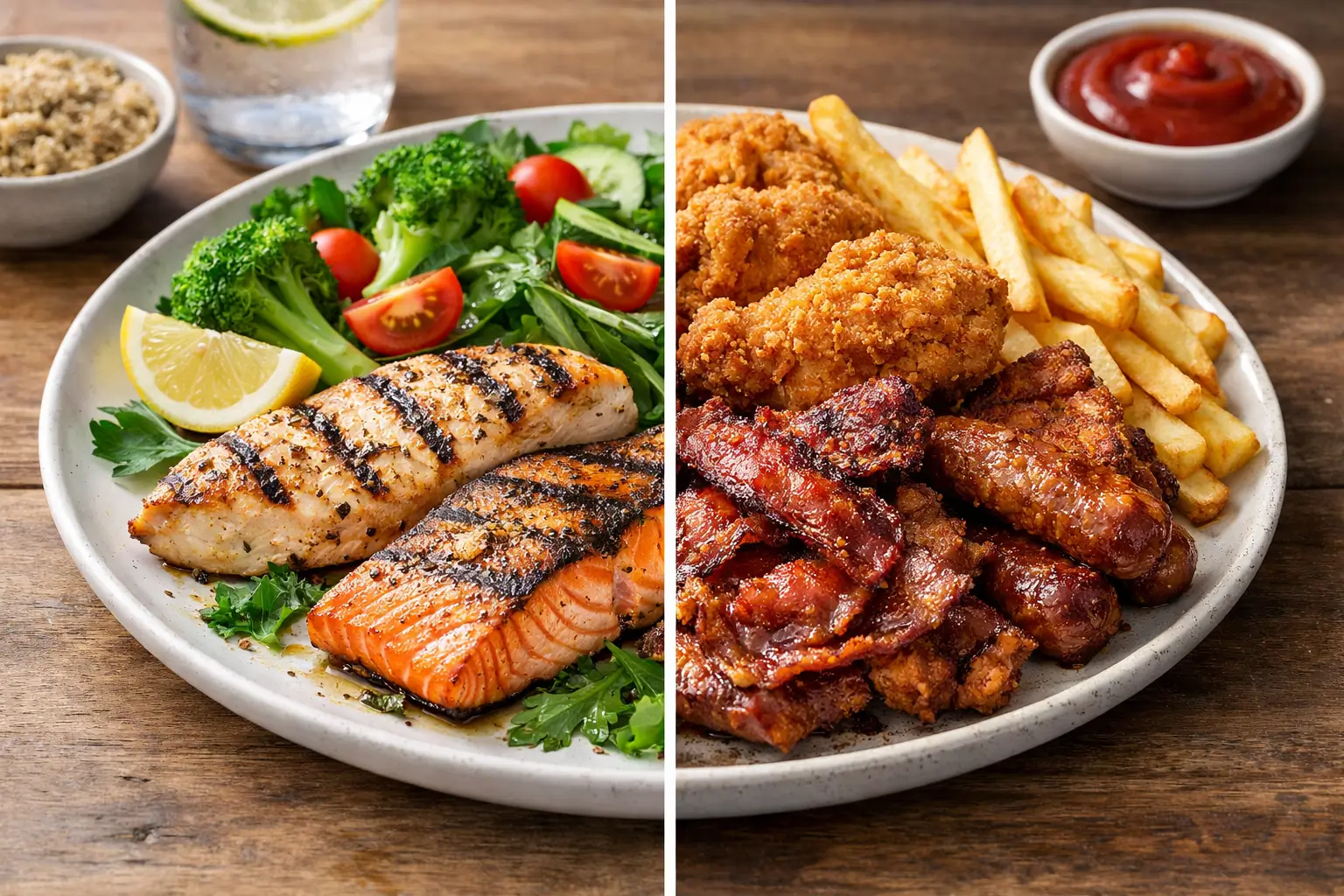
Many people eat non veg in unhealthy ways:
- Deep-fried chicken
- Processed meats (sausages)
- Excess oil and spices
👉 This turns a healthy food into a harmful one.
Ayurveda Perspective on Non Veg
According to Ayurveda:
- Non veg food is considered “Tamasic”
- It can increase:
- Laziness
- Aggression
- Mental heaviness
However, Ayurveda does not completely ban it. It suggests:
✔ Eat occasionally
✔ Prefer light meats (like fish)
✔ Avoid overeating
Non Veg vs Vegetarian: Which is Healthier?
| Factor | Non Veg | Vegetarian |
|---|---|---|
| Protein | High | Moderate |
| Digestion | Heavy | Light |
| Nutrients | Rich (B12, iron) | Limited B12 |
| Disease Risk | Higher if overconsumed | Lower |
| Energy | High | Balanced |
👉 Conclusion:
Both can be healthy if balanced properly.
Which Non Veg is the Healthiest?
🥇 Best Options
- Fish (rich in omega-3)
- Eggs (complete nutrition)
- Chicken (lean protein)
🚫 Limit These
- Red meat
- Processed meat
- Fried non veg
Expert Tip
From a nutrition standpoint:
👉 “The problem is not non veg itself—it’s how frequently and how it is consumed.”
- Grilled > Fried
- Fresh > Processed
- Moderate > Excess
Common Mistakes People Make
- Eating non veg daily without balance
- Choosing fried over grilled
- Ignoring vegetables and fiber
- Overeating red meat
- Not considering body type (Ayurveda)
Quick Summary
- Non veg can be healthy OR unhealthy
- It depends on:
- Quantity
- Cooking method
- Type of meat
- Fish and eggs are healthiest options
- Excess red meat = health risk
- Balance is key
Conclusion
So, is non veg healthy or unhealthy?
👉 The truth is: It’s both—depending on how you eat it.
If you choose:
- Lean meats
- Healthy cooking methods
- Moderate portions
Then non veg can be a powerful part of a healthy lifestyle.
But if you:
- Overeat
- Consume processed meat
- Ignore balance
It can slowly harm your health.
👉 Your diet doesn’t need extremes—just smart choices.
Disclaimer
This article is for informational purposes only. Always consult a qualified healthcare professional or nutritionist before making major dietary changes.