
Gaining weight can be just as difficult for some women as losing weight is for others. The healthy approach is not to eat as much junk food as possible or chase rapid “weight gain” products. Instead, the goal is to consistently provide enough energy and nutrients while supporting muscle, strength and overall health.
For women who are genuinely underweight or have lost weight unintentionally, it is also important to understand why the weight is low or falling before simply increasing food intake. Persistent unexplained weight loss can sometimes be associated with medical conditions, digestive problems, appetite changes or mental-health concerns.
Quick Answer
The basic way to gain weight is to consume more energy than your body uses over time. For healthy adults, this can be achieved by gradually increasing food intake, choosing nutritious calorie-dense foods, eating protein regularly and, when appropriate, doing resistance training to support muscle gain.
NHS guidance suggests that adults trying to gain weight can consider adding around 300–500 calories a day, but this should be treated as a general starting point rather than a universal prescription. Individual energy needs vary according to body size, activity, age, health and other factors.
Do You Actually Need to Gain Weight?
Not every woman who is naturally thin needs to gain weight.
For adults, a BMI below 18.5 is commonly classified as underweight. However, BMI is only a screening measure and does not directly measure body fat, muscle or overall health.
If you have always been naturally lean, feel well and have stable weight, the situation may be very different from someone who has recently lost weight without trying.
Unintentional or continuing weight loss deserves more attention. Possible causes include inadequate food intake, appetite problems, digestive conditions, overactive thyroid, diabetes, mental-health conditions and other illnesses.
Step 1: Increase Your Food Intake Gradually
You do not need to suddenly double your portions.
A more practical strategy is to make your existing meals slightly more energy-dense.
For example:
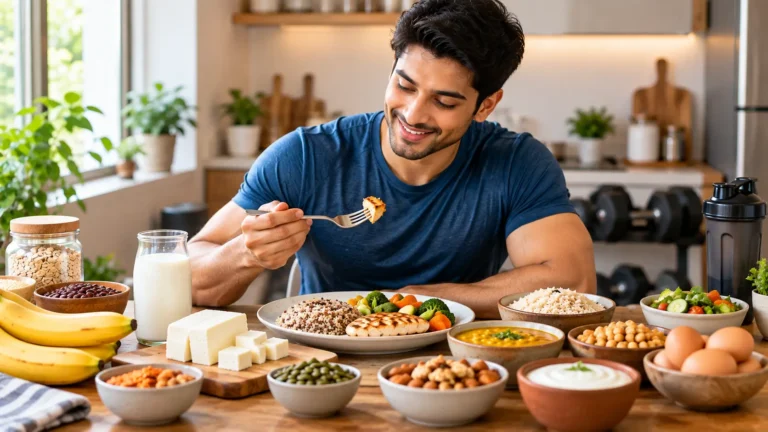
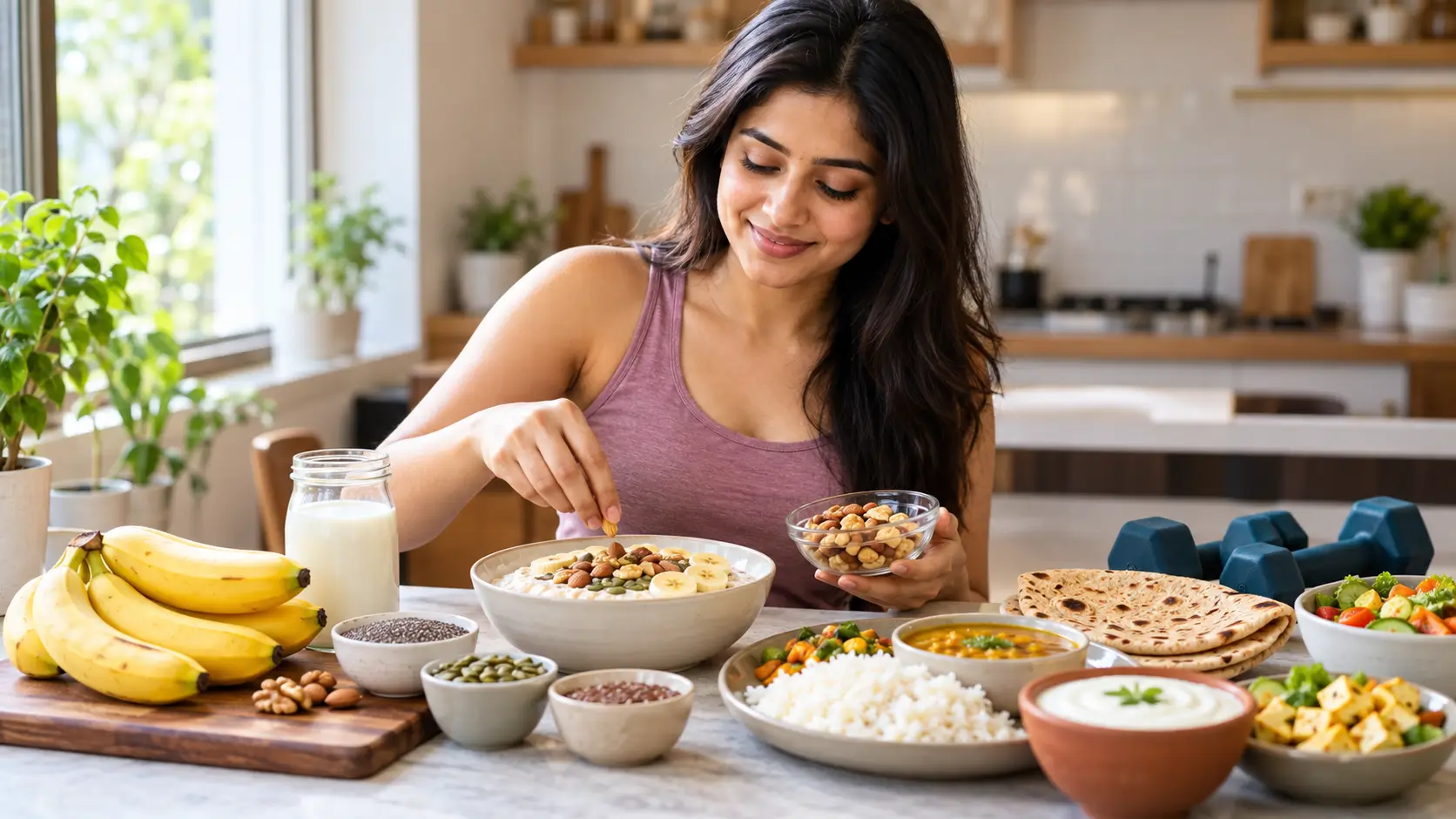
- Add peanuts, almonds or other nuts to oats or curd.
- Add seeds to yogurt, porridge or salads.
- Use milk in oats or smoothies.
- Add paneer, eggs, tofu or another protein source to meals.
- Include an additional snack between meals.
- Add an appropriate amount of cooking oil to meals.
- Combine rice or roti with dal, beans and other nutrient-rich foods.
If your appetite is small, several smaller meals may be easier than trying to eat three very large meals. NHS guidance also recommends eating smaller meals more frequently and using nutritious snacks when necessary.
Step 2: Choose Nutrient-Dense Calorie Sources
Weight gain does not mean that cakes, sweets, chips and sugary drinks should become the foundation of your diet.
WHO recommends a healthy dietary pattern based on adequacy, balance, moderation and diversity, with a variety of minimally processed and unprocessed foods.
For an Indian diet, useful options can include:
| Food group | Examples |
|---|---|
| Grains and starches | Rice, roti, oats, potatoes, millets |
| Pulses and legumes | Dal, rajma, chana, chickpeas |
| Dairy | Milk, curd, paneer |
| Protein foods | Eggs, fish, chicken, soy, tofu |
| Nuts and seeds | Peanuts, almonds, walnuts, sesame, flaxseed |
| Fruits | Banana, mango, dates and seasonal fruits |
| Healthy fats | Nuts, seeds and appropriate amounts of plant oils |
The exact combination and portion size should depend on your dietary preferences, appetite, activity level and health status.
Step 3: Include Protein Regularly
Protein is important for maintaining body tissues and supporting muscle.
ICMR-NIN’s 2020 recommendation gives a protein RDA of 0.83 g/kg/day for healthy Indian adults. That figure is a population-level recommendation, not a universal muscle-building target for every woman.
You can obtain protein from ordinary foods such as:
- dal
- rajma
- chana
- milk
- curd
- paneer
- soy foods
- eggs
- fish
- chicken
- nuts and seeds
If you are trying to gain muscle as well as weight, protein intake should be considered together with resistance training and adequate overall energy intake rather than viewed as a standalone solution.
Women do not automatically need protein powders to gain weight.
Step 4: Use Smaller Meals and Snacks if Your Appetite Is Low
A common problem is not necessarily a lack of knowledge about food—it is simply feeling full before eating enough.
Instead of forcing down very large meals, consider:
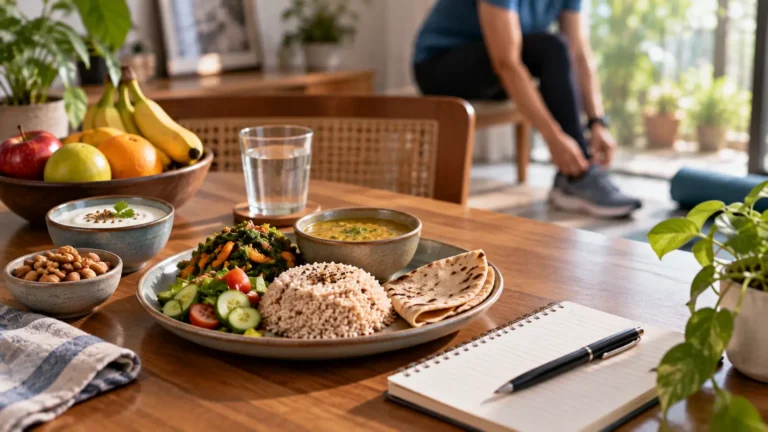
Breakfast: oats with milk, banana and nuts
Snack: curd with fruit and seeds
Lunch: rice or roti with dal, vegetables and paneer/eggs
Snack: milk-based smoothie or a handful of nuts with fruit
Dinner: roti or rice with vegetables and a protein source
The portions should be adjusted to your individual needs.
Drinking large amounts immediately before meals may also make some people feel too full to eat. If this happens to you, having calorie-containing drinks between meals may be more practical.
Step 5: Add Resistance Training if Muscle Gain Is the Goal
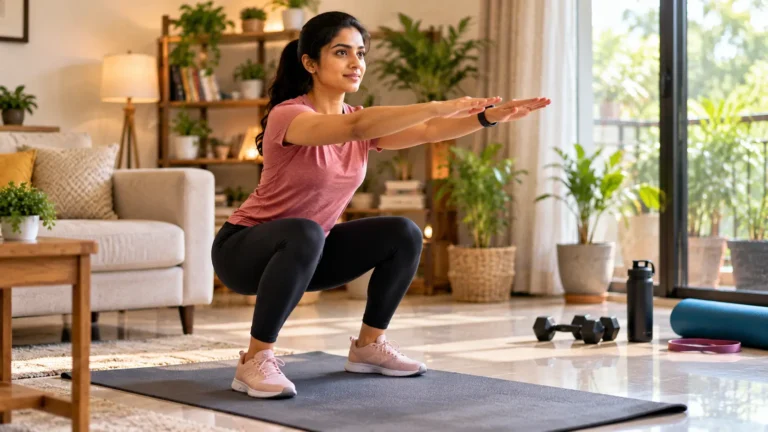
If your goal is to become stronger and increase muscle as well as body weight, resistance training can be useful.
Research specifically examining women has found that resistance training improves muscular strength and can promote muscle hypertrophy in healthy adult women.
A beginner might start with exercises such as:
- squats
- lunges
- rows
- push-ups or modified push-ups
- hip hinges
- resistance-band exercises
- appropriately supervised weight training
The emphasis should be on gradual progression, proper technique and adequate recovery rather than trying to lift the heaviest possible weight immediately.
Your body-weight increase will not necessarily consist entirely of muscle. Weight can reflect changes in muscle, fat, water and other body tissues.
Step 6: Do Not Depend on Weight-Gain Supplements
Weight-gain powders can provide a convenient source of additional calories, but they are not inherently necessary.
A supplement may be useful in specific circumstances—for example, when appetite is poor and meeting nutritional needs through ordinary meals is difficult. But it should complement an appropriate diet rather than replace it.
Before using one, consider:
- calories per serving
- protein content
- added sugars
- ingredients
- portion size
- allergies or intolerances
- whether you actually need the product
Peaceful Health already has a separate guide covering what to check before buying a weight-gain powder for women.
Can You Gain Weight Only in Your Hips, Breasts, Face or Legs?
No food can reliably tell your body where newly gained fat must be stored.
Body-fat distribution is influenced by biological factors including genetics, sex hormones, age and other factors. Research shows substantial biological variation in how fat is distributed among individuals and between women and men.
Strength training can help develop particular muscles—for example, the gluteal muscles—but that is different from selectively directing body fat to one area.
Be cautious of products or social-media programs promising targeted fat gain in the breasts, hips, face or another specific body part.
What If You Eat More but Still Cannot Gain Weight?
First, look at the overall pattern rather than assuming you simply have a “fast metabolism.”
Ask:
- Has your weight always been low?
- Are you actually eating more consistently?
- Is your appetite unusually low?
- Are you exercising heavily?
- Have you recently been ill?
- Do you have digestive symptoms?
- Have you started a new medicine?
- Are you experiencing significant stress?
- Are you deliberately restricting food?
Persistent difficulty gaining weight or unexplained weight loss can sometimes have an underlying cause. NHS guidance lists conditions including digestive disorders, overactive thyroid, diabetes and mental-health conditions among possible contributors to unintentional weight loss.
When Should You Talk to a Healthcare Professional?
Seek individualized medical or dietetic advice if:
- you are losing weight without trying
- your weight continues to fall
- you have persistent loss of appetite
- you have ongoing diarrhoea, vomiting or other digestive symptoms
- you feel persistently weak, dizzy or unusually tired
- you have a diagnosed medical condition
- you take medicines that may affect appetite or weight
- you are pregnant or breastfeeding
- you have concerns about an eating disorder or restrictive eating
Eating-disorder symptoms can include severe food restriction, excessive exercise, intense fear around weight gain and other problematic eating behaviours. These concerns require appropriate professional support rather than a generic weight-gain plan.
Practical Takeaway
Healthy weight gain for women is not about finding one magical food.
A better approach is to:
- Establish whether weight gain is actually appropriate.
- Increase food intake gradually.
- Choose nutrient-dense, calorie-containing foods.
- Include protein regularly.
- Use smaller, more frequent meals if appetite is limited.
- Add resistance training if building muscle is part of the goal.
- Treat supplements as optional tools rather than necessities.
- Avoid unrealistic rapid-weight-gain promises.
- Seek medical advice when weight loss is unexplained or persistent.
For Indian women, ordinary foods such as dal, rajma, chana, rice, roti, oats, milk, curd, paneer, eggs, soy, nuts, seeds and fruit can form the foundation of a practical weight-gain eating pattern.
The goal should not simply be a higher number on the scale. It should be adequate nutrition, appropriate body weight, strength and sustainable health habits.
FAQ
Can women gain weight without eating junk food?
Yes. Weight gain can be achieved by increasing overall energy intake with nutritious foods such as dairy, nuts, seeds, pulses, grains, eggs, soy, paneer and other suitable foods.
What is the fastest healthy way to gain weight for women?
There is no universally safe “fastest” rate. A gradual increase in energy intake is generally more appropriate than deliberately trying to gain several kilograms in a very short period. NHS guidance suggests around 300–500 additional calories per day as one general approach for adults, but individual needs vary.
Do women need protein powder to gain weight?
No. Protein can come from foods such as dal, beans, dairy, eggs, soy, fish and meat. Supplements may be convenient in some situations but are not automatically necessary.
Can strength training help women gain weight?
It can help increase muscle mass and strength when combined with adequate nutrition. Evidence from studies in women supports resistance training for improvements in strength and muscle hypertrophy.
Can I gain weight only in my hips or breasts?
No diet can reliably direct newly gained body fat to one chosen body part. Fat distribution is influenced by biological and genetic factors.
Is being thin automatically unhealthy?
No. A naturally lean person is not automatically unhealthy. However, a low BMI, nutritional deficiencies, or unexplained weight loss can warrant further assessment. BMI itself is a screening measure rather than a diagnosis.
Why am I losing weight even though I am eating normally?
There are several possible explanations, including medical conditions, digestive problems, appetite changes, mental-health factors and differences between perceived and actual energy intake. Persistent unexplained weight loss should be assessed by a healthcare professional.
Should I use a weight-gain powder?
Not automatically. A powder can be a convenient way to add calories in selected situations, but it should not replace a balanced diet or medical evaluation when weight loss has an unexplained cause.
MEDICAL DISCLAIMER
This article is for general educational and informational purposes and does not replace individualized medical or nutrition advice. Nutritional needs vary according to age, body size, activity level, health status, medications, pregnancy, breastfeeding, allergies and other factors. If you have unexplained weight loss, persistent appetite problems, an eating disorder, or a medical condition affecting nutrition or weight, consult an appropriately qualified healthcare professional or registered dietitian.