
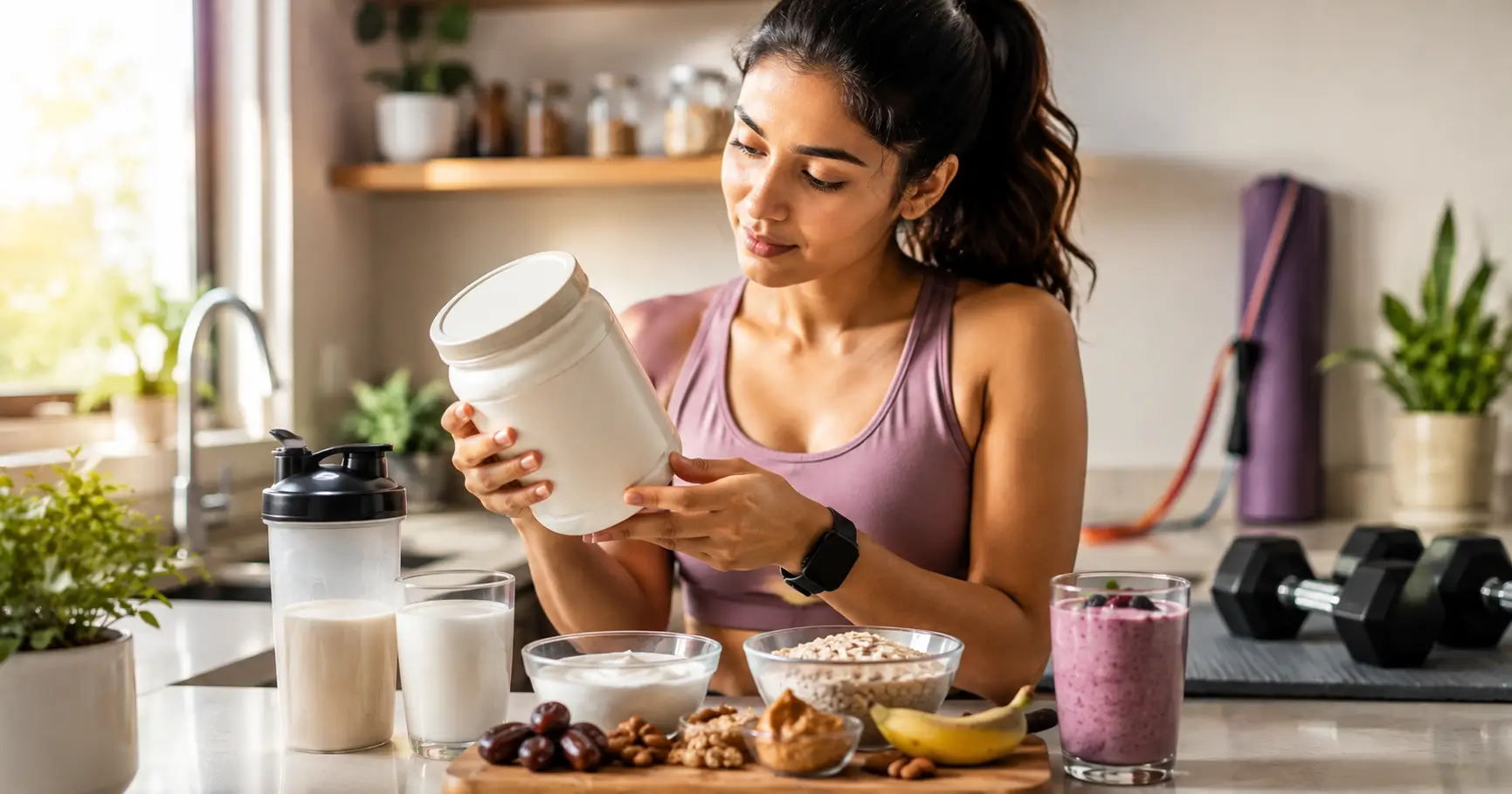

A tub labeled “mass gainer” can look like the easiest answer when you’re a woman struggling to put on weight. But here’s the catch: the biggest tub, highest calorie count or most impressive protein number isn’t automatically the best choice.
A weight gain powder for women can be useful in some situations, particularly when appetite is low or regular meals don’t provide enough energy. But it is a supplement to an overall eating pattern—not a shortcut around nutrition.
The NHS recommends gradual weight gain by adding nutritious calories, eating balanced meals and including protein-rich foods. It also suggests strength training to help build muscle.
So before buying that powder, there are seven things worth checking.
What is a weight gain powder?
A weight gain powder is a powdered nutrition product designed to make it easier to consume additional calories and, depending on the formula, protein and other nutrients.
Most products fall somewhere between a protein supplement and a high-calorie meal supplement.
A typical formula may contain:
- Protein
- Carbohydrates
- Fats
- Vitamins and minerals
- Flavoring
- Sweeteners
- Other added ingredients
The important distinction is that weight gain comes from your overall energy intake, not from a special ingredient that automatically increases body weight.
If your body consistently receives more energy than it uses, weight can increase. If the powder simply replaces a meal without increasing your overall intake, it may not accomplish the intended goal.
Does weight gain powder actually work for women?
Yes, it can—but only when it helps solve a genuine nutritional problem.
For example, imagine a woman who has a small appetite and regularly struggles to finish large meals. Adding a calorie-dense shake between meals may be easier than forcing down another full plate of food.
That is a practical use of a supplement.
On the other hand, someone already eating enough calories may gain little from simply adding a powder without considering the rest of her diet.
The NHS recommends gradual weight gain and suggests adults may try adding roughly 300–500 extra calories per day, while emphasizing nutritious foods rather than relying on sugary foods and drinks. Individual calorie needs vary.
The powder is the delivery method. The calorie surplus is what drives weight gain.
7 things to check before buying a weight gain powder for women
1. Check the calories per serving
Start with the nutrition panel, not the front of the package.
Two products can both be called “weight gainers” while providing very different amounts of energy.
A very high-calorie serving isn’t necessarily better. If the serving is so large that it causes bloating or kills your appetite for normal meals, it may become counterproductive.
Look for a product that fits realistically into your existing diet.
Think of the powder as a nutritional bridge, not your entire diet.
2. Look at the protein content
If your goal is to gain muscle as well as body weight, protein becomes particularly important.
Weight gain doesn’t automatically mean muscle gain.
A woman who combines adequate food intake with resistance training has a different nutritional objective from someone simply trying to restore lost body weight.
Protein can come from many foods, including:
- Eggs
- Dairy
- Soy
- Lentils
- Beans
- Fish
- Chicken
- Greek yogurt
- Nuts and seeds
A powder can make protein intake more convenient, but it shouldn’t make the rest of the diet irrelevant.
The NHS also recommends adding protein through foods such as beans, pulses, fish, eggs and lean meat when trying to gain weight.
3. Don’t ignore the carbohydrate and fat profile
Some women searching for a weight gain supplement focus almost entirely on protein.
That’s a mistake if the objective is to increase total energy intake.
Carbohydrates and fats can contribute substantial energy while making a shake easier to consume.
A sensible product should therefore be assessed as a complete calorie source, rather than judged by protein alone.
A balanced formula may be more useful than one that simply pushes protein to an unnecessarily high level.
4. Check added sugar
This is one of the easiest details to overlook.
A product can have a high calorie count partly because it contains significant amounts of added sugar.
That doesn’t automatically make a product unusable, but it should make you look more closely at the nutrition panel.
The NHS specifically advises against relying on chocolate, cakes and sugary drinks to gain weight.
A better strategy is to build most of your diet around nutrient-dense foods and use a supplement when it provides genuine convenience.
5. Read the ingredient list
The front label is marketing.
The ingredient list tells you what you’re actually buying.
Check:
- Primary protein source
- Main carbohydrate sources
- Added sugars
- Fat sources
- Sweeteners
- Allergens
- Serving size
- Number of servings
- Added vitamins and minerals
- Any proprietary blends
If a product makes an impressive claim but gives little useful information about its ingredients, consider another option.
6. Look for quality and regulatory information
This matters particularly when purchasing supplements online.
In India, FSSAI regulates health supplements and nutraceuticals under its applicable regulatory framework, including the Food Safety and Standards (Health Supplements, Nutraceuticals, Food for Special Dietary Use, Food for Special Medical Purpose, Functional Food and Novel Food) Regulations, 2016.
That doesn’t mean every product is equally suitable for every person.
Look for clear labeling, manufacturer information, ingredient quantities, batch information and appropriate quality assurances.
For products sold in the United States, remember that FDA does not approve dietary supplements for safety and effectiveness before they reach consumers.
“Supplement” and “FDA approved” are not interchangeable terms.
7. Consider whether you need a powder at all
This may be the most important question.
A woman who can comfortably increase calories through normal food may not need a weight-gain powder.
Healthy high-energy foods include:
- Nuts
- Nut butter
- Seeds
- Full-fat dairy
- Avocado
- Eggs
- Oats
- Rice
- Potatoes
- Whole-grain foods
- Yogurt
- Smoothies
The NHS similarly recommends adding calories through foods such as cheese, nuts and seeds and using nutritious snacks between meals.
A supplement becomes more interesting when convenience, appetite or schedule makes adequate food intake difficult.
Weight gain powder vs protein powder: what’s the difference?
The names sound similar, but the nutritional purpose can be different.
| Feature | Protein Powder | Weight Gain Powder |
|---|---|---|
| Main purpose | Increase protein intake | Increase overall calorie intake |
| Calories | Usually lower | Usually higher |
| Protein | Main focus | Important but varies |
| Carbohydrates | Usually moderate | Often higher |
| Fat | Usually modest | May be higher |
| Best fit | Protein convenience | Difficulty meeting energy needs |
This doesn’t mean one is “better.”
A woman who eats enough calories but struggles to meet protein needs may prefer a protein powder.
Someone who consistently struggles to consume enough total food may find a higher-calorie shake more useful.
Choose according to the nutritional gap—not the marketing category.
What is the best weight gain powder for women?
There isn’t one universally best product.
The better question is:
Which product fits your calorie needs, dietary preferences, tolerance, health status and overall diet?
For example:
If you have a small appetite
A calorie-dense shake between meals may be useful because it can provide substantial nutrition without requiring a large meal.
If you’re vegetarian
Look for a suitable plant-based or dairy-based formula depending on your dietary preferences.
If you’re lactose intolerant
Consider lactose-free dairy options or plant-based alternatives.
If you’re strength training
Prioritize adequate overall calories and protein rather than choosing a product solely because it says “mass gainer.”
If you’re trying to restore weight after illness
Don’t automatically self-prescribe a supplement. Your nutritional requirements may depend on the underlying condition and recovery stage.
A better way to use a weight gain powder
The biggest practical mistake is drinking a weight-gain shake and then skipping normal meals.
Instead, use it strategically.
Step 1: Establish your normal eating pattern
Track your meals for several days.
Look for obvious gaps.
Are you skipping breakfast? Eating very little between meals? Getting full quickly?
Step 2: Improve food first
Add calorie-dense foods to existing meals.
For example:
Breakfast: oats + milk + banana + nut butter
Lunch: rice + dal + vegetables + yogurt
Snack: fruit + nuts
Dinner: roti/rice + protein source + vegetables
Step 3: Add a supplement if needed
If you’re still consistently falling short, a shake may help bridge the gap.
This approach prevents the powder from becoming a substitute for a varied diet.
Step 4: Monitor your progress
Don’t judge success after three days.
Look at your weight trend over several weeks alongside appetite, digestion, strength and overall wellbeing.
If nothing changes despite consistent intake, reassess the entire diet rather than simply doubling the powder.
Can women gain muscle instead of just fat?
Yes, but the strategy is different from simply chasing rapid weight gain.
Resistance training provides the stimulus for muscle development.
Adequate protein and sufficient energy provide nutritional support.
Recovery and sleep complete the picture.
The NHS specifically recommends strength training or yoga as part of a healthy approach to gaining weight and building muscle.
A practical framework is:
Adequate calories + adequate protein + progressive resistance training + recovery + consistency
No powder can replace those fundamentals.
A simple high-calorie shake without commercial powder
Before buying a supplement, consider whether a homemade shake can solve the same problem.
Try combining:
- Milk or a suitable alternative
- Banana
- Oats
- Peanut or almond butter
- Greek yogurt
- Dates or another fruit
Blend until smooth.
This approach lets you control the ingredients and adjust the calorie density according to your needs.
It can also be cheaper than a branded supplement.
For women who simply struggle with appetite, a homemade smoothie may be a useful first experiment.
Common mistakes women make when buying weight gainers
Choosing the highest-calorie product
More calories aren’t automatically better.
A huge serving can cause digestive discomfort and reduce appetite for normal meals.
Focusing only on protein
Weight gain requires adequate total energy, not protein alone.
Believing “female” automatically means better
A product marketed specifically to women isn’t automatically nutritionally superior.
Look at the actual nutrition facts and ingredients.
Replacing meals with shakes
A shake can supplement a diet, but relying on it for most nutrition can reduce dietary variety.
Buying because of dramatic testimonials
Individual testimonials don’t establish that a product will produce the same result for you.
Ignoring unexplained weight loss
This is a major red flag.
If weight is falling without an intentional change in diet or exercise, the priority should be identifying the cause—not simply buying a weight-gain supplement.
The NHS notes that unexplained weight loss can have multiple causes, including digestive conditions, hormonal disorders, mental-health conditions and other illnesses, and recommends medical assessment when weight loss continues without an intentional change.
Myths vs facts about weight gain powder for women
| Myth | Fact |
|---|---|
| A weight-gain powder automatically makes women gain healthy weight. | It only contributes to weight gain when it helps increase overall energy intake. |
| Women need a special type of mass gainer. | Nutritional needs are individual; gender alone doesn’t determine the ideal formula. |
| More calories always mean faster results. | Excessive intake can cause unwanted fat gain or digestive problems. |
| Protein powder and mass gainer are identical. | Mass gainers generally provide more total calories and carbohydrates. |
| Supplements are always safer than food. | Supplements require careful ingredient and quality evaluation. |
| A thin woman should automatically take a weight gainer. | Low weight or unexplained weight loss may require professional assessment first. |
When should a woman avoid self-prescribing a weight gainer?
Certain situations deserve professional guidance.
Talk to a doctor or registered dietitian if you:
- Are losing weight without trying
- Have persistent digestive symptoms
- Have a very poor appetite
- Have difficulty swallowing
- Have a diagnosed medical condition
- Take medications that may interact with supplements
- Are pregnant or breastfeeding
- Have a history of an eating disorder
- Are recovering from a significant illness
FDA consumer guidance also recommends discussing dietary supplements with a healthcare professional because supplements can interact with medicines or other supplements.
Pregnancy deserves particular caution. Weight-gain targets during pregnancy are based on factors such as pre-pregnancy BMI and stage of pregnancy, so a generic weight-gain powder should not be treated as a pregnancy nutrition plan. ACOG provides individualized pregnancy weight-gain guidance.
The smartest buying checklist
Before purchasing any weight gain powder, ask:
- How many calories does one serving provide?
- How much protein does it contain?
- How much added sugar is present?
- What are the main ingredients?
- Can I tolerate those ingredients?
- Is the serving realistic for me?
- Does the product provide clear manufacturer and labeling information?
- Do I actually need a supplement?
If you can’t answer those questions from the label, don’t rush the purchase.
Key takeaways
A weight gain powder for women can be useful, but it isn’t a magic solution.
The best approach is to:
- Create a gradual calorie surplus.
- Eat a varied, nutrient-dense diet.
- Include adequate protein.
- Use strength training if muscle gain is a goal.
- Choose supplements based on your actual nutritional needs.
- Check calories, protein, sugar and ingredients before buying.
- Treat dramatic claims with skepticism.
- Seek professional advice for unexplained weight loss or medical concerns.
The goal shouldn’t simply be “gain weight as fast as possible.”
It should be “gain weight in a way that supports overall health, strength and long-term nutrition.”
FAQ
Is weight gain powder safe for women?
A weight gain powder can be appropriate for some women, but safety depends on the ingredients, product quality, individual health and medications. Consult a healthcare professional if you have medical conditions or take medications.
Which weight gain powder is best for women?
There is no universally best product. Compare calories, protein, carbohydrates, added sugar, ingredients, serving size and quality information and choose according to your nutritional needs.
Can weight gain powder make women gain fat?
Yes. If a supplement creates a calorie surplus larger than needed, some of the additional weight can be stored as body fat. Weight gain should therefore be gradual and matched to the individual’s goals.
Is mass gainer better than protein powder for women?
Not necessarily. A mass gainer generally provides more total calories and carbohydrates, while protein powder focuses more heavily on protein. The better choice depends on whether your main gap is total calories or protein.
Can women gain weight without supplements?
Yes. Many women can gain weight through regular foods such as nuts, seeds, dairy, oats, rice, potatoes, legumes, eggs, nut butter and smoothies. Supplements are mainly useful when they provide additional convenience or help meet nutritional needs.
Should women take weight gain powder during pregnancy?
Pregnancy nutrition is individualized, and a generic weight-gain powder should not automatically be used during pregnancy. Weight-gain recommendations depend partly on pre-pregnancy BMI and pregnancy stage, so discuss supplements with your obstetric healthcare professional.
Conclusion
The best weight gain powder for women isn’t necessarily the one with the biggest calorie number or the most aggressive marketing.
A smarter choice starts with understanding why you need the supplement in the first place.
If you’re struggling to eat enough, a calorie-dense shake can be a convenient addition to an otherwise balanced diet. But if your meals already provide adequate energy, simply adding a mass gainer may not be the right solution.
Before buying, check the calories, protein, added sugar, ingredient list, serving size and product-quality information. Then consider whether whole foods can meet the same need.
Most importantly, don’t use a supplement to ignore unexplained weight loss. Persistent or unexpected weight changes deserve professional evaluation.
The goal isn’t simply to gain weight quickly. It’s to build a sustainable nutrition strategy that supports healthy weight, strength and long-term wellbeing.
Disclaimer
Disclaimer: This article is intended for general educational purposes and does not constitute medical, nutritional or individualized supplement advice. Weight-gain requirements vary according to age, body size, activity level, dietary pattern, medical history and personal goals. Dietary supplements may interact with medications or may not be appropriate for everyone. Anyone experiencing unexplained weight loss, persistent digestive symptoms, poor appetite or other concerning symptoms should consult a qualified healthcare professional. Pregnant or breastfeeding women should seek individualized advice before using weight-gain supplements. Product claims should be evaluated against the current ingredient and nutrition label rather than relying solely on advertising claims.




[…] answer: A strong women’s health and wellness routine is built around nutritious food, regular physical activity, adequate sleep, mental-health support, […]
[…] Gaining weight can be just as difficult for some women as losing weight is for others. The healthy approach is not to eat as much junk food as possible or chase rapid “weight gain” products. Instead, the goal is to consistently provide enough energy and nutrients while supporting muscle, strength and overall health. […]