
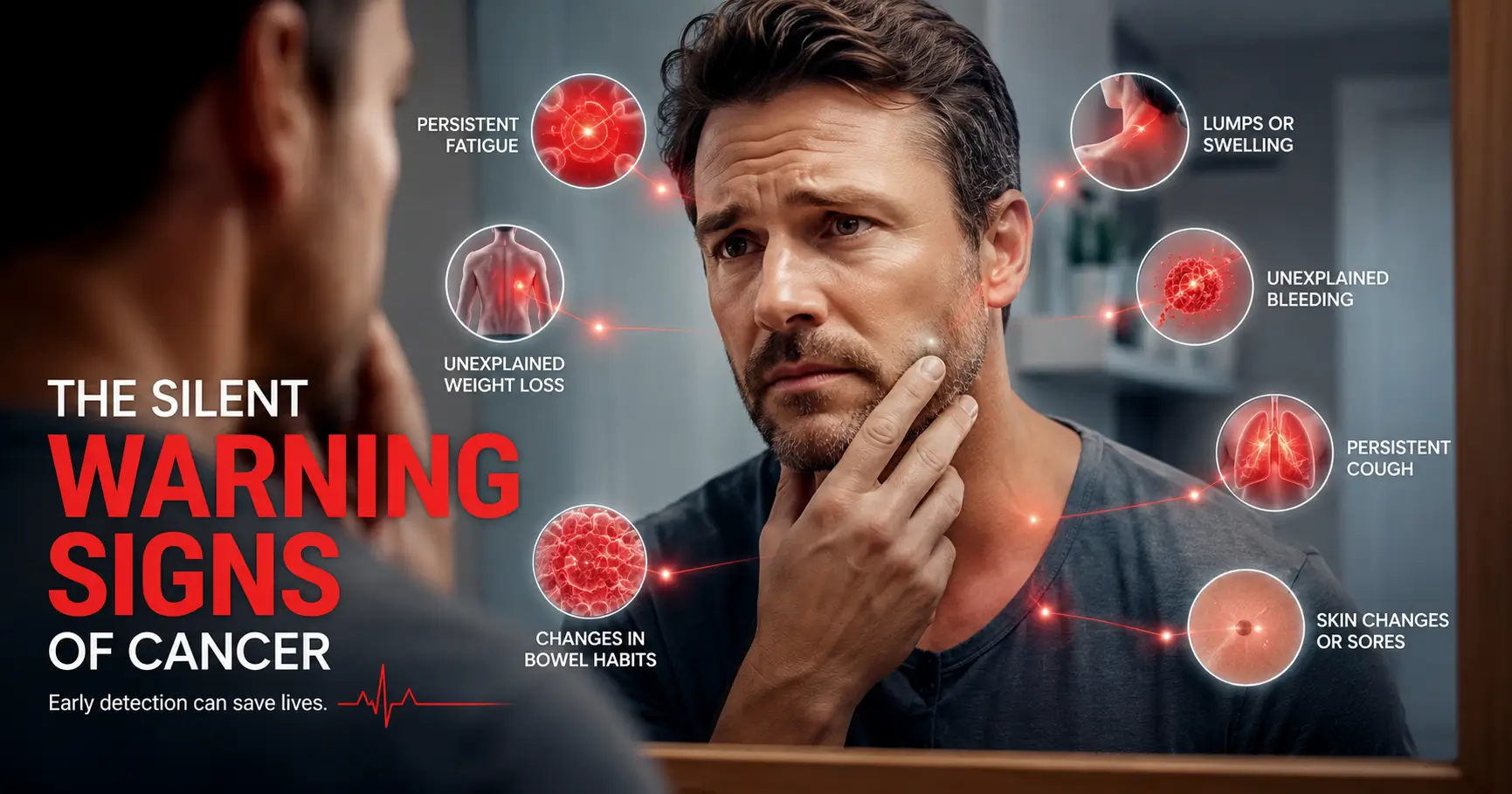

Most people associate cancer with dramatic symptoms—severe pain, noticeable lumps, or sudden illness. But the reality is often very different.
Many forms of cancer begin quietly. The earliest cancer symptoms can be subtle, easy to dismiss, and surprisingly common. Fatigue, unexplained weight changes, persistent coughs, or digestive issues may seem harmless at first.
The challenge is that these symptoms frequently overlap with everyday conditions. That is why awareness matters.
Recognizing potential warning signs early can lead to earlier diagnosis, more treatment options, and significantly better outcomes.
Let’s explore the silent warning signs that many people overlook.
Why Early Cancer Symptoms Are Often Missed
Cancer develops when abnormal cells grow uncontrollably. In many cases, this process occurs gradually over months or years.
Early symptoms often:
- Appear mild
- Come and go
- Mimic common illnesses
- Cause little immediate discomfort
Because of this, people frequently delay medical evaluation.
Early detection remains one of the most powerful tools in cancer treatment.
Persistent Fatigue That Doesn’t Improve
Everyone feels tired occasionally.
However, persistent exhaustion that continues despite adequate sleep may deserve attention.
What Makes It Different?
Normal tiredness improves with rest.
Cancer-related fatigue often:
- Feels overwhelming
- Persists for weeks
- Interferes with daily activities
- Doesn’t improve after sleep
Certain cancers, including blood cancers, may trigger fatigue before other symptoms appear.
When to Pay Attention
Consider medical evaluation if fatigue:
- Lasts several weeks
- Is worsening
- Appears without an obvious cause
Unexplained Weight Loss
Losing weight without trying may sound appealing to some people.
In reality, unexpected weight loss can be a warning sign.
Possible Red Flag
Medical professionals often consider losing:
5% or more of body weight within 6–12 months without lifestyle changes
worthy of investigation.
Why It Happens
Cancer can alter:
- Metabolism
- Appetite
- Hormone balance
- Nutrient absorption
This symptom may occur before diagnosis in several cancer types.
A Persistent Cough That Won’t Go Away
Most coughs are linked to infections or allergies.
However, a cough lasting several weeks should not be ignored.
Watch For:
- Cough lasting longer than 3–4 weeks
- Blood in mucus
- Wheezing
- Chest discomfort
- Shortness of breath
While these symptoms often have non-cancer causes, persistent respiratory changes deserve medical attention.
Changes in Bowel Habits
Digestive changes are common and usually harmless.
But ongoing changes can sometimes signal a deeper issue.
Potential Warning Signs
- Persistent diarrhea
- Chronic constipation
- Narrow stools
- Blood in stool
- Feeling that the bowel doesn’t empty completely
These symptoms can be associated with gastrointestinal disorders but should be evaluated if persistent.
Unusual Bleeding
Unexpected bleeding is one of the most important warning signs.
Examples Include
| Symptom | Possible Concern |
|---|---|
| Blood in urine | Urinary tract issues |
| Blood in stool | Digestive tract concerns |
| Persistent nosebleeds | Various underlying causes |
| Unusual vaginal bleeding | Gynecological conditions |
| Coughing up blood | Respiratory issues |
Not every case indicates cancer, but unexplained bleeding always warrants medical assessment.
Skin Changes You Might Ignore
Your skin often reflects what’s happening inside the body.
Look For
- New moles
- Changing moles
- Non-healing sores
- Persistent itching
- Unusual pigmentation
The ABCDE Rule
When evaluating moles:
- A — Asymmetry
- B — Border irregularity
- C — Color variation
- D — Diameter enlargement
- E — Evolving appearance
Regular skin checks can help identify concerns early.
Difficulty Swallowing
Occasional swallowing problems happen to everyone.
Persistent difficulty swallowing should not be ignored.
Common Accompanying Symptoms
- Food getting stuck
- Chest discomfort
- Weight loss
- Frequent choking sensations
These symptoms can result from numerous conditions, but ongoing issues require evaluation.
Persistent Pain Without Explanation
Pain is the body’s warning system.
While most pain has harmless explanations, persistent unexplained pain deserves attention.
Areas Commonly Noticed
- Back pain
- Abdominal pain
- Bone pain
- Headaches
The key factor is persistence and lack of improvement.
Frequent Infections
Some cancers affect immune system function.
Signs Include
- Repeated infections
- Slow recovery
- Frequent fevers
- Recurring illnesses
When infections become unusually frequent, further investigation may be needed.
Night Sweats and Unexplained Fever
Occasional night sweats can occur for many reasons.
However, repeated episodes combined with fever and fatigue should not be ignored.
Common Characteristics
- Soaking bed sheets
- Frequent recurrence
- No obvious environmental cause
- Accompanied by weight loss
These symptoms can indicate several medical conditions requiring evaluation.
The Symptoms Many People Rationalize Away
One reason cancer can remain undetected is that people often explain symptoms away.
Common thoughts include:
- “I’m just getting older.”
- “It’s stress.”
- “I’m working too much.”
- “It’s probably nothing.”
- “I’ll wait and see.”
While many symptoms ultimately prove harmless, persistent changes deserve professional attention.
Real-World Example: Why Timing Matters
Consider two individuals experiencing ongoing fatigue and weight loss.
Person A
- Waits 12 months
- Assumes stress is responsible
- Delays medical evaluation
Person B
- Notices persistent symptoms
- Schedules a checkup
- Receives early testing
Early detection often provides more treatment options and improved outcomes.
The difference isn’t panic.
It’s awareness.
How to Monitor Potential Cancer Symptoms
Instead of worrying about every small change, take a systematic approach.
Keep a Symptom Journal
Track:
- Start date
- Frequency
- Severity
- Associated symptoms
Schedule Preventive Screenings
Recommended screenings vary based on:
- Age
- Family history
- Lifestyle factors
- Medical history
Know Your Normal
You are often the first person to notice meaningful changes in your body.
Pay attention when something feels consistently different.
Risk Factors Worth Understanding
While cancer can affect anyone, certain factors increase risk.
Major Risk Factors
- Tobacco use
- Excessive alcohol consumption
- Obesity
- Physical inactivity
- Family history
- UV exposure
- Certain infections
- Environmental exposures
Understanding risk factors helps prioritize prevention and screening.
Prevention Matters More Than Most People Realize
Not all cancers are preventable, but many risk factors are modifiable.
Practical Prevention Steps
- Avoid tobacco products.
- Maintain a healthy weight.
- Exercise regularly.
- Eat a balanced diet.
- Limit alcohol.
- Protect skin from UV exposure.
- Stay up to date on screenings.
- Discuss family history with healthcare providers.
Small lifestyle changes can have significant long-term benefits.
FAQ SECTION
What are the earliest cancer symptoms?
Persistent fatigue, unexplained weight loss, ongoing cough, unusual bleeding, skin changes, and digestive changes are among commonly reported early warning signs.
Can cancer cause symptoms years before diagnosis?
Some cancers develop slowly and may produce subtle symptoms months or years before diagnosis.
Is unexplained weight loss always a sign of cancer?
No. Many conditions can cause weight loss. However, unexplained weight loss should be evaluated by a healthcare professional.
When should I see a doctor about possible cancer symptoms?
If symptoms persist for several weeks, worsen over time, or significantly affect daily life, seek medical advice.
Can young adults develop cancer?
Yes. Although risk generally increases with age, cancer can occur in younger individuals as well.
Are cancer screenings important even without symptoms?
Yes. Screening programs can identify certain cancers before symptoms appear, improving treatment outcomes.
DISCLAIMER
This article is intended for educational and informational purposes only. It does not provide medical diagnosis, treatment, or professional healthcare advice. Symptoms discussed may result from many non-cancerous conditions. Always consult a qualified healthcare professional regarding medical concerns, symptoms, screening recommendations, or treatment decisions.
CONCLUSION
Cancer does not always announce itself loudly. Often, the earliest warning signs are subtle changes that seem easy to ignore. Persistent fatigue, unexplained weight loss, ongoing coughs, unusual bleeding, skin changes, and digestive issues may not automatically indicate cancer, but they deserve attention when they persist.
The goal is not fear—it’s awareness. Knowing what to watch for can help you seek timely medical guidance and make informed decisions about your health. Pay attention to changes, stay current with recommended screenings, and prioritize preventive habits. Early action can make a meaningful difference.