
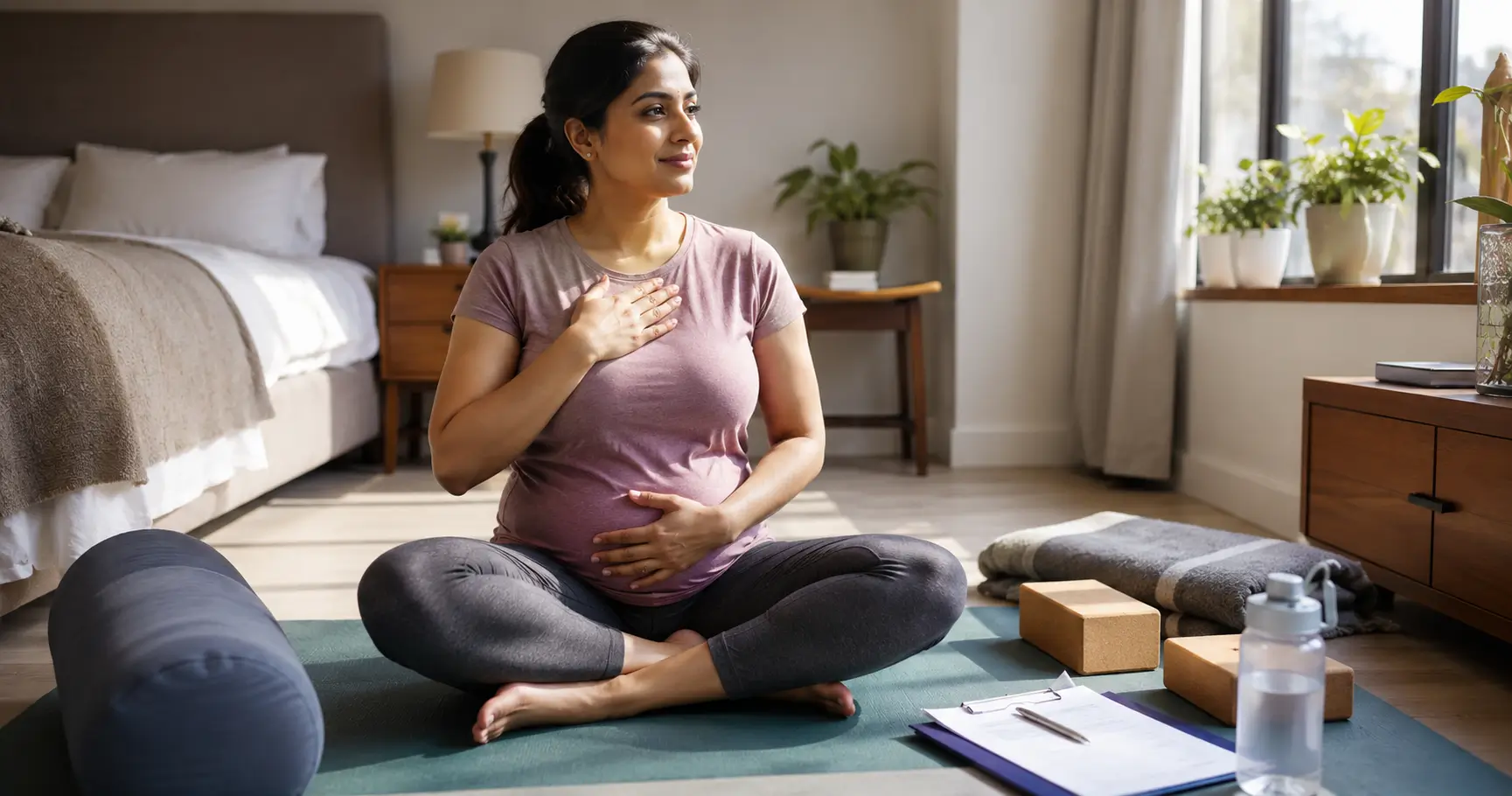

The days after an embryo transfer can make every movement feel unusually important. A walk can trigger worry. A stretch can raise questions. Even a familiar yoga pose may suddenly feel like something that could affect your chances.
So, can you do yoga after embryo transfer?
In many uncomplicated situations, gentle movement is not automatically off-limits. Research also does not support routine bed rest after embryo transfer. But that does not mean every yoga class, pose or intensity level is appropriate. The safest approach depends on where you are in your IVF cycle, whether you have had egg retrieval, whether your ovaries remain enlarged, whether you are pregnant, and what your fertility specialist has advised.
What happens after an embryo transfer?
During IVF, an embryo is placed inside the uterus using a thin catheter. After the procedure, many people enter what is commonly called the two-week wait before the pregnancy test.
It is understandable to feel that the embryo could somehow be “dislodged” by normal movement. However, the evidence does not support prolonged bed rest as a way to improve IVF outcomes.
The American Society for Reproductive Medicine states that there is good evidence not to recommend bed rest after embryo transfer.
A prospective study of women undergoing frozen embryo transfer also found no significant difference in pregnancy outcomes based on activity levels after transfer. A newer 2026 study similarly found that physical and professional activity on the day of frozen embryo transfer and during the following three days did not appear to affect clinical outcomes.
That is reassuring—but it is not a green light for strenuous exercise.
Is yoga after embryo transfer safe?
For many people, gentle, modified yoga may be reasonable after embryo transfer, provided the fertility team has not prescribed activity restrictions.
The key word is gentle.
The goal during this period should not be to increase flexibility, burn calories, achieve advanced poses or set a personal fitness record. Instead, think about controlled movement, comfortable stretching, breathing and relaxation.
Research on physical activity following assisted reproduction has not found convincing evidence that moderate activity harms IVF outcomes, although the overall evidence remains limited and heterogeneous.
Yoga may also have a useful psychological role. A systematic review of yoga research in people experiencing infertility found potential benefits for stress, anxiety and depression, although the evidence should not be interpreted as proof that yoga improves implantation or live birth.
What yoga can—and cannot—do
Yoga can potentially help you:
- Relax tense muscles
- Practice slow breathing
- Maintain gentle mobility
- Reduce perceived stress
- Create a calming routine during the waiting period
But yoga should not be presented as a treatment that makes an embryo implant.
There is currently insufficient evidence to say that a particular yoga pose, breathing technique or fertility-yoga sequence increases implantation or live-birth rates.
That distinction is important.
Which yoga is better after embryo transfer?
If your fertility specialist allows exercise, choose a low-intensity, pregnancy-conscious practice.
Good options may include:
- Gentle seated breathing
- Supported child’s pose if comfortable
- Gentle neck and shoulder movements
- Easy seated stretches
- Supported relaxation poses
- Gentle hip mobility
- Prenatal-style modifications after pregnancy is confirmed
- Meditation or yoga nidra
The exact poses matter less than how you perform them.
You should be able to breathe comfortably. Avoid forcing flexibility, holding your breath or working through pain.
ACOG considers modified yoga an appropriate form of exercise during an uncomplicated pregnancy, while recommending avoidance of activities such as hot yoga and exercises with a higher risk of falls or abdominal injury.
Yoga poses and practices to avoid
There is no universally agreed medical list saying that one particular yoga pose will cause an embryo to fail to implant.
However, after IVF, a conservative approach makes sense—particularly when your fertility team has given you specific restrictions.
Avoid intense abdominal work
Skip demanding core exercises that create substantial abdominal pressure.
That includes intense boat-pose variations, aggressive abdominal workouts and advanced strength-based yoga flows.
Avoid deep twisting
Gentle spinal mobility is different from forcing the torso into a deep twist.
During the immediate post-transfer period, it is reasonable to avoid aggressive twisting or movements that cause discomfort around the abdomen or pelvis.
Avoid strenuous or advanced flows
Power yoga, advanced vinyasa, intense hot yoga and highly demanding sessions are not the best choice during the immediate post-transfer period.
ACOG specifically recommends avoiding hot yoga and hot Pilates during pregnancy because of overheating concerns.
Avoid exercises with a fall or injury risk
Headstands, handstands, advanced inversions and difficult balancing sequences offer little practical benefit during this period and introduce unnecessary risk.
The same principle applies to any exercise that could result in a significant fall or abdominal injury.
Do not push through pain
Pain is not a sign that a pose is “working.”
Stop if you develop pain, dizziness, unusual shortness of breath, significant pelvic discomfort or feel unwell.
The important difference: after egg retrieval vs. after embryo transfer
This distinction is frequently missed in online advice about yoga after IVF.
An embryo transfer and an egg retrieval are different procedures.
After ovarian stimulation and egg retrieval, the ovaries can remain enlarged and uncomfortable. Ovarian hyperstimulation syndrome, or OHSS, can also cause enlarged ovaries, abdominal swelling and other symptoms.
That can change the exercise advice considerably.
After egg retrieval
If you have recently undergone egg retrieval, do not assume that because walking is comfortable, intense yoga is also appropriate.
Your fertility clinic may recommend reduced activity while the ovaries recover.
If you develop significant bloating, sudden abdominal pain, vomiting, difficulty breathing, reduced urination or rapid weight gain, contact your fertility team promptly. These can be warning signs of OHSS or another complication.
After embryo transfer
The situation is different.
The embryo is placed in the uterus, and available evidence does not support prolonged bed rest as a way to improve implantation.
In other words, normal gentle movement does not mean you are “shaking the embryo loose.”
Still, your clinic’s individual instructions take priority.
A simple approach to yoga during the two-week wait
If your fertility specialist has cleared gentle activity, use this conservative framework.
Step 1: Choose a short session
Start with approximately 10–20 minutes rather than a long class.
The purpose is relaxation and comfortable movement—not training.
Step 2: Keep the intensity low
You should be able to breathe normally and speak comfortably.
If you are struggling to catch your breath, slow down or stop.
Step 3: Prioritize breathing
Try several minutes of slow, comfortable breathing.
Avoid forceful breath retention or aggressive breathing techniques that make you dizzy.
Step 4: Use support
A bolster, pillow, wall or chair can make movements more comfortable.
There is no prize for achieving the deepest stretch.
Step 5: Finish with relaxation
Spend several minutes sitting or lying in a comfortable position, depending on your clinic’s advice and how you feel.
The mental benefit may be more valuable than squeezing extra physical intensity into the session.
What about walking after embryo transfer?
Walking is often the simplest form of movement after transfer.
ASRM’s embryo-transfer guidance supports immediate ambulation rather than routine bed rest.
A study examining physical activity after frozen embryo transfer also found no evidence that ordinary ambulation reduced pregnancy rates.
A comfortable walk can therefore be a useful alternative if yoga makes you anxious.
You do not need to walk for hours. A short, comfortable walk may be enough to break up long periods of sitting.
What if you already practiced yoga before IVF?
Your previous fitness level matters.
Someone who has practiced gentle yoga regularly may tolerate a modified routine differently from someone who has never exercised.
But IVF introduces variables that ordinary fitness advice does not always account for—especially ovarian stimulation, egg retrieval, medications, bleeding, OHSS risk and early pregnancy.
A useful rule is:
Do not use IVF as the time to introduce a new, intense workout.
If you normally practice gentle yoga, ask your fertility specialist how they want you to modify it.
If you normally practice hot yoga, advanced vinyasa or intensive strength yoga, ask specifically whether and when you should resume.
Myths vs. facts
| Myth | Fact |
|---|---|
| You must stay in bed after embryo transfer. | Routine bed rest is not recommended by ASRM; studies have not shown a benefit. |
| Walking can make the embryo fall out. | Evidence does not support this concern. Ambulation after transfer has not been shown to reduce IVF success. |
| One yoga pose can guarantee implantation. | There is no good evidence that a specific yoga pose guarantees implantation. |
| All exercise is dangerous after IVF. | Activity restrictions depend on the treatment stage, symptoms and individual medical circumstances. |
| More yoga means better IVF results. | There is not enough evidence to recommend yoga as a way to increase live birth or implantation. |
When should you stop exercising and call your doctor?
Contact your fertility clinic rather than trying to exercise through concerning symptoms.
Seek medical advice if you experience:
- Sudden or severe abdominal pain
- Significant abdominal swelling
- Heavy or concerning bleeding
- Persistent vomiting or inability to keep fluids down
- Difficulty breathing
- Markedly reduced urination
- Rapid unexplained weight gain
- Severe dizziness or fainting
- Any symptom your fertility team specifically told you to report
OHSS can become serious, particularly when accompanied by significant swelling, vomiting, breathing problems, dehydration or blood-clot complications.
What happens after a positive pregnancy test?
Once pregnancy is confirmed, exercise advice generally shifts toward standard pregnancy guidance, assuming the pregnancy is uncomplicated.
ACOG says physical activity is generally safe during a normal pregnancy and recommends discussing an exercise plan with your obstetrician. Modified yoga is among the activities that can be appropriate.
The NHS similarly recommends gentle exercise during pregnancy and identifies prenatal yoga as an option for relaxation and gentle stretching.
But an IVF pregnancy may receive additional monitoring depending on your medical history and treatment.
That means your OB-GYN and fertility specialist remain the best source of individualized exercise instructions.
The bottom line on yoga after embryo transfer
For many people, gentle yoga after embryo transfer can be compatible with normal activity, but it should be approached conservatively.
The evidence does not support lying in bed for days to protect implantation. At the same time, there is no reason to turn the two-week wait into an intense fitness challenge.
Think gentle movement, comfortable breathing, no overheating, no aggressive stretching and no unnecessary risk.
Most importantly, don’t blame yourself if implantation does not occur. IVF success depends on complex biological factors that yoga, walking or a single movement cannot control.
Your job during the waiting period is not to perform the “perfect” routine. It is to follow your medical team’s instructions, care for your body and give yourself permission to take things one day at a time.
FAQ
Can I do yoga after embryo transfer?
For many people, gentle yoga may be appropriate after embryo transfer if their fertility team has not imposed activity restrictions. Avoid strenuous, hot or advanced practices and follow your clinic’s individual instructions.
Is yoga safe during the two-week wait after IVF?
Gentle, modified yoga may be reasonable during the two-week wait. Evidence does not show that routine bed rest improves embryo-transfer outcomes, but intense exercise is unnecessary during this period.
Which yoga poses should I avoid after embryo transfer?
It is sensible to avoid strenuous flows, aggressive twists, intense abdominal work, advanced inversions, overheating and movements that cause pain or significant discomfort.
Can yoga affect embryo implantation?
There is no strong evidence that a specific yoga pose improves or guarantees implantation. Yoga may support relaxation and stress management, but it should not be considered an implantation treatment.
Can I walk after embryo transfer?
Generally, ordinary walking is not considered harmful after embryo transfer. ASRM specifically finds no benefit to routine bed rest, and research has not shown that normal ambulation reduces pregnancy rates.
When can I return to normal exercise after IVF?
The timing depends on whether you recently had ovarian stimulation, egg retrieval or embryo transfer, as well as your symptoms and pregnancy status. Ask your fertility specialist before returning to strenuous exercise, particularly if your ovaries are enlarged or you have symptoms of OHSS.
Conclusion
Yoga after embryo transfer does not need to mean complete inactivity—and it certainly does not need to become another source of anxiety.
The evidence does not support routine bed rest after embryo transfer, while gentle physical activity is generally compatible with an uncomplicated IVF journey.
The safest strategy is simple: keep movement gentle, avoid overheating and strenuous or risky poses, listen to your body, and follow your fertility clinic’s instructions.
Remember the bigger picture: no single yoga pose, missed workout or ordinary walk determines whether an IVF cycle succeeds. Implantation and pregnancy depend on complex biological factors beyond your control.
During the two-week wait, focus less on finding the “perfect” routine and more on taking care of yourself—physically and emotionally.
If your fertility team has cleared gentle exercise, a short restorative yoga session, breathing practice or comfortable walk can be a reasonable way to stay active while you wait.
Disclaimer
Medical Disclaimer: This article is intended for general educational and informational purposes only and does not constitute medical advice, diagnosis or treatment. IVF patients can have very different medical circumstances depending on ovarian stimulation, egg retrieval, embryo transfer, pregnancy status, medications and complications such as ovarian hyperstimulation syndrome. Exercise recommendations should therefore be individualized. Always follow the specific instructions provided by your fertility specialist, reproductive endocrinologist or obstetrician. If you experience severe abdominal pain, significant swelling, persistent vomiting, difficulty breathing, reduced urination, heavy bleeding or other concerning symptoms, seek prompt medical attention.