
Most people believe pimples are caused by dirty skin, chocolate, or bad luck.
That’s only part of the story.
If you’ve tried face washes, home remedies, expensive creams, and even social-media skincare hacks, yet your pimples keep returning, the real reason may be hiding beneath the surface.
The truth is that recurring pimples often have more to do with what’s happening inside your body and daily routine than what you’re putting on your skin.
Understanding these hidden triggers can be the difference between temporary improvement and truly clear skin.
Let’s uncover what your skin may be trying to tell you.
Why Pimples Form in the First Place
A pimple develops when four factors come together:
- Excess oil production
- Dead skin cell buildup
- Blocked pores
- Acne-causing bacteria growth
When these conditions combine, inflammation develops and a pimple appears.
But here’s the important part:
The visible pimple is often the final result—not the original cause.
The Hidden Reason Your Pimples Keep Coming Back
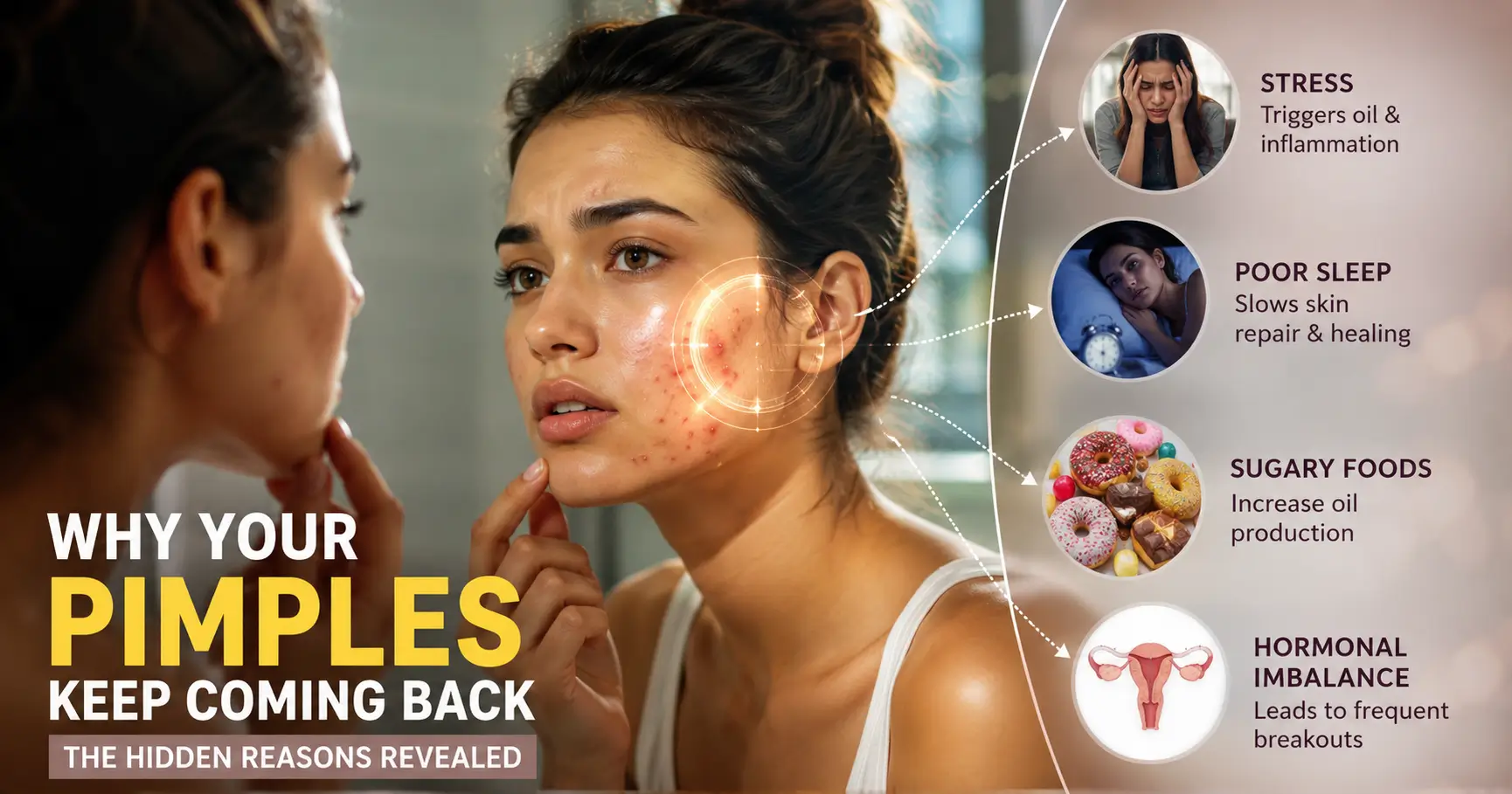
Many recurring breakouts are driven by chronic inflammation and hormonal fluctuations.
Even if a pimple disappears, the underlying trigger remains active.
Think of it like turning off a fire alarm without putting out the fire.
Common Hidden Triggers Most People Overlook
Stress Is Changing Your Skin
Stress doesn’t just affect your mood.
It increases cortisol, a hormone that can stimulate oil glands.
The result?
More clogged pores and more breakouts.
Signs Stress May Be Triggering Your Pimples
- Breakouts before exams
- Acne during work pressure
- Pimples appearing after poor sleep
- Increased skin oiliness during stressful periods
Research consistently shows a connection between stress levels and acne severity.
Sleep Deprivation Creates a Perfect Storm
Your skin repairs itself while you sleep.
When sleep quality drops:
- Inflammation rises
- Hormone balance changes
- Skin healing slows
- Oil production increases
A week of poor sleep can noticeably worsen acne-prone skin.
Sleep vs Skin Health
| Sleep Duration | Potential Skin Impact |
|---|---|
| Under 5 Hours | Increased inflammation |
| 5–6 Hours | Slower skin recovery |
| 7–9 Hours | Optimal repair and healing |
Your Diet May Be Playing a Bigger Role Than You Realize
Contrary to popular myths, acne isn’t caused by a single food.
However, some dietary patterns may increase breakouts.
Foods Commonly Linked to Acne
- Sugary drinks
- White bread
- Highly processed snacks
- Excessive fast food
- High-glycemic desserts
These foods can trigger blood sugar spikes that influence hormones associated with acne.
Hormonal Acne: The Most Misunderstood Type of Pimples
Hormonal fluctuations affect both men and women.
Common triggers include:
- Puberty
- Menstrual cycles
- PCOS
- Pregnancy
- High stress levels
How to Identify Hormonal Pimples
Hormonal acne often appears:
- Along the jawline
- On the chin
- Around the mouth
- On the lower cheeks
These breakouts tend to be deeper, more painful, and slower to heal.
The Skincare Mistake That Makes Pimples Worse
Many people respond to pimples by washing their face repeatedly.
This can backfire.
Over-cleansing strips the skin’s natural barrier.
The skin then compensates by producing even more oil.
Better Approach
✔ Cleanse gently twice daily
✔ Use non-comedogenic products
✔ Avoid harsh scrubs
✔ Moisturize consistently
✔ Wear sunscreen daily
Face Mapping: What Different Pimple Locations Might Mean
Although face mapping isn’t an exact science, certain patterns can provide clues.
| Location | Possible Trigger |
|---|---|
| Forehead | Stress, hair products |
| Nose | Excess oil production |
| Cheeks | Phone screens, pillowcases |
| Chin | Hormonal changes |
| Jawline | Hormonal fluctuations |
These patterns should be viewed as clues rather than medical diagnoses.
The Hygiene Habits Nobody Talks About
You may be cleaning your face perfectly while overlooking major bacterial sources.
Hidden Acne Triggers
Dirty Pillowcases
Pillowcases collect:
- Oil
- Sweat
- Bacteria
- Dead skin cells
Changing them every few days can help reduce irritation.
Smartphone Screens
Most phones contain surprisingly high levels of bacteria.
Your skin touches these surfaces multiple times daily.
Makeup Brushes
Unwashed brushes can transfer bacteria and oil directly back onto your face.
Experts recommend regular cleaning.
Why Quick-Fix Treatments Often Fail
Many products focus only on visible symptoms.
They temporarily reduce inflammation but don’t address the underlying cause.
That’s why the cycle continues:
- Pimple appears
- Product removes it
- Trigger remains
- New pimple develops
Long-term success requires identifying the root trigger.
A Real-World Example
Consider two people using the same acne treatment.
Person A
- Sleeps 8 hours
- Exercises regularly
- Manages stress
- Eats balanced meals
Person B
- Sleeps 4–5 hours
- Constantly stressed
- Eats highly processed foods
- Frequently touches their face
Even with identical products, Person A is far more likely to see lasting improvement.
Skincare matters.
But lifestyle factors often determine results.
The 30-Day Clearer Skin Strategy
Week 1
- Establish gentle cleansing routine
- Stop picking pimples
- Increase water intake
Week 2
- Improve sleep schedule
- Change pillowcases regularly
- Reduce sugary snacks
Week 3
- Add stress-management activities
- Exercise 3–4 times weekly
- Review skincare ingredients
Week 4
- Track breakout patterns
- Identify recurring triggers
- Adjust habits accordingly
Many people notice measurable improvements within a month.
What Dermatologists Wish More People Knew
The biggest misconception about pimples is that they’re solely a skin problem.
In reality, acne is often influenced by:
- Hormones
- Inflammation
- Lifestyle habits
- Genetics
- Stress levels
- Sleep quality
Treating only the surface rarely delivers lasting results.
When You Should See a Dermatologist
Seek professional guidance if:
- Acne is painful
- Pimples leave scars
- Over-the-counter treatments fail
- Breakouts affect mental well-being
- Acne is severe or widespread
Early treatment can prevent permanent scarring.
FAQ SECTION
Why do my pimples keep coming back in the same spot?
Recurring pimples often develop when inflammation remains beneath the skin or pores repeatedly become clogged due to oil, bacteria, or hormonal activity.
Can stress really cause pimples?
Yes. Stress increases cortisol levels, which can stimulate oil production and worsen inflammation associated with acne.
What foods can trigger pimples?
High-glycemic foods, sugary beverages, and heavily processed snacks may contribute to acne in some individuals.
Is washing my face more often better for acne?
No. Overwashing can irritate the skin and increase oil production, potentially worsening breakouts.
How long does it take to clear pimples?
Mild acne may improve within several weeks, while moderate to severe acne often requires months of consistent treatment.
When should I see a dermatologist?
Consult a dermatologist if acne is severe, painful, causes scarring, or does not improve with standard treatments.
CONCLUSION
Pimples are rarely caused by a single factor. While skincare products can help, recurring breakouts often stem from deeper issues such as stress, hormonal fluctuations, sleep deprivation, inflammation, and daily habits.
The key is to stop treating pimples as isolated events and start identifying the patterns behind them. Small improvements in sleep, nutrition, stress management, and skincare consistency can produce surprisingly significant results over time.
Take action today: Track your breakouts for the next 30 days, identify recurring triggers, and build a routine that addresses the root causes—not just the symptoms. Your skin may reveal more about your health than you realize.
DISCLAIMER
This article is for educational and informational purposes only. It does not replace professional medical advice, diagnosis, or treatment. Always consult a qualified healthcare provider or dermatologist regarding persistent, severe, or worsening skin conditions.