
If you have ever searched for vitamin b1 benefits for brain health, you’ve likely seen vitamin B12 mentioned in the same breath. Both are essential B vitamins. Both support the nervous system. Both are linked to memory and mental clarity.
But they are not interchangeable.
As a nutrition-focused writer who regularly reviews clinical research and dietary guidelines, I can confidently say this: vitamin B1 and B12 serve very different neurological roles. Understanding those roles helps you choose the right focus for your symptoms, diet, and long-term brain health.
Let’s break this down clearly and practically.
Quick Definition: Vitamin B1 vs B12 for the Brain
Vitamin B1 (thiamine) helps the brain convert carbohydrates into energy and supports neurotransmitter function.
Vitamin B12 (cobalamin) supports myelin sheath formation, nerve signal transmission, and DNA synthesis.
Both are essential, but they act at different biological levels.
Understanding Vitamin B1 Benefits for Brain Function
What Is Vitamin B1?
Vitamin B1, also called thiamine, is a water-soluble vitamin. That means your body does not store large amounts of it. You need a steady dietary intake.
It is converted into an active form called thiamine pyrophosphate (TPP), which acts as a coenzyme in energy metabolism.
Why the Brain Needs Vitamin B1
Your brain uses glucose as its primary fuel source. Vitamin B1 helps convert glucose into usable cellular energy (ATP).
Without adequate thiamine, energy production slows. Neurons become metabolically stressed.
This is where the true vitamin b1 benefits for brain health become clear.
Key Vitamin B1 Benefits for Brain Health
- Supports energy production in brain cells
- Helps maintain neurotransmitter balance
- Reduces mental fatigue
- Supports cognitive clarity
- Prevents severe deficiency disorders like beriberi
- Protects against Wernicke encephalopathy in alcohol-related deficiency
When thiamine levels drop, early symptoms may include:
- Brain fog
- Irritability
- Poor concentration
- Memory lapses
- Fatigue
Severe deficiency can lead to neurological damage.
Understanding Vitamin B12 and Brain Health
What Is Vitamin B12?
Vitamin B12 (cobalamin) is another water-soluble vitamin. Unlike B1, it can be stored in the liver for several years.
It plays a major role in:
- DNA synthesis
- Red blood cell formation
- Myelin sheath production
The myelin sheath is the protective coating around nerves. It ensures efficient signal transmission.
How Vitamin B12 Supports the Brain
Vitamin B12:
- Maintains nerve integrity
- Prevents nerve degeneration
- Supports mood regulation
- Helps prevent cognitive decline related to deficiency
Low B12 levels can cause:
- Numbness or tingling
- Memory problems
- Depression-like symptoms
- Neuropathy
Long-term deficiency may result in irreversible nerve damage.
Vitamin B1 Benefits for Brain vs Vitamin B12: Key Differences
| Function | Vitamin B1 | Vitamin B12 |
|---|---|---|
| Primary Role | Energy metabolism | Myelin & nerve protection |
| Storage | Minimal | Stored in liver |
| Deficiency Onset | Rapid | Slow, progressive |
| Brain Impact | Mental fatigue, confusion | Nerve damage, memory loss |
| Food Sources | Whole grains, legumes | Animal products |
Both are essential, but they address different neurological pathways.
Which Is Better for the Brain?
This depends entirely on context.
Choose Vitamin B1 Focus If You Have:
- Chronic fatigue
- High refined carb diet
- Alcohol overuse
- Brain fog
- Stress-related exhaustion
The vitamin b1 benefits for brain energy metabolism become critical in these cases.
Choose Vitamin B12 Focus If You Have:
- Nerve tingling
- Vegetarian/vegan diet
- Anemia
- Memory decline
- Age above 50
B12 deficiency is more common in vegetarians and older adults due to absorption decline.
Can You Be Deficient in Both?
Yes — especially in:
- Elderly individuals
- People with gut disorders
- Chronic alcohol users
- Poor dietary intake
Because both are water-soluble, subclinical deficiencies are not uncommon.
How Vitamin B1 and B12 Work Together
The B-complex vitamins function synergistically.
Vitamin B1 helps generate energy.
Vitamin B12 ensures nerve integrity.
Think of it this way:
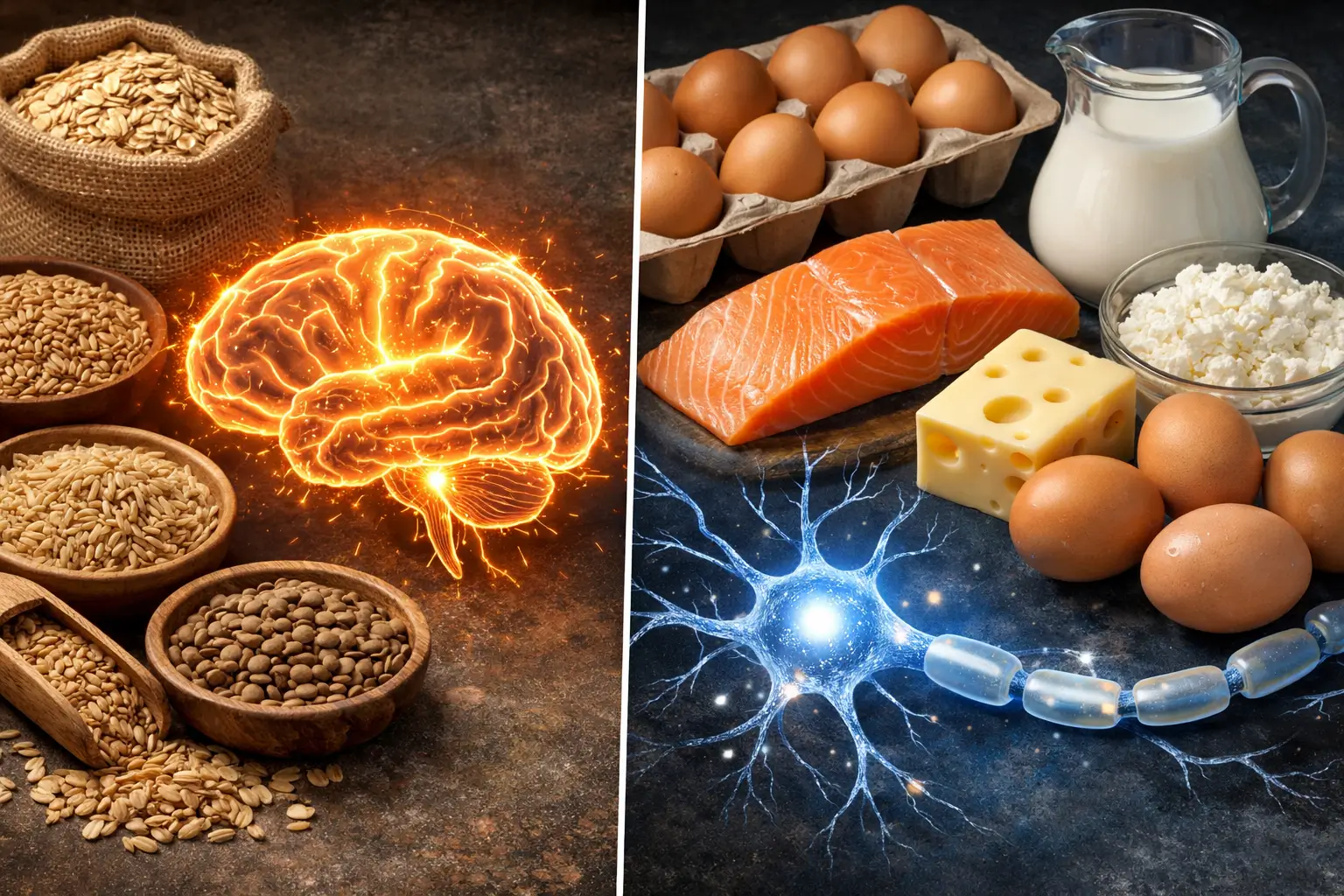
- B1 powers the engine.
- B12 protects the wiring.
Optimal brain health requires both.
Signs You May Need More Vitamin B1 for Brain Support
Early warning signs often include:
- Persistent tiredness
- Difficulty focusing
- Irritability
- Mild confusion
- Poor stress tolerance
These are subtle but important.
Because thiamine is not stored efficiently, dietary gaps can quickly affect brain performance.
Dietary Sources Comparison
Vitamin B1 Rich Foods
- Whole grains
- Brown rice
- Lentils
- Beans
- Sunflower seeds
- Pork
Vitamin B12 Rich Foods
- Eggs
- Dairy
- Fish
- Chicken
- Red meat
Vegetarians may need fortified foods or supplements for B12.
Daily Requirements
Recommended Dietary Allowance (RDA)
- Vitamin B1: ~1.1–1.2 mg/day
- Vitamin B12: ~2.4 mcg/day
Pregnant women, elderly individuals, and people with malabsorption conditions may require adjustments.
Always consult a healthcare provider before supplementation.
Pros and Cons Overview
Vitamin B1
Pros
- Supports brain energy
- Rapid symptom improvement when deficient
- Affordable
Cons
- Needs daily intake
- Easily depleted
Vitamin B12
Pros
- Long-term nerve protection
- Stored in body
- Crucial for aging population
Cons
- Absorption declines with age
- Vegan diets at higher risk
What Does Research Suggest?
Clinical studies show:
- Thiamine deficiency directly impairs cognitive function.
- B12 deficiency correlates with neuropathy and dementia risk when prolonged.
- Combined B-vitamin supplementation may support mild cognitive impairment in certain populations.
However, supplementation beyond deficiency does not automatically boost intelligence or memory in healthy individuals.
Evidence supports correction, not megadosing.
Practical Steps to Optimize Brain Health
Step 1: Assess Symptoms
Identify whether your concerns are:
- Energy-related
- Memory-related
- Nerve-related
Step 2: Review Diet
Track intake of:
- Whole grains (for B1)
- Animal or fortified foods (for B12)
Step 3: Consider Testing
Blood tests may include:
- Serum B12
- Methylmalonic acid (for B12 status)
- Thiamine levels
Step 4: Choose Smart Supplementation
If supplementing:
- Use evidence-based doses
- Avoid excessive megadoses
- Combine with balanced nutrition
Special Populations
Older Adults
B12 absorption decreases due to lower stomach acid.
Monitoring is recommended.
High-Carbohydrate Diet Consumers
Low B1 combined with high carb intake increases deficiency risk.
Alcohol Users
Alcohol interferes with thiamine absorption and utilization.
Common Myths Clarified
Myth 1: More B vitamins automatically improve memory.
Reality: Only if deficiency exists.
Myth 2: B1 and B12 do the same thing.
Reality: They support different neurological pathways.
Myth 3: Supplements are always necessary.
Reality: Many people meet needs through diet.
Frequently Asked Questions
Is vitamin B1 better than B12 for brain health?
Neither is universally better. Vitamin B1 supports energy metabolism, while B12 protects nerves. The right choice depends on your deficiency or symptoms.
Can vitamin B1 improve memory?
If memory issues stem from thiamine deficiency, correcting it may improve cognitive clarity.
Should I take B1 and B12 together?
In many cases, a balanced B-complex supplement is appropriate, but individualized advice is best.
What are early signs of low vitamin B1?
Fatigue, irritability, difficulty concentrating, and mild confusion.
Is vitamin B12 deficiency more common?
Yes, especially in vegetarians and older adults.
Can too much B1 or B12 harm the brain?
High doses are generally safe but unnecessary without deficiency. Excess should be avoided unless medically supervised.
Final Verdict: Which Is Better?
If your concern is mental energy and brain fog, the vitamin b1 benefits for brain metabolism are highly relevant.
If your concern is nerve protection, aging, or neuropathy, vitamin B12 deserves priority.
For optimal cognitive health, focus on balanced nutrition rather than isolated megadosing.
When in doubt, test first — supplement second.
Conclusion
Vitamin B1 and B12 are not competitors. They are complementary.
Understanding their unique roles empowers you to make informed decisions about diet and supplementation.
If you suspect deficiency, consult a qualified healthcare provider and request proper testing. Brain health is too important for guesswork.
Disclaimer
This article is for educational purposes only and does not replace professional medical advice. Always consult a licensed healthcare provider before starting supplements.