
Iron is one of the most important minerals the body needs to function properly. It plays a crucial role in producing hemoglobin, the protein in red blood cells responsible for carrying oxygen throughout the body. Without enough iron, the body cannot produce sufficient healthy red blood cells, which may lead to fatigue, weakness, and iron deficiency anemia.
Millions of people worldwide experience low iron levels due to poor diet, chronic illness, or increased nutritional demands. Fortunately, including iron rich foods in your daily meals can significantly improve blood health and overall energy levels.
This guide explores the best iron rich foods, how iron supports the body, and practical tips to improve iron absorption.
Why Iron Is Essential for Your Body
Iron is vital for many biological functions. One of its primary roles is helping red blood cells carry oxygen from the lungs to tissues and organs.
Without sufficient iron, oxygen delivery becomes inefficient. This may lead to symptoms such as:
• Persistent fatigue
• Weakness
• Headaches
• Shortness of breath
• Reduced concentration
Iron also supports:
• Brain development
• Immune system function
• Muscle metabolism
• Hormone production
Because of these functions, maintaining adequate iron intake is essential for overall health.
Signs Your Body Needs More Iron
Iron deficiency often develops gradually, which means symptoms may go unnoticed at first.
Common signs include:
Fatigue
Low iron reduces oxygen supply to muscles and tissues, leading to persistent tiredness.
Pale Skin
Hemoglobin gives blood its red color. When iron levels fall, skin may appear pale.
Frequent Headaches
Reduced oxygen supply to the brain may cause headaches and dizziness.
Cold Hands and Feet
Poor oxygen circulation may make extremities feel cold.
Shortness of Breath
Even mild physical activity may cause breathlessness when iron levels are low.
If these symptoms persist, medical evaluation may be necessary.
10 Iron Rich Foods That Boost Blood Health
Including iron rich foods in your daily diet is one of the most effective ways to maintain healthy iron levels.
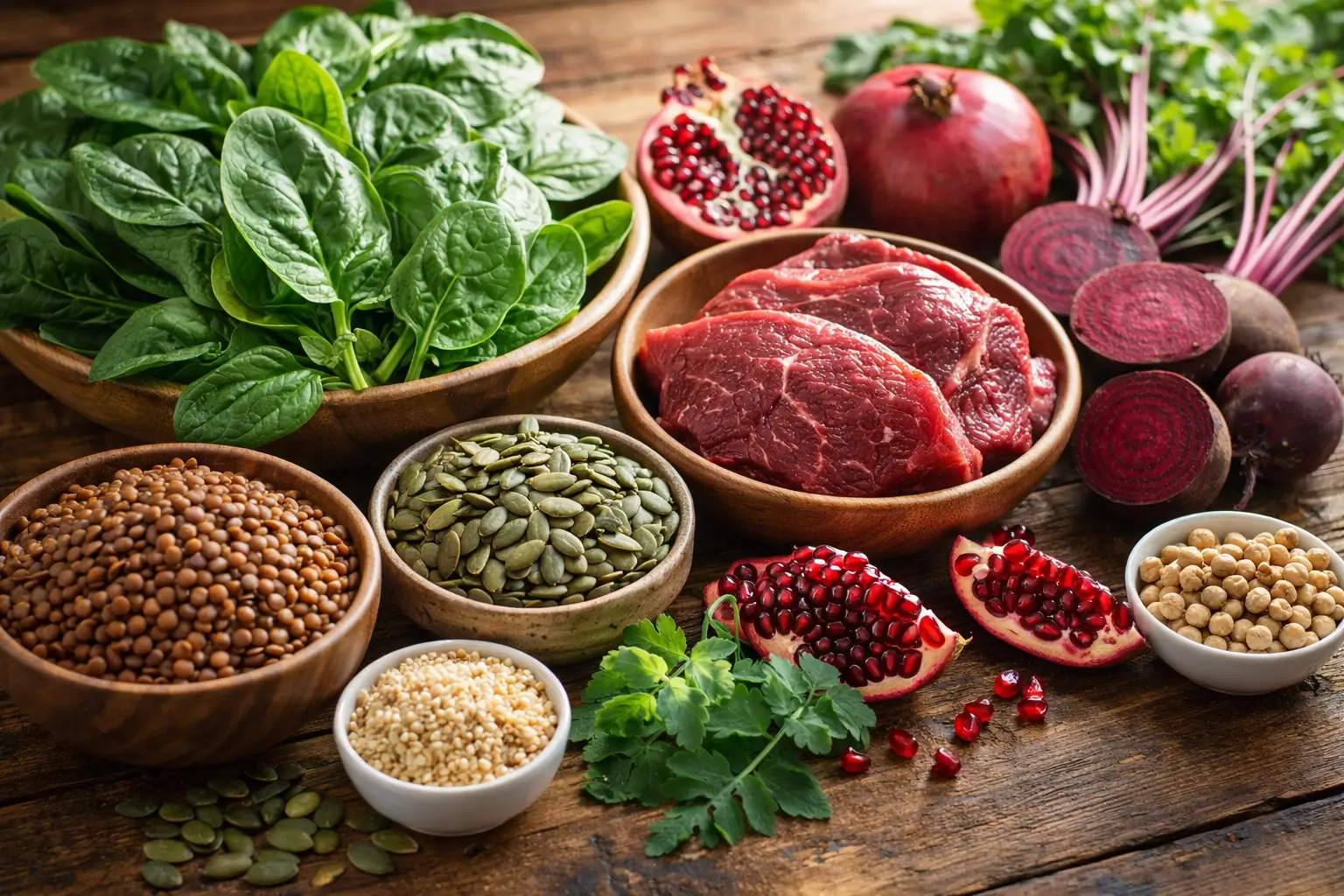
1. Spinach
Spinach is one of the most popular iron rich vegetables. It also contains vitamin C, which helps improve iron absorption.
2. Lentils
Lentils are an excellent plant-based source of iron and protein. They are widely used in vegetarian diets.
3. Red Meat
Red meat provides heme iron, a type of iron that is more easily absorbed by the body compared to plant-based iron.
4. Pumpkin Seeds
Pumpkin seeds are nutrient-dense and contain iron, magnesium, and healthy fats.
5. Eggs
Eggs provide moderate amounts of iron and are a convenient protein source.
6. Tofu
Tofu is a valuable iron source for vegetarians and vegans.
7. Beetroot
Beetroot is often recommended for improving blood health due to its iron and antioxidant content.
8. Pomegranate
Pomegranate supports healthy blood circulation and may help improve hemoglobin levels.
9. Quinoa
Quinoa is a whole grain rich in iron and protein.
10. Chickpeas
Chickpeas are commonly used in many cuisines and offer plant-based iron and fiber.
How to Increase Iron Absorption
Iron absorption depends on dietary combinations and digestion.
Eat Vitamin C Foods
Vitamin C improves iron absorption. Combine iron rich foods with:
• Oranges
• Tomatoes
• Bell peppers
• Strawberries
Avoid Tea and Coffee After Meals
Tannins in tea and coffee can reduce iron absorption if consumed immediately after eating.
Common Mistakes That Reduce Iron Levels
Many people unknowingly reduce iron absorption through everyday habits.
Common mistakes include:
• Drinking tea or coffee immediately after meals
• Skipping iron rich foods
• Poor digestion
• Low vitamin C intake
Correcting these habits can significantly improve iron levels.
Nutrition Expert Tips
Health professionals recommend:
• Balanced diet including plant and animal iron sources
• Pairing iron foods with vitamin C
• Avoiding processed foods that reduce nutrient absorption
• Monitoring iron levels with regular health checkups
Conclusion
Iron plays a vital role in maintaining healthy blood and energy levels. Iron deficiency can lead to fatigue, weakness, and anemia, affecting overall well-being.
Fortunately, simple dietary changes can help improve iron intake. Adding iron rich foods such as spinach, lentils, red meat, pumpkin seeds, and chickpeas to your meals can support better blood health and prevent deficiency.
Maintaining a balanced diet and adopting healthy lifestyle habits are key steps toward improving iron levels naturally.
FAQ
What foods are highest in iron?
Foods such as spinach, red meat, lentils, pumpkin seeds, and chickpeas contain high levels of iron.
Which fruit is richest in iron?
Pomegranate and dried fruits like dates contain moderate amounts of iron.
Can iron deficiency cause fatigue?
Yes, low iron reduces oxygen delivery to tissues, leading to fatigue.
What foods increase hemoglobin quickly?
Iron rich foods combined with vitamin C foods can help improve hemoglobin levels.
Are bananas rich in iron?
Bananas contain small amounts of iron but are not considered a major source.
How can vegetarians get iron?
Vegetarians can consume lentils, chickpeas, tofu, spinach, and pumpkin seeds.
How long does it take to improve iron levels?
Improvement may take several weeks depending on diet and severity.
What drink is high in iron?
Beetroot juice and spinach smoothies provide moderate iron levels.
Can cooking affect iron absorption?
Cooking with iron cookware may slightly increase iron content in foods.
What vitamin helps absorb iron?
Vitamin C significantly improves iron absorption.
Disclaimer
This article is for informational purposes only and does not replace professional medical advice. Consult a healthcare professional for diagnosis or treatment.
Nutritionists recommend pairing iron rich foods with vitamin C sources to increase absorption and improve hemoglobin production.
This article is based on nutrition research and public health resources to provide accurate and reliable health information.