

Introduction: Why a High Fiber Vegetarian Diet Plan Matters
If you often feel bloated, sluggish, constipated, or struggle with weight balance, your fiber intake may be lower than you think. A well-structured high fiber vegetarian diet plan can significantly improve digestion, stabilize blood sugar, and support long-term metabolic health.
Most adults require 25–38 grams of fiber per day, yet many vegetarians still fall short because their meals rely heavily on refined grains instead of whole foods. This 7-day plan is designed with practical, everyday vegetarian foods—no extreme restrictions, no unrealistic ingredients.
As a health-focused content specialist, I recommend gradual fiber increase, adequate hydration, and balanced macronutrients to prevent discomfort. This guide reflects those principles.
What Is a High Fiber Vegetarian Diet Plan?
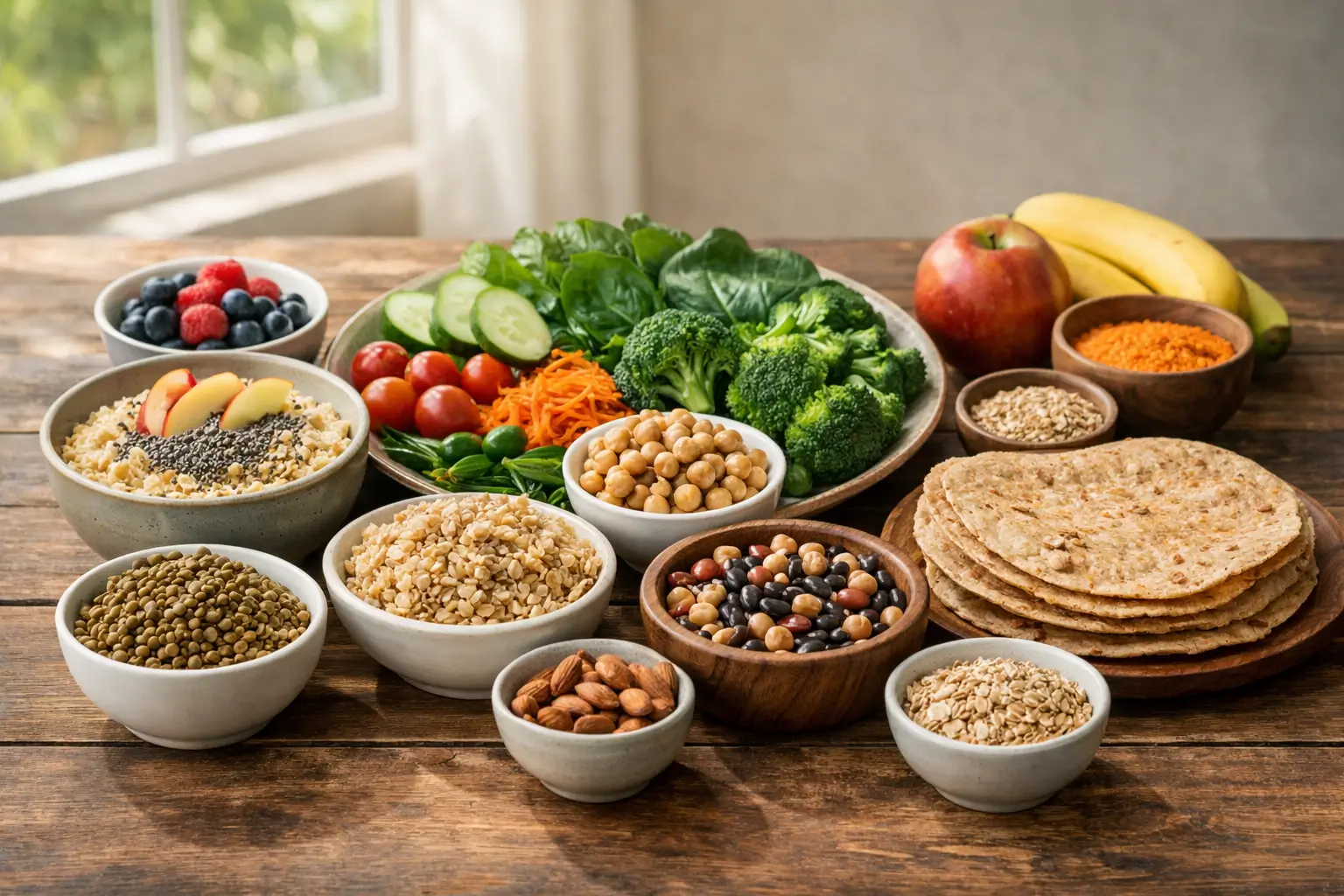
A high fiber vegetarian diet plan is a structured meal pattern based entirely on plant-based foods that provides at least 25–35 grams of dietary fiber daily through whole grains, legumes, fruits, vegetables, seeds, and nuts.
It emphasizes:
- Soluble fiber (supports heart health and blood sugar balance)
- Insoluble fiber (promotes bowel regularity)
- Resistant starch (feeds beneficial gut bacteria)
This approach improves gut microbiome diversity, supports cholesterol management, and enhances satiety.
Understanding Dietary Fiber: A Clear Explanation
Soluble Fiber
Soluble fiber dissolves in water to form a gel-like substance in the digestive tract. It slows digestion and helps regulate blood glucose and cholesterol levels.
Sources:
- Oats
- Chia seeds
- Flaxseeds
- Apples
- Lentils
Insoluble Fiber
Insoluble fiber adds bulk to stool and helps prevent constipation.
Sources:
- Whole wheat
- Brown rice
- Leafy greens
- Beans
- Carrots
Resistant Starch
Resistant starch resists digestion in the small intestine and ferments in the colon, producing beneficial short-chain fatty acids.
Sources:
- Cooked and cooled potatoes
- Green bananas
- Legumes
- Whole grains
Daily Fiber Requirement
| Age Group | Recommended Fiber Intake |
|---|---|
| Women (19–50) | 25 g/day |
| Men (19–50) | 30–38 g/day |
| Women (50+) | 21 g/day |
| Men (50+) | 30 g/day |
Gradual increase is essential to prevent bloating.
Benefits of a High Fiber Vegetarian Diet Plan
- Improves digestion and prevents constipation
- Supports healthy gut microbiome
- Helps maintain steady blood sugar
- Aids in weight management
- Reduces LDL cholesterol
- Enhances satiety and reduces overeating
7-Day High Fiber Vegetarian Diet Plan
Each day provides approximately 28–35 grams of fiber.
Day 1: Balanced Gut Start
Breakfast: Oats porridge with chia seeds, apple slices
Mid-Morning: Guava
Lunch: Brown rice, rajma curry, salad
Snack: Roasted chana
Dinner: Vegetable dal with whole wheat roti
Approximate fiber: 30g
Day 2: Lentil-Focused Day
Breakfast: Vegetable poha with peanuts
Snack: Orange
Lunch: Quinoa, mixed vegetable sabzi, moong dal
Snack: Almonds
Dinner: Palak chana with millet roti
Approximate fiber: 32g
Day 3: High Vegetable Intake
Breakfast: Smoothie (spinach, banana, flaxseeds)
Snack: Pear
Lunch: Bajra roti, bhindi, masoor dal
Snack: Sprout salad
Dinner: Vegetable khichdi with brown rice
Approximate fiber: 29g
Day 4: Gut Microbiome Boost
Breakfast: Overnight oats with berries
Snack: Papaya
Lunch: Chickpea salad bowl
Snack: Pumpkin seeds
Dinner: Vegetable soup with whole grain toast
Approximate fiber: 31g
Day 5: Heart Health Focus
Breakfast: Ragi dosa with coconut chutney
Snack: Apple
Lunch: Barley khichdi
Snack: Walnuts
Dinner: Mixed lentil curry and roti
Approximate fiber: 30g
Day 6: High Satiety Day
Breakfast: Whole wheat vegetable paratha (minimal oil)
Snack: Carrot sticks + hummus
Lunch: Brown rice, black chana curry
Snack: Trail mix
Dinner: Tofu stir-fry with vegetables
Approximate fiber: 33g
Day 7: Light but Fiber-Rich
Breakfast: Chia pudding with fruits
Snack: Guava
Lunch: Vegetable millet pulao
Snack: Roasted soy nuts
Dinner: Moong dal soup + salad
Approximate fiber: 28g
How to Increase Fiber Safely
- Increase fiber gradually over 1–2 weeks
- Drink 2.5–3 liters of water daily
- Combine soluble and insoluble sources
- Avoid sudden large portions of legumes
- Chew food properly
Common Mistakes to Avoid
- Increasing fiber too quickly
- Not drinking enough water
- Ignoring protein balance
- Over-relying on supplements
- Choosing refined vegetarian foods
Pros and Cons
Pros
- Naturally supports digestion
- Vegetarian-friendly
- Sustainable long term
- Budget-friendly
Cons
- May cause temporary bloating
- Requires meal planning
- Not suitable for low-FODMAP individuals without adjustments
Frequently Asked Questions
1. How much fiber should I consume daily on a vegetarian diet?
Most adults need 25–35 grams daily depending on age and gender.
2. Can a high fiber vegetarian diet plan help with weight loss?
Yes, fiber increases satiety and reduces overall calorie intake.
3. Is fiber supplementation necessary?
Whole foods are preferred. Supplements may help under medical supervision.
4. Does high fiber cause bloating?
If increased suddenly, yes. Gradual adjustment prevents discomfort.
5. Is this diet suitable for diabetics?
High fiber supports blood sugar control, but portion control is important.
6. Can children follow a high fiber vegetarian diet?
Yes, but fiber intake should be age-appropriate.
7. What is the best breakfast for fiber?
Oats with seeds and fruits provide balanced fiber.
Conclusion: Start Gradually, Stay Consistent
A structured high fiber vegetarian diet plan is one of the most practical ways to improve digestive health, metabolic stability, and overall well-being. The key is balance, hydration, and consistency—not extreme changes.
If you are new to high-fiber eating, start with small adjustments and monitor how your body responds. Sustainable health always beats quick fixes.
Disclaimer
This article is for educational purposes only and does not replace professional medical advice. Consult a qualified healthcare provider before making major dietary changes, especially if you have IBS, diabetes, or gastrointestinal conditions.