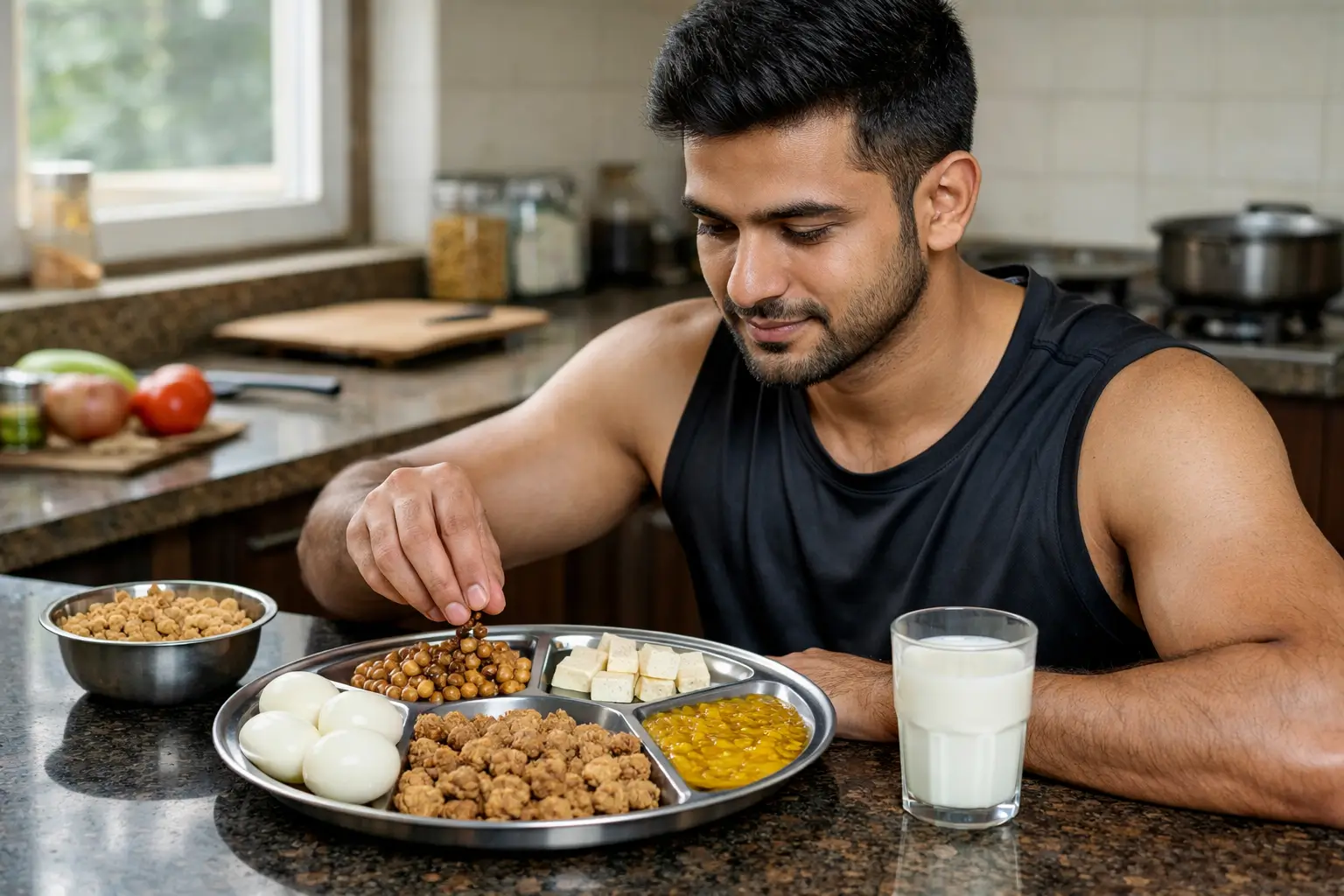

Building muscle does not require imported supplements or expensive meal plans. In India, we have access to several affordable, nutrient-dense foods that support muscle protein synthesis and recovery. If you are searching for cheap protein rich foods in India that genuinely help in muscle gain, this guide will give you practical, evidence-based answers.
As someone who has worked with fitness beginners, vegetarian clients, and budget-conscious students, I can confidently say this: muscle growth depends more on consistency and adequate protein intake than on costly powders.
Let us break it down properly.
What Are Cheap Protein Rich Foods in India? (Quick Definition)
Cheap protein rich foods in India are affordable, locally available food items that provide significant protein per serving, supporting muscle repair, growth, and recovery without reliance on expensive supplements.
For muscle gain, most adults need around 1.6–2.2 grams of protein per kilogram of body weight daily, depending on training intensity.
Why Protein Is Essential for Muscle Gain
What Is Protein?
Protein is a macronutrient made of amino acids. These amino acids act as building blocks for:
- Muscle tissue
- Hormones
- Enzymes
- Immune cells
What Is Muscle Protein Synthesis?
Muscle Protein Synthesis (MPS) is the biological process where your body repairs and builds muscle fibers after resistance training.
Without sufficient protein intake:
- Recovery slows
- Muscle growth plateaus
- Fatigue increases
Affordable protein sources can easily meet your daily needs if planned correctly.
Daily Protein Requirement for Muscle Gain in India
Here is a practical breakdown:
| Body Weight | Protein Range for Muscle Gain |
|---|---|
| 50 kg | 80–100g/day |
| 60 kg | 95–120g/day |
| 70 kg | 110–150g/day |
| 80 kg | 130–170g/day |
These numbers are achievable using cheap protein rich foods in India when distributed across 3–5 meals.
Top 15 Cheap Protein Rich Foods in India for Muscle Gain
1. Eggs
- Protein: ~6g per egg
- Affordable and high biological value
- Contains all essential amino acids
Eggs are one of the most cost-effective muscle-building foods available.
2. Soy Chunks (Soya Chunks)
- Protein: ~52g per 100g (dry weight)
- Extremely affordable
- Rich in plant-based protein
An excellent option for vegetarians.
3. Lentils (Dal)
- Protein: 7–9g per cup cooked
- Easily digestible
- High fiber content
Moong dal and masoor dal are economical and versatile.
4. Chickpeas (Chana)
- Protein: ~8–10g per serving
- Good for meal prep
- Budget-friendly
Roasted chana makes a high-protein snack.
5. Paneer
- Protein: ~18g per 100g
- High in casein protein
- Supports sustained amino acid release
Homemade paneer reduces cost significantly.
6. Curd (Dahi)
- Protein: ~3–4g per 100g
- Supports gut health
- Improves protein absorption
Especially useful post-meal.
7. Peanuts
- Protein: ~25g per 100g
- Affordable
- High calorie (use wisely)
Good for bulking phases.
8. Milk
- Protein: ~8g per glass
- Contains whey + casein
- Ideal before bed
9. Rajma (Kidney Beans)
- Protein: ~8g per serving
- Combined with rice forms complete amino acid profile
10. Black Chana
- High protein and fiber
- Very economical
11. Sprouts
- Protein enhanced after germination
- Easy digestion
12. Oats
- Protein: ~11–13g per 100g
- Combine with milk for better amino acid balance
13. Tofu
- Protein: ~10g per 100g
- Cheaper alternative to paneer in some regions
14. Groundnuts Chikki
- Protein + energy dense
- Budget snack option
15. Sattu
- Roasted gram flour
- Excellent rural protein source
- Extremely cheap
Sample Budget Muscle Gain Meal Plan (Vegetarian)
Breakfast
- 3 eggs or 100g paneer
- Oats with milk
- 1 banana
Lunch
- Dal
- Rice
- Mixed vegetables
- Curd
Evening Snack
- Roasted chana
- Peanut butter sandwich
Dinner
- Rajma or soy chunks
- Roti
- Salad
Approximate protein: 90–120g depending on portion size.
How to Combine Cheap Protein Rich Foods in India for Maximum Results
Step 1: Distribute Protein Evenly
Consume 20–30g protein per meal.
Step 2: Combine Plant Proteins
Examples:
- Dal + rice
- Chana + roti
This improves amino acid completeness.
Step 3: Track Intake
Use a food tracking app for 2–3 weeks to understand portion sizes.
Are Supplements Necessary?
For most beginners, no.
Cheap protein rich foods in India can meet daily needs if planned properly. Supplements like whey protein are convenient but not mandatory.
Pros and Cons of Relying on Cheap Protein Sources
Pros
- Affordable
- Easily available
- Sustainable long term
Cons
- Requires planning
- Higher fiber may cause bloating
- Portion sizes need monitoring
Common Mistakes People Make
- Ignoring total daily protein intake
- Relying only on carbs
- Skipping post-workout nutrition
- Not increasing calories for muscle gain
Expert Insight: Is High Protein Safe?
For healthy individuals, consuming up to 2.2g/kg body weight is generally considered safe. However:
- Drink adequate water
- Monitor kidney health if pre-existing conditions exist
- Consult a doctor if unsure
Frequently Asked Questions
1. What is the cheapest protein source in India?
Soy chunks and eggs are typically the most economical per gram of protein.
2. Can vegetarians build muscle using cheap protein rich foods in India?
Yes. Combining lentils, soy, paneer, and dairy provides sufficient amino acids.
3. How much protein do I need daily for muscle gain?
Around 1.6–2.2g per kg body weight depending on activity level.
4. Is paneer better than soy chunks?
Soy chunks have higher protein per gram, but paneer is easier to digest for some people.
5. Are cheap protein foods enough without whey protein?
Yes, if total daily protein requirements are met consistently.
6. Can I gain muscle without eggs?
Absolutely. Plant-based combinations can meet protein needs.
Conclusion
Muscle gain is not about spending more money. It is about understanding nutrition fundamentals and being consistent. Cheap protein rich foods in India are more than enough to support muscle growth when consumed in adequate quantity and balanced properly.
Start by calculating your daily requirement, build simple meals around local protein sources, and track your progress for 4–6 weeks.
Consistency beats complexity.
Disclaimer
This article is for educational purposes only. Nutritional needs vary based on age, health status, and activity level. Consult a qualified healthcare professional or registered dietitian before making significant dietary changes.