
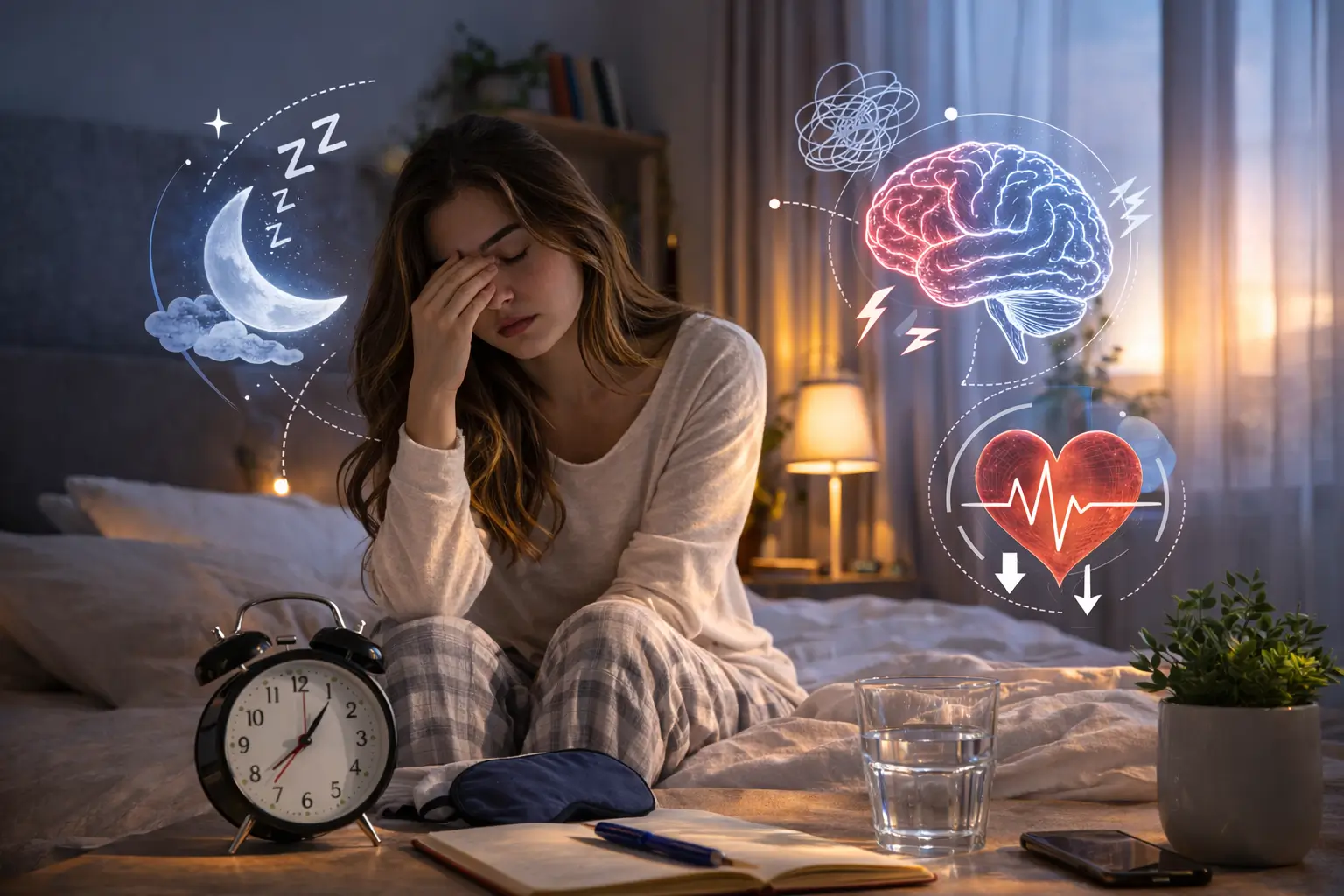

Introduction: You May Be Sleeping… But Not Resting
Many adults believe that spending seven or eight hours in bed automatically means good sleep. Unfortunately, duration and quality are not the same.
You can sleep “long enough” and still wake up exhausted.
As someone who studies sleep behavior patterns and lifestyle health markers, I see this repeatedly: people overlook subtle signs of poor sleep quality because they assume sleep problems only exist when insomnia is severe. In reality, poor sleep often develops gradually and silently.
This guide explains the 10 most important signs of poor sleep quality in adults, what they mean biologically, and when to take action.
What Are Signs of Poor Sleep Quality?
Signs of poor sleep quality refer to physical, mental, and behavioral symptoms that indicate sleep is not restorative. Even if sleep duration appears adequate, disruptions in deep sleep, REM cycles, or circadian rhythm can cause fatigue, brain fog, mood instability, and reduced daytime performance.
Why Sleep Quality Matters More Than Sleep Duration
Sleep occurs in cycles.
Each night, your body moves through:
- Light sleep
- Deep sleep (slow-wave sleep)
- REM sleep (rapid eye movement sleep)
Deep sleep restores the body.
REM sleep restores the brain.
When these cycles are fragmented, recovery suffers.
1. Persistent Morning Fatigue
Why This Is One of the Main Signs of Poor Sleep Quality
If you wake up feeling unrefreshed most days, it suggests your deep sleep was insufficient.
This may be caused by:
- Frequent micro-awakenings
- Sleep apnea
- Stress-related cortisol spikes
- Alcohol use
- Late-night screen exposure
Morning fatigue is often the earliest warning sign.
2. Difficulty Concentrating During the Day
Brain Fog and Cognitive Slowness
One of the most common signs of poor sleep quality is mental dullness.
You may notice:
- Forgetfulness
- Slow reaction time
- Reduced focus
- Difficulty learning new information
REM sleep supports memory consolidation. If it is disrupted, cognition suffers.

3. Frequent Nighttime Awakenings
Interrupted Sleep Cycles
Waking up occasionally is normal.
However, waking up:
- More than 2–3 times nightly
- For extended periods
- With difficulty returning to sleep
may indicate fragmented sleep architecture.
Common causes include:
- Stress
- Anxiety
- Blood sugar fluctuations
- Poor sleep environment
4. Irritability or Mood Swings
Sleep and Emotional Regulation
Sleep regulates neurotransmitters like serotonin and dopamine.
Poor sleep increases emotional reactivity.
Adults may experience:
- Irritability
- Low patience
- Heightened stress response
- Mild depressive symptoms
Mood instability is a powerful yet overlooked indicator.
5. Daytime Sleepiness or Napping Dependence
Excessive Sleepiness Despite “Enough” Hours
If you rely on naps or caffeine to function, your sleep may not be restorative.
This differs from occasional tiredness. Persistent daytime sleepiness often signals:
- Insufficient deep sleep
- Obstructive sleep apnea
- Chronic sleep debt
6. Headaches or Morning Dry Mouth
Possible Signs of Sleep Apnea
Some physical signs of poor sleep quality are subtle.
Morning symptoms may include:
- Headaches
- Dry mouth
- Jaw tension
These can indicate breathing disturbances during sleep.
Sleep apnea often goes undiagnosed in adults.
7. Increased Cravings and Weight Changes
Sleep and Metabolic Hormones
Poor sleep alters:
- Ghrelin (hunger hormone)
- Leptin (satiety hormone)
- Insulin sensitivity
As a result, adults may:
- Crave sugar
- Overeat
- Gain weight unexpectedly
Metabolic imbalance is strongly linked to sleep quality.
8. Reduced Immune Function
Getting Sick More Often
Chronic poor sleep weakens immune response.
Adults may notice:
- Frequent colds
- Slower wound healing
- Persistent low-grade fatigue
Deep sleep supports immune cell production.
9. Increased Anxiety at Night
Hyperarousal and Cortisol
If you feel mentally alert or anxious at bedtime, your nervous system may be overstimulated.
This can be linked to:
- Excess screen time
- Late caffeine
- Chronic stress
- Irregular sleep schedule
High nighttime cortisol disrupts REM cycles.
10. Reduced Physical Performance or Low Libido
Hormonal Impact of Poor Sleep
Sleep affects testosterone, growth hormone, and cortisol balance.
Men and women may notice:
- Slower muscle recovery
- Lower strength
- Decreased libido
- Reduced motivation
Hormonal changes often reflect chronic sleep disruption.
Summary Table: Quick Overview
| Sign | What It Suggests |
|---|---|
| Morning fatigue | Inadequate deep sleep |
| Brain fog | REM disruption |
| Night awakenings | Fragmented sleep cycles |
| Mood swings | Neurotransmitter imbalance |
| Daytime sleepiness | Sleep debt or apnea |
| Headaches | Breathing disturbance |
| Cravings | Hormonal dysregulation |
| Frequent illness | Immune suppression |
| Night anxiety | Elevated cortisol |
| Low libido | Hormonal imbalance |
When to See a Doctor
Seek medical advice if:
- Loud snoring with pauses in breathing
- Severe daytime sleepiness
- Chronic insomnia (3+ months)
- Depression linked to sleep
- Restless legs symptoms
Sleep studies may be recommended.
How to Improve Sleep Quality Naturally
Step 1: Optimize Sleep Hygiene
- Fixed sleep schedule
- Dark, cool bedroom
- No screens 60 minutes before bed
Step 2: Support Circadian Rhythm
- Morning sunlight exposure
- Reduce late-night artificial light
- Consistent meal timing
Step 3: Reduce Stress Before Bed
- Deep breathing
- Journaling
- Light stretching
- Warm shower
Step 4: Monitor Nutrition
Avoid:
- Late heavy meals
- Excess caffeine after 2 PM
- Alcohol before bed
Include:
- Magnesium-rich foods
- Balanced dinner with protein and healthy fats
Pros and Cons of Ignoring Sleep Problems
Pros (Short-Term Illusion)
- More waking hours
- Temporary productivity
Cons (Long-Term Reality)
- Increased cardiovascular risk
- Metabolic dysfunction
- Hormonal imbalance
- Mood disorders
- Cognitive decline
The risks outweigh short-term benefits.
Frequently Asked Questions
1. What are the most common signs of poor sleep quality?
Morning fatigue, brain fog, irritability, and frequent awakenings are the most common signs.
2. Can you sleep 8 hours and still have poor sleep quality?
Yes. Fragmented deep or REM sleep can reduce restorative effects even with adequate duration.
3. How long does it take to fix poor sleep quality?
Many people notice improvements within 2–4 weeks of consistent sleep hygiene changes.
4. Does stress cause poor sleep quality?
Yes. Elevated cortisol disrupts natural sleep cycles.
5. Can poor sleep affect weight gain?
Yes. It disrupts hunger hormones and insulin regulation.
6. Is poor sleep linked to anxiety?
Yes. Sleep and mental health are closely connected.
Conclusion: Listen to the Signals Your Body Sends
The signs of poor sleep quality are rarely dramatic at first.
They begin subtly.
Morning fatigue. Irritability. Cravings. Brain fog.
If you recognize multiple symptoms from this list, consider making structured sleep improvements.
Small changes in sleep habits often produce powerful long-term health benefits.
Disclaimer
This article is for educational purposes only and does not replace professional medical advice. Consult a healthcare provider if you suspect a sleep disorder.